Pages

Showing posts with label character arc. Show all posts

November 28, 2017

Circle Around for Your Story's Success


by Gary Fearon, Creative Director, Southern Writers Magazine


It seems like just yesterday we'd be flipping the pages of the latest Archie or Batman comic book and we would come across this headline:

"Tired of being picked on? Nobody picks on an ATLAS MAN!"


The cartoon accompanying this full-page ad showed a beach bully kicking sand at a skinny fellow (named Mac) and his girl.  After confronting and being threatened by the muscle-bound brute, Mac vows to get even some day.  In the next panel, he signs up for Charles Atlas' bodybuilding course, and in the end he becomes the hero of the beach.

The word balloons changed over the years, I noticed, so sometimes Mac's girl was sympathetic when he vowed revenge.  Other times she said something demeaning like, "Oh, don't let it bother you, little boy." Originally, the cartoon showed the aftermath of a now-powerful Mac knocking the beach bully out.  Over time, the advertisement eliminated that panel, probably because it promoted violence.  Or maybe Mac punched out his verbally abusive girlfriend off-screen.

The point is, in the full version of this miniature morality tale, we are given a definitive "before" and "after".  Before, Mac is picked on by a bully.  After, the underdog becomes top dog.

This classic Atlas ad is a simple but effective example of the full circle readers want in their stories. There has to be a situation that needs resolving, and by the end of the story that situation must be resolved.  Without either, there is no sense of accomplishment.

A time-tested method is to establish, at the beginning of the story, our hero in his/her current state (their "Ordinary World", as the experts call it).  We'll see them going about their normal routine in their normal circumstances so that we understand the status quo.  After that, things go topsy-turvy and the hero's world as they know it comes under siege by whatever problems the story dictates.  A series of ups and downs follow, until finally there is victory and we are rewarded with a scenario that hearkens us back to the original roots of the hero.

This return to the "ordinary world" will clarify the results of what has taken place and show how thingsand hopefully the herohave changed.  The hero doesn't physically have to return to their hometown with a parade waiting for them.  Sometimes the hero in fact cannot go back to their world, but an early vulnerability that is now a strength is easy to convey.

If the character arc has been apparent enough, it may not even be necessary to change a thing. A mere reminder of how things used to be could be sufficient.  Perhaps the hero was swimming at the beginning of the story.  Toward the end of the story, the hero is swimming again.  Same activity, but this time we know they possess a contentment they didn't have the first time.

Life itself affords us very few clear-cut befores and afters, so we find fulfillment in those we experience with our fictional friends.  Letting readers go full circle with the bookends of an obvious before and after is an easy and effective way to bulk up a skinny story.


September 6, 2016

The Covenant of the Arc


by Gary Fearon, Creative Director, Southern Writers Magazine


For many writers, the character arc is a vague concept that feels like an imposition.  When we already have an interesting plot that's fun to write, why must we burden ourselves with the laborious task of transforming our protagonist into a new and better person?

First of all, because the reader wants it.  Secondly, it's not as difficult or nebulous as it sounds.

The plot may be the driving force behind the story, but as good as it may be, that only covers the external. It is through the internal struggle of the hero that the reader will invest themselves and feel the real heart of the story.

Perhaps you've noticed how many famous tales feature an orphan.  From Oliver Twist to Harry Potter, it's a popular device.  Before the plot even develops, the protagonist is a sympathetic character lacking the stability of a true home.  An Oliver Twist will experience his emotional arc by looking for love in all the wrong places but ending up finding a family.  A Harry Potter will go from being an neglected child to claiming his rightful place in the world.

Similarly, in many a classic Western as well as modern-day action flick, the hero's family dies early on.  These lost souls who have had life as they know it taken away from them can experience their arc in a variety of ways: revenge, restitution, redemption, etc. A Jason Bourne, who loses both his memory and his identity, can regain his footing by discovering who he really is.

How many romances feature a selfish, stuck-up protagonist who finds the meaning of love and is transformed into happily-ever-after material?  Yes, it's a cliché, but the audience eats it up when the character recognizes that their ego is their own worst enemy.

One of my favorite comedies, Shallow Hal, centers around a man who judges everyone by their looks.  When Tony Robbins hypnotizes Hal and causes him to see people for who they really are, he finds true love with someone he would have totally ignored. Something as simple as a lesson learned is a sturdy arc.

In a lengthy series, only minor protagonist arcs are advised, because the audience wants the hero to stay comfortably familiar from book to book. Even when the womanizing James Bond got married at one point, his wife was out of the picture before the next book.

In literature you will see no lack of Scrooges who discover there is more to life than money, and adventurers who leave the safety of their world to go find themselves only to realize that there's no place like home.

And here's a tip: arcs aren't just for the main character.  A story wins extra points for depth when secondary characters get in on the action.  Someone who is an antagonist early on could well become an advocate for the hero when we least expect it.  This can be doubly satisfying because they not only help save the day for the protagonist, but demonstrate a change of heart themselves.

Each of us experience arcs of many kinds on a regular basis.  In the course of a lifetime, we couldn't count them all. Luckily, we only have to build one arc for our hero to give him or her (and the reader) the emotional anchor they're hoping for.

November 3, 2015

Seven Things Writers Can Learn from Marty McFly


by Gary Fearon, Creative Director, Southern Writers Magazine

October 2015 was a milestone month for fans of Back to the Future, having reached one of the target dates in Marty and Doc's cinematic adventures. Three decades after its release, the trilogy boasts a cult following of DeLorean restorers, cosplay devotees, and less fanatical folk who simply enjoy well-told tales.

With that enduring popularity in mind, I offer seven things that make the Back to the Future series worth a second look for writers.

1. Lack of a hero arc
Unlike the typical protagonist, Marty doesn't experience an inner change that makes him grow as a person by the end of the story.  Instead, everything around him changes.  For the audience, that is satisfying enough. Just like James Bond, Indiana Jones or Frodo, the hero is consistent from story to story, while it's the new adventure providing the variety.

2. Back to the Future wasn't going to be a trilogy
Screenwriter Robert Zemeckis had only intended to make the one movie.  Only because of its enormous success did he write two sequels.  Had he known up front that would happen, he says he would have ended the first movie differently: He wouldn't have had Marty's girlfriend get into the time machine. He would have preferred for Marty and Doc Brown to go on their next mission alone.  That script complication was dealt with (a little too patly) by zapping her with a ray to make her think it was all a dream. The lesson here is: The End might not be The End, so be forward-thinking just in case you're lucky enough for fans to demand a followup.
 
3. Believable characters
To maintain realism in a fantasy, it helps to anchor it with characters who react like real people.  There are no wild and crazy sidekicks or talking animals to suspend belief.  Even the quirky Doc Brown is no more off the wall than your crazy uncle.  Each character contains humanity that invites us to invest ourselves in them.

4. Keepin' it Real
As for the fantastic storyline, Michael J. Fox himself makes the observation that the more radical visionary aspects of Back to the Future still maintained some resemblance to life as we know it. For example, he says, flying cars wouldn't need imaginary lanes to drive in; they have the entire sky in which to navigate. But flying cars are fantastic enough without giving the audience too many additional concepts to distract themselves with.

5. Reassuring repetition
Like the movie posters that echoed each other, repeating gags and catch phrases from film to film also gave the audience a comforting sense of familiarity. Whenever Biff taunted, "What are you, chicken?", we knew Marty was about to go full McFly.

6. Be Flexible
When producers couldn't strike a deal with Crispin Glover to reprise his role as Marty's dad, they brought in another actor and tried -- in vain -- to fool audiences using prosthetics, showing him upside down or at a distance, etc, to awkward effect.  To ease everyone's pain, they eliminate him as soon as possible.  Bottom line: If one of your characters is giving you too much trouble, don't try to negotiate; write him out entirely.

http://shop.pepsi.com/7. Take advantage of marketing tie-ins
Like cozy mystery authors who offer recipes and other tangible story elements to fans, Pepsi is capitalizing on one of the iconic series symbols this very day. A bottle of Pepsi Perfect, in a collectible container, sold out faster than 88 MPH on October 21st. Public demand, however, made 6,500 of them available again for, appropriately enough, $20.15.  They went on sale today, November 3rd, at 8:00 a.m. Central. (Update: They sold out within ten minutes.) http://shop.pepsi.com/

Some say Back to the Future is the best-written trilogy of all time.  Bob Zemeckis won't even attempt a fourth one lest he do it a disservice.  We can take many cues from Marty and friends in our own quest to write a story that stands the test of time.


September 22, 2015

Nothing to Fear


by Gary Fearon, Creative Director, Southern Writers Magazine


We talk a lot about giving our characters goals, and then putting obstacles in their path so they have a hard time achieving them.  We can double that drama by making their obstacle something that not only impedes their progress, but something over which they already possess a deep-seated fear.

Consider Jack Nicholson's character in As Good As It Gets.  His obsesssive-compulsive disorder is constantly put to the test for him to even have a shot at getting the girl.  The internal roadblock provides a means for conflict at every turn.

Phobias in fiction are worth their weight in gold.  Indiana Jones had a problem with snakes, and part of the fun of Raiders was seeing how he reacted to a roomful of asps. 

We identify with a hero who has hangups, since we tend to have a few ourselves.  A warrior without worries is unrelatable.  It would be hard to identify with Superman if his invincible body didn't have a soft spot for Lois Lane.

Reality TV sure knows the value of exploiting contestants' fears.  From Fear Factor (eating bugs) to Bear Gryllis' Running Wild (rock climbing and eating bugs), we're facing our own fears alongside the players, wondering how far we would be willing to go if $5000 was dangled in front of us.  Similarly, we are drawn into a story in which the protagonist is challenged on a deeply personal level.  The specific quest may not be one we ever have to face, but then again, something inside us does like to feel prepared.

Fears we can all relate to include:
  • Fear of failure
  • Loss of freedom
  • Loss of a job
  • Unrequited love
  • The unknown
The biggest fear of all, of course, is death.  Physical danger of any kind is an intrinsic phobia everyone knows. But even something as simple as disappointment can be a worthwhile challenge to our hero, giving us a very wide berth within which to endanger their destiny.  

"We have met the enemy and he is us," Pogo once said.  We can up the ante of antagonism by giving our protagonist a good internal struggle on top of their outside enemies and obstacles. 

Inner demons add an easy and especially effective layer of conflict, since our internal fears are among the hardest to conquer.  Don't be afraid to use them.


July 30, 2013

Putting the Pro in Protagonist


by Gary Fearon, Southern Writers Magazine Creative Director


Writers often use the words "protagonist" and "hero" interchangeably, and for good reason.  If we look at the actual definitions, we can see why:

PROTAGONIST: The leading character in a drama, movie, novel, or other fictional text.

HERO: A person who is admired for their courage or noble qualities.

When we create the lead character in our story, we want it to be someone the audience likes, respects, and cares about.  We do that best by giving the protagonist heroic qualities.

Not to say that our lead needs to leap tall buildings in a single bound, nor do they even need to leave the house.  They need only possess one or more character traits our audience will look up to.  We admire a character who's witty, smart, talented, or humanebasically the same qualities we like to see in people, not to mention ourselves.

We've all read books or seen movies where the main character was none of these things.  Actually, we probably never finished those books and we turned the channel when we realized the protagonist was someone we simply didn't find likable or relatable, someone we didn't care to spend the next two hours or three hundred pages with.

One of the few movies I ever walked out on was a 1990s flick by a well-known director in which the protagonist had multiple personalities.  The subject matter looked interesting enough, but it only took twenty minutes of this guy going back and forth between annoying personas possessing no redeeming qualities among them, for me to decide to sneak into a showing of 3 Ninjas instead.  Had the protagonist done anything to make someone care about what happened to him, I might have stuck around.  But in this case, he wasn't a hero, but merely the central figure of the story.

I never think about protagonists without remembering Blake Snyder's terrific book on story creation, Save the Cat!, which spells out the importance of having your main character do something "nice" early on so that the audience will bond with him/her.  This is something we can accomplish even for an antihero.  In fact, many a protagonist starts out as a self-consumed, errant figure, which makes their character arc that much more dramatic in the end.  But all the same, a well-told story will establish early on that there is hope for this person, by helping a kid find his cat or performing some other kind gesture.

By the same token, we want our hero to have flaws.  Perfect protagonists are boring.  Make sure your hero has vulnerabilities everyone can identify with; weaknesses than can take him/her down.  Kryptonite only goes so far as a threat, but human conflict is the stuff of legend in fiction.

Any time a reader picks up your book, they're hoping for a story that will envelope them.  When you give them a relatable protagonist they can share an adventure with, and ultimately prevail with, the real hero is you.

May 8, 2012

Giving Them Grief


by Gary Fearon, Creative Director -

 
Many of us are familiar with the Five Stages of Grief, said to be the emotions we have to work through whenever we suffer a loss or other devastating blow.  They are:

  • Denial
  • Anger
  • Bargaining
  • Depression
  • Acceptance

We don’t always experience them in that order, nor are we necessarily visited by all of them. But this psychological observation is an excellent tool we can use to bring our characters to life.

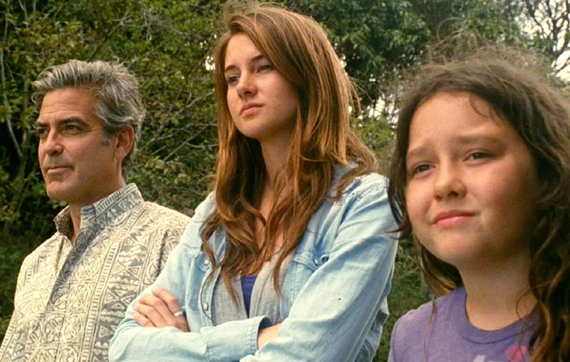
Each of The Descendants deals with grief in their own way
When we give our hero a challenge, we are essentially taking something important away from them. Whether we kill off their loved one, fire them from a job, or give them a crime to solve, we remove the comfort zone they were previously in.  It becomes their task to deal with it, and different characters will do it in different ways.

We’ve all seen heroes who, when initially approached for help, refuse the call to action. If they don’t believe in the cause – or in themselves – they deny the need to take up arms.  Soon, however, it becomes personal and they have no choice but to act.

During the course of the story, it’s satisfying to experience the same character arc as our protagonist. We identify with their anger and frustration when the villain is getting away with murder. We are right there with the hero, looking for solutions in our own mental bargaining table. We can appreciate how the heroine’s romantic slump causes her to eat a whole pint of Häagen-Dazs in one sitting.

However, in the last stage – acceptance – we discover a distinct difference between real life and fiction.  We’re not content for our heroes merely to accept the situation as it stands. We insist that they overcome.

In The Way, Martin Sheen takes up his late son's pilgrimage
Peter Protagonist can’t merely come to terms with someone stealing his idea and getting rich from it. Peter has to come up with an even better idea and ultimately steal the thunder back from his opponent.

Harriet Heroine cannot just learn to be at peace with college professors who fail her and cause her to drop out. She must rise from the ashes and become a superstar in her field, so she can throw it back in their face, as publicly and humiliatingly as possible.

When a young Bruce Wayne grows up to be a caped crusader who captures his parent’s murderer, that has a nice full circle feel to it. When the career of the tiger lady in Baby Boom goes bust after inheriting a child, we cheer all the more when the baby becomes the reason for her even greater business success. We love poetic justice.

Confronted by trouble, protagonists go the extra mile and turn into conquerors. When it looks like they’ll fail, make them prevail. That’s why we call them heroes.