Pages

Showing posts with label plot. Show all posts

November 27, 2012

What Drives a Story Forward?


On the cover of our November/December issue, you will find best-selling author Steven James, who is a master at storytelling.  In our feature article, Steven was most gracious in sharing his experience and expertise with our readers. Steven has also written this article below, which is so full of valuable advice that we wanted to run it today in Suite T.  Susan Reichert, Editor, Southern Writers Magazine. 


What Drives a Story Forward?
by Steven James
 
Over the years as I’ve taught at writers conferences throughout North America and abroad, I’ve found that too many people think of stories as a series of things that happen. But stories are much more than that.
At its heart, a story is about tension, and tension is created by unfulfilled desire. So the secret to writing a story that draws readers in and keeps them turning pages is to create more and more tension, not to make more and more things happen.
So plotting stories is not a process of asking what should happen next, but what would tighten the tension.
This shift in perspective will forever change how you shape and tell the stories that you write, whatever the genre.
Romance stories are not about romance, they are about romantic tension. As soon as the actual romance happens, it is the end of the story.
Action stories are not about action, they are about resolving problems. Once the conflict is resolved, the story is over. One exciting event happening after another does not make an intriguing action story. In fact, it gets boring unless the reader can see what is at stake, unless he can understand and identify with the unfulfilled desire of the main character.
Thrillers are not stories about scary things happening, they are about the promise of pain. Suspense happens between the promise of something dreadful happening and the actual event itself. So when writing suspense, the key is to include less action and more promises.
And then, as the story rises in escalation, to keep all the promises you’ve made.
So all of this means that as you write a story you’ll both save time and write better stories if you stop asking yourself, “What should happen?” and start asking, “How can I make things worse?” It also means that stories, at their essence, are neither character-driven nor plot-driven. All stories are tension-driven.
For example, you can write a fascinating description of a character or have thirty chase scenes in your novel, but after a while readers will grow tired of hearing about what the character is thinking or eating or wearing or doing if we do not know what their unfulfilled desire is. And we will get bored of seeing car chases unless we know what the people chasing (or being chased) want.
Readers need to know what the character wants.
Readers need to know where the action is leading.
So, stop asking yourself what should happen and focus instead on tightening the tension—on making things worse. Always come back to the unmet desire of the characters and you will create the tension that you need to drive your story forward and keep your readers coming back for more.
________________________________________________
Steven James is the critically acclaimed, bestselling author of more than thirty books including the award-winning thrillers The Rook, The Bishop and The Queen. His latest book, Placebo, introduces a new series, The Jevin Banks Experience.

Steven earned a Master's Degree in Storytelling from ETSU in 1997 and is an active member of International Thriller Writers, The Authors Guild, Mystery Writers of America, and International Association of Crime Writers.

October 23, 2012

Giving Them Pause


by Gary Fearon, Creative Director


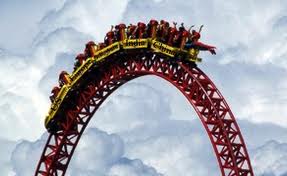
A good story is a roller coaster ride.  It takes readers through a series of twists and turns, saving the biggest thrill for last.  And, gravity being what it is, what goes up must come down.  It's not one continuous fast drop.  Indeed, the slow, steep inclines of anticipation can provide some of the biggest excitement.

Those ups and downs give a story its rhythm, much like breathing.  The action builds, then it lets up a bit, then builds again.  A story that builds and builds and never gives the reader a chance to catch their breath can be exhausting.  If the heart-pounding opening sequence of Raiders of the Lost Ark had  lasted for two hours without a break, brains would have melted.

An actual example of this (well, not the brain-melting part) is 2005's King Kong with Jack Black.  Fun movie with interesting variations on an old theme, but once they get to the jungle it's a nonstop series of action sequences.  The long prehistoric battles are exciting at first, but about the third or fourth one in, they lose their impact and even become tiresome because there isn't a quiet moment inbetween to remind us how amazing these scenes are.

We know that each scene in our story must further the plot, but we can accomplish this in a variety of ways besides continuous motion.  Sometimes the scene will be less about action and more about reaction; the result of what big thing just took place.  The bigger the thing, the more the audience will appreciate an opportunity to consider its implications.  Give them time to sort out the possibilities for themselves and you have a captive, involved audience.

After a scene with a car crash, the quietude of the patient lying in a hospital bed isn't just a natural aftermath, but a welcome opportunity to take a cleansing breath and ponder what the new developments will mean. 

Sometimes the pause itself provides the drama.  In the recent charmer Hope Springs with Meryl Streep and Tommy Lee Jones, a particularly important scene is followed by the lengthy closeup shot of a door, which, at that point, seems to last for an eternity.  As we look at the door we are filled with questions: 1) which door is this? 2) which of the two people will walk through it? 3) are they coming or going? 4) will the door even open? and 5) what are the ramifications of each of these scenarios?  It really is a brilliant and powerful silent story beat in its own right.

As a classic soft drink campaign once reminded us, it's the pause that refreshes.  Give your reader a chance to catch their breath before and after your roller coaster's big loops, and they'll stand in line to ride again.


August 28, 2012

That's What Friends Are For


by Gary Fearon, Creative Director


Ever since the dawn of the sitcom, writers have recognized the value of  a second banana. (Actually, it goes all the way back to Greek comedies, but I don't have photos of Lysistrata and Calonise, so let's go with Ed Norton.)

Audiences love a good friendship, and writers love them even more because it paves a ready path for:

1) Exposition
2) Plot Progression
3) Conflict
4) Mentoring

In a comedy, it's especially important to have a partner in crime, a foil even, to share the hero's dilemma, or even make it worse. A hero with no one to talk to doesn't reveal much.

Where would Andy have been without Barney?  Lucy without Ethel?  Those two examples epitomize two very classic chemistries: 1) The sensible protagonist with the wacky friend, and 2) The wacky protagonist with the sensible friend (although Ethel usually could be roped into any hare-brained scheme).

Quite often the supporting cast is also a rich field for mining memorable and very useful characters. The quirky neighbor is a particularly popular archetype. Bewitched and Three's Company were richly enhanced by the nosey Gladys Kravitz and the befuddled Mr Roper. Anyone who watched Newhart eagerly anticipated the appearance of bumpkins Larry, Darryl and Darryl, a contrast to Bob's button-down personality.  Indeed, contrast is a major component in the supporting casts of everything from The Beverly Hillbillies to Big Bang Theory.

Looking again at the Mertzes and the Nortons, neighbors have always been a staple of story. In more recent memory, Seinfeld's Kramer opened the door to at least momentary mayhem whenever he came bursting in, just as Lenny and Squiggy did on Laverne & Shirley.

Not that all neighbors are nuts. Sometimesas on Home Improvementthe guy next door is the voice of reason, even when the fence obscures his wise face.

Whether they are a harbinger of hassles for the hero, or just someone to reveal plot points to, a second banana or a supporting character with pizzazz has the potential to become a breakout personality  the audience comes to enjoy on a par with the hero himself.
 
We put a great deal of thought into our protagonist, making sure they have charisma and wit, are interesting and worth caring about.  Don't they deserve a good friend to hang out with?

Who are some of your favorite supporting characters?

May 8, 2012

Giving Them Grief


by Gary Fearon, Creative Director -

 
Many of us are familiar with the Five Stages of Grief, said to be the emotions we have to work through whenever we suffer a loss or other devastating blow.  They are:

  • Denial
  • Anger
  • Bargaining
  • Depression
  • Acceptance

We don’t always experience them in that order, nor are we necessarily visited by all of them. But this psychological observation is an excellent tool we can use to bring our characters to life.

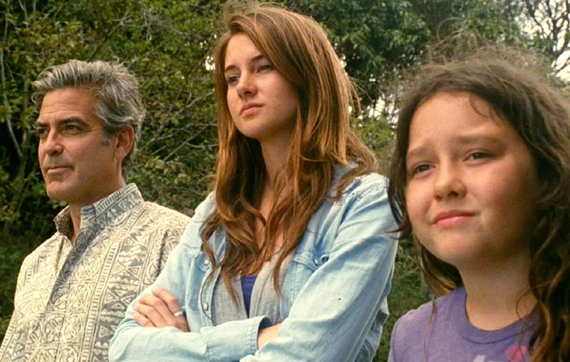
Each of The Descendants deals with grief in their own way
When we give our hero a challenge, we are essentially taking something important away from them. Whether we kill off their loved one, fire them from a job, or give them a crime to solve, we remove the comfort zone they were previously in.  It becomes their task to deal with it, and different characters will do it in different ways.

We’ve all seen heroes who, when initially approached for help, refuse the call to action. If they don’t believe in the cause – or in themselves – they deny the need to take up arms.  Soon, however, it becomes personal and they have no choice but to act.

During the course of the story, it’s satisfying to experience the same character arc as our protagonist. We identify with their anger and frustration when the villain is getting away with murder. We are right there with the hero, looking for solutions in our own mental bargaining table. We can appreciate how the heroine’s romantic slump causes her to eat a whole pint of Häagen-Dazs in one sitting.

However, in the last stage – acceptance – we discover a distinct difference between real life and fiction.  We’re not content for our heroes merely to accept the situation as it stands. We insist that they overcome.

In The Way, Martin Sheen takes up his late son's pilgrimage
Peter Protagonist can’t merely come to terms with someone stealing his idea and getting rich from it. Peter has to come up with an even better idea and ultimately steal the thunder back from his opponent.

Harriet Heroine cannot just learn to be at peace with college professors who fail her and cause her to drop out. She must rise from the ashes and become a superstar in her field, so she can throw it back in their face, as publicly and humiliatingly as possible.

When a young Bruce Wayne grows up to be a caped crusader who captures his parent’s murderer, that has a nice full circle feel to it. When the career of the tiger lady in Baby Boom goes bust after inheriting a child, we cheer all the more when the baby becomes the reason for her even greater business success. We love poetic justice.

Confronted by trouble, protagonists go the extra mile and turn into conquerors. When it looks like they’ll fail, make them prevail. That’s why we call them heroes.