Pages

March 17, 2022

Suite T Nostalgic Moment with Adriana Girolami


Adriana Girolami said, "I am a historical author and credit my inspirations to the haunting beauty of the old continent of Europe since I was born there. It helped me to create exciting story lines with the backdrop of splendid historical castles. Heroic knights with swords blazing and smoldering romances with beautiful damsels in distress exemplifies this period in history."


Here is her post from 2017


Friday, March 24, 2017

The Historical Connection

By Adriana Girolami


Generally speaking authors write historical books, since yesterday is already in the realm of history. Little difference exists in envisioning the Appian Way during the Roman Empire or a charming little town in America's heartland during the turn of the nineteenth century.

We are all products of our environments. In most cases authors favor writing about familiar places which stimulate and appeal to their imagination the most.

I am a historical author and credit my inspirations to the haunting beauty of the old continent of Europe since I was born there. It helped me to create exciting story lines with the backdrop of splendid historical castles. Heroic knights with swords blazing and smoldering romances with beautiful damsels in distress exemplifies this period in history.

However, the characters we create with such devotion seem to breed a life of their own. At times, they strongly resemble people we are familiar with, regardless of the chronological time in history.

I was surprised to notice one of my favorite characters in the Knights Templar Trilogy, Wilfred the Valiant, had a strong resemblance to my dear late father. His speech pattern was strongly akin to phrases and words my father used when he spoke to me. I guess I didn't realize how important those words were to me at the time. I treasured and saved them throughout the years in the recesses of my mind, until they came alive in the pages of my books. I realized now how important they were, and how deeply he had affected me. He was truly my Knight in shining armor.

It would be helpful for authors to revisit places they have known throughout their lives. Areas they loved or are just familiar with lend easily to creating storylines. I am certain that endless possibilities will sprout from it.

If memories linger throughout the years, those recollections likely are dear to us. In general, our characters are a composite of people we have known, as well as they bring parts of ourselves into the equation.

Since I love to travel, many of my characters were created while I was fortunate enough to visit palaces and castles throughout Europe. I could actually see them come alive with such clarity, that it even shocked me at times. It was a riveting experience as I relished the joy of being surrounded by the majesty of history still alive in the dust of time.

However, in today's world we don't have to travel very far to be connected with special, exotic places. Through the magic of the Internet we can now visit places in the world that people in the past could only dream about.

We are privileged to be part of this ever-changing world. It gives us the opportunity to explore and create. It helps us to benefit from our past, and create a myriad of storylines for the future. It is an honor for all of us to replenish the endless firmament of books, with creativity and beauty.

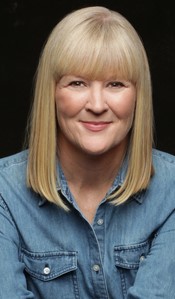

Adriana Girolami is an historical romance author. She was born in Rome, Italy and credits the ancient beauty of her native country for her love of history. She immigrated to the United States and attended The Art Students League in New York City. She is a professional portrait artist who loves to write and express her creativity not only with a brush, but also with the power of the written words. Her debut novel, Mysterious Templar, is now a trilogy followed by The Crimson Amulet and on March 1, 2017 Templar's Redemption will also be published. Being also an artist she particularly enjoys painting the covers for all her books. She loves to travel with her husband and has been privileged to visit many beautiful places in the world. Since her work is sedentary, she exercises faithfully, loves to jog, plays racquetball and has a black belt in Kenpo Karate. She always looks forward to a special tomorrow and writing her next exciting novel.

March 16, 2022

Suzanne Woods Fisher ~ I Love To Write!


                               Suzanne Fisher


WV STITCHER said of Suzanne Woods Fisher, “Fisher writes her characters like they are old friends, making me connect with them, hoping that their lives will work out for the best, and when I come to the end of a story, I find myself missing them, and hoping to see them again in another story.”

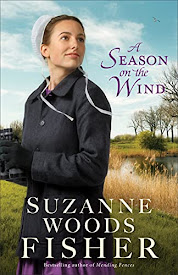
Suzanne Woods Fisher is an award-winning, bestselling author of more than 40 books, including The Sweet Life, The Moonlight School, and A Season on the Wind, as well as the Three Sisters Island, Nantucket Legacy, Amish Beginnings, The Bishop's Family, The Deacon's Family, and The Inn at Eagle Hill series. She is also the author of several nonfiction books about the Amish, including Amish Peace and Amish Proverbs. She lives in California.

The first book she wrote for Revell was non-fiction, Amish Peace for a Complicated World. It became a foundational book for her to write credibly about the Old Order Amish, to look beyond the bonnets, buggies and beards. That book became a ECPA Book of the Year finalist.

Her book, A Season on the Wind, released in October of 2021. With this book she welcomes her readers to the Amish community at Stoney Ridge in this engaging story of discovering just who the rare birds are in life.


Ben Zook had only two loves in his life: books and birds. In a stroke of good fortune, he'd stumbled onto a way to cobble together those two loves into a career, writing books about rare birds. He was as free as a bird--until a chase for a rare White-winged Tern takes him to the one place on earth he planned to never return: his Amish home in Stoney Ridge.

Desperate for photographs of the elusive tern, Ben hires a local field guide, Micah Weaver, and boards at Micah's farm, planning to "bag the bird" and leave Stoney Ridge before anyone recognizes him. But he neglected to plan for Micah's sister, Penny.

One long-ago summer, Penny had introduced Ben to birding, even sharing with him a hidden eagle aerie. That was when she knew true love. She'd always hoped he would come back to Stoney Ridge. Back to his Amish roots. Back to her. The only problem? Ben has absolutely no memory of Penny.


Here are a few of the praises she has received:


“Fisher has taken her research to the next level and brings to life the forgotten beginning of Quakers on Nantucket Island.” RT 4 1/2 STAR TOP PICK


“It’s so well written, and even though it’s labeled as a romance, it’s probably one of the most “real” fiction books that I’ve read.” RENEE, BLACK ‘N GOLD GIRL’S BOOK SPOT ON THE LESSON


“Fisher’s superb command of her historical setting is particularly commendable as she launches her Nantucket Legacy series.” BOOKLIST


“Fisher’s writing brings that Amish sense of peace into your own world. The Choice brings an entirely new perspective to the Amish way of life. You will love it!” KRISTIN BILLERBECK ON THE CHOICE


In May of 2022, Fisher's new book, The Sweet Life, Book #1 of her new series, Cape Cod Creamery releases. She welcomes her readers to a summer of sweet surprises on Cape Cod--a place where dreams just might come true.

You won't want to miss this exciting new story!

Learn more at www.suzannewoodsfisher.com and follow Suzanne on  Facebook@SuzanneWoodsFisherAuthor and Twitter @suzannewfisher

Photo Credit: © Dan Davis Photography

March 15, 2022

What is a Muse?


Ever wondered what a person’s muse is? If so, you might enjoy this definition.

A muse, (in the most basic sense) is a person who serves as an inspiration to an artist.

Now you may have known that, but did you know the word muse dates back to Greek mythology, with Zeus' daughters forming the nine Muses who presided over the arts and science?

For us, the muse is a spirit or source that inspires us to (write) create.

I once heard someone suggest that it was like daydreaming. I wonder!

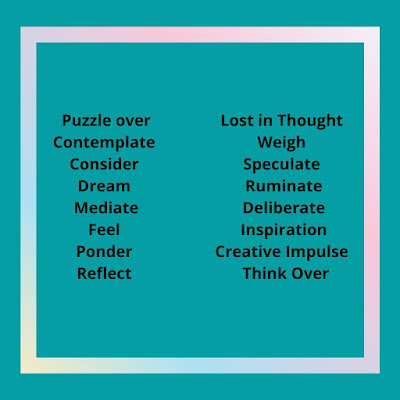
Here are some synonyms I found for muse. What do you think? Any of these represent how you see your muse?


These are just a few I found.

Our work would be dry and dead without inspiration just as inspiration without work would have no meaning. It is said our muse provides the ideas and energy, the fundamental fire for our work.

A muse can be anything. Anything that gives a spark to our creativity, such as a person, place, or object. Even your natural creativity.

I like the archaic definition of muse: Wonder and Marvel.


Do one or more of these represent your muse?


March 14, 2022

Master of Suspense


Lynette Eason


Lynette Eason is considered a Master of Suspense. Her books are truly riveting. Her books have power to grab our attention and keep us in the palm of her hand through the entire book. I am always sorry when I finish reading the book. I just want it to continue.


Here are some words of praise for her previous novels:

Eason remains a force in action-packed inspirational fiction with

this excellently paced, heartening tale.”

—Publishers Weekly, on Collateral Damage


“[Lynette Eason] will take you on a rocket ride with snappy

dialogue, where the good guys win and the bad guys get what’s

coming to them. As a reader of Lynette’s work, you get the sense

that God is active in the world and wants to see justice done.”

—Library Journal, on Acceptable Risk


“Eason is a master of inspirational romantic suspense, and she takes

readers on another wild ride in her latest entry in the Danger Never

Sleeps series.”

—Booklist, on Active Defense


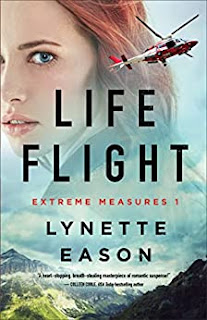
In January she released Life Flight (Extreme Measures Book #1). "A heart-stopping, breath-stealing masterpiece of romantic suspense!"-- Colleen Coble, USA Today bestselling author.

Truly another high-octane tale of close calls, narrow escapes, and the fight to bring a nefarious criminal to justice.

Eason has definitely reached new heights of intrigue and suspense.

Here is a description:


EMS helicopter pilot Penny Carlton is used to high stress situations, but being forced to land on a mountain in a raging storm with a critical patient--and a serial killer on the loose--tests her skills and her nerve to the limit. She survives with FBI Special Agent Holt Satterfield's help. But she's not out of the woods yet.

In the ensuing days, Penny finds herself under attack. And when news reaches Holt that he may not have gotten his man after all, it will take all he and Penny have to catch a killer--before he catches one of them.


I was hooked after reading the first page all the way through.


Look for her new book CROSSFIRE in August, 2022.


Lynette Eason is the bestselling author of Life Flight and the Danger Never Sleeps, Blue Justice, Women of Justice, Deadly Reunions, Hidden Identity, and Elite Guardians series. She is the winner of three ACFW Carol Awards, the Selah Award, and the Inspirational Reader’s Choice Award, among others. She is a graduate of the University of South Carolina and has a master’s degree in education from Converse College. Eason lives in South Carolina with her husband and two children. Learn more at

www.lynetteeason.com.

And visit her:


March 11, 2022

Today!


 It's nice to know the impossible is waiting for us to achieve!

March 10, 2022

I’ll Take My Poetry Medium and Rare

Sara M. Robinson


Recently I read an article in Poetry magazine about the use of “medium” in art and in language. The author of the essay was a longtime favorite poet and essayist of mine, James Longenbach. He also writes books about the craft of writing which I also study.

Visual artists define medium as the materials and the template, such as oils and canvas. Or the medium can be watercolors on gypsum board, or inks or pillows. The artist uses various mediums to connect with his/her world. But what about the sheet of paper as the medium? How does the reader embrace the writer with pen and paper? And what if the poet uses another medium, such as a canvas, or tree bark, or chalkboard?

Most writers stick to the usual, everyday paper. But every so often we encounter a novel poet, who experiments with other mediums. Why do we care? Well, first the writer cum artist is offering a transaction for us to consider. We are given a challenge to step out of our comfort space and engage in something different, if not new.

Longenbach asks, “how can art be something made of words, the same words used for newspapers and parking tickets?” Well, for starters, written art always depends on language. That is what all this comes down to: Language. For most of us, English language. The subject of the evolution of English language is interesting and much too long and complicated to write here, but with our language we do have some interesting developments in its evolution. Again, Longenbach gives us this great example: “Even today, we raise pigs and cows (from German, via Old English), but eat pork and beef (from Latin, via French). And there are many others!

But as perplexing as language and words derived from other languages, poetry goes right back to the creativity of the line with its novel use of simile and metaphors. Here is a line of Keats: “sudden from heaven, a weeping cloud…”. And one of mine: “It’s like sunburn & blisters. Underneath / skin abrasions/invasions/insults there is / the beauty of a person.” We elevate inanimate objects to a higher status.


Until next time…


Sara M. Robinson, founder of the Lonesome Mountain Pro(s)e Writers’ Workshop, and former Instructor of a course on Contemporary American Poets at UVA-OLLI, was poetry columnist for Southern Writers Magazine and inagural poetry editor for Virginia Literary Journal. She has served as guest lecturer at UVA’s College at Wise, Wise, VA. Her poetry has appeared in various anthologies, including We Grew Wings and Flew (2014), Scratching Against the Fabric (2015), Virginia Writer’s Club Centennial Anthology (2017), Blue Ridge Anthologies and Mizmor Anthology (2018). Journals include: Loch Raven Review, The Virginia Literary Journal, vox poetica, Jimson Weed, Whisky Advocate, and Poetica. She is poet and author of Love Always, Hobby and Jessie (2009), Two Little Girls in a Wading Pool (2012), A Cruise in Rare Waters (2013 Stones for Words (2014), Sometimes the Little Town (2016), a finalist for the Poetry Society of Virginia’s 2017 Book Award. In 2019, Needville, her poetry about effects of coal mining on SW Virginia was released and in 2020 debuted as play in Charlottesville. Her most recent publication is Simple River (2020, Cyberwit).


https://saramrobinson.com/

March 9, 2022

Lucy Merrill ~ My Personal Everest


Lucy Merrill


Mount Everest, at more than 29,000 feet the tallest mountain in the world, is majestic, serene, harsh, and forbidding.

While most people are content to enjoy the mountain’s beauty in photos and films, a small, but growing, number see in its splendor the ultimate challenge. As one of the two men credited with first summiting Everest famously said, when asked why he wanted to climb the eminence, “Because it’s there.”

I wanted to conquer my personal Everest for the opposite reason—it wasn’t there.

I wanted to write a novel and offer it to the world. I wanted to be an author. That was my impossible dream. My Everest.

I recently reached the summit. I had a lot to learn and, frankly, the odds weren’t always in my favor. But now I know much more about the process, and a bit more about myself.

There are many challenges for the mountaineer setting out to make it to the top of so formidable a peak. So, too, for the writer (although with less drastic consequences for missteps).

Here are a few of the dangers:


Lack of experience. Novices shouldn’t try to scale Mount Everest. Start smaller, y’all. For writers, that doesn’t mean you have to crank out numerous short stories before getting to that novel you want to write. But it does mean you’re going to make mistakes. A lot of them. Find good critique partners or a reliable—and brutally honest—friend to evaluate your work. Take their feedback seriously, even if you decide not to make changes they suggest.

Don’t worry if your manuscript gets roughed up in the process. It’s for its own good. Resolve to make it better. And remember, most successful novelists have an early work stowed in a desk drawer or computer file, unseen by readers’ eyes. Almost nobody gets it right on the first try.


Other climbers. Believe it or not, overcrowding at the early stages of an Everest expedition is one of the biggest problems for climbers. There is a place at the bottom of the famous Hillary Step that can be traversed by only one climber at a time. The rest are waiting in a long, long line, subjected to extremely cold temperatures, and dwindling stamina.

Overcrowding of the book market can be a problem once you have your manuscript finished and even when published. But there are different other-people problems for the aspiring novelist.

There are people who belittle your efforts. “Why are you wasting time on that? Nobody will buy it.” Or the opposite problem. Those who expect a runaway bestseller or the next Pulitzer Prize winner when your highest ambition is to publish a diverting beach read.

Then there are those best-selling authors or award winners. They can inspire an inner voice that says, “I can’t write like that.” Of course, you can’t. You can only write like you. (I once read a Flannery O’Connor short story and was discouraged from writing for months afterward.)

Ignore all these voices. Their chilling effect on your creativity is as debilitating as a Himalayan wind.


Oxygen deprivation. The atmosphere thins out as the elevation increases. The higher you climb, the more the danger from lack of oxygen. You need oxygen to survive, of course, but the peril is yet more insidious. Climbers must be in tip-top shape, physically and mentally, and a low oxygen supply can deprive them of the ability to think clearly and anticipate or work through problems. Avoidable situations can become deadly ones.

Writers are in danger of oxygen deprivation at any altitude, but particularly when starting out. For us, low O2 can come from not trading thoughts, ideas, and encouragement with other writers and readers, and not actively juicing creativity. But the major cause of dream-killing oxygen deprivation is simply not writing. If you want to write a book, write a book. There’s no magic.


Summit fever. The opposite of lower-level oxygen deprivation may be high-altitude, almost-there giddiness that leads to a rush to the finish. For climbers, summit fever can be especially deadly, as they shed their careful plans to power-through and get to the top. For writers, as “The End” comes oh-so-close, craft and skill may fall away in a rush to complete the project.

It also hits after “The End” has been typed. Rushing a manuscript into print is a mistake. Proofreading and editing take time, but they should not be seen as optional steps. Summit fever can deprive you of the best-it-can-be work that you can be proud of.


Crevasses. Glacial ice on the slopes of Mount Everest is subject to cracking, and a yawning chasm can open up, ready to swallow up even a wary trekker. Hidden by snow and ice, crevasses are a serious danger to climbers. Teams rope themselves together to save anyone who falls into one.

For me on my personal Everest expedition, small cracks in self-confidence readily opened into deep, dark, cold crevasses of self-doubt that echo with voices of derision. “You can’t do it. It’s too hard. You’re not good enough.”

Don’t listen to the crevasse. It lies. Make sure you are roped together with Commitment, Effort, and Enthusiasm. They’ll pull you out of any crevasse.


The key to tackling Everest, just like any long journey, is to focus on today. Doing what you can and as much as you can right now. One step, then another and another.

Unlike mountaineers, writers never need to turn back. A project may change. An outline may evolve. But if you keep climbing, you will reach the summit.


Lucy Merrill has amateur detective Nancy Drew to thank for her lifelong love of mystery stories and the budding hope of becoming a writer. After years of writing newspaper and magazine feature stories, she finally fulfilled that childhood ambition and penned a mystery.

Lucy lives in Alabama with a tolerant husband and reads too much and does housework too little. Her first novel, Crazy Red Moon, a cozy mystery set in the 1950s, is currently available on Amazon.

She is on Facebook at https://www.facebook.com/lucy.merrill.author and Goodreads at https://www.goodreads.com/lucymerrill.


March 8, 2022

Nostalgic Moment with Natalie Walters


Wednesday, March 6, 2019

Setting Your Characters Up

By Natalie Walters, Author of Living Lies

If you’re a reader or writer, then you probably know the importance of setting. Where the story takes place can have a direct impact on the character’s journey. It can become the character’s enemy: Titanic, Deep Water Horizon, Twister. It can force the character to change: Sweet Home Alabama, Made in Manhattan. Or, it can become the character’s ally: Die Hard, the Nakatomi Plaze became John McClane’s ally as he wreaked havoc on the terrorists and Willy Wonka used the Chocolate Factory to help him find a child of noble character.

Settings have the power to become a character. And they should. When I began writing Living Lies, I didn’t really have a setting in mind until we moved to the coastal Georgia area near Savannah and I began to imagine how I could use my new surroundings as an antagonist.

In Living Lies, I have a character, Miguel Roa, who is a Vietnam veteran and lives among the dense Live Oaks along the river. Unstable after his return home from war, he becomes a recluse and has blackouts that force him to relive the terror of his past. Talking with my uncles (three of them served in Vietnam) and watching documentaries, it was easy to imagine how the swampy marshland, tucked deep beneath the gnarly limbs of giant Live Oaks layered in long boughs of Spanish moss, might bring back the memories of a land not so different. And so,I used it. I used the setting to haunt my character back into his past.

Here are three questions to consider regarding your current project:

1. How does my setting affect my plot?
2. Am I describing my setting enough my readers get a good feeling of place?
3. Where can I use my setting to increase tensions in my story?


As writers, we have a fabulous opportunity to create a setting that can challenge, terrorize, define, or manipulate characters. We can deepen the experience readers have in our books by helping them visualize and experience the setting through description and deep point of view.

In Living Lies, this meant being able to describe Savannah and the Live Oaks—visually but also experientially. I had to describe the giant, mossy trees and convey their earthy scent. I had to capture the essence of a small town in the south and use it to the advantage of the plot.

I urge you to consider how setting plays into the books you read, the movies you watch, and even in your own life! The next time you’re walking through the decrepit hallways of an old prison (I’ve done this twice), or hunkering down with your family as tear gas and bullets fill the air around you (true story), or canceling your sister’s bachelorette party due to warnings of an impending tsunami (true again), take notes on how you can use your setting to immerse your characters and your readers into a story they’ll never forget.


Natalie Walters newest book releases May 3, 2022. This is book
2 in the Snap Agency series.


Natalie's world revolves around GIJOE and our three adult (or almost adult) children who keep my life anything but predictable. Our boots hit the ground wherever the Army sends us but home is when we’re all together no matter the zipcode. My passion is writing stories where adventure meets love and share my belief that life rooted in purpose is a story worth telling.

She writes full-time and has been published in Proverbs 31 magazine and has blogged for Guideposts online. In addition to balancing life as a military spouse, mom, and writer, she loves connecting on social media, sharing her love of books, cooking, and traveling. Natalie comes from a long line of military and law enforcement veterans and is passionate about supporting them through volunteer work, races, and writing stories that affirm no one is defined by their past.


March 7, 2022

Meet Ava Miles


Meet Ava Miles


Millions of readers have discovered International Bestselling Author Ava Miles and her powerful fiction and non-fiction books about love, happiness, and transformation. Her novels have received praise and accolades from USA Today, Publisher's Weekly, and Women's World Magazine in addition to being chosen as Best Books of the Year and Top Editor's picks. However, Ava's strongest praise comes directly from her readers, who call her books life changing.

Ava combines her real-life experiences and passions into her books. In her former career rebuilding warzones, she worked in places like Lebanon, Colombia, and Congo to foster peaceful and prosperous communities. As an artist and former chef, she invites others to celebrate human expression and feed their souls. As a life coach, wellness expert, and energy healer, she helps people transform their lives. And as part of her focus on healing and wellness, she formulates natural products designed to enhance everyone’s radiant beauty and health.

The desire to help people on more than a one-on-one basis led Ava to expand her reach through books. Still, everything she shares is inviting and intimate. Ava’s readers often mention feeling connected to a greater community, and in some cases, infinite love, inspiring them to believe in the impossible and live their best life.


Her newest book, Through Crimson Irish Light, (The Unexpected Prince Charming Series Book 3) releases March 14, 2022.

If you'd like to connect with Ava or hear more about her upcoming books, check out the links below:

Sign up for Ava's newsletter at www.avamiles.com/newsletter/

Join Ava on Faceboook at www.facebook.com/authoravamiles

Follow Ava on twitter at www.twitter.com/authoravamiles

Visit Ava's website at www.avamiles.com

Goodreads: www.goodreads.com/author/show/7133520.Ava_Miles

March 3, 2022

A Gift That Keeps On Giving


                               Melody Carlson


I always loved writing as a child and young adult, but never dreamed I could ever be a published author. Wasn’t that for someone more qualified, dignified . . . someone in a tweedy jacket with leather elbow patches and a sweet-smelling pipe? Despite encouragement from teachers who even called me a ‘gifted writer,’ and some early ‘successes’ in writing, I never considered myself a real writer. And yet I continued to write. A love of words and storytelling seemed to drive me. Whether it was journaling, corresponding, creating a PTA newsletter, or sending an opinion piece to the newspaper, I was always writing. Was it a gift?


Eventually, a deep burning desire to seriously write took over, and I joined a writers’ critique group. In my spare time, I began to pen (with a real pen and a yellow legal pad) a novel. I soon moved up to an electronic typewriter and, later on, a DOS word processing computer—weren’t those the days? But early in the game, probably due to my overly packed schedule, I discovered I could write fast. Was that a good thing, a bad thing, or maybe even a gift?


Before long, I’d completed half a dozen novels for tweens, teens, and women. My writing time, while working and raising kids, was sparse, but every chance I got I was hammering out a new story. I also spent a fair amount of time (and money) copying and mailing out manuscripts. That was back in the days before internet. And, no kidding, I received enough rejection letters to wallpaper my bathroom! I still have a boxful of them somewhere—they definitely didn’t feel like a gift!


But something finally clicked, and I began to receive book contracts instead of rejections. That was more than 250 books and nearly thirty years ago and yet, today, I’m just as amazed as ever. I still wonder how this all happened. But I’m grateful for it—and I was eventually able to admit that writing, for me, was a gift.


One of the things I love most about writing is that I can never conquer it. I had a number of other diverse occupations before becoming a fulltime writer, but I’d quickly become proficient in those jobs. In other words, they felt conquerable to me. The learning curve would fade, the challenge would flee, and a job I’d enjoyed would become boring. Not so with writing. I could work hard, study the craft diligently, and practice daily, but there was always something new to learn. And since I love to learn, it’s been like a gift to me.


I love knowing that I’ll never be the best writer! It forces me to keep going, keep chasing the story, keep developing new characters, keep digging deeper, and best of all keep learning. Lately I’ve been studying up on screenplay writing and adaptation. I love the idea of getting stories into film. I’ve got a number of projects in the works and even had a Hallmark movie in 2019. And an adaptation (The Happy Camper) in production stages now. That really feels like a gift!


I’ve already adapted my newest book, Looking for Leroy, into a script and think it would be a fun film. It’s a road-trip story about Brynna Phillips—a woman who’s had some disappointments and in need of a second chance at life and love. While Brynna and her friend Jan camp their way from Oregon to California, Jan challenges Brynna to seek out an old high-school beau who might live in Sonoma County. But all Bryanna can remember is that 1) his first name is Leroy, 2) he was a very special guy, and 3) his family owned a vineyard in Sonoma. But that was three decades ago! Meanwhile Leroy has challenges of his own. A widower who’s raised three strong-willed daughters and trying to recover his vineyard from wildfires and a bad economy, is experiencing some middle-aged loneliness.


When Leroy’s and Brynna’s worlds collide, it gets interesting . . . and dicey. But it also provides a fun romp through a gorgeous old-world vineyard! When I wrote this story, during Covid, I got to travel vicariously with these characters as well as learn a bit about vineyards and wineries. What a fun excursion that I hope readers will enjoy as well! And that little getaway is just one more gift that comes with writing—and why I’ll probably never give it up!


Melody Carlson is the award-winning author of over two hundred books with sales
of more than seven million, including many bestselling Christmas novellas, young
adult titles, and contemporary romances. She received a Romantic Times Career
Achievement Award in the inspirational market for her many books,
including Finding Alice, and her novel All Summer Long was made into a Hallmark
movie. She and her husband live in central Oregon. 

Learn more at
www.MelodyCarlson.com.

March 2, 2022

Reaching Into the Past

p.m.terrell


I have often heard that no experience is ever lost on a writer. This is true not only for current events but also for our memories. If we were lucky enough to have older generations share their memories with us, we harbor those images within ourselves because they, too, may have made us who we are.


A chance conversation recently took me back to the 1971 Mississippi Delta. A family member mentioned legislation that is now before the Supreme Court, and my life flashed back in an instant.


My father is a former FBI Agent. In 1967 amid the Vietnam War and Civil Rights Movement, he was transferred from the New York office to the Mississippi Delta. He was the Senior Agent in Charge (SAC) of the Greenville office, the largest field office outside Washington, DC. It was a tumultuous time, and as I began writing my latest book set against that backdrop, I realized how much this country had changed and yet, how much had remained the same.


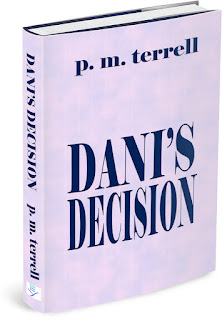
I avoided controversial subjects throughout most of my writing career, recognizing my readers probably fell on both sides of an issue. After that chance conversation, I could not shake the idea of writing a fictional story about the attack of a young woman in 1971 Mississippi who discovered she was pregnant with the assailant’s child. The book was meant to show the options—and lack thereof—that were available to a young woman facing an uncertain future and society’s judgment. Seventeen-year-old Dani had her entire life planned out, or so she thought; she was engaged, graduating from high school, and embarking on a journalism career and college. Everything changes one fateful night when she is attacked in her own home by a stranger.


In writing about 1971 Mississippi, I encountered many of the issues still being fought and debated today: women’s reproductive rights, class systems, racial inequality, unpopular wars, and misogyny.


Here are a few tips for writing about the past:


(1) Choose an era with conflict. There are reasons why authors set some of their greatest works against times of war, such as Doctor Zhivago, War and Peace, Gone with the Wind, and others. There are other types of conflict, such as the suffrage movement, civil rights, the rise of unions, and the settling of the west.

(2) Find hope in the chaos. Readers seek inspiration, particularly in dark or troubled times. Even amid war, love can be found. In times of hardship, there are success stories. During times of economic depression, someone is rising to the top. The tougher the climb, the sweeter the victory.

(3) Weave historical facts into the storyline. Selecting a time of historical significance and then weaving parts of that history through the plot lends authenticity to your story. Readers may recognize the backdrop and empathize more strongly with certain characters if they are recent events, but even those from centuries past can evoke strong emotion. Check your facts carefully; your credibility could suffer if you get them wrong.

(4) Make the story personal. I’m sure some of us dozed through at least one history class. The likely reason is we were not connecting to the facts and figures. When you introduce characters we love or hate into the historical backdrop, readers become invested in what happens to them. It’s what made Michael Shaara’s and Jeff Shaara’s historical books bestsellers.

(5) Don’t preach. Allow your characters to tell the story through their actions and their challenges. To this day, we instinctively know the nature of an Uncle Tom, Simon Legree, Scrooge or Hannibal Lector. In my book, Dani’s Decision, I remained on a thin line, never leaning too far in one direction or another as Dani contemplated her future. It fascinates me that the ending differs in the readers’ minds depending upon their own beliefs and morals. I had never before written a book with such unexpected and varied reactions.


And sometimes, reading a book in a different era tells us that we will be all right. The world survived past plagues, wars, and seemingly insurmountable challenges. We know we will prevail again, and we will flourish again. There is always hope amid the chaos.


p.m.terrell is the internationally acclaimed, award-winning author of more than twenty-five books, including historical fiction, creative nonfiction, and contemporary suspense. She is the co-founder of the Book ‘Em Foundation and founder of the annual North Carolina Book ‘Em Writers Conference and Book Fair. Both raise awareness of the correlation between high illiteracy rates and high crime rates and raise money to promote and increase literacy. She divides her time between North Carolina and her ancestral home in Ireland. She is an avid supporter of animal rights and has welcomed seven rescue dogs into her family.


Website: https://pmterrell.com/


Facebook: pmterrell.author

Twitter: @pmterrell

Amazon: https://www.amazon.com/P.-M.-Terrell/e/B001JOXFXK


March 1, 2022

Telling Myself Stories

  
                                                                                      Lynn H. Blackburn


I’ve been telling myself stories for as long as I can remember. I would go to bed and instead of falling asleep, I spun fantastic adventures where I was the heroine. No matter what role I cast myself in I was always smart, beautiful, popular, and brave. Sometimes I was a princess. Sometimes I was a maid. Sometimes I was a scholar. But most of the time I was a spy.


There was one long-running mental adventure where I was the leader of a group of teenage spies. I spoke multiple languages, had a black belt in karate, and was sent undercover to do everything from thwarting nuclear attacks (hey, it was the 80s!) to rescuing hostages. Since I was a teenager, I still had to go to school, but only a select few knew that the girl sitting next to them in Chemistry or Geometry might be called upon at any moment to, quite literally, save the world.


While my internal story-telling drive was strong, the idea of writing those stories down never occurred to me. I didn’t have any desire to write unless it was necessary for an assignment.


I went on to college and studied Chemical Engineering where the only writing I did was for lab reports and technical documents. I graduated, married, and started my career. And through all of this, the stories in my head never went away. They had altered as I matured, but the idea of special agents and intrigue remained a regular thread.


Then one day I was reading an article about an author that I enjoy, and she made the statement that “she’d told herself stories for years” and her writing was the natural outcome. And I thought about my own stories, and about the thousands of books I’d read over the years, and wondered how hard could it really be to write a book out of one of my stories?


Looking back, I believe God was protecting me because if I’d had any idea just how hard it would be, I might not have ever given it a go. As it was, when I sat down on a Sunday evening in March 2009 and began to put the story on paper, I realized after just a few paragraphs that I had no idea how to format dialogue and had to grab a book from my shelf to see how to do it!


Six months later I had a 110,000-word novel. That novel, incidentally, has never been published, but it was the first step toward a writing career that I, even with my wildly active imagination, had never dreamed of.


I sold my first book in 2014 and have been privileged to continue to write and publish since then. It’s no surprise to me that my stories involve brave, smart, heroines who have a tight group of friends around them. It’s also no shock that despite my best efforts (really, I tried!) to write romance without suspense, inevitably my characters would insist on being undercover agents. I stopped fighting it and dove into the romantic suspense genre with joy.


That first book I wrote in 2009 was so easy to write. I had no expectations, no plans for publication, no deadlines. These days my writing experience has a different flavor. There are many days when it is hard work. There are deadlines and genre expectations to be met, there are readers to satisfy and publishers to please. But there are also days when my fingers can’t type fast enough to keep up with the flow of the story in my head, when words are pouring out of me, and the entire process is pure delight.


I’ve learned to lean into both the hard days and the easy days. To trust that the hard days won’t last forever, and the easy days will return, usually when I least expect them. And I’m learning to trust the parts of my writing process that don’t have anything to do with the actual writing.


I’ve found that I need to take in a lot of information about whatever topic I’m writing about, because my brain will use it at some point in the creative process. One of the ways I’ve done that with my current series is that I listen to a podcast from the U.S. Secret Service. That podcast is where I first learned about ransomware, which is an integral component to the suspense plot of my latest book, Malicious Intent.


Ransomware is a malicious software that is used to block access to computers systems until a ransom is paid. Once paid, the “bad actors” who launched the ransomware attack will provide a code that allows the company to access their system again. It’s a huge issue in the United States and around the world and is one that both the U.S. Secret Service and FBI spend countless hours investigating.


In Malicious Intent, Dr. Ivy Collins, founder and CEO of Hedera, Inc., is ready to begin clinical trials of her company's cutting-edge prosthetic. Her work has been heralded by government, medical, and advocacy groups and everyone hopes the device will be a success. But someone is determined to destroy her business and her life’s work. Which is where U.S. Secret Service Special Agent Gil Dixon comes in. Gil and Ivy were childhood best friends and they’ve only recently been reunited. Now that Gil has found Ivy again, he intends to spend the rest of his life with her. But it will take all his skill to uncover the truth in time to save Ivy's life's work, her own life, and the innocent lives caught in the crossfire.


Malicious Intent has everything my teenage self would have loved. A smart, brave, beautiful heroine. A strong, intelligent, handsome hero (who can cook!). A group of friends who have their back. Danger at every turn. And a happily ever guaranteed.


My adult self is amazed that she gets to turn the stories in her head into books. She is blessed.


Lynn H. Blackburn is the award-winning author of Unknown Threat and the DiveTeam Investigations series. She believes in the power of stories, especially those that
remind us that true love exists, a gift from the Truest Love. Blackburn is passionate
about CrossFit, coffee, and chocolate (don’t make her choose) and experimenting with
recipes that feed both body and soul. She lives in Simpsonville, South Carolina, with
her true love, Brian, and their three children. 

Learn more at LynnHBlackburn.com.