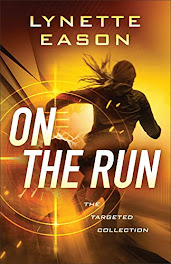
A stalker who wants to finish what he started. A US Marshal who's vowed to protect his charge. And one woman who is determined to put the past in the past.
Flight paramedic Raina Price has been running so long it's hard to stop. To escape a dangerous stalker, she changed her name and disappeared, building a new life with the help of a friend from her time in juvie. It feels good to put her energies into saving people's lives, but because her stalker was never found, she's never stopped looking over her shoulder. And one can only run so far before the past finally catches up.
US Marshal Vincent Corelli's job is to hunt down fugitives and protect those who are assigned to him. When Raina is almost killed right in front of him, he vows to protect her at all costs--whether it's his job or not. Together they work to solve the mystery of Raina's past. But someone is out to make sure Raina doesn't live long enough to do it.
Countdown is the breathless conclusion to USA Today bestselling author Lynette Eason's thrilling Extreme Measures series.
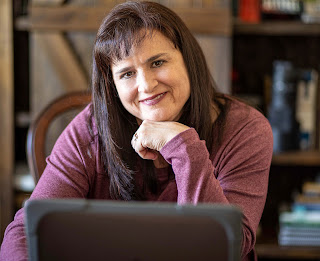
Award-winning, best-selling author, Lynette Eason writes for Harlequin's Love Inspired Suspense line and for Revell, a division of Baker Publishing Group. Her books have hit the Publisher's Weekly, CBA and ECPA bestseller lists and have won numerous awards such as the prestigious Carol Award, the Selah, the Daphne, the IRCC award and more. Lynette is married, has two children, and lives in Greenville, SC.
She's worked hard to distance herself from her father's legacy--but family ties are hard to break
When FBI Agent Daria Nevsky returns home to an intruder, she's not exactly surprised. She's been on high alert ever since her father, a powerful figure in Russian organized crime, was killed. She is surprised, however, when the man in a ski mask and hoodie tells her that her father sent him.
Dr. Ryker Donahue knows he's heard the name Daria Nevsky before. As he tends to the young woman's wounds, he tries to put the pieces together. No sooner does she show up at his hospital than it becomes painfully clear that whoever she is, she's in trouble. He feels a strong pull to protect her--but he quickly realizes that this is a woman who knows how to handle herself.
It will take both of them--and a handful of their skilled friends--to figure out who's after her, what they really want, and how to make it out alive.
Award-winning, best-selling author, Lynette Eason writes for Harlequin's Love Inspired Suspense line and for Revell, a division of Baker Publishing Group. Her books have hit the Publisher's Weekly, CBA and ECPA bestseller lists and have won numerous awards such as the prestigious Carol Award, the Selah, the Daphne, the IRCC award and more. Lynette is married, has two children, and lives in Greenville, SC.
Lynette Eason is considered a Master of Suspense. Her books are truly riveting. Her books have power to grab our attention and keep us in the palm of her hand through the entire book. I am always sorry when I finish reading the book. I just want it to continue.
Here are some words of praise for her previous novels: Eason remains a force in action-packed inspirational fiction with
this excellently paced, heartening tale.”
—Publishers Weekly, on Collateral Damage
“[Lynette Eason] will take you on a rocket ride with snappy
dialogue, where the good guys win and the bad guys get what’s
coming to them. As a reader of Lynette’s work, you get the sense
that God is active in the world and wants to see justice done.”
—Library Journal, on Acceptable Risk
“Eason is a master of inspirational romantic suspense, and she takes
readers on another wild ride in her latest entry in the Danger Never
Sleeps series.”
—Booklist, on Active Defense
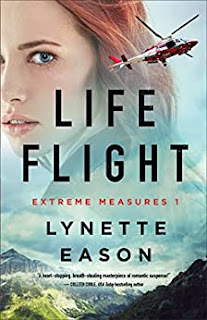
In January she released Life Flight (Extreme Measures Book #1). "A heart-stopping, breath-stealing masterpiece of romantic suspense!"-- Colleen Coble, USA Today bestselling author.
Truly another high-octane tale of close calls, narrow escapes, and the fight to bring a nefarious criminal to justice.
Eason has definitely reached new heights of intrigue and suspense.
Here is a description:
EMS helicopter pilot Penny Carlton is used to high stress situations, but being forced to land on a mountain in a raging storm with a critical patient--and a serial killer on the loose--tests her skills and her nerve to the limit. She survives with FBI Special Agent Holt Satterfield's help. But she's not out of the woods yet.
In the ensuing days, Penny finds herself under attack. And when news reaches Holt that he may not have gotten his man after all, it will take all he and Penny have to catch a killer--before he catches one of them.
I was hooked after reading the first page all the way through.
Look for her new book CROSSFIRE in August, 2022.
Lynette Eason is the bestselling author of Life Flight and the Danger Never Sleeps, Blue Justice, Women of Justice, Deadly Reunions, Hidden Identity, and Elite Guardians series. She is the winner of three ACFW Carol Awards, the Selah Award, and the Inspirational Reader’s Choice Award, among others. She is a graduate of the University of South Carolina and has a master’s degree in education from Converse College. Eason lives in South Carolina with her husband and two children. Learn more at www.lynetteeason.com.
Hi everyone, I want to say thanks for stopping by the Suite T blog. I’m honored to be posting today, so thanks for reading. I get asked a lot about how I got into writing and let’s just say it was a gradual process. I’d always been good at essays in school, and I’d much rather complete an essay test than a multiple choice one, so there was that. But believe it or not, I started writing fiction out of loneliness. Yep, I was lonely, so I decided to talk to the voices in my head! Ha. There’s a writer t-shirt out there that says, “You know you’re a writer when: You’d rather talk to the voices in your head than the person next to you.”
It's a joke, but it’s true, nonetheless. When I was first married (December 1996), my husband traveled a lot with his job. That meant I was home alone with time on my hands. I was a voracious reader and devoured books. And, I’ll admit, there were some stories that had me wanting. . .more. I’d think, “I wouldn’t have ended it that way, I would have done. . .such and so. . .etc.” Any time I mentioned that to my friends and fellow book nerds, they would say, “You should write a book!” So, with all this time on my hands, you would think that this would be when I started writing, but nope. I waited until my daughter (born in 1998) was about nine months old before I thought, “Hey, I should try this writing a book thing.”
So, that’s what I did. One thing led to another and about eight years later, I found myself with a book contract. I’m laughing because that makes it sound easy but let me assure you that in between those eight years, I worked hard. I attended conferences where I learned from those who were years ahead of me in the process, invested in a few writing books, found a local community of writers who were willing to give me feedback and critiques, and more.
Like I said, it was hard work. So, why didn’t I give up? Well, I have to be honest, I thought about it a few times. And there were even times, months, that I didn’t give writing a thought. I added a second child into the mix of things in 2001 and truly, some days, there just weren’t enough hours to get it all done-much less devoting any amount of time to writing about a made-up world and with made up characters. It was all I could do to keep control of my current reality. Ha. But writing was something that I found myself drawn to. I’d forget about it for a while, then when I had time, I would return to the story world, delving into things like setting, point of view, characters, and plot.
In 2002, I attended my first writing conference. My mother came to keep my children who were 4 and 18 months at the time (God bless her!) and allowed me to have 4.5 days of nothing but learning the craft of writing. After that conference, I was addicted. I couldn’t get enough of it. I was fascinated that I could create a world, a whole cast of people—and make them do what I wanted them to do. It’s a real control freak playground. LOL! Honestly, I looked at writing like a puzzle. All I had to do was find the right piece, the right place and put it there. It was the same with writing. I would write something then analyze it. Was that the right sentence, the right word, the right point of view, the right scene, the right setting? Then I’d rip it apart and put it all back together again. Until one day, every piece was where it was supposed to go, and I had a story. At least until edits rolled around. But that’s another story for another day.
So, why share this with you? Because some of you reading this may be on the verge of quitting. Thoughts like, “I’m not good enough.” “That writer’s first book was published. I’m on my third and still not published.” “This is just too hard. I can’t do this.” “I’ve read that story and mine is way better. Why is that book published and mine isn’t?”
All those thoughts are valid. We’ve all had them. But the truth is, so many factors play into a book getting published that just because you got a rejection letter, doesn’t mean your story isn’t worthy. It may just mean that it’s not the right timing for that particular topic because they just published one on it. Or they’re booked solid for the next two years on Romantic Suspense stories. Whatever the case, if writing is your calling, then you must do your best to silence the negativity and press on. Because eventually, if you’ve put in the work and have learned the craft, then in God’s timing, it’s highly likely that a publisher is going to say, “We would like to publish your book.” However, getting to that point is definitely difficult, but never impossible. I encourage you to surround yourself with fellow writers and support people who will speak truth to you and encourage you to fight for your dreams.
Life Flight, book 1 in the new Extreme Measures series, is the end result of everything I’ve just talked about. It can happen for you, too. Work hard, believe in yourself, pray about God’s timing, and buckle your seatbelt in preparation for an incredible ride.
Lynette Eason has been ranked as one of the top romantic suspense authors. With over 40 books in print and more than 1 million copies sold, Eason has mastered the craft of writing action-packed suspense novels with the perfect touch of romance. In Life Flight, book 1 in the Extreme Measures series, Eason offers another high-octane tale of close calls, narrow escapes, and a fight to bring a nefarious criminal to justice.
Lynette Eason is the bestselling author of the Danger Never Sleeps, Blue Justice, Women of Justice, Deadly Reunions, Hidden Identity, and Elite Guardians series. She is the winner of three ACFW Carol Awards, the Selah Award, and the Inspirational Reader’s Choice Award, among others. She is a graduate of the University of South Carolina and has a master’s degree in education from Converse College. Eason lives in South Carolina with her husband and two children.
Suite T:
What will be different about your writing after going through a pandemic?
Lynette:
Honestly, I can’t say anything will be different about my writing. While I
hated the pandemic like everyone else, it probably didn’t affect this introvert
too much in terms of my writing. Pre-pandemic, my days were usually spent at my
desk in front of my laptop. During the pandemic, it was pretty much the same.
All that to say, my writing has stayed and will stay the same in terms of story
type, character type, suspense, and romance content, etc. because I believe
that’s what the readers want.
Suite T:
Will You be able to schedule your writing and family and other responsibilities
and keep them balanced?
Lynette:
Yes. I hope. Ha. I’ve been doing this for over twenty years and unless
something drastic happens, I’ll continue on doing what I’ve been doing. Because
if it’s not broken, don’t fix it, right? I do have two children at home for the
next couple of months and then I'll have an empty nest!
I've had one before fora short time, but this time it's probably a little more long-term
as both of my kids have purchased their own homes. All that to say, I'll
probably find myself writing even more than usual once the dust settles and the
house is quiet.
Suite T:
With your new book, Hostile Intent, do you feel you spent more time
developing the story, characters, plots, or dialogue?
Lynette:
I always spend loads of time on character development. I don't feel like I can write a story if I don’t know my characters
inside out. Therefore, I have a character sketch that I fill out with each book
so i have a really good grasp on their personalities. That’s not to say they
don’t tell me something new about themselves as the story progresses, but
that’s the fun part. :)I love itwhen
that happens. It’s exciting. The plot comes as I write. I’m mostly a pantser.
Meaning, I don’t know all the details -the plot-when I start writing. As for
dialogue, I simply write what I “hear”. I kind of see everything playing out in
my head like I’m watching a movie on a screen. Then I transcribe what I see and
hear onto the page. I know it sounds weird, but it seems to work for me.
Suite T:With this new book, Hostile Intent, what, if anything, do you want
the reader to know about you as an author?
Lynette:I supposed I want readers to know that I appreciate them and their support of my stories so very much. Writing is a difficult career and it’s not always kind to those who are in the profession. Just knowing the readers love the books is a blessing. And if the readers want to sign up for my newsletter, that would be amazing. They just need to click on my website and go to the contact tab and sign up. They can also follow me on social media, they can find me here:
Thanks so much for having me back on the Suite T blog. I’ll end with
two questions. What’s your favorite type of fiction story? And what kind of occupations do you like to read about the most?
Suite T: We want to thank Lynette Eason for her interview today and for sharing with us. She has asked two great questions. We are all anxsious to find out the answers.
Lynette Eason Bio: Lynette Eason is the bestselling author of Collateral Damage,
Acceptable Risk, and Active Defense, as well as Protecting Tanner Hollow and the
Blue Justice, Women of Justice, Deadly Reunions, Hidden Identity, and
Elite Guardians series. She is the winner of three ACFW Carol Awards, the
Selah Award, and the Inspirational Reader’s Choice Award, among others.
She is a graduate of the University of South Carolina and has a master’s
degree in education from Converse College. Eason lives in South Carolina with
In January 2020, bestselling author Lynette Eason introduced Collateral Damage, the first book in the Danger Never Sleeps series. This was followed by Aceeptable Risk in August 2020. Eason's new book, Active Defense, offers another suspense-filled novel in this action-packed series.
This series follows the lives of four friends who have left the military and are returning to a civilian life. But life does not go as planned for these friends who carry their own secrets.
But first, we wanted to know how the pandemic had affected Eason if at all. "No, not really. At least not
at the moment unless there's some subconscious thing I'm not aware of. I'm an
introvert so spending a lot of time alone doesn't bother me in the least. I
just feel really sorry for people who need the in person social interaction and
haven't been able to have that. I think that the isolation is truly devastating
for some. I'm fortunate not to be one of those. That's NOT to say I don't love
people and enjoy socializing; I just don't thrive on it.
"However, it's funny you should
ask that. I actually tested positive today. So...when I didn't have it, I wrote
as usual. It really didn't affect me since that's my day job. We'll see how I
feel over the course of the next few days to determine how it's going to affect
my writing. I can't let it affect me too much since I have to meet deadlines."
Her new book, Active Defense is about Heather Fontaine, a former field surgeon in Afghanistan who is used to life-or-death situations. She just didn’t expect them to follow her home. When she finds someone has broken into her house while she was gone, she decides to hide out in a small town. But trouble is not far behind.
You may be surprised to learn . . ."I didn't really have anything
in mind for the plot when I sold the series, but after some in-depth study on
the characters I'd be writing about, and some serious brainstorming with some
of my awesome writing buds, I was able to put the story together based on those
suggestions.
"I’m very good at making stuff up. I decided I wanted to write about people who have
gotten out of the military and have to deal with acclimating to life as a civilian while bad buys try to kill them."
Eason says when is writing her books , "The easiest part is always the
end. The hardest part is always the middle. Making sure I've got enough action
to keep the readers turning the pages."
And she has made sure there is enough action for her readers. They will be looking over their shoulders as they dive into this story, Active Defense, about losing control and finding something better.
Lynette Eason is the bestselling author of Collateral Damage and Acceptable Risk, as well as Protecting Tanner Hollow and the Blue Justice, Women of Justice, Deadly Reunions, Hidden Identity, and Elite Guardians series. She is the winner of three ACFW Carol Awards, the Selah Award, and the Inspirational Reader’s Choice Award, among others. She is a graduate of the University of South Carolina and has a master’s degree in education from Converse College. Eason lives in South Carolina with her husband and two children.
I’ve
been doing quite a bit of research on…research. I actually love this part of
the job because I get to learn and write about all kinds of fabulous things.
Not only that, but I get to meet some top-notch people who are always ready to
offer their advice on how best to portray their career.
So…how
does one go about researching for their novel? One of the things that I’ve
found super helpful is thinking about my story and the kind of information I’m
going to need. Meaning, I do some pre-research. If I know I’m going to have a
military hero with a military job, I know I’m going to need some good
information from someone with that expertise. One of the ways of finding
someone like that is by reaching out on social media. There are so many great
people out there who are willing—even eager to share to make sure you get it
right in the story.
Another
great way to find people who can—and will—help you out is to head to the
conferences where they are attending. Now, I know this can be an expensive
venture, but I’ve found it’s more than worth it. Think of conferences as an
investment in your writing. The good thing is, they’re also tax deductible!
Seriously,
I can’t think of one conference where I came home thinking, “Well, that was a
waste of time and money.” Not one. As long as you’re making the effort to talk
to people, gather business cards, make those contacts, not only will you come
away with some great resources for your novel, you might even make a new friend
or two.
One word
of advice about those business cards: Build a database in numbers or excel and
enter the information into that. That way, if you lose the cards, you still
have the contact info. All of this is great information on research, right? But
remember, you can’t spend ALL your time researching. You still have to actually
write the story if you want to get it published within a decent time frame.
Set
yourself a time limit on the research. If you spend six hours a day writing,
vow to spend an hour or two of that in research then get back to the writing.
You can always go back and fix the stuff that needs more research, but if you
never get the words on the page, you can’t fix it. Well, there you go. Those
are just a few of my research tips. How about you? How do you research your
stories? Can you add some wise words to help others dig into their research?
Lynette Eason is the bestselling author of Protecting Tanner Hollow, as well as the
Blue Justice, Women of Justice, Deadly Reunions, Hidden Identity, and Elite
Guardians series. She is the winner of three ACFW Carol Awards, the Selah
Award, and the Inspirational Reader’s Choice Award, among others. She is a
graduate of the University of South Carolina and has a master’s degree in
education from Converse College. Eason lives in South Carolina with her husband
and two children. Learn more at www.lynetteeason.com
When I decided to write a book, I wanted to be
the kind that I liked to read. Suspense, law enforcement, military, mystery,
some romance, and definitely, a happily ever after. The problem was, my
background wasn’t in any of that—except maybe the romance since I was married
when I started on this writing adventure. Although, to be truthful, my husband
tends to be more of a romantic than I do.
Anyway, I decided that I was intelligent
enough to do the research so I started writing the story that had been swirling
inside my head for about six months. The thing about research is that you can
only get so much off of the internet. The best thing to do is to find someone who
actually does the job you have your character doing and interview that
professional. The great thing is, most people are really excited to help. They
WANT the author to get it right. So, how did I find these people?
Simple. I put myself in places where I’d run
into them. And yes, that’s mostly at writer’s conferences. I know a writer’s
conference can be an expensive venture, but I was looking at it as an
investment—not to mention the tax write off.
Just recently, I’ve started a new series
involving military vets. These heroes and heroines have all been in the
military, but are now out for one reason or another. In order to portray these
characters accurately, I need to talk to people in the military. And I tried. I
talked to someone who is currently serving in Afghanistan, I talked to someone
who’d been in the Army and was now retired. I talked to about six different
people. And the funny thing is, none of them could really answer the questions
I had, but I wrote the scenes based on the information I had. About two weeks
before my book was due to my editor, I was at a weekend conference on
marketing. A young man was there teaching and in passing mentioned he was in
the Army. You can bet I jumped on that. “What do you do?” I asked him. “I was
in Special Ops.” I nearly fell over. My hero, who I was trying to write as
accurately as possible, was in Special Ops. That guy at the conference read my
scenes, gave me feedback and a lot “inside” lingo –stuff that I never found on
the web, and I’m now one hundred percent confident that if a military person
reads those scene, he or she will go, “Man, she knows her stuff—or at least
took the time to do her research.”
That’s important. Why? Because I don’t want
that reader to throw the book aside because he or she thinks I didn’t do my
research. I want them coming back for more stories. I’m an author. I need
repeat customers!
Some great resources for me have been:
American Christian Fiction Writers
Killer Nashville
Thrillerfest
The Writers Police Academy
The Blue Ridge Mountains Christian Writers
Conference
And more.
My point? Take the time to do your research.
Get it right. Will you make mistakes? Of course! But the more you learn, the
more you investigate, the more people you talk to, the more likely you’ll find
exactly the kind of information you need to get it right. Your agent, editors
and readers will thank you.
Lynette Eason is the bestselling author of Oath of Honor, Called to Protect, and Code
of Valor, as well as the Women of Justice, Deadly Reunions, Hidden Identity,
and Elite Guardians series. She is the winner of three ACFW Carol Awards, the
Selah Award, and the Inspirational Reader’s Choice Award, among others. She is
a graduate of the University of South Carolina and has a master’s degree in
education from Converse College. Eason lives in South Carolina with her husband
and two children. Learn more at www.lynetteeason.com
What do you do when
you don’t feel like writing? Gasp! Not feel like writing? Is that even a real
feeling?
Um…yes. Unfortunately,
it happens. At least to me. Don’t get me wrong. I love what I do. I adore my
job, the people I work with, and the flexibility being a self-employed writer
affords me. Believe me, I don’t take it for granted. But I don’t wake up EVERY
SINGLE day thinking, “Oh boy! I’m just so excited, I can’t wait to hit the
keyboard!”
For those of you who
do this, we are not friends and you can go away.
Ha-ha. Just kidding.
Sort of.
Anyway, for those of
you who are occasionally afflicted with this “I don’t want to write today”
thing, I have a few helpful tips on how to get past that.
Sit down in front of your
manuscript and edit. Sometimes when I edit, I’ll get a new idea to flesh
out. That will generate some excitement about moving forward with the
story.
Get your voice recorder out and
start brainstorming the next part of the story. Just start talking. It’s
okay if you sound like an idiot or you stutter and stumble your way
through a scene description, you’re the only one who will hear it. And you
can edit it when you get it in the computer.
Do something physical. But read
the last part of your manuscript before you go. Then while you’re working
out or walking around the block, you can be thinking about the next scene,
fleshing it out in your mind, getting it ready to be put on the screen.
Email a brainstorming buddy
and tell her the story in a stream of consciousness telling. Don’t
stop to breathe, just talk. When you’re finished, say, “Now what happens?”
Sit down in front of your
manuscript and tell yourself you can’t get up until you write at 10 words.
Yes. 10. Then you’re allowed to go do something fun. Because I can’t write
just 10 words. I always write more. Granted, sometimes it’s only 20, but
at least I met my goal! Ha. Seriously, I’m willing to bet that would
happen to you too.
And last but not least, adopt
the Nike slogan. “Just do it.” (Most necessary when deadlines loom.)
Yes, I know you think
that that last one is not really the most helpful suggestion, but it is. I look
at it this way. Everyone who has a job has days where he/she doesn’t want to go
in to work—even when they love what they do. Writing is the same thing. It’s
your job. Unless you’re sick or otherwise incapacitated, you go to work. Although
I will say this, like some dedicated people (who are unappreciated in the
office environment) sometimes you go to work when you’re sick. The good thing
is that, at least if you’re a writer and you work from home, you won’t spread
the yuck.
Honestly, I really do
love writing. I’m very excited about each project God lets me work on. Like I
said earlier, I don’t take it for granted that I get to do what I get to do.
I’m not whining or complaining. I’m just being honest. Some days it’s just
plain hard work and some days I’m just not in the mood to go to work. And
that’s okay. As long as it’s the exception and not the rule.
And I would like to
also point out that these suggestions are great for pre-pubbed writers as well.
You may not have publisher deadlines, but if you don’t get a manuscript
finished…you won’t have publisher deadlines.
So, what are some
other suggestions you could add to the list? What do you do when you MUST
write, and you just don’t want to? I can ALWAYS use more ideas!
Lynette Eason is the bestselling author of Oath of Honor, as well as the Women of
Justice series, the Deadly Reunions series, the Hidden Identity series, and the
Elite Guardians series. She is the winner of two ACFW Carol Awards, the Selah
Award, and the Inspirational Reader’s Choice Award. She has a master’s degree
in education from Converse College and lives in South Carolina. Learn more at
www.lynetteeason.com
I’ve been writing for about twenty years now. It took me eight years to
catch an editor’s eyes with a cold submission. That first year, I sold three
books. Then a year later, sold five more. When I first started writing, I wrote
off the top of my head—or by the seat of my pants. Now, my brain is much older!
LOL. I need to do a little more planning to work my way through a book and have
it actually make sense. One thing I was working on the other day was content
for a workshop that’s coming up. I started looking at how to teach someone how
to craft a scene.
I came to the conclusion that scenes were mini stories. They all need a
beginning, middle and end, just like the full novel. Someone else may have
already pointed this out somewhere, but it’s the first time it occurred to
me.You see, I write mostly from
instinct. Don’t get me wrong, I’ve studied the craft, I’ve attended the
conferences and the classes and even had one of the best mentors a writer could
have.
But because I write instinctively, it can be harder for me to put into
words exactly how to convey a topic about writing to an audience. I have to
look at exactly how I craft something and then put it into words other writers
can understand. Yesterday, I was working on Scene Building and trying to put a
name to the elements that every scene needs.
I finally narrowed it down to these things:
1.Purpose or motivation: This is the scene’s reason for being.
Why are you including this scene in the story? How is this scene going to move
the story forward? What are you trying to accomplish with this scene?
2.Suspense – It doesn’t matter if you’re writing comic relief, a thriller,
an historical or a women’s contemporary novel. Every book needs suspense and
intrigue. This creates tension and causes the reader to ask questions and
desire to know more. It’s really what keeps the readers flipping the pages to
see what happens next.
3.Fluidity – The scene has to make sense. It has to flow and not jar the
reader out of the story. This is where a lot of writers make their biggest
mistake and the scene doesn’t flow or there’s something illogical about it,
then the reader gets frustrated at constantly being jarred out of the story.
4.Relevance of content – This is a bit different than the purpose of the scene. You
can have a scene with a great purpose, but the content of the scene needs be
there for a reason. If it’s not important to the scene leave it out. Start your
scene in the middle of the action. Leave out the nonessential stuff and boring
narrative that the reader doesn’t need. However, that doesn’t mean you don’t
want your scene rich with details that give the reader a sense of time, place
and being right there in the story. It’s all about balance.
5.Transition – The end of every scene must lead the reader into the next
using some of that fluidity I just mentioned. Yes, you need fluidity inside
your scenes, but also at the end of every scene. The transition must seem like
a natural, chronological segue into the next scene or chapter. This is another
even bigger mistake some writers make. When there’s no transition, then we get
what editors call episodic writing. Meaning, you may have some great ideas for
scenes, but that’s all they are—separate scenes that don’t seem to have any
kind of connection.
6.Hook or cliffhanger – Be sure to have one of these at the end of the scene. This is
what’s going to keep the reader coming back—and is also part of that whole
suspense thing.
I hope
you found this helpful! Good luck with all of your writing projects. Now go
craft the most amazing scenes ever!
__________________________________________
Lynette Eason is the bestselling
author of Oath of Honor, as
well as the Women of Justice series, the Deadly Reunions series, the Hidden
Identity series, and the Elite Guardians series. She is the winner of two ACFW
Carol Awards, the Selah Award, and the Inspirational Reader’s Choice Award. She
has a master’s degree in education from Converse College and lives in South
Carolina. Learn more at www.lynetteeason.com.


.jpg)