Pages

Showing posts with label Sara M. Robinson. Show all posts

February 2, 2023

Do You Have Thoughts About What's Done?


When We Are Asked About Our Poetry (Part 1)

Sara Robinson

Recently our Suite T publisher asked me to select one of my published poems and write about what inspired me to pen that particular one. This caused me to stop and think about my poetry in a little bit of a different way. I didn’t want to create a brain cramp by struggling to decide which was my favorite poem, but I did want to choose one that affected me in several directions. So, I have picked two poems from my book, Needville, and I will include them here with my thoughts.


Cave

The morning the first hole was blasted

dust was blown into the air

& a thousand bats were hurled

awake, thrown out of the dark.


A million squeals we heard. In their

jammed radar they rushed into

trees dump trucks coal haulers

before to the ground, stunned.


Like soldiers trying to make it back

to safety, they struggled & dragged

broken arms & torn skin, never to fly.


A scooper came along, picked them up

in three moves & dumped all

into a trash bin. No one said a word.


Like no one speaks when they see lesser evil

trample over perceived great good.


This poem is one of witness to what happens when coal mining takes over. My whole book is about the effects of coal mining on SW Virginia, and by implication, anywhere else mining takes place. Poets write about nature and how we feel when it is harmed. So this poem for me spoke volumes about what mankind is doing to nature. Someday maybe we will think more strongly and actively about saving our planet. This is how poetry also helps us toward a greater understanding of living.


Another thing I witnessed was the terrible drug addiction problem in that same region. And again this problem was mightily influenced by coal mining. Life can be short and painful for coal miners.


Life and Death


My feet stay cold

in black water


like some blood’s trickling

in hard rock veins


I’ll die too young

to see my age


In Part 2, I’ll explore other thoughts about “our” poetry


Until next time…


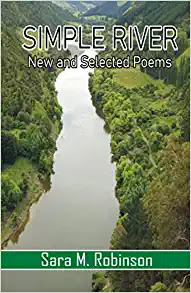
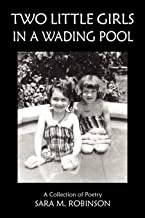
Sara M. Robinson, founder of the Lonesome Mountain Pro(s)e Writers’ Workshop, and former Instructor of a course on Contemporary American Poets at UVA-OLLI, was poetry columnist for Southern Writers Magazine and inagural poetry editor for Virginia Literary Journal. She has served as guest lecturer at UVA’s College at Wise, Wise, VA. Her poetry has appeared in various anthologies, including We Grew Wings and Flew (2014), Scratching Against the Fabric (2015), Virginia Writer’s Club Centennial Anthology (2017), Blue Ridge Anthologies and Mizmor Anthology (2018). Journals include: Loch Raven Review, The Virginia Literary Journal, vox poetica, Jimson Weed, Whisky Advocate, and Poetica. She is poet and author of Love Always, Hobby and Jessie (2009), Two Little Girls in a Wading Pool (2012), A Cruise in Rare Waters (2013 Stones for Words (2014), Sometimes the Little Town (2016), a finalist for the Poetry Society of Virginia’s 2017 Book Award. In 2019, Needville, her poetry about effects of coal mining on SW Virginia was released and in 2020 debuted as play in Charlottesville. Her most recent publication is Simple River (2020, Cyberwit).

November 28, 2022

Why Is It Important For Me to Read Poetry?

 Sara M. Robinson


In an earlier essay, I discussed the importance of reading poetry in order to be a better poet. But let’s take another view. Why is it important for me to read poetry, even if I don’t write poetry?


For starters, reading poetry is about taking a short journey in a very small boat across a very small lake all by yourself. You can easily accomplish the reading of several poems in a small amount of time. Contrast this to a novel. To start and continue a novel requires a commitment of time that may not be easy to give. Novels are long (200-1000 pages); while poetry books are typically less than a hundred.


And there are the lines. In novels they can be long and winding. In poems lines are short and direct. Both have heroes and heroines. Both can have plots. A poem can tell you about the death of a soldier in an airplane in five lines. Whereas a novel may take three hundred pages to get you to the same thing. Another big difference is that poems use metaphors to grab your attention. Can you envision a combat gunner inside a fighter plane’s rear glass turret fending off the enemy only to be killed by a rocket? What if he, as part of the metaphor, is telling the story of his impending death in the same context as being shocked out of his mother’s womb. All in five lines.


There is another truth of why to read poetry. The striking language in a small space lets you do all the expansive thinking. Poetry in a few lines with creative words has to do a lot of “showing.” A novel gets the excuse of doing most of the “telling.”


In Maxine Kumin’s poem, “Woodchucks,” (which I have written about before), we learn about The Holocaust in thirty lines. How many books have been written about this history? By using amazing metaphors, we get the real meaning of her poem. That is why it is important to read poetry. No wasted words. In poetry every word has a purpose. As a poet, I can tell you that I can spend an afternoon struggling on whether or not to use a particular word in a draft.


A poet can write about selfishness, lament and regret, using plums in a refrigerator that were intended for someone else, but were eaten instead by another. And the poem was only twelve lines long. Yet it spoke volumes about the person speaking, and the human experience.


I tell you this: I read poetry to gain appreciation for brevity with meaning. I read to learn the specialness of words and how so often less is more.


Keep reading!  


Until next time…


Sara M. Robinson, founder of the Lonesome Mountain Pro(s)e Writers’ Workshop, and former Instructor of a course on Contemporary American Poets at UVA-OLLI, was poetry columnist for Southern Writers Magazine and inagural poetry editor for Virginia Literary Journal. She has served as guest lecturer at UVA’s College at Wise, Wise, VA. Her poetry has appeared in various anthologies, including We Grew Wings and Flew (2014), Scratching Against the Fabric (2015), Virginia Writer’s Club Centennial Anthology (2017), Blue Ridge Anthologies and Mizmor Anthology (2018). Journals include: Loch Raven Review, The Virginia Literary Journal, vox poetica, Jimson Weed, Whisky Advocate, and Poetica. She is poet and author of Love Always, Hobby and Jessie (2009), Two Little Girls in a Wading Pool (2012), A Cruise in Rare Waters (2013 Stones for Words (2014), Sometimes the Little Town (2016), a finalist for the Poetry Society of Virginia’s 2017 Book Award. In 2019, Needville, her poetry about effects of coal mining on SW Virginia was released and in 2020 debuted as play in Charlottesville. Her most recent publication is Simple River (2020, Cyberwit).

https://saramrobinson.com/

October 31, 2022

Idioms-It’s All About How We Say Something. Or Is It?


Sara M. Robinson


In previous columns, I have mentioned the use of clichés and how we should avoid them, at all costs. Or use them at our peril. The same thing could be said of “idioms.” And what are they exactly? Here is a standard definition, according to Webster: (1) the language or dialect of a people, region, class, etc. (2) the usual way in which the words of a language are joined together to express thought (3) An accepted phrase, construction, or expression contrary to the usual patterns of the language or having a meaning different from the literal.


Does that clear it up for us? Well, we need examples. And here are some: “don’t cry over spilled milk”; “that’s a wrap”; “break a leg”; “think outside the box.” I’m sure you can come up with others. Cliches start out as idioms and then become overused. Here’s a recent idiom that drives me nuts: “kick the can down the road.” Often idioms have been used to colorfully illustrate an ordinary action. An example: “Spill the beans,” to mean reveal a secret.


So, why am I talking about this in the context of writing poetry? It’s because I want to save you from using idioms! In your quest for unique poetic language, I want you to stay true to your creative use of words. Please do not use: “Barking up the wrong tree,” in a poetic line when you are describing your grandfather’s favorite coon hound calling out about the treed raccoon, and the furry thing is in another tree.


Try this instead: “My grandfather called and whistled for Sheldon his hound, going deeper into the woods / Sheldon, now fifteen, still had the heart for the chase/ But no longer had the sight or sound for the quarry. // Grandfather didn’t mind as Sheldon was still his favorite and would be until he died. / Which happened that same night and again at the base of the wrong tree.”


We don’t need idioms to help us write imaginative and impactive poetry. Why can’t we simply and with great talent say: My dreams are calling me to give in to sleep and come to the softness of a treasured quilt. Isn’t that much better than “hit the hay”?


Keep looking for new and better ways to express yourself. 


Until next time…


Sara M. Robinson, founder of the Lonesome Mountain Pro(s)e Writers’ Workshop, and former Instructor of a course on Contemporary American Poets at UVA-OLLI, was poetry columnist for Southern Writers Magazine and inagural poetry editor for Virginia Literary Journal. She has served as guest lecturer at UVA’s College at Wise, Wise, VA. Her poetry has appeared in various anthologies, including We Grew Wings and Flew (2014), Scratching Against the Fabric (2015), Virginia Writer’s Club Centennial Anthology (2017), Blue Ridge Anthologies and Mizmor Anthology (2018). Journals include: Loch Raven Review, The Virginia Literary Journal, vox poetica, Jimson Weed, Whisky Advocate, and Poetica. She is poet and author of Love Always, Hobby and Jessie (2009), Two Little Girls in a Wading Pool (2012), A Cruise in Rare Waters (2013 Stones for Words (2014), Sometimes the Little Town (2016), a finalist for the Poetry Society of Virginia’s 2017 Book Award. In 2019, Needville, her poetry about effects of coal mining on SW Virginia was released and in 2020 debuted as play in Charlottesville. Her most recent publication is Simple River (2020, Cyberwit).

https://saramrobinson.com/


September 28, 2022

What is Cowboy Poetry?

 Sara M. Robinson


Recently I discussed cowboy poetry with my weekly poetry critique group. This was a lively discussion as most had not heard of it, or the recently-deceased and beloved Baxter Black.

He was the major contributor to that sub-genre and would richly contribute his verse to late night hosts.

So, what makes this poetry type so interesting? 

Well, for starters, the main topics are near and dear to most hearts: horses, the West, saddles, chuckwagon steak and beans, prairie dogs, and cattle. Cowboy life is a life of rugged independence that we have seen portrayed by the likes of Randolph Scott, Alan Ladd, Clint Eastwood, Gene Autry, and Roy Rogers. The West wasn’t always about bandits and Indians either. 

Many of the poems had a romantic lure which mostly focused on being away from family, the loss of a dear spouse, and longing for a pretty girl. As you can guess by now there weren’t many cowgirls noted, but we have to mention Dale Evans, Annie Oakley, Calamity Jane, and Sandra Day O’Connor. Yes, that one, the Supreme Court Justice who grew up being a cowgirl.

What would be the kind of lines and language we would expect to see? Here are a few to consider:

“I like to think I’m good with cows, / A pretty fair hand with a horse / But am I a surefire

 cowboy? / I’m dodgin’ the answer, of course. // …”. (Baxter Black. Washington Post June 2022)


“They don’t call it Death Valley for nuthin’

And coyotes don’t make a good pet 

But livin’ out here with the griz and the deer you pretty much take what you get” (Baxter Black)


“I know there's some ponies that I cannot ride

Some of them living, they haven't all died.

But I bet all money there's no man alive

That can ride Old Strawberry when he makes that high dive.” (Curley Fletcher)


And here is my contribution, as I thought, why not try?

Bull Rider’s Waltz 

Come jump with me in moonlight

Both of us tied to each other so tight

We’ll jump and careen ever so light

All day and well into the night


Come ride with me on the plains

And we’ll head toward sunset before it rains

We’ll hoop it up and holler out loud

Then laugh at the bull shaped like a cloud


Come live with me and we’ll face the weather

Free of ropes and rough raw leather

We’ll graze in lush green fields

And spend our lives in total pleasure

(Sara Robinson)


Sometimes when we write, we should give ourselves a chance to be totally silly. This is exactly what I did. It doesn’t matter whether it’s good or not. Cowboys didn’t really care either. They were content to entertain themselves and give their occupation a kind of pointless dignity. The point of their work was the work itself. Their poetry was a gift to us.

Keep writing!


This is Sara's newest book. A delightful read!

Sara M. Robinson, founder of the Lonesome Mountain Pro(s)e Writers’ Workshop, and former Instructor of a course on Contemporary American Poets at UVA-OLLI, was poetry columnist for Southern Writers Magazine and inagural poetry editor for Virginia Literary Journal. She has served as guest lecturer at UVA’s College at Wise, Wise, VA. Her poetry has appeared in various anthologies, including We Grew Wings and Flew (2014), Scratching Against the Fabric (2015), Virginia Writer’s Club Centennial Anthology (2017), Blue Ridge Anthologies and Mizmor Anthology (2018). Journals include: Loch Raven Review, The Virginia Literary Journal, vox poetica, Jimson Weed, Whisky Advocate, and Poetica. She is poet and author of Love Always, Hobby and Jessie (2009), Two Little Girls in a Wading Pool (2012), A Cruise in Rare Waters (2013 Stones for Words (2014), Sometimes the Little Town (2016), a finalist for the Poetry Society of Virginia’s 2017 Book Award. In 2019, Needville, her poetry about effects of coal mining on SW Virginia was released and in 2020 debuted as play in Charlottesville. Her most recent publication is Simple River (2020, Cyberwit).

https://saramrobinson.com/


September 14, 2022

Do You Live to Write Or Do You Write to Live…


Sara M. Robinson


And does it have to be an “either/or”? How do you approach your life as a writer, and in this case, an approach to poetry? What is your mindset when you sit down to start composing?


I don’t think I live to write, but I think writing is a vital component to my living. When I observe what is going on around me, perhaps taking notes, and letting my mind and hand wander, I feel like I am inside the life I am living. My words are my portal to the outside so I can then see what I am feeling or seeing.


All poets have their reasons for writing the way that they do. Some notable poets wrote to help them deal with mental illness, such as depression. Examples are Anne Sexton, Sylvia Plath, and Robert Lowell. They belonged to a group, the Confessional poets. In their case, I could make the point that they were “writing to live.” They were encouraged to get what was inside their troubled minds out on paper so they could examine themselves and perhaps find ways to cope.


Other poets, such as Mary Oliver, wrote about the joys of nature and faith. Perhaps she lived to write about how this joy gave her life purpose. Still others, have written about horrors of war, racial divides, and social inequities. These poets of witness could be considered “bridges” between the two approaches.


We don’t have to conform or place ourselves in either category, but it is a meaningful question to ask as a way for us to understand ourselves better. What motivates us? What is provocative enough to start us to write? Does that mean we are living? Of course not. We live no matter what we write. But when we are aware of our surroundings and of our inner workings, we have hints of what may give us a reason to write. And it doesn’t have to be complicated.


One of my favorite poets is Barbara Kingsolver (Yes, that same Barbara Kingsolver). In her recent poetry book, How to Fly, she has a terrific poem, “How to Love Your Neighbor.” That poem starts off, “All of them. Not just the morning shoppers, / the man who walks his chortling dog, the couples / with strawberry children. These are the given. // …” The poem continues about how diverse our world is, and how close our world is to us. I think she wrote this poem so we could live.


Enjoy life…maybe even write about it.


Until next time…


Sara M. Robinson, founder of the Lonesome Mountain Pro(s)e Writers’ Workshop, and former Instructor of a course on Contemporary American Poets at UVA-OLLI, was poetry columnist for Southern Writers Magazine and inagural poetry editor for Virginia Literary Journal. She has served as guest lecturer at UVA’s College at Wise, Wise, VA. Her poetry has appeared in various anthologies, including We Grew Wings and Flew (2014), Scratching Against the Fabric (2015), Virginia Writer’s Club Centennial Anthology (2017), Blue Ridge Anthologies and Mizmor Anthology (2018). Journals include: Loch Raven Review, The Virginia Literary Journal, vox poetica, Jimson Weed, Whisky Advocate, and Poetica. She is poet and author of Love Always, Hobby and Jessie (2009), Two Little Girls in a Wading Pool (2012), A Cruise in Rare Waters (2013 Stones for Words (2014), Sometimes the Little Town (2016), a finalist for the Poetry Society of Virginia’s 2017 Book Award. In 2019, Needville, her poetry about effects of coal mining on SW Virginia was released and in 2020 debuted as play in Charlottesville. Her most recent publication is Simple River (2020, Cyberwit).

https://saramrobinson.com/

August 22, 2022

Sense, Sentiment, & Sentimentality


Sara M. Robinson


No, I am not channeling some of Jane Austen. I’m leaving out “sensibility.” We know why we are here. From this poet’s view, I want to share the importance of those three words to a writer.


Let’s start with the definitions (from Webster’s New World Dictionary )and then expand the meanings for the composition of poetry.


Sense: to feel, perceive; an ability to judge, distinguish, discriminate, or estimate external conditions; an ability to feel, appreciate, understand, or comprehend some quality, such as humor; an ability to think or reason soundly.


We all agree that artists have a special “sense” when it comes to capturing the presence or essence of their craft. Think de Vinci and his “Mona Lisa.” Think Walt Whitman and his tome, Leaves of Grass. It is this sense that is the underlying driver for language that becomes the heart of poetry. In other columns, I have touched on aspects of sense, but this column is offering attention to differing uses of the root word, “sense.” Poetry draws upon the expansion of sense to give reason to what we observe or feel. In her poem, “Scraps,” Louise Glück has these lines which portray sense very well: “… I saw / Myself at seven learning / Distance at my mother’s knee…” The discovery by the child is her sense of her future.


Sentiment: a complex combination of feelings and opinions as a basis for action or judgment; general emotionalized attitude (i.e. patriotism); a thought, opinion, or attitude, usually a result of deliberation, but often colored with emotion; delicacy of feeling; appeal to the emotions in literature or art. For example, think of all the poetry by the Brownings. They called that era of writing and culture the Romantic era, for a reason. Here is the famous first line from Elizabeth Barrett Browning: “How do I love thee? Let me count the ways.” In contemporary American poetry, we read the very strong patriotism of Walt Whitman. He makes no attempt to hide his sentiment about America. I urge you to read his poem, “Salut au Monde!” Then read “I,Too” by Langston Hughes. This poem is the definition of “sentiment.”


Sentimentality: character, condition, or quality of being sentimental. With sentimental meaning having or showing tenderness, emotion, delicate feeling, etc. as in music or poetry. So let’s focus on poetry here. In the Romantic period, poets such as William Blake, William Wordsworth, and Mary Robinson, spent much of their writing energy on exultations of the human spirit. Poems dedicated to the seasons and many devoted to religion and innocence were frequently published.


Strict poetic forms were the norm along with antiquated language (by today’s standards).


We don’t so much write like that now, but I would draw you to the poetry of Charlotte Matthews and her book, Green Stars. I love these lines: “ the soul is like a trust, / like a cloud whose shape of angel or not, / is exactly what we need to be. //


Keep writing… with sense and sentiment


Sara M. Robinson, founder of the Lonesome Mountain Pro(s)e Writers’ Workshop, and former Instructor of a course on Contemporary American Poets at UVA-OLLI, was poetry columnist for Southern Writers Magazine and inagural poetry editor for Virginia Literary Journal. She has served as guest lecturer at UVA’s College at Wise, Wise, VA. Her poetry has appeared in various anthologies, including We Grew Wings and Flew (2014), Scratching Against the Fabric (2015), Virginia Writer’s Club Centennial Anthology (2017), Blue Ridge Anthologies and Mizmor Anthology (2018). Journals include: Loch Raven Review, The Virginia Literary Journal, vox poetica, Jimson Weed, Whisky Advocate, and Poetica. She is poet and author of Love Always, Hobby and Jessie (2009), Two Little Girls in a Wading Pool (2012), A Cruise in Rare Waters (2013 Stones for Words (2014), Sometimes the Little Town (2016), a finalist for the Poetry Society of Virginia’s 2017 Book Award. In 2019, Needville, her poetry about effects of coal mining on SW Virginia was released and in 2020 debuted as play in Charlottesville. Her most recent publication is Simple River (2020, Cyberwit).

https://saramrobinson.com/

August 9, 2022

Why Should I Read Poetry?

Sara M. Robinson


Recently I came across an old article, “The Importance of Reading Poetry.” This made me stop and think more about what I’ve shared with others about this importance. I have known poets who have told me they don’t read other poets’ works. When I asked why, the usual response was, “I’m too busy writing my own poems.” What?


If we are not reading other poets, we are missing out on a lot of great literature. There are so many great poets out there now that I can’t keep up. How can anyone ignore Wendell Berry?


Billy Collins? The late Mary Oliver? The rest of this column could be a list. But I want to take this space to give some suggestions and maybe some insight. I will draw on others who have responded to this question as well. Here’s a starting list:


1. Reading other poetry will increase your vocabulary and expand language.

2. Imitating other poets is a great way to learn to write poetry.

3. Pick up an anthology, such as The Vintage Book of Contemporary American Poetry, 2nd edition.(Edited by J.D.McClatchy). 1990.

4. Reading a variety of poems will train you to look for special forms, such as rhymes and flow.

5. Get outside your comfort zone and read everything you can. Even twice. Just don’t hurry.

6. Don’t live in a literary vacuum. Share your poetry unless you have decided that no one else will ever see it.

7. If you want others to read your poetry, then you must read what others are writing.


Think of reading poetry as the same as attending a symphony. Pick out parts you like and listen to the parts you don’t. Read some bad poetry and use this as a personal measuring stick for your writing. Also read translations and explore regional poetry, such as those from inner cities.


Lastly, unleash enthusiasm for poetry. Yours included. Don’t think of other poets as competitors. Remember, a rising tide floats all ships.


Until next time…
Sara M. Robinson, founder of the Lonesome Mountain Pro(s)e Writers’ Workshop, and former Instructor of a course on Contemporary American Poets at UVA-OLLI, was poetry columnist for Southern Writers Magazine and inagural poetry editor for Virginia Literary Journal. She has served as guest lecturer at UVA’s College at Wise, Wise, VA. Her poetry has appeared in various anthologies, including We Grew Wings and Flew (2014), Scratching Against the Fabric (2015), Virginia Writer’s Club Centennial Anthology (2017), Blue Ridge Anthologies and Mizmor Anthology (2018). Journals include: Loch Raven Review, The Virginia Literary Journal, vox poetica, Jimson Weed, Whisky Advocate, and Poetica. She is poet and author of Love Always, Hobby and Jessie (2009), Two Little Girls in a Wading Pool (2012), A Cruise in Rare Waters (2013 Stones for Words (2014), Sometimes the Little Town (2016), a finalist for the Poetry Society of Virginia’s 2017 Book Award. In 2019, Needville, her poetry about effects of coal mining on SW Virginia was released and in 2020 debuted as play in Charlottesville. Her most recent publication is Simple River (2020, Cyberwit).


https://saramrobinson.com/

June 22, 2022

What is poetry? Perhaps the Answer is What Poetry is Not.


Sara M. Robinson


Inspired by a recent essay asking this same question, I started thinking more about all that I have written about poetry, as well as the poems I have composed. After all, what is this genre we are writing? I guess we could ask the other long questions, too. Why? How? When, and Where might be a little obscure as to poetry, but back to the first question: What is poetry?


Is poetry prose, simply written differently? Some poetry critics say that poetry is simply prose broken up into short lines. Really? That’s an over simplification of the most amazing literary genre that the human brain has created. There is method to poetry and the first step is compaction: every word must serve a purpose. Even prose poetry (to further confuse matters) has specific tasks, such as creative visuals. Poetry also relies on a peculiar kind of rhythm to state its case for being poetry. The rhythm or cadence can seem musical, or it can match the rhythm of human speech. Poetry does not have to have rhyming lines, but the language must be true.


Writing of true, I emphasize that language must be true in that it represents a keen interest and application of words. This is not the same as truth. My mantra is: Poetry can always be fiction, but the words must reveal great truths. By means of example, Alexis de Tocqueville wrote in his seminal Democracy in America, “…men in democracies, whose concerns are in general so paltry, call upon their poets for conceptions so vast and descriptions so unlimited.” These authors undertake such grand requests and respond with the gigantic to reach the multitudes. The risk is that poets get so lofty that they simply float away.


Poetry is the relevant genre of our times as well. We see in currently published works the anxieties, horror and redemptions that mankind faces. The world is brought closer to us, and our own local geography is put right in front of us. Poetry is a mirror. Its reflections are created by words that make us either think, cringe, laugh or cry. At its best, poetry is a call to action. How?


Remember Amanda Gorman and her poem, “The Hill We Climb”?


Poetry is the all-inclusive “WE” for this planet. Poetry is more than a tie that binds, it is the rope of salvation. A rescue ship whose constant search is for more of us to save.


What is poetry? Perhaps the answer is what poetry is not.


Keep writing…


Sara M. Robinson, founder of the Lonesome Mountain Pro(s)e Writers’ Workshop, and former Instructor of a course on Contemporary American Poets at UVA-OLLI, was poetry columnist for Southern Writers Magazine and inagural poetry editor for Virginia Literary Journal. She has served as guest lecturer at UVA’s College at Wise, Wise, VA. Her poetry has appeared in various anthologies, including We Grew Wings and Flew (2014), Scratching Against the Fabric (2015), Virginia Writer’s Club Centennial Anthology (2017), Blue Ridge Anthologies and Mizmor Anthology (2018). Journals include: Loch Raven Review, The Virginia Literary Journal, vox poetica, Jimson Weed, Whisky Advocate, and Poetica. She is poet and author of Love Always, Hobby and Jessie (2009), Two Little Girls in a Wading Pool (2012), A Cruise in Rare Waters (2013 Stones for Words (2014), Sometimes the Little Town (2016), a finalist for the Poetry Society of Virginia’s 2017 Book Award. In 2019, Needville, her poetry about effects of coal mining on SW Virginia was released and in 2020 debuted as play in Charlottesville. Her most recent publication is Simple River (2020, Cyberwit).

https://saramrobinson.com/

June 13, 2022

To Rhyme or Not to Rhyme, Is That a Question?

Sara M. Robinson


I’ve not talked about rhyme on its own in my earlier columns. As a free-verse poet, I don’t necessarily focus on rhymes. However, someone asked me recently if poetry had to rhyme.


This person wanted to write poetry but didn’t feel adequate enough to create rhyming lines.


And this got me to thinking about the idea of rhyme schemes. So, here we go. Let’s explore what it is about rhyming lines.


I’ve looked at two recent resources to help explain why or why not rhyming. One of the sources is Adam Gopnik’s “The Rules of Rhyme,” that appeared in the May 30 issue of The New Yorker magazine. I’ll refer to my second resource in a follow-up column. Gopnik states that rhyme is language turned into a ritual. He further explains that rituals are the cohesion (my word) among cultures, religions, and various sects. When we think of hymns, for instance, we know that literally every one of them in our language have rhyme schemes. Probably these hymns started out as poems then were set to music. Works of literature, such as those by Shakespeare used a great deal of rhyme. This was a great technique to appeal to the masses where formal education was not always present.


In our country today, we hear the poetry of hip-hop and rap as a major force in poetry of the YA group. Spoken-word poetry is also a forum for rhyming. So, does the popularity of modern spoken-word music (combines the two just mentioned) mean that rhyming is the only way to write? No, and maybe. All depends on what audience you write for or intend to write for.


To further add to your consideration of using rhymes, consider there are several types: half-rhymes, slant-rhymes, off-rhymes, odd-rhymes, near-rhymes, and assonance. I leave it to you to google these types as a homework assignment. If you decide that incorporating rhymes is an essential component of your style, then I implore you to expand your vocabulary. Read Milton, read Richard Wilbur, Robert Frost, and others who are formalists. Because once you begin to write in rhyme, you will need to consider how to make your lines work: iambic pentameter? trochee (stressed and unstressed syllables in a particular pattern)? These are only two examples.


Then lastly you will consider the end-rhyme word scheme itself: AABB, ABAB, ABBA, ABBCCA, ABA BCB, and so on.


What will you give your readers? Keep writing…


Sara M. Robinson, founder of the Lonesome Mountain Pro(s)e Writers’ Workshop, and former Instructor of a course on Contemporary American Poets at UVA-OLLI, was poetry columnist for Southern Writers Magazine and inagural poetry editor for Virginia Literary Journal. She has served as guest lecturer at UVA’s College at Wise, Wise, VA. Her poetry has appeared in various anthologies, including We Grew Wings and Flew (2014), Scratching Against the Fabric (2015), Virginia Writer’s Club Centennial Anthology (2017), Blue Ridge Anthologies and Mizmor Anthology (2018). Journals include: Loch Raven Review, The Virginia Literary Journal, vox poetica, Jimson Weed, Whisky Advocate, and Poetica. She is poet and author of Love Always, Hobby and Jessie (2009), Two Little Girls in a Wading Pool (2012), A Cruise in Rare Waters (2013 Stones for Words (2014), Sometimes the Little Town (2016), a finalist for the Poetry Society of Virginia’s 2017 Book Award. In 2019, Needville, her poetry about effects of coal mining on SW Virginia was released and in 2020 debuted as play in Charlottesville. Her most recent publication is Simple River (2020, Cyberwit).

https://saramrobinson.com/

June 2, 2022

Seeing Into the Life of Things

Sara M. Robinson


Poetry As the Mechanism For Seeing Into the Life of Things.


In all of my previous columns I have written about how poetry works, the role of language, mechanics, and how to start our own internalized fire for poetry. I’ve written about poetry as a way to witness current events or to watch nature. What do I mean by this topic? In my unfolding explanation down this page, I attempt not to be redundant, but to offer some new/different sight lines using poetry.


How does poetry work to see the necessary points of life… and death? I submit that the first work poetry has to do here is get our attention. This is best done by a powerful first line, especially if the poem is short. Say, ten lines, more or less. William Carlos Williams’ poem, “The Red Wheelbarrow,” is only eight lines containing sixteen words. But that first line, “so much depends,” is a novel. This line is so expansive that it is amazing that it comes back to focus on the red wheelbarrow. That’s how attention works.


Poetry asks us to move in all directions. Some critics would say poetry requires us to move. Either way the key is observation. We may see lots of things and we may need to make decisions about what to keep and what to discard. For example, you witness a bluebird singing and you see a nice-looking car drive by. That decision of what to keep and write about is likely pretty easy. But what if you witness an accident and you witness someone struggling with groceries. In that case you may want to keep both as writing potential. Observation is about choices.


Poetry is also about reaction times. I hinted at that above. How we may react quickly to an event, though the poem may take much longer to come together. We react, poetry reflects. The caveat to this, however, is speed. Today’s electronic/digital age requires information to be sent at nanosecond speeds and read about as fast. There does not seem to be time to absorb the information and even to contemplate it. Poetry does not fit well with nanosecond speeds so this is why it could become a casualty. Spoken word poetry is one way to keep up as I see and hear young poets recite poetry in the fashion of hip-hop or rap.


Maybe poetry can be both things: Modern quick speed and slow thoughtful pacing. The quick one can relay immediate witness and the slower pace can provide perspective and documentary.


Lastly, poetry’s vision can bring us all into solidarity… in the world… in all life.


May 26, 2022

When We Wrap Works Up & Move On


Sara M. Robinson


So, now we are closing in on the final essay in this collection. We’ve been through all the mechanics, ideas, parts and parcels of what we can use to write our poetry. How does it feel to know you are successfully engaging in your craft?


I want to leave you with one final thought: Writing poetry is a transactional relationship. I recently learned this term when I took a class on tying flies for fly fishing. The art/craft of tying flies is very similar to the art/craft of writing poetry. Both rely on convincing another party (fish or person) to “take the bait.” With poetry, our metaphorical “hook” is generally the first line.

If you are to concentrate on one particular component of your poetry, then really give that first line attention. Unlike fiction, where the writer has pages to engage the reader, we poets have a shorter line space to pull a reader in. Just like the perfect tie to catch a trout, we need the best line we have to complete the transaction.


Poets spent a “writing lifetime” constructing a poem which will either be read in minutes or dismissed in a moment. Back to the wary trout: I might spend 45 minutes constructing an appealing nymph (to me anyway), only to have my intended catch ignore it. We sure don’t want our intended audience to ignore us!


As you have seen throughout this book, there is no right or wrong way to write a poem. Yes, there are some basics that need attention and possibly correction to make the poem work. Those are your “tools.” I use 3 x 5 notecards with my mechanics written on them. I carry them with me everywhere in my writer’s satchel. Did you notice I did not use the word, “toolbox”? That has become a cliché and my advice is to never use that phrase!


While we are at the end of this edition, we are either beginning or continuing our poetry writing.

I hope you will always write to your heart’s content. I hope you will share your love of poetry with others. May the fire that is within your words, give warmth and happiness to your world.


Until next time…


Sara M. Robinson, founder of the Lonesome Mountain Pro(s)e Writers’ Workshop, and former Instructor of a course on Contemporary American Poets at UVA-OLLI, was poetry columnist for Southern Writers Magazine and inagural poetry editor for Virginia Literary Journal. She has served as guest lecturer at UVA’s College at Wise, Wise, VA. Her poetry has appeared in various anthologies, including We Grew Wings and Flew (2014), Scratching Against the Fabric (2015), Virginia Writer’s Club Centennial Anthology (2017), Blue Ridge Anthologies and Mizmor Anthology (2018). Journals include: Loch Raven Review, The Virginia Literary Journal, vox poetica, Jimson Weed, Whisky Advocate, and Poetica. She is poet and author of Love Always, Hobby and Jessie (2009), Two Little Girls in a Wading Pool (2012), A Cruise in Rare Waters (2013 Stones for Words (2014), Sometimes the Little Town (2016), a finalist for the Poetry Society of Virginia’s 2017 Book Award. In 2019, Needville, her poetry about effects of coal mining on SW Virginia was released and in 2020 debuted as play in Charlottesville. Her most recent publication is Simple River (2020, Cyberwit).

https://saramrobinson.com/

May 12, 2022

What Did You Think You Would Do Growing UP?

Sara M. Robinson


Taking some notes and thoughts from the accomplished writer, Edward Hirsch, I now ask the question: Are we born to write? I also would ask, are we born to write poetry? How do we know poetry is what we want?


I bet that when most of us were growing up we didn’t give much thought to a future writing career. I know I certainly didn’t. I was too busy riding my bicycle, hanging out with friends, reading comic books, and mostly being a kid. Some of my friends kept diaries and sometimes they would share little rhyming poems they penned. Most of these were little ditties about pretend boyfriends and pets.


At some point, we became writers. Many found it early in life, and many, like me, found writing much later. That’s not so unique. Frank McCord didn’t write his inaugural novel Angela’s Ashes until he was sixty-nine. Does that mean we have to wait until we are well passed middle-age before we can write? For some of us, the right side of the brain did not kick in until later in life. For others, it may mean that we were so busy either doing other types of art or we were simply busy with life. John Lennon once said something like: “Life happens while you are making other plans.” I had an artist friend, who in her late 80s published her first book of poetry. It was a tour de force. Extraordinary effort.


This brings me up to a characteristic that is essential to the education. Ambition. A strong desire to achieve something. We must want to write poetry as much as anything else. Why is this so important? Because it is the “driver” of this car we call poetry (See an earlier column titled When We Wrap Works Up & Move On). We look for the impetus that gets us up and then gets it done. Ambition will keep us wanting not to fail. And remember, failure is in your perception. No one is judging you or your poetry output. Your writing is not under any intense scrutiny. Your ambition is yours and yours alone. You give yourself permission to define your desire and how much education you want to put into your writing. I love to read poetry, poetry criticism, and pretty much anything that involves poetry.


My personal education is ongoing but that’s how I am. You may have a totally different approach and that is great.


Poetry is individual and so is the education of a poet. A last thought: Keep writing!


Until next time…


Sara M. Robinson, founder of the Lonesome Mountain Pro(s)e Writers’ Workshop, and former Instructor of a course on Contemporary American Poets at UVA-OLLI, was poetry columnist for Southern Writers Magazine and inagural poetry editor for Virginia Literary Journal. She has served as guest lecturer at UVA’s College at Wise, Wise, VA. Her poetry has appeared in various anthologies, including We Grew Wings and Flew (2014), Scratching Against the Fabric (2015), Virginia Writer’s Club Centennial Anthology (2017), Blue Ridge Anthologies and Mizmor Anthology (2018). Journals include: Loch Raven Review, The Virginia Literary Journal, vox poetica, Jimson Weed, Whisky Advocate, and Poetica. She is poet and author of Love Always, Hobby and Jessie (2009), Two Little Girls in a Wading Pool (2012), A Cruise in Rare Waters (2013 Stones for Words (2014), Sometimes the Little Town (2016), a finalist for the Poetry Society of Virginia’s 2017 Book Award. In 2019, Needville, her poetry about effects of coal mining on SW Virginia was released and in 2020 debuted as play in Charlottesville. Her most recent publication is Simple River (2020, Cyberwit).


https://saramrobinson.com/

May 5, 2022

Quality: What Is Its Worth?


Sara M. Robinson


I have been reading an old paperback from the past, Zen and the Art of Motorcycle Maintenance. I venture to guess there are many readers who remember this book from some fifty years ago. All of my friends read it, but I was so left-brain that I missed it. Until this year. Now that I am a proud right-brain, this book is so timely for me. It’s not so much about taking care of a cycle, as it is a journey to find what matters. I love this because it speaks to me of my journey with Poetry Matters.


In the book, the narrator ponders on the definition of Quality and why a definition is important. In all the previous columns, I’ve likely danced around topics that lead to a successful poem, or at least a satisfying writing experience. I had not written about Quality. So, maybe it is something we should address. How would you define Quality?


Is Quality a description of an attribute? What was the first known “Quality something?” Seems to me there had to be a comparison to start with. But that is not satisfying as it is so subjective.


This conflict brings me to poetry. How would we describe a “Quality poem?” Is that description necessary? Today we often find so many things attached to the word Quality that I think it may have lost its original definition. Webster’s definition: “that which makes something what it is.”


A basic nature or attribute completes the definition.


Poetry is that something and each poem is what it is. Quality for poetry is a validation that means with each poem we write we can say it has Quality. This is an important statement because we can take pride in that our words created lines which led to a poem. When you complete your poem, you have created a Quality entity. Sure, this piece may need some further work or revision, but those are improvements or modifications and only work to enhance the Quality.


Your poems exist. Your poetry is relevant. Your poems would not exist or perhaps even disappear if Quality was subtracted. All literature would be in peril if Quality was to disappear.


As beautiful and as mysterious Quality is, so is poetry.


Think about your writing and what your work brings to you. Hint: When you write something, you put a part of yourself out there. That’s your Quality.


Amazing, isn’t it?


Until next time…


Sara M. Robinson, founder of the Lonesome Mountain Pro(s)e Writers’ Workshop, and former Instructor of a course on Contemporary American Poets at UVA-OLLI, was poetry columnist for Southern Writers Magazine and inagural poetry editor for Virginia Literary Journal. She has served as guest lecturer at UVA’s College at Wise, Wise, VA. Her poetry has appeared in various anthologies, including We Grew Wings and Flew (2014), Scratching Against the Fabric (2015), Virginia Writer’s Club Centennial Anthology (2017), Blue Ridge Anthologies and Mizmor Anthology (2018). Journals include: Loch Raven Review, The Virginia Literary Journal, vox poetica, Jimson Weed, Whisky Advocate, and Poetica. She is poet and author of Love Always, Hobby and Jessie (2009), Two Little Girls in a Wading Pool (2012), A Cruise in Rare Waters (2013 Stones for Words (2014), Sometimes the Little Town (2016), a finalist for the Poetry Society of Virginia’s 2017 Book Award. In 2019, Needville, her poetry about effects of coal mining on SW Virginia was released and in 2020 debuted as play in Charlottesville. Her most recent publication is Simple River (2020, Cyberwit).


https://saramrobinson.com/

March 30, 2022

The Line: In Search of It


Sara M. Robinson


In search of the perfect, or at least the ideal, poetic line. I don’t know about any other poets, but I am in search of “the line of all lines.” I can’t describe it for you, but like my search for the perfect onion ring, I’ll know it when I see it.


Some time back, in one of my earlier Southern Writers columns, I wrote about the line in poetry. A quick review: The line in poetry is simply composed, but complex in its action. How’s that for possible confusion. Let’s take a look at some brief poetry lines and see how this works. In his poem, “In a Station of the Metro,” Ezra Pound gave us these amazing lines: “The apparition of these faces in the crowd: / Petals on a wet, black bough.” Many critics would argue that these two lines are among the best ever written. The metaphor and imagery are key here. So, we know something more about a poetic line: It should contain metaphor; and it should conjure up images for our minds to latch onto. This poem, The Red Wheelbarrow, by William Carlos Williams is another example: “so much depends/ upon / a red wheel / barrow / glazed with rain / water / beside the white / chickens.” He wants us to take each line, each single word, slowly and thoughtfully. Amazing. Here’s one of mine, from the poem, The Root of Faults. “Mountain of no roots / slips ledge by ledge / bench by bench / into the bitter water” //…


What about length or number of words? As we can see above perhaps brief is better, but there has to be meaning. There is a poetic line in the Bible that is considered the shortest line in the Book: “Jesus Wept.” Two words that for many speak volumes. The greatest mistress of the short, but powerful, poetic line is Emily Dickinson. It is hard for me to pick one out, but here is one that certainly is representative of her talent: “I dwell in possibility— / A fairer house than Prose— /” … The vastness of that initial line offers unlimited options for her “house” which stands in as a metaphor for her poetry.


Another key element in the line is making inanimate objects life-like. Again from Ms. Dickinson, “The duties of the Wind are few,” … Immediately I think I should list some of the duties! The rest of the poem directs us to see nature as the epitome of a poetic topic.


I love the poet, Billy Collins. For me he is every person’s poet. His poems are so accessible that you can easily relate. And his use of humor is extraordinary. Here is a line from one of my favorites of his: “the trouble with poetry is / that it encourages the writing of more poetry, / more guppies crowding in the fish tank / … // And how will it ever end?/ ...”


We should hope that the writing will never end. My hope is that we all find that perfect line, whether or not we even wrote it. No matter. In our hearts and minds, we can claim it.


Like me, I hope you will keep searching.

Until next time.


Sara M. Robinson, founder of the Lonesome Mountain Pro(s)e Writers’ Workshop, and former Instructor of a course on Contemporary American Poets at UVA-OLLI, was poetry columnist for Southern Writers Magazine and inagural poetry editor for Virginia Literary Journal. She has served as guest lecturer at UVA’s College at Wise, Wise, VA. Her poetry has appeared in various anthologies, including We Grew Wings and Flew (2014), Scratching Against the Fabric (2015), Virginia Writer’s Club Centennial Anthology (2017), Blue Ridge Anthologies and Mizmor Anthology (2018). Journals include: Loch Raven Review, The Virginia Literary Journal, vox poetica, Jimson Weed, Whisky Advocate, and Poetica. She is poet and author of Love Always, Hobby and Jessie (2009), Two Little Girls in a Wading Pool (2012), A Cruise in Rare Waters (2013 Stones for Words (2014), Sometimes the Little Town (2016), a finalist for the Poetry Society of Virginia’s 2017 Book Award. In 2019, Needville, her poetry about effects of coal mining on SW Virginia was released and in 2020 debuted as play in Charlottesville. Her most recent publication is Simple River (2020, Cyberwit).

March 23, 2022

Am I Done With This Poem?


Sara M. Robinson


When is a poem finished? How do you know when you have reached the end of your poetry piece?

For some of you who have kept up with either my Southern Writers columns or my Suite T blogs, this may sound like I am resurrecting old stuff. But hang in there with me, I have some new things to say about finishing a poem.

When we are writing, and we believe we are coming to the end of the poem, the “finish line,” as it were, are we saying that the poem is good at this time? Is there more to write, or have I written too much? And now when I go back, I realize I finished the poem in several places before I came to my perceived “end.” Was I really done? Is where I am really “good.”?

How many poems have you read, where you asked if the poet really meant to stop there?

I’ve read my share, and that includes my own. Some poets stop intentionally before they finish.

Does that seem odd? Sure, we read a poem, think that the poet stopped too soon. But that is our opinion. We can’t guess intention. Take this ending from Billy Collins’ poem, “Hippos on Holiday”: “Only a mean-spirited reviewer/ would ask on holiday from what?” Of course, this ending is taking out of context, but he does end the poem with a question mark, which is a great way to leave the reader to determine from herself whether the poem is done.

Now you ask, where am I going with this? I want to convey that good poems need to come across as finished. When you say the poem is done, in your view, the poem is good when it is done.

I often choose many endings or closings for one poem. I have to have enough plans for when I decide I am done and what I have written is good. This is when revision becomes important. I know. I know. Many poets hate to revise. But I’ve shared this before: I love revision. Between when I create the first rendering and when I finish the piece, I might go through 5 to 10 or more versions. And when I finally settle on something, this is how the poem tells me it is done. Here is a little trick I use: I reverse the order of the poem to see if the first line is a better ending than the last line. You might find yourself surprised if you try this.

I have finally gotten to the point: The poem will tell you when you are done. When you write, listen and read carefully so you don’t miss hearing, “that’s it, we’re done. And it is good.”


Until next time…


Sara M. Robinson, founder of the Lonesome Mountain Pro(s)e Writers’ Workshop, and former Instructor of a course on Contemporary American Poets at UVA-OLLI, was poetry columnist for Southern Writers Magazine and inagural poetry editor for Virginia Literary Journal. She has served as guest lecturer at UVA’s College at Wise, Wise, VA. Her poetry has appeared in various anthologies, including We Grew Wings and Flew (2014), Scratching Against the Fabric (2015), Virginia Writer’s Club Centennial Anthology (2017), Blue Ridge Anthologies and Mizmor Anthology (2018). Journals include: Loch Raven Review, The Virginia Literary Journal, vox poetica, Jimson Weed, Whisky Advocate, and Poetica. She is poet and author of Love Always, Hobby and Jessie (2009), Two Little Girls in a Wading Pool (2012), A Cruise in Rare Waters (2013 Stones for Words (2014), Sometimes the Little Town (2016), a finalist for the Poetry Society of Virginia’s 2017 Book Award. In 2019, Needville, her poetry about effects of coal mining on SW Virginia was released and in 2020 debuted as play in Charlottesville. Her most recent publication is Simple River (2020, Cyberwit).

https://saramrobinson.com/

March 10, 2022

I’ll Take My Poetry Medium and Rare

Sara M. Robinson


Recently I read an article in Poetry magazine about the use of “medium” in art and in language. The author of the essay was a longtime favorite poet and essayist of mine, James Longenbach. He also writes books about the craft of writing which I also study.

Visual artists define medium as the materials and the template, such as oils and canvas. Or the medium can be watercolors on gypsum board, or inks or pillows. The artist uses various mediums to connect with his/her world. But what about the sheet of paper as the medium? How does the reader embrace the writer with pen and paper? And what if the poet uses another medium, such as a canvas, or tree bark, or chalkboard?

Most writers stick to the usual, everyday paper. But every so often we encounter a novel poet, who experiments with other mediums. Why do we care? Well, first the writer cum artist is offering a transaction for us to consider. We are given a challenge to step out of our comfort space and engage in something different, if not new.

Longenbach asks, “how can art be something made of words, the same words used for newspapers and parking tickets?” Well, for starters, written art always depends on language. That is what all this comes down to: Language. For most of us, English language. The subject of the evolution of English language is interesting and much too long and complicated to write here, but with our language we do have some interesting developments in its evolution. Again, Longenbach gives us this great example: “Even today, we raise pigs and cows (from German, via Old English), but eat pork and beef (from Latin, via French). And there are many others!

But as perplexing as language and words derived from other languages, poetry goes right back to the creativity of the line with its novel use of simile and metaphors. Here is a line of Keats: “sudden from heaven, a weeping cloud…”. And one of mine: “It’s like sunburn & blisters. Underneath / skin abrasions/invasions/insults there is / the beauty of a person.” We elevate inanimate objects to a higher status.


Until next time…


Sara M. Robinson, founder of the Lonesome Mountain Pro(s)e Writers’ Workshop, and former Instructor of a course on Contemporary American Poets at UVA-OLLI, was poetry columnist for Southern Writers Magazine and inagural poetry editor for Virginia Literary Journal. She has served as guest lecturer at UVA’s College at Wise, Wise, VA. Her poetry has appeared in various anthologies, including We Grew Wings and Flew (2014), Scratching Against the Fabric (2015), Virginia Writer’s Club Centennial Anthology (2017), Blue Ridge Anthologies and Mizmor Anthology (2018). Journals include: Loch Raven Review, The Virginia Literary Journal, vox poetica, Jimson Weed, Whisky Advocate, and Poetica. She is poet and author of Love Always, Hobby and Jessie (2009), Two Little Girls in a Wading Pool (2012), A Cruise in Rare Waters (2013 Stones for Words (2014), Sometimes the Little Town (2016), a finalist for the Poetry Society of Virginia’s 2017 Book Award. In 2019, Needville, her poetry about effects of coal mining on SW Virginia was released and in 2020 debuted as play in Charlottesville. Her most recent publication is Simple River (2020, Cyberwit).


https://saramrobinson.com/