Pages

Showing posts with label Simple River. Show all posts

September 14, 2022

Do You Live to Write Or Do You Write to Live…


Sara M. Robinson


And does it have to be an “either/or”? How do you approach your life as a writer, and in this case, an approach to poetry? What is your mindset when you sit down to start composing?


I don’t think I live to write, but I think writing is a vital component to my living. When I observe what is going on around me, perhaps taking notes, and letting my mind and hand wander, I feel like I am inside the life I am living. My words are my portal to the outside so I can then see what I am feeling or seeing.


All poets have their reasons for writing the way that they do. Some notable poets wrote to help them deal with mental illness, such as depression. Examples are Anne Sexton, Sylvia Plath, and Robert Lowell. They belonged to a group, the Confessional poets. In their case, I could make the point that they were “writing to live.” They were encouraged to get what was inside their troubled minds out on paper so they could examine themselves and perhaps find ways to cope.


Other poets, such as Mary Oliver, wrote about the joys of nature and faith. Perhaps she lived to write about how this joy gave her life purpose. Still others, have written about horrors of war, racial divides, and social inequities. These poets of witness could be considered “bridges” between the two approaches.


We don’t have to conform or place ourselves in either category, but it is a meaningful question to ask as a way for us to understand ourselves better. What motivates us? What is provocative enough to start us to write? Does that mean we are living? Of course not. We live no matter what we write. But when we are aware of our surroundings and of our inner workings, we have hints of what may give us a reason to write. And it doesn’t have to be complicated.


One of my favorite poets is Barbara Kingsolver (Yes, that same Barbara Kingsolver). In her recent poetry book, How to Fly, she has a terrific poem, “How to Love Your Neighbor.” That poem starts off, “All of them. Not just the morning shoppers, / the man who walks his chortling dog, the couples / with strawberry children. These are the given. // …” The poem continues about how diverse our world is, and how close our world is to us. I think she wrote this poem so we could live.


Enjoy life…maybe even write about it.


Until next time…


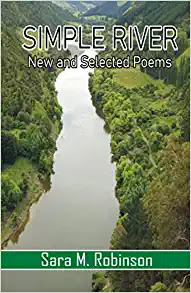
Sara M. Robinson, founder of the Lonesome Mountain Pro(s)e Writers’ Workshop, and former Instructor of a course on Contemporary American Poets at UVA-OLLI, was poetry columnist for Southern Writers Magazine and inagural poetry editor for Virginia Literary Journal. She has served as guest lecturer at UVA’s College at Wise, Wise, VA. Her poetry has appeared in various anthologies, including We Grew Wings and Flew (2014), Scratching Against the Fabric (2015), Virginia Writer’s Club Centennial Anthology (2017), Blue Ridge Anthologies and Mizmor Anthology (2018). Journals include: Loch Raven Review, The Virginia Literary Journal, vox poetica, Jimson Weed, Whisky Advocate, and Poetica. She is poet and author of Love Always, Hobby and Jessie (2009), Two Little Girls in a Wading Pool (2012), A Cruise in Rare Waters (2013 Stones for Words (2014), Sometimes the Little Town (2016), a finalist for the Poetry Society of Virginia’s 2017 Book Award. In 2019, Needville, her poetry about effects of coal mining on SW Virginia was released and in 2020 debuted as play in Charlottesville. Her most recent publication is Simple River (2020, Cyberwit).

https://saramrobinson.com/

July 13, 2022

What is Poetry?

 Sara M. Robinson


Inspired by a recent essay asking this same question, I started thinking more about all that I have written about poetry, as well as the poems I have composed. After all, what is this genre we are writing? I guess we could ask the other long questions, too. Why? How? Where, and When might be a little obscure as to poetry, but back to the first question: What is poetry?


Is poetry prose, simply written differently? Some poetry critics say that poetry is simply prose broken up into short lines. Really? That’s an over simplification of the most amazing literary genre that the human brain has created. There is method to poetry and the first step is compaction: every word must serve a purpose. Even prose poetry (to further confuse matters) has specific tasks, such as creative visuals. Poetry also relies on a peculiar kind of rhythm to state its case for being poetry. The rhythm or cadence can seem musical or it can match the rhythm of human speech. Poetry does not have to have rhyming lines, but the language must be true.


Writing of true, I emphasize that language must be true in that it represents a keen interest and application of words. This is not the same as truth. My mantra is: Poetry can always be fiction, but the words must reveal great truths. By means of example, Alexis de Tocqueville wrote in his seminal Democracy in America, “ …men in democracies, whose concerns are in general so paltry, call upon their poets for conceptions so vast and descriptions so unlimited.” These authors undertake such grand requests and respond with the gigantic to reach the multitudes. The risk is that poets get so lofty that they simply float away.


Poetry is the relevant genre of our times as well. We see in currently published works the anxieties, horror and redemptions that mankind faces. The world is brought closer to us and our own local geography is put right in front of us. Poetry is a mirror. Its reflections are created by words that make us either think, cringe, laugh or cry. At its best, poetry is a call to action. How?

Remember Amanda Gorman and her poem, “The Hill We Climb”?


Poetry is the all-inclusive “WE” for this planet. Poetry is more than a tie that binds, it is the rope of salvation. A rescue ship whose constant search is for more of us to save.


What is poetry? Perhaps the answer is what poetry is not.


Keep writing…


Sara M. Robinson, founder of the Lonesome Mountain Pro(s)e Writers’ Workshop, and former Instructor of a course on Contemporary American Poets at UVA-OLLI, was poetry columnist for Southern Writers Magazine and inagural poetry editor for Virginia Literary Journal. She has served as guest lecturer at UVA’s College at Wise, Wise, VA. Her poetry has appeared in various anthologies, including We Grew Wings and Flew (2014), Scratching Against the Fabric (2015), Virginia Writer’s Club Centennial Anthology (2017), Blue Ridge Anthologies and Mizmor Anthology (2018). Journals include: Loch Raven Review, The Virginia Literary Journal, vox poetica, Jimson Weed, Whisky Advocate, and Poetica. She is poet and author of Love Always, Hobby and Jessie (2009), Two Little Girls in a Wading Pool (2012), A Cruise in Rare Waters (2013 Stones for Words (2014), Sometimes the Little Town (2016), a finalist for the Poetry Society of Virginia’s 2017 Book Award. In 2019, Needville, her poetry about effects of coal mining on SW Virginia was released and in 2020 debuted as play in Charlottesville. Her most recent publication is Simple River (2020, Cyberwit).

https://saramrobinson.com/


June 2, 2022

Seeing Into the Life of Things

Sara M. Robinson


Poetry As the Mechanism For Seeing Into the Life of Things.


In all of my previous columns I have written about how poetry works, the role of language, mechanics, and how to start our own internalized fire for poetry. I’ve written about poetry as a way to witness current events or to watch nature. What do I mean by this topic? In my unfolding explanation down this page, I attempt not to be redundant, but to offer some new/different sight lines using poetry.


How does poetry work to see the necessary points of life… and death? I submit that the first work poetry has to do here is get our attention. This is best done by a powerful first line, especially if the poem is short. Say, ten lines, more or less. William Carlos Williams’ poem, “The Red Wheelbarrow,” is only eight lines containing sixteen words. But that first line, “so much depends,” is a novel. This line is so expansive that it is amazing that it comes back to focus on the red wheelbarrow. That’s how attention works.


Poetry asks us to move in all directions. Some critics would say poetry requires us to move. Either way the key is observation. We may see lots of things and we may need to make decisions about what to keep and what to discard. For example, you witness a bluebird singing and you see a nice-looking car drive by. That decision of what to keep and write about is likely pretty easy. But what if you witness an accident and you witness someone struggling with groceries. In that case you may want to keep both as writing potential. Observation is about choices.


Poetry is also about reaction times. I hinted at that above. How we may react quickly to an event, though the poem may take much longer to come together. We react, poetry reflects. The caveat to this, however, is speed. Today’s electronic/digital age requires information to be sent at nanosecond speeds and read about as fast. There does not seem to be time to absorb the information and even to contemplate it. Poetry does not fit well with nanosecond speeds so this is why it could become a casualty. Spoken word poetry is one way to keep up as I see and hear young poets recite poetry in the fashion of hip-hop or rap.


Maybe poetry can be both things: Modern quick speed and slow thoughtful pacing. The quick one can relay immediate witness and the slower pace can provide perspective and documentary.


Lastly, poetry’s vision can bring us all into solidarity… in the world… in all life.


May 5, 2022

Quality: What Is Its Worth?


Sara M. Robinson


I have been reading an old paperback from the past, Zen and the Art of Motorcycle Maintenance. I venture to guess there are many readers who remember this book from some fifty years ago. All of my friends read it, but I was so left-brain that I missed it. Until this year. Now that I am a proud right-brain, this book is so timely for me. It’s not so much about taking care of a cycle, as it is a journey to find what matters. I love this because it speaks to me of my journey with Poetry Matters.


In the book, the narrator ponders on the definition of Quality and why a definition is important. In all the previous columns, I’ve likely danced around topics that lead to a successful poem, or at least a satisfying writing experience. I had not written about Quality. So, maybe it is something we should address. How would you define Quality?


Is Quality a description of an attribute? What was the first known “Quality something?” Seems to me there had to be a comparison to start with. But that is not satisfying as it is so subjective.


This conflict brings me to poetry. How would we describe a “Quality poem?” Is that description necessary? Today we often find so many things attached to the word Quality that I think it may have lost its original definition. Webster’s definition: “that which makes something what it is.”


A basic nature or attribute completes the definition.


Poetry is that something and each poem is what it is. Quality for poetry is a validation that means with each poem we write we can say it has Quality. This is an important statement because we can take pride in that our words created lines which led to a poem. When you complete your poem, you have created a Quality entity. Sure, this piece may need some further work or revision, but those are improvements or modifications and only work to enhance the Quality.


Your poems exist. Your poetry is relevant. Your poems would not exist or perhaps even disappear if Quality was subtracted. All literature would be in peril if Quality was to disappear.


As beautiful and as mysterious Quality is, so is poetry.


Think about your writing and what your work brings to you. Hint: When you write something, you put a part of yourself out there. That’s your Quality.


Amazing, isn’t it?


Until next time…


Sara M. Robinson, founder of the Lonesome Mountain Pro(s)e Writers’ Workshop, and former Instructor of a course on Contemporary American Poets at UVA-OLLI, was poetry columnist for Southern Writers Magazine and inagural poetry editor for Virginia Literary Journal. She has served as guest lecturer at UVA’s College at Wise, Wise, VA. Her poetry has appeared in various anthologies, including We Grew Wings and Flew (2014), Scratching Against the Fabric (2015), Virginia Writer’s Club Centennial Anthology (2017), Blue Ridge Anthologies and Mizmor Anthology (2018). Journals include: Loch Raven Review, The Virginia Literary Journal, vox poetica, Jimson Weed, Whisky Advocate, and Poetica. She is poet and author of Love Always, Hobby and Jessie (2009), Two Little Girls in a Wading Pool (2012), A Cruise in Rare Waters (2013 Stones for Words (2014), Sometimes the Little Town (2016), a finalist for the Poetry Society of Virginia’s 2017 Book Award. In 2019, Needville, her poetry about effects of coal mining on SW Virginia was released and in 2020 debuted as play in Charlottesville. Her most recent publication is Simple River (2020, Cyberwit).


https://saramrobinson.com/

April 14, 2022

Cheer Up! Things Could Be Verse…


Sara M. Robinson


Here are two questions for you: Do you have to be sad, depressed or angry to write good poetry? Does how you feel determine your subject matter?


I often read articles by other poets and essayists where they discuss how mood or state of mind influences their writing. Poets, as an historical bunch of writers, often brag they are in touch with all that surrounds them, and this plays a huge part in their subjects. I think this is very true, but often we are not in physical or even mental place where we can create poetic lines. This is where my writing journal comes in. I jot down how I feel or how the particular setting affected me, then later I come back to it to write.


Now, however, when I come back to the writing, my mood is no longer the same. For me, the return to my notes is more objective, less subjective or emotional. I don’t mean to say less involved; I only present to you that now the poetic part of my brain is “translating” the emotional part I felt at the time into worthy lines.


Meditative poems are examples, I think, of where you might experience a real emotional connection to the writing. Say, you lost a beloved pet, and you wanted to write about your feelings, but you simply were too saddened to compose. You let your mind and soul grieve, then you make some notes which later become the beautiful lines.


I’ve seen a lot of angry poems. One I read recently was from a poet who was particularly upset about a poetry class he was in. He was very angry at the instructor. This poet thought the instructor did not pay enough attention to him. So, this poem, to me, was more of a poison pen letter than a creative rendering. Maybe the poet should have used that version as notes and then created a poem about the heartbreak of disappointment or rejection. When you release your writing to the public, then you have engaged them, good or bad.


It can be tricky determining your emotional state and then turning it into poetry. What do you want your writing to do? Wallace Stevens wrote a poem, “Poetry is a Destructive Force.”

His first stanza goes like this: “That’s what misery is, / Nothing to have at heart. / It is to have or nothing./…” He goes on to use animals as metaphors to portray the violence man can have. But the poem is quiet, contemplative. That’s what makes his poem so good.


Think about your feelings and how you want to put them into verse. “I felt the coldness of time when my mother died. / Then I saw the sky, and felt warm suddenly…” S. Robinson


Until next time…

Sara M. Robinson, founder of the Lonesome Mountain Pro(s)e Writers’ Workshop, and former Instructor of a course on Contemporary American Poets at UVA-OLLI, was poetry columnist for Southern Writers Magazine and inagural poetry editor for Virginia Literary Journal. She has served as guest lecturer at UVA’s College at Wise, Wise, VA. Her poetry has appeared in various anthologies, including We Grew Wings and Flew (2014), Scratching Against the Fabric (2015), Virginia Writer’s Club Centennial Anthology (2017), Blue Ridge Anthologies and Mizmor Anthology (2018). Journals include: Loch Raven Review, The Virginia Literary Journal, vox poetica, Jimson Weed, Whisky Advocate, and Poetica. She is poet and author of Love Always, Hobby and Jessie (2009), Two Little Girls in a Wading Pool (2012), A Cruise in Rare Waters (2013 Stones for Words (2014), Sometimes the Little Town (2016), a finalist for the Poetry Society of Virginia’s 2017 Book Award. In 2019, Needville, her poetry about effects of coal mining on SW Virginia was released and in 2020 debuted as play in Charlottesville. Her most recent publication is Simple River (2020, Cyberwit).

January 19, 2022

Can I Write Good Poetry?


                                Sara Robinson


How will I know if my poetry is good? That is a question I am often asked. And, it is almost impossible to answer. First of all, what do we mean by “good”? The person creating the work should determine his/her own definition. Good is SO subjective. But before you even ask that question, get the poem down, then work on the “good” part. For me to supply either an encouraging answer or to attempt to define it, would be like trying to train a rhino to heel.


But the question does determine an attempt. Here are my thoughts, presented as a list:


With something completed, ask yourself if you like what you wrote. Even if you like it, can you like it even more with some revision? Revision can be the most fun about writing poetry.


What was your original goal for the poetry? Did you achieve that? If yes, then think about the importance of the goal’s satisfaction. If no, then go back over what you write and try to find pieces to fix, keeping the goal in mind.


Read other poets and explore why you like or don’t like their writing. Use their writing to help you put together a definition for “good.”


Poetry is not just about good writing; it is also about feeling. When someone scratches your back, you say “that feels good.” Good poetry should also make you feel good. Also bear in mind that good poetry can make you feel bad. (And that could be good in a totally different context). Poetry is an intimate relationship in which both good and bad exist.


Think about texture of your poem. What other feelings do your words invoke?


Are you satisfied with presentation of the poem? How does it look on the page to you? If you are not happy with it, what changes could you make?


Don’t try to find “good” in one sitting. Let the poem under consideration stew for a while, then come back to it. Time is always on your side.


In her poem, “To Charlie, on His Poetry,” poet Alicia Ostriker writes, “The zoom of your poem would often/ pull far out from the scene you were capturing, // then you would nail it, down to the last/ pixel of the truth.” …


You will write in your life a number of words. Some will come together. Some won’t. When you feel like you have nailed your poem, and you feel good about it, then at the very least, for you the poem is good. Now you can get that rhino to heel.


Until next time…

Sara M. Robinson, founder of the Lonesome Mountain Pro(s)e Writers’ Workshop, and former Instructor of a course on Contemporary American Poets at UVA-OLLI, was poetry columnist for Southern Writers Magazine and inagural poetry editor for Virginia Literary Journal. She has served as guest lecturer at UVA’s College at Wise, Wise, VA. Her poetry has appeared in various anthologies, including We Grew Wings and Flew (2014), Scratching Against the Fabric (2015), Virginia Writer’s Club Centennial Anthology (2017), Blue Ridge Anthologies and Mizmor Anthology (2018). Journals include: Loch Raven Review, The Virginia Literary Journal, vox poetica, Jimson Weed, Whisky Advocate, and Poetica. She is poet and author of Love Always, Hobby and Jessie (2009), Two Little Girls in a Wading Pool (2012), A Cruise in Rare Waters (2013 Stones for Words (2014), Sometimes the Little Town (2016), a finalist for the Poetry Society of Virginia’s 2017 Book Award. In 2019, Needville, her poetry about effects of coal mining on SW Virginia was released and in 2020 debuted as play in Charlottesville. Her most recent publication is Simple River (2020, Cyberwit).


https://saramrobinson.com/

January 11, 2022

Here Is Something To Contemplate


Sara Robinson


Your Signature Style of Writing


Here is something to contemplate: Can you recognize a poet by his/her style before you actually know who it is? Does a poet need one or does it seem to naturally evolve into a type of recognition? Is it necessary for a writer to have recognition in this way?


I only bring this up because as we continue to improve our writing, sometimes certain attributes emerge over time and practice. If we go on to publish, then common threads within our writing give signals of our style. What the reader can expect from our words and lines. We will get to topics later.


Let’s start with what we define as style in our writing: I submit, using the Princeton Encyclopedia of Poetry & Poetics, that style is a way that something is written; not especially what, but how. Also, the manner in which a work is written. Some critics would say that style is the “distinctive” voice of an individual. I say it is much more than that. I say an individual style is composed of grammar selection, poetry type (formalism, free verse, sonnet) used consistently, and presentation on the page that is commonly seen. An example of the last is the work of e.e. cummings. This is a typical pattern of his writing:


[the bigness of cannon]

BY E. E. CUMMINGS

the bigness of cannon / is [skillful], //

but i have seen / death’s clever enormous voice / which hides in a fragility

of poppies. . . . // i say that sometimes

on these long talkative animals /

are laid fists of huger silence. // I have seen all the silence

filled with vivid noiseless boys // at Roupy / i have seen /between barrages,//

the night utter ripe unspeaking girls.


As you can see one significant aspect of his style is his use of lower-case letters.

Emily Dickinson had a “signature style” as well. Hers, mostly of lines primarily organized in

Four-line stanzas. Within these stanzas there is a strict metrical pattern, mostly iambic

pentameter. I wouldn’t be surprised to learn that most people recognize her poetry. Another

admired poet is Gwendolyn Brooks who novel “ballet” style is well known.


The free verse writers have more of a challenge in signature style. So, ones like me, look for words and topics to define us. Frankly, I cannot tell many of the contemporary writers contributing today and I think that is just fine. I am of the “camp” that believes in writing as an evolutionary process within one’s own skill set. While I might be recognized in some of my poetry, I don’t want a style to ultimately make me that predictable. I hope you will consider that as you grow with your writing.


Keep evolving. Keep guessing yourself. Only you should recognize you.


Until next time…


Sara M. Robinson, founder of the Lonesome Mountain Pro(s)e Writers’ Workshop, and former Instructor of a course on Contemporary American Poets at UVA-OLLI, was poetry columnist for Southern Writers Magazine and inagural poetry editor for Virginia Literary Journal. She has served as guest lecturer at UVA’s College at Wise, Wise, VA. Her poetry has appeared in various anthologies, including We Grew Wings and Flew (2014), Scratching Against the Fabric (2015), Virginia Writer’s Club Centennial Anthology (2017), Blue Ridge Anthologies and Mizmor Anthology (2018). Journals include: Loch Raven Review, The Virginia Literary Journal, vox poetica, Jimson Weed, Whisky Advocate, and Poetica. She is poet and author of Love Always, Hobby and Jessie (2009), Two Little Girls in a Wading Pool (2012), A Cruise in Rare Waters (2013 Stones for Words (2014), Sometimes the Little Town (2016), a finalist for the Poetry Society of Virginia’s 2017 Book Award. In 2019, Needville, her poetry about effects of coal mining on SW Virginia was released and in 2020 debuted as play in Charlottesville. Her most recent publication is Simple River (2020, Cyberwit).


https://saramrobinson.com/

December 2, 2021

Engagement with Poetry (or how to propose to your friends)


Sara M. Robinson


There is a widely popular rock song in which the singer says to someone else, “Put a ring on it.” Now how does this relate to us and poetry? Well, both suggest a proposal and a follow-up commitment. But how do we get friends and acquaintances to commit? To poetry?

Let’s look at some of the ways our poetry can present the “ring.”

Metaphor is a great starting place as that is one of the main tasks of a poem. I’ve written about this in earlier Southern Writers’ columns but let’s take a brief review. Metaphor, by definition, is where one thing is likened to another. From a poetic perspective, we could say an implied comparison where a word or phrase is taken out of its usual context and given a new meaning.

A famous example is John Donne’s “No man is an island.” In one of my columns, I started out by writing, “On a sunny, unremarkable day, I see poetry lying in an ordinary ditch.”

Similes are often used as another type of comparison. In using simile, we often use the words, “like,” and “as.” For instance, “my body is like an old, battered bourbon barrel.”

What about passion and intensity as rules of engagement? Can we be so devoted to poetry that we channel our enthusiasm into words convincing our audience that poetry is passion?

I love it when someone says, “I don’t like poetry.” When I ask why she/he always responds about hating it in high school or even college, where studying poetry was part of the English requirement. I tell my friends to forget all that. I didn’t prefer the old poets either. But now, we have such marvelous writers that cover the entire spectrum of topics. Tired of listening to any politician or pontificate? Read an activist’s poetry. Start with our current U.S. poet laureate, Joy Harjo. Rejoice in her amazing wordsmithing. Try to write like her!

Share your other favorite poets with your friends, then talk about the uniqueness of their writing.

Other poetry can influence your own. (More on that in a later blog!)

After the engagement party is over, what is next. Keep writing and keep looking for more inspiration. Here is a line from Morrigan McCarthy that sums up everything: “…poetry allows for beauty in the messiness and mystery of being human.” I wish I had written that; but what I can tell you is that poetry will transform your friends. And if any one of them come back to remark about one of your poems, and what it meant to them, then the engagement proposal was a success!


Until next time…

Sara M. Robinson, founder of the Lonesome Mountain Pro(s)e Writers’ Workshop, and former Instructor of a course on Contemporary American Poets at UVA-OLLI, was poetry columnist for Southern Writers Magazine and inagural poetry editor for Virginia Literary Journal. She has served as guest lecturer at UVA’s College at Wise, Wise, VA. Her poetry has appeared in various anthologies, including We Grew Wings and Flew (2014), Scratching Against the Fabric (2015), Virginia Writer’s Club Centennial Anthology (2017), Blue Ridge Anthologies and Mizmor Anthology (2018). Journals include: Loch Raven Review, The Virginia Literary Journal, vox poetica, Jimson Weed, Whisky Advocate, and Poetica. She is poet and author of Love Always, Hobby and Jessie (2009), Two Little Girls in a Wading Pool (2012), A Cruise in Rare Waters (2013 Stones for Words (2014), Sometimes the Little Town (2016), a finalist for the Poetry Society of Virginia’s 2017 Book Award. In 2019, Needville, her poetry about effects of coal mining on SW Virginia was released and in 2020 debuted as play in Charlottesville. Her most recent publication is Simple River (2020, Cyberwit).


October 26, 2021

Why Do I Teach About Contemporary Women Poets?


Sara M. Robinson


When I was in my second fall UVA-OLLI session I was asked this on the first day.


The easy answer is because I like so many of the contemporary women poets. But that’s too easy; and I’m skirting around the issue.


The issue is that women poets have not always received the recognition they’ve earned. I’m not sure I know why, but I can tell you that when I read bios of well-known women poets (i.e. Anne Sexton, Rae Armantrout, Maxine Kumin) I learned that most were influenced by well-known male poets (i.e. Ezra Pound, T.S. Eliot, Robert Frost, William Carlos Williams). You get the drift.


In one source, I did learn that Gertrude Stein mentored Ernest Hemingway through her famous Paris writing salon. I read in scarce commentaries of the influence of Edna St. Vincent Millay and Elizabeth Bishop; I do find comfort in that. However, it’s not enough for me. I want to see more of our spectacular women poets being cited and mentioned more frequently in journals and literary magazines.


Even anthologies need to step up and increase the exposure. For example, I used the 2nd edition (2003) of the Vintage Book of Contemporary American Poetry in the course I taught. This text contains seventy-five outstanding poets, but only twenty-two are women! Not even half!


In the Best of the Best of American Poetry (25th Anniversary Edition, 2013) there are one hundred poems, of which only thirty-eight are written by women. What gives? I could continue with my count, but again you get the picture. We have Pulitzer Prize winning women poets and yet one had to work pretty darn hard to find them in years past. And, by the way, out of ninety-one Pulitzer Prizes given for poetry, only twenty-five have been given to women. Having said that, to be fair, starting with 2010, all the poetry prizes have gone to women. So, maybe something is happening.


I try to do my part in getting the voices of women poets out there. I don’t buy into the line that there are not as many as men. They are out there all right. We shouldn’t have to dig with a backhoe to find them either. I want to see shelves filled with Tracey K. Smith, Jane Hirshfield, and Sharon Olds books, Lesley Wheeler and Charlotte Matthews, too. I want to see more community-based readings where the list is balanced between the men and women. I want to read more essays about the influence of women poets on our current literature.


While many of the general anthologies omit the presence, never mind neglecting the importance, of women poets, here are several books with women featured: Innovative Women Poets(2007), an anthology of contemporary women’s poetry and interviews; Fire on Her Tongue(2011), a ground-breaking eBook anthology of women’s poetry(1st electronic collection of poems by women who are writing to day!); When She Named Fire: AnAnthology of Contemporary Poetry by American Women(2009),the mother lode: 461 poems by 96 American women poets.


Can I hear a call for more?

Sara M. Robinson, founder of the Lonesome Mountain Pro(s)e Writers’ Workshop, and former Instructor of a course on Contemporary American Poets at UVA-OLLI, was poetry columnist for Southern Writers Magazine and inagural poetry editor for Virginia Literary Journal. She has served as guest lecturer at UVA’s College at Wise, Wise, VA. Her poetry has appeared in various anthologies, including We Grew Wings and Flew (2014), Scratching Against the Fabric (2015), Virginia Writer’s Club Centennial Anthology (2017), Blue Ridge Anthologies and Mizmor Anthology (2018). Journals include: Loch Raven Review, The Virginia Literary Journal, vox poetica, Jimson Weed, Whisky Advocate, and Poetica. She is poet and author of Love Always, Hobby and Jessie (2009), Two Little Girls in a Wading Pool (2012), A Cruise in Rare Waters (2013 Stones for Words (2014), Sometimes the Little Town (2016), a finalist for the Poetry Society of Virginia’s 2017 Book Award. In 2019, Needville, her poetry about effects of coal mining on SW Virginia was released and in 2020 debuted as play in Charlottesville. Her most recent publication is Simple River (2020, Cyberwit).

October 19, 2021

What About Reading Poetry?


Sara Robinson


Do poets read others’ poetry with the same enthusiasm as reading their own? Why should we read poetry? Do these questions seem trite to you? They are not meant to be. You might be surprised to learn that many poets do not read poetry. They may read other genres or journals or digital files, I don’t know. But I have come across poets who tell me that they don’t read much poetry. And I ask them why? The response is mostly about time, or lack of it to read. Some offer up that a lot of the poetry now seems to be on themes that are not interesting to them or even relevant to what they are writing.


It’s funny, as in peculiar, to me that writers of particular genres may not read others in that same arena. I don’t think this is an isolated situation either. I think more and more writers are scarce in time and find they must pick what they do. Do you agree? I wonder if going to a reading would inspire more interest in reading poetry. But now we must deal with the upsurge in covid-related illness and the growing threat of more isolation. For me this means I will turn more to poetry to read.


To read poetry, is to learn. I have not stopped learning. To read poetry, is to live. I have not stopped living. To read poetry, is to experience language in the most incredible ways. I want to embrace language. To read poetry, is to be reassured that all can be good in the world. I want to see and feel better. To read poetry, is to connect with people of all ethnicities. I want to know these people. To read poetry, is to celebrate an art form that is ageless. I love to celebrate.


Did you know that after 9/11 poetry sales rose? To read poetry, is to offer solace, give succor to those around us. To read poetry in the aftermath of a catastrophe and create a “wellness” is to offer a kind of peace, a kind of rest. We can find in poetry a path to our own acceptance and strengthening of our personal resolve to be a greater person. Maybe a greater poet.


So, yes, we must read poetry. Poets can be everything and everyone. Poets write poems for everyone, even though poets write for themselves. When a book of poetry arrives in my mail, I open the package slowly, knowing that a treasure is within. The late Mary Oliver had a poem, “Humility.” Poems arrive ready to begin.// Poets are only the transportation.”


Find a poetry book and begin.


Until next time…

Sara M. Robinson, founder of the Lonesome Mountain Pro(s)e Writers’ Workshop, and former Instructor of a course on Contemporary American Poets at UVA-OLLI, was poetry columnist for Southern Writers Magazine and inagural poetry editor for Virginia Literary Journal. She has served as guest lecturer at UVA’s College at Wise, Wise, VA. Her poetry has appeared in various anthologies, including We Grew Wings and Flew (2014), Scratching Against the Fabric (2015), Virginia Writer’s Club Centennial Anthology (2017), Blue Ridge Anthologies and Mizmor Anthology (2018). Journals include: Loch Raven Review, The Virginia Literary Journal, vox poetica, Jimson Weed, Whisky Advocate, and Poetica. She is poet and author of Love Always, Hobby and Jessie (2009), Two Little Girls in a Wading Pool (2012), A Cruise in Rare Waters (2013 Stones for Words (2014), Sometimes the Little Town (2016), a finalist for the Poetry Society of Virginia’s 2017 Book Award. In 2019, Needville, her poetry about effects of coal mining on SW Virginia was released and in 2020 debuted as play in Charlottesville. Her most recent publication is Simple River (2020, Cyberwit).


August 20, 2021

Interesting Premise


Sara M. Robinson


I have a long-time friend, who in the height of her career was a well-known and highly regarded fashion illustrator. She and I compare notes frequently on techniques for each of our crafts. She wants to write poetry, but I really want to steal some of her ideas. One of my techniques she often brings up is my use of white space. She is intrigued as white space is an essential tool for the artist. I like to think of my white space as an insertion of “pause.” She uses the space more for defining her intended subject. She uses white pigment to create white space while my “writing canvas” is simply left blank.


In some works of art, the artist has created pathos or chaos or poignancy. Think of Van Gogh or

Cezanne. In paintings the artist has a number of ways for expression to not only get a viewer’s attention, but also to invoke an emotional commitment. Since we can’t “write” with colors, texture, or perspective, we must use words to present the same effect. In past columns, I’ve mentioned metaphor and simile as tools. But it all comes down to language. For example, how would you describe a southern mansion, abandoned, in shadows of live oak and Spanish moss? Your decision might be influenced by what emotions you wanted to bring out. Do you want this mansion to be creepy? Or do you want it to be sad? How would you put each into words for a poem?


So, in all this, I’m suggesting that you write as a painter would. Moss, for instance, has a muted green color that is anything but vivid. How does it hang from the trees? Do breezes move the moss in a certain way? Look at the live oak branches. How do they appear? Stately? Forlorn?

Or maybe the branches are still and waiting. As I drive up to this mansion, I see sheer cotton curtains emerge from windows like little thin translucent ghosts escaping the heat.


My friend created an illustration for a play based on my Needville poetry book. It was a coal miner standing in front of a cart of coal. He held a pickaxe on his shoulder. His look was one of stern conviction and accomplishment. I wrote about him in my book that he had to always put on a brave front for his family. Art can give us many ideas to choose from in our writing.


Here is an exercise to consider: Find an illustration and see what you can write about it as a poem. Study it for details that might normally be missed. Your topic might not even have anything to do with the art, but for one little, small detail.


In all your writing, have fun. Write to the end of the page and wrap it around the edge. Like an infinity canvas. A key word or line around the edge could be an interesting surprise.


Sara M. Robinson, founder of the Lonesome Mountain Pro(s)e Writers’ Workshop, and former Instructor of a course on Contemporary American Poets at UVA-OLLI, was poetry columnist for Southern Writers Magazine and inagural poetry editor for Virginia Literary Journal. She has served as guest lecturer at UVA’s College at Wise, Wise, VA. Her poetry has appeared in various anthologies, including We Grew Wings and Flew (2014), Scratching Against the Fabric (2015), Virginia Writer’s Club Centennial Anthology (2017), Blue Ridge Anthologies and Mizmor Anthology (2018). Journals include: Loch Raven Review, The Virginia Literary Journal, vox poetica, Jimson Weed, Whisky Advocate, and Poetica. She is poet and author of Love Always, Hobby and Jessie (2009), Two Little Girls in a Wading Pool (2012), A Cruise in Rare Waters (2013 Stones for Words (2014), Sometimes the Little Town (2016), a finalist for the Poetry Society of Virginia’s 2017 Book Award. In 2019, Needville, her poetry about effects of coal mining on SW Virginia was released and in 2020 debuted as play in Charlottesville. Her most recent publication is Simple River (2020, Cyberwit).

Visit
https://saramrobinson.com/

June 17, 2021

Fire in Your Belly

 Sara Robinson


Sometimes we want to write strongly about events or issues that particularly affect us.

I get it. I often feel the same way. But here is the thing: How do really great poets and writers get their words across without coming across as “preachy”? The answer to that lies probably in what can be described as “poetic finesse.” We can research about embracing the “great understanding” and how to write as a “witness,” but what about the real fire that one feels. How do we harness that successfully into words and lines without failing our task?


Poets have always been viewed as having a passion for their writing. We see something, a minor thing, and we can create transformative verse that elevates our mind and if we are so lucky, the mind of the reader. Take the transformative poem, The Red Wheelbarrow, by William Carlos Williams. His first two lines: “so much depends / upon…”  You must agree those four words are transformative. Everything in our lives depends upon something or someone else, no matter how isolated we may be. I can sense Williams’ “fire” in those few words because they speak to such large things out of his control.


Let’s take that premise even further as we look at these opening lines from Lester Speiser: “Your violin shattered stars; / call yourself a nice Jewish / boy?” As the poem progresses, I read Speiser getting more and more angry, but not at the boy (who ended up being a hero) but at the Nazis. The reading of this poem stirred in me an anger as well for the aftermath of the Holocaust.

This anger was that the Holocaust robbed so many of their lives and their futures. This poem certainly showed me his “fire in the belly.” That was certainly his idea, I’m sure.


So, how do you channel this passion, this torch, these flaring embers into remarkable writing?

First, look at word choices. Think of powerful words that can be chosen to make your points.

Think of your senses. Which one(s) do you want to focus on? How you feel? What do you see?

I often look to my surroundings to give me ideas/inspiration. A brightly-colored dolphin fish when in the water, and just hooked, is brilliant. But when it comes onto a boat, within seconds, it turns deathly grey. What an opportunity to use this as a metaphor. Elizabeth Bishop and others have used this same fish. Does “red” conjure up something deep within you?


Search for that fire, stoke it properly, with your creativity, then transform yourself while you transform others.


Sara M. Robinson, founder of the Lonesome Mountain Pro(s)e Writers’ Workshop, and former Instructor of a course on Contemporary American Poets at UVA-OLLI, was poetry columnist for Southern Writers Magazine and inagural poetry editor for Virginia Literary Journal. She has served as guest lecturer at UVA’s College at Wise, Wise, VA. Her poetry has appeared in various anthologies, including We Grew Wings and Flew (2014), Scratching Against the Fabric (2015), Virginia Writer’s Club Centennial Anthology (2017), Blue Ridge Anthologies and Mizmor Anthology (2018). Journals include: Loch Raven Review, The Virginia Literary Journal, vox poetica, Jimson Weed, Whisky Advocate, and Poetica. She is poet and author of Love Always, Hobby and Jessie (2009), Two Little Girls in a Wading Pool (2012), A Cruise in Rare Waters (2013 Stones for Words (2014), Sometimes the Little Town (2016), a finalist for the Poetry Society of Virginia’s 2017 Book Award. In 2019, Needville, her poetry about effects of coal mining on SW Virginia was released and in 2020 debuted as play in Charlottesville. Her most recent publication is Simple River (2020, Cyberwit).

Visit 
https://saramrobinson.com/

May 17, 2021

What Is It Really That We Want Poetry to Say?

Sara Robinson


In post past I’ve discussed how poetry can lead us to a great understanding, can be a call to witness, and can lead us to appreciation of nature and humanity. But that is not all poetry needs to say. The poet Stanley Moss describes poetry as “a carnival of word play.” I ask, how does poetry really come together and say something? We believe we have lots to say. We study forms, words, metrical patterns (or not), other poets, newspapers, and even other genres to give us help.


Here are some thoughts to improve our skills:


1. Slow down, and “smell the roses.” If we rush through our writing, we may miss words and lines that require closer inspection. My work-out trainer constantly has to remind me to slow my movements, let my muscles feel the work. If we speed out the door, we could miss that charming bluebird.

2. Manage effectively your expectations. Start writing without thinking about winning a contest. Get it down. Then get it good.

3. Don’t like what you’ve written? Before you throw it away, look through it and find at least one word or line that you do like. Put it down on a 3 x 5 card, save it for something else.

4. Manage distractions in your writing space. Set aside time. If you can’t write, then at least read. Maybe read a poem you don’t understand. Exercise your brain to dissect it until you find a meaning that satisfies you.

5. Free up your writing to find its own form. Truth be told, there is an organic process to what you write. It may show itself as a natural form to your poem. And if it comes together more like prose, then fine. You are seeking energy here.


We say what we say. We write what we write. Simple, yet complex. What we feel within us can stir us so magnificently that our writing becomes this unified strength. Here is something I am working on in a forthcoming manuscript:


Life and Death

“My feet stay cold

in black water


like some blood’s trickling

in hard rock veins


I’ll die too young

to see my age”


What will your poetry say to you, that you can say to your readers?


Sara M. Robinson, founder of the Lonesome Mountain Pro(s)e Writers’ Workshop, and former Instructor of a course on Contemporary American Poets at UVA-OLLI, was poetry columnist for Southern Writers Magazine and inagural poetry editor for Virginia Literary Journal. She has served as guest lecturer at UVA’s College at Wise, Wise, VA. Her poetry has appeared in various anthologies, including We Grew Wings and Flew (2014), Scratching Against the Fabric (2015), Virginia Writer’s Club Centennial Anthology (2017), Blue Ridge Anthologies and Mizmor Anthology (2018). Journals include: Loch Raven Review, The Virginia Literary Journal, vox poetica, Jimson Weed, Whisky Advocate, and Poetica. She is poet and author of Love Always, Hobby and Jessie (2009), Two Little Girls in a Wading Pool (2012), A Cruise in Rare Waters (2013 Stones for Words (2014), Sometimes the Little Town (2016), a finalist for the Poetry Society of Virginia’s 2017 Book Award. In 2019, Needville, her poetry about effects of coal mining on SW Virginia was released and in 2020 debuted as play in Charlottesville. Her most recent publication is Simple River (2020, Cyberwit).

https://saramrobinson.com/


March 12, 2021

Humorous Poetry

Sara Robinson


I have spent all my previous columns on the mechanics and cultures of poetry, but have yet to discuss a lighter form, humor as an essential topic for poetry. I am not talking about limericks, puns, or cowboy poetry doggerel, but the type of humorous poetry whose principal role is make the reader smile. Who writes that? For starters, Billy Collins and Garrison Keillor come to mind for modern day writers. Even back in the early centuries of poetry there has been much “lighter-hearted” compositions. Think Shakespeare as the quintessential reference.


But let us discuss modern times. How can we persuade our reading public that poets can be funny, amusing, memorable in a “smiley” kind of way? We can try adventurous rhymes, heavy alliteration, bizarre visuals, and tongue-in-cheek wordsmithing. In fact, we can gain readers’ attention with a book title like The Rain in Portugal by Billy Collins. He has a poem in there, “On Rhyme,” that pokes fun at the old rhyme scheme for remembering which months have thirty days or where in Spain rain pours. But this poem has no rhyme to it! This poem is really a lighter approach to a wonderful memory he had about a trip. Another poet, Patrick Chewning, has a chapbook, Chicken-Fried Escargot. What a title, right? His poem, “Priorities,” from this book, speaks to his love of fishing and his love of writing poetry. I love this line, “If someone doesn’t like your fish poem, he probably can’t fish.” When we talk of love of nature and can see humor and humanity in it, then we are offering up a great connection.


One of my favorites, Nikki Giovanni, in her poem: “Letting the Air Out (of my tires)” offers right at the start, “This is not / a country song // I am not / a dixie chick/… I am smiling at this point because I know she is going to make a big point later in the piece.

And she delivers eloquently how the humanness of us all makes us forgive and move on, appreciating the frailty of mankind.


So, humor in our poetry can give us an opportunity to present strong messages in a less intimidating and serious way. Smile, this is only a movie.


Sara M. Robinson, founder of the Lonesome Mountain Pro(s)e Writers’ Workshop, and former Instructor of a course on Contemporary American Poets at UVA-OLLI, is poetry columnist for Southern Writers Magazine and poetry editor for Virginia Literary Journal. In addition to publication in various anthologies, including We Grew Wings and Flew (2014), Scratching Against the Fabric (2015), and Virginia Writer’s Club Centennial Anthology (2017); journals: Loch Raven Review, The Virginia Literary Journal, vox poetica, Jimson Weed, Whisky Advocate, and Poetica, she is poet and author of Love Always, Hobby and Jessie (2009), Two Little Girls in a Wading Pool (2012), A Cruise in Rare Waters (2013), and Stones for Words (2014). Her latest poetry book, Sometimes the Little Town, released in February 2016, was a finalist for the Poetry Society of Virginia’s 2017 Book Award.


The subtle power and intense imagination in these poems will certainly appeal to all readers. The most impressive quality of these poems is that the poet is able to fill the reader’s mind with illumination, which is the mark of genius and the guarantee of truth.

February 10, 2021

Poet Sara, Searches for a New American Story


Sara Robinson


This past year was nothing short of national chaos amidst rising numbers of deaths. Somehow, we not only lost lives, but we lost souls. I saw many a moral compass spin and spiral out of control and get lost somewhere else, but not on earth. I have hung on to mine for dear life. Why should that have been hard to do? I have considered my personal core to be that of strong ethics and firm moral balance. But I do believe I was not the only one foundering around with footing trying to grasp every grain of sand. We must work to change the sand to rock. Rock solid. I want to be rock solid.

January 12, 2021

In the Service of Poetry


Sara Robinson


Recently I read the remarkable and astute essay, The Poet, by Ralph Waldo Emerson. In this column I draw upon his wisdom to discuss what motivates us as poets. We write for purpose beyond the quest for or necessity of publication. Ours is a service described best as a philosophy of mankind. What do I mean? While we are not interpreters of life, we seek to convince ourselves and others that life has meaning.


Did you know that poets show us that within each of us dwells an artist? Within each of us there is a power, the power to engage the senses. Think about this: artists engage our eyes and emotions; sculptors engage our eyes, sense of dimensional space, and emotions; writers engage our eyes, sense of language, and imagination. Emerson stated a poet “sees and handles that which others dream of…”


A poet knows and tells. Did poetry exist before time? Was the first poem simply a word? Certainly, we know that before words there were symbols (art!). How about the compilation of thought into any form? Imagine the first poet assembling the mechanics of a villanelle or sestina. That poet struggled with how best to convey a thought.


A poet’s service is to the truth. Until we find a better “truth-sayer,” poets are likely to be the best option. No one exceeds the poet’s fidelity to his/her service. And this is sensual in that the senses are aroused.


Poets liberally use metaphor to explain often the inexplicable. We continually examine language for the metaphor to help get to the great understanding (see an earlier column). Emerson also stated that language is fossil poetry. I have coined a new word (I hope), metaphormosis: defined as the development of the perceptions of symbols or words or forms to describe life.


We love poets because they give us new thoughts (they “unlock” us). Poets free our intellect like children’s books unlock imagination. We take our “language” to paper from what we have observed in nature, heard from friends, from touching the world, and who we have loved. Then we share this.


How noble our service to poetry!


Sara M. Robinson, founder of the Lonesome Mountain Pro(s)e Writers’ Workshop, and former Instructor of a course on Contemporary American Poets at UVA-OLLI, is poetry columnist for Southern Writers Magazine and poetry editor for Virginia Literary Journal. In addition to publication in various anthologies, including We Grew Wings and Flew (2014), Scratching Against the Fabric (2015), and Virginia Writer’s Club Centennial Anthology (2017); journals: Loch Raven Review, The Virginia Literary Journal, vox poetica, Jimson Weed, Whisky Advocate, and Poetica, she is poet and author of Love Always, Hobby and Jessie (2009), Two Little Girls in a Wading Pool (2012), A Cruise in Rare Waters (2013), and Stones for Words (2014). Her latest poetry book, Sometimes the Little Town, released in February 2016, was a finalist for the Poetry Society of Virginia’s 2017 Book Award.


https://saramrobinson.com.


December 15, 2020

Space, A Writer’s Frontier


Sara Robinson


Do you have a dedicated area for your writing? Where is it? How connected to your regular living environment is your space? It is important for all of us who write to have a “room of our own.” We can define that room anyway we want if it belongs to us, the writers. No one else should claim it. Even if your space consists of an unfinished door propped up by two sawhorses, it must belong to you. When you “enter” your space you leave the outside world and let your body and mind go wandering into your imagination.


What comprises your space? Pencils, pens, laptop? Here are my essentials:


Sticky pads, various sizes

3 x 5 index cards

Pencils, pens, highlighters, erasers, laptop, printer

Notebooks/journals of all sizes

Stapler and paperclips

File folders

Bookshelves

Bottle of water

Kleenex


What about books? Do you have favorites close by? I have many poetry books: authors, anthologies, literary texts. Dictionaries, thesaurus, poetry manuals. My go-to poetry manuals are the heart-and-soul of my space. For example, I continuously refer to Frances Mays’ The Discovery of Poetry. One is never so accomplished that prosody resources do not matter. I will always want and need all the help I can get. A big part of my bookshelf belongs to the Princeton Encyclopedia of Poetry and Poetics (4th ed). What a gold mine of information. I also love the essays on the simplicity and complexity of poetry. If I am going to write the best I can possibly write, I want to ensure that my word choices, line composition, and overall language presence represents the best I can offer.

When I write about coal mining or whisky drinking or my hometown, it is necessary for me to speak with intelligence, emotion, and persuasion. If I am clear and convincing in my writing, then I can be assured that my readers will not be left wondering.

Now, all of this goes back to the fundamental point of having the necessary space to do the necessary job of giving good writing. I look around my space and in its organized chaos I see the offerings of so many to help me.


How is your space working for you?


Sara M. Robinson, founder of the Lonesome Mountain Pro(s)e Writers’ Workshop, and former Instructor of a course on Contemporary American Poets at UVA-OLLI, is poetry columnist for Southern Writers Magazine and poetry editor for Virginia Literary Journal. In addition to publication in various anthologies, including We Grew Wings and Flew (2014), Scratching Against the Fabric (2015), and Virginia Writer’s Club Centennial Anthology (2017); journals: Loch Raven Review, The Virginia Literary Journal, vox poetica, Jimson Weed, Whisky Advocate, and Poetica, she is poet and author of Love Always, Hobby and Jessie (2009), Two Little Girls in a Wading Pool (2012), A Cruise in Rare Waters (2013), and Stones for Words (2014). Her latest poetry book, Sometimes the Little Town, released in February 2016, was a finalist for the Poetry Society of Virginia’s 2017 Book Award.


https://saramrobinson.com.