Pages

Showing posts with label Suzanne Woods Fisher. Show all posts

May 9, 2023

What's Your Sweet Life?


Suzanne Woods Fisher


Escape to Cape Cod--where you just might find the secret to happiness

Callie Dixon had the world by the tail . . . until it all slipped away. Fired from her dream job after making a colossalmistake, she's escaped to her aunt's home on Cape Cod for time to bounce back. Except it isn't a home, it's an ice cream shop. And time isn't going to help, because Callie's bounce has up and left. There's a reason she made that mistake at work, and she's struggling to come to terms with it.

Things go from bad to worse when Callie's cousin Dawn drags her to a community class about the secret to happiness. Happiness is the last thing Callie wants to think about right now, but instructor Bruno Bianco--a curiously gloomy fellow--is relentless. He has a way of turning Callie's thoughts upside down. Her feelings, too.

Bruno insists that hitting rock bottom is the very best place to be. But if that's true, how is it supposed to help her figure out what--or who--has been missing from her life all along?

 suzanne@suzannewoodsfisher.com


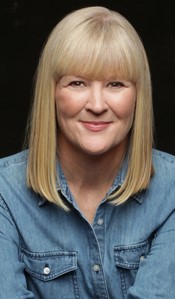
Suzanne Woods Fisher loves stories worth telling about people worth remembering. With over a million copies of her book sold worldwide, this bestselling, award-winning author of more than 30 books is always on the lookout for the unsung hero with an untold story.

Readers are invited to stop by Suzanne's website at: www.suzannewoodsfisher.com


October 7, 2022

Anything But Plain


INTERVIEW


with


Suzanne Woods Fisher


We welcome Carol award winner, Suzanne Woods Fisher who writes stories that take you to places you’ve never visited—one with characters that seem like old friends. But most of all, her books give you something to think about long after you’ve finished reading it. With over 1.5 million copies of her books sold worldwide, Suzanne is the best-selling author of more than thirty books, ranging from non-fiction books, to children’s books, to novels. She lives with her very big family in northern California.


Her newest book is Anything But Plain.


When did you start writing?

I was living in Houston, Texas and was a brand new mom. I learned of a diaper delivery service that was looking for someone to write a monthly newsletter in exchange for diaper service. I grabbed it! I appreciated the free cotton diaper service, but I loved writing the newsletter.

Who were/are two of your favorite authors?

Catherine Marshall is my go-to author—but not for Christy (as good as that novel is). For her non-fiction books: The Helper, Beyond Ourselves, To Live Again.

In what way do you feel they influenced you and in what way?

Those books have been a spiritual guidepost for me, a glowing lantern. Catherine Marshall’s life of faith has both depth and intimacy, and we’re so fortunate that she had shared her inner life in her books. Whenever I sense myself drifting or doubting, I’ll pull out one of her books. The result has always been like stirring coals until the embers spark and flame again.

What point in your writing career do you feel you left the amateur level and went to pro?

Um…well, I still feel like an amateur! Like…every contract is my last one. But here’s something good that comes from that insecurity: I work hard to make each book better than the one before it. Every single book.

What do you look for in choosing a setting for your book?


A good setting is more than a backdrop. It becomes one of the characters of the book. For Amish books, a rural farm setting helps the reader feel transported: It’s full of quiet, with wide open spaces and grazing animals. A horse’s whinny or a gurgling brook remind the reader that she’s in another world, at least until the last page.

What steps if any are involved in research for your book?

First, a lot of digging on the internet. Second, reading non-fiction books to provide knowledge about a topic. Third, get on a plane. It makes such a difference to travel to a site, to soak it up, to pay attention to the smallest details that can bring a story to life. Here’s a small example: on one of my first trips to Amish country, I noticed how large women’s hands were. Strong hands. Working hands. While researching the Three Sisters Island series in Maine, I overheard a local woman say that she could “feel” the ferry approaching, like it was part of her. There’s just so many on-the-ground details an author can glean through original sourcing. In fact, other than a global pandemic, there’s just no excuse for an author to not make the effort to get to the setting of their book.

In writing your new book, what do you feel makes it stand out?

Anything but Plain is a story about a young Amish woman with ADHD—she’s a square peg in a round hole. She’s so frustrated with her life that she’s convinced leaving the Amish and her family is her only option—until someone steps in to help her.

In your new book, what would you like the reader to feel and walk away with?

Strategies to overcome distractions. Painlessly delivered through a wonderfully captivating story!

What's the best writing advice you've received so far?

Long ago, I read a newspaper article about a woman on her one hundredth birthday. The reporter asked why she thought she had lived so long. The woman said, “Because I want to see what happens next.”

That’s exactly what writing a book should be like! The reader should be eager to know what will happen in the next page, the next chapter, the next book in the series.

What's the worst?

To read your customer reviews. Don’t do it!

Between plotting, character development, dialogue, scenes which is easiest for you, and which takes a lot of effort?

Character development comes naturally. Closing scenes takes a lot of effort, especially closing a chapter. Remember, you want the reader to think: “What happens next?”

What is your writing schedule?


Early in the morning. I have a wordcount each day that I hit, rain or shine.

What do you do if you get stumped?

I write through it. I’m not a believer in writer’s block. My daily wordcount might not always be sterling work, but it moves things forward. It keeps my head in the story.

Did you or do you make any sacrifices to be a writer?

Writing requires so much time alone. I have to say no to many other things—activities I’d like to participate in, even friendships I’d like to deepen—because that writing time needs to be protected.

Did you choose your genre, or did it choose you?

Interesting question! I think it chose me. My grandfather was raised Plain. Lots of family history there.

What is the best way you found to market your book?

Building up my newsletter subscribers. It’s quite robust. They’re dedicated and loyal, and have been so good to me. 

Did you actively build a network of readers and if so, how?

I work hard to take care of my subscribers—they’re the first to receive news and updates, plus they get early access to special giveaways or contests. As for gaining new contacts, I sign up regularly for Ryan Zee Booksweeps, and would recommend the contests for authors who are building their subscriber list and/or BookBub followers.

Are you on the Social Media Highway and if so, do you schedule times to post?

I post regularly, but not daily. Lately, I’ve been posting on Instagram and share it on FB/Twitter. The problem is I forget to check Facebook comments! I’m working on that.

What advice would you like to give new authors that would help them?

Hangeth thou in there!


May 6, 2022

The Story Behind The Sweet Life


Suzanne Woods Fisher


A reader sent me an email after reading the first chapter of The Sweet Life. “I can’t imagine any mother,” she wrote, “having surgery for breast cancer without telling her daughter.”

Uh, well, that would be me.

After a routine mammogram discovered breast cancer, I made a decision to not tell my family until after the surgery. Hold your judgment! I had good reasons.

First of all, I found out I had cancer on Christmas Eve (such a bummer!), my mother-in-law had just passed away, my youngest son was bringing his sweetheart home for Christmas, and it was clear an engagement was pending, my youngest daughter’s mother-in-law was undergoing treatment for a brain tumor. Too much! It was all too much.

So, I chose to keep my news to myself. I did leave a “just in case something goes wrong” note for my four adult children. About a week after the surgery, I told them. Yes, they were mad at me. More mad than worried.

But that was okay. I hadn’t wanted anyone to worry about me. After all, I had a book to write! And thank God I did, because “The Sweet Life” became a wonderful escape during six long weeks of radiation. Cathartic, too. I wove the whole experience into Marnie Dixon’s story—though breast cancer wasn’t a major plot line. Still, what you’ll read came from firsthand experience. It’s a very personal story for me.

The Sweet Life is a novel about Marnie and her daughter, Dawn, both in need of a fresh start. Dawn’s fiancĂ©, Kevin, has just called off the wedding. And Marnie…well, you already know about her back story. The two women end up on Cape Cod and Marnie, being a smidge impulsive, makes a low ball offer on a rundown ice cream shop. To her surprise, and Dawn’s horror, the offer was accepted. Suddenly, they’re in the ice cream business. And Marnie has never made ice cream before. Not once.

To circle back to my story…I’m doing great! That’s the thing about cancer, especially the all-too-common diagnosis of breast cancer—catch it early! It’s so curable. A note to all women who might be reading this post: please schedule your annual mammogram. Keep that appointment. And if, like me, you do end up with a diagnosis you hadn’t expected, please feel free to email me for encouragement. suzanne@suzannewoodsfisher.com


Suzanne Woods Fisher, with over 1.5 million copies sold, is a bestselling author of over 39 books, ranging from novels to children’s books to non-fiction. She is a Christy Award finalist, a winner of Carol and Selah awards, and a two-time finalist for ECPA Book of the Year. She writes stories that take you to places you’ve never visited—one with characters that seem like old friends. But most of all, her books give you something to think about long after you’ve finished reading them. Suzanne lives with her very big family in northern California.

March 16, 2022

Suzanne Woods Fisher ~ I Love To Write!


                               Suzanne Fisher


WV STITCHER said of Suzanne Woods Fisher, “Fisher writes her characters like they are old friends, making me connect with them, hoping that their lives will work out for the best, and when I come to the end of a story, I find myself missing them, and hoping to see them again in another story.”

Suzanne Woods Fisher is an award-winning, bestselling author of more than 40 books, including The Sweet Life, The Moonlight School, and A Season on the Wind, as well as the Three Sisters Island, Nantucket Legacy, Amish Beginnings, The Bishop's Family, The Deacon's Family, and The Inn at Eagle Hill series. She is also the author of several nonfiction books about the Amish, including Amish Peace and Amish Proverbs. She lives in California.

The first book she wrote for Revell was non-fiction, Amish Peace for a Complicated World. It became a foundational book for her to write credibly about the Old Order Amish, to look beyond the bonnets, buggies and beards. That book became a ECPA Book of the Year finalist.

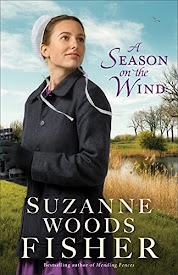
Her book, A Season on the Wind, released in October of 2021. With this book she welcomes her readers to the Amish community at Stoney Ridge in this engaging story of discovering just who the rare birds are in life.


Ben Zook had only two loves in his life: books and birds. In a stroke of good fortune, he'd stumbled onto a way to cobble together those two loves into a career, writing books about rare birds. He was as free as a bird--until a chase for a rare White-winged Tern takes him to the one place on earth he planned to never return: his Amish home in Stoney Ridge.

Desperate for photographs of the elusive tern, Ben hires a local field guide, Micah Weaver, and boards at Micah's farm, planning to "bag the bird" and leave Stoney Ridge before anyone recognizes him. But he neglected to plan for Micah's sister, Penny.

One long-ago summer, Penny had introduced Ben to birding, even sharing with him a hidden eagle aerie. That was when she knew true love. She'd always hoped he would come back to Stoney Ridge. Back to his Amish roots. Back to her. The only problem? Ben has absolutely no memory of Penny.


Here are a few of the praises she has received:


“Fisher has taken her research to the next level and brings to life the forgotten beginning of Quakers on Nantucket Island.” RT 4 1/2 STAR TOP PICK


“It’s so well written, and even though it’s labeled as a romance, it’s probably one of the most “real” fiction books that I’ve read.” RENEE, BLACK ‘N GOLD GIRL’S BOOK SPOT ON THE LESSON


“Fisher’s superb command of her historical setting is particularly commendable as she launches her Nantucket Legacy series.” BOOKLIST


“Fisher’s writing brings that Amish sense of peace into your own world. The Choice brings an entirely new perspective to the Amish way of life. You will love it!” KRISTIN BILLERBECK ON THE CHOICE


In May of 2022, Fisher's new book, The Sweet Life, Book #1 of her new series, Cape Cod Creamery releases. She welcomes her readers to a summer of sweet surprises on Cape Cod--a place where dreams just might come true.

You won't want to miss this exciting new story!

Learn more at www.suzannewoodsfisher.com and follow Suzanne on  Facebook@SuzanneWoodsFisherAuthor and Twitter @suzannewfisher

Photo Credit: © Dan Davis Photography

October 18, 2021

Things I Learned the Hard Way So You Don’t Have To


Suzanne Woods Fisher


Small ponds are a great place to start. I volunteered a lot of time as a writer before I ever became published. One of my first writing assignments was to write a newsletter for a diaper service and, in exchange, I received free diapers. Yes, diapers. I had so much to learn. For example, one time, someone mentioned casually that my verb tenses weren’t lining up. She was right! (They’ve lined up ever since.)

Say yes to as many writing opportunities as you can. And seek out feedback on your work, guidance, suggestions, editing. It’ll reap endless benefits.


Rejection isn’t so bad, once you get used to it. Toughen up. Learning how to take criticism is part of the author gig. When my first book came out, it was reviewed by Publisher’s Weekly (which was good) and promptly skewered (which was bad). I thought my writing career was over, before it even began.

Here’s what I learned from that experience:

-Critics have a bias.

-Critics can be wrong. That book, The Choice, has sold over 200,000 copies.


You only get one chance to debut. Don’t blow it. Not long ago, I was asked to judge first pages at a Masters’ Writing Class. In about twenty-five entries, most had so many grammatical errors and typos in those first pages that they interfered with reading the story. So unnecessary! So fixable.


Oy yeh! I should have majored in marketing. Marketing and promotion are half my job. Literally, half. They are entirely different skill sets, yet just as important as the skills of writing a good book

The Twenty Mile March. You’re probably familiar with the story of the 1911 teams that set out to reach the South Pole. They were led by two experienced explorers: Norwegian named Roald Amundsen and Englishman named Robert Falcott Scott.

Both teams departed within days of each other. Amundsen committed to traveling no more than 20 miles per day regardless of conditions. Scott stopped when conditions were bad and made up for lost time when the weather improved.

Stop for a moment. Which team do you see yourself on? Most writers would jump to Scott’s team, preferring to wait until inspiration strikes before they finish that book.

Tragically, Scott and every member of his team perished, only eleven miles from a cache of food. Amundsen and his team made it to the South Pole first, and returned back again.

The 20 Mile March is a great illustration of how consistent, disciplined action wins out over waiting for conditions to be right—because they never will be. I have written three books a year for over a decade by hitting a word count every single day but Sunday. It works!

Set reasonable writing goals for yourself. And then stick to your plan. You’ll be amazed at what can happen when you do.


Carol award winner Suzanne Woods Fisher writes stories that take you to places you’ve never visited—one with characters that seem like old friends. But most of all, her books give you something to think about long after you’ve finished reading it. With over one million copies of her books sold worldwide, Suzanne is the best-selling author of more than thirty books, ranging from non-fiction books, to children’s books, to novels. She lives with her very big family in northern California.

June 2, 2021

So…What Now?

 Suzanne Woods Fisher


A few weeks ago, I received my second vaccine for Covid-19. Afterwards, driving home, I felt such a sense of relief, like I’d been holding my breath for a long time and could finally release it. Not only is our country finally on the downhill side of a global pandemic, but my (very large, extended) family made it through relatively unscathed. My niece, working as a physician’s assistant on the Covid floor of a NYC hospital, never caught the virus. Early in the pandemic, she begged everyone she knew to send M-95 masks to her. My youngest son, who became infected late in the pandemic, recovered swiftly.


At long last, “normal life” is starting to return. For me, and probably for most full-time writers, it’s not so very different from pandemic life—I’ve always been protective of the time needed to write well and stay on top of deadlines. A question I’m often asked is whether I’m writing more quickly, more efficiently, because of the lockdowns. My answer, “Not really,” comes with a shrug of my shoulders. A manuscript is like a hungry bear. It requires all the time it’s allowed, right up to the deadline. If it’s given more time, it just consumes more time.


Still, there is a lesson from the pandemic that will stick with me: Life can change in the blink of an eye.


That theme circles through At Lighthouse Point, the final book in the Three Sisters Island series. The storyline has nothing to do with a pandemic (who wants to read about that?!), and everything to do with main character Blaine Grayson’s acute awareness of her vulnerabilities. After an absence of two years, Blaine returns to the little island in Maine with big plans and high hopes, only to discover that any control she thought she had over her life was an illusion.


Hold on! The story doesn’t end on a bleak note. It would, if God weren’t part of the conversation. Happily, He is. For Blaine, for me, for you. The Lord God has plans for this world that’s emerging, slowly, from a global pandemic. Good plans. Ones that are full of hope, full of a bright future. Plans for each one of us. There’s a verse in the book of Isaiah that’s just as relevant today as it was in 700 BC, when the prophet penned them:


“Forget about what’s happened;
don’t keep going over old history.
Be alert, be present. I’m about to do something brand-new.
It’s bursting out! Don’t you see it?
There it is!” (Isaiah 43:18-19, msg)


With over one million copies sold, Suzanne Woods Fisher is a bestselling, award winning author of over 30 books, ranging from novels to children’s books to non-fiction. She is a Christy Award finalist, a Carol and Selah award winner, and a two-time finalist for ECPA Book of the Year. She writes stories that take you to places you’ve never visited—one with characters that seem like old friends. But most of all, her books give you something to think about long after you’ve finished reading it. Suzanne lives with her very big family in northern California.

Readers are invited to stop by www.suzannewoodsfisher.com.

February 3, 2021

Truth into Fiction -The Moonlight School

 Suzanne Woods Fisher


I was asked how I set my goals for writing for the new year? Have you ever heard of the 20 Mile March? It came out of the 1911 exploration to the South Pole. One team, led by Englishman Robert Falcon Scott, used good weather to their advantage. Some days, they went as far as 40-60 miles. When the weather turned bad, they hunkered down and waited it out, using the pause to rest, and to repair equipment. The other team, led by Norwegian Roald Amundsen, completed a 20-mile march daily, no matter the weather. Even if all conditions were perfect, Amundsen’s team stopped after reaching their daily goal.


Let’s shift those strategies to the writing world. Many writers wait for ideal conditions—an empty calendar, a quiet house, ideas to blossom. Other writers plow forward. While there’s no right or wrong way to achieve writing goals, do consider this: Amundsen’s team made it to the South Pole and back again. Scott’s team died, only 11 miles from a cache of food.


Back to the question. I am a 20 Mile March writer. On every day but Sunday, I aim for a specific word count. It’s not always stellar writing, but this strategy moves my work-in-progress forward. And I have not missed a deadline yet.


Most of writing is fairly isolated, even with the virus, that part hasn’t changed. But the virus had had a huge impact on how I do research, on limitations of travel, on promoting a book on-line rather than in person. Alas, this is just the reality of life for now. In a curious way, I think the virus has fast-forwarded a lot of changed behavior (such as using Zoom for meetings or working remotely). I have a hunch that many pandemic-related adjustments might become permanent.


I feel a sense of urgency to share the message of hope in my writing since the pandemic. Life is so hard, with so many losses piling up. Writers with hope, to me, are like lighted candles on a dark night. Helping others find the path to a loving God.


Many people ask where I get my ideas for a new book. The Moonlight School idea is a fun story! I listen to a classical music radio station as I write. A few years ago, the announcer made a passing comment: "On this day in history, the Moonlight Schools began." I stopped writing and googled Moonlight Schools…then Cora Wilson Stewart. Then I did some more research. And then I called my editor! She was just as intrigued as I was, and a contract was soon in the works. The Moonlight School is based on a true story of an ordinary woman who lived an extraordinary life. It is a story that belongs to all of us.


To tell you what was the easiest and most difficult part of writing my new book I have to circle back to the start of the pandemic. I was working on a draft of The Moonlight School and had a trip set up to eastern Kentucky, including meetings lined up with scholars whom I’d interviewed over the phone, and I was eager to collect photographs for future book promotion. BOOM. The trip fell apart because of the country’s lockdown. Eventually, I turned in the manuscript with a confidence that I had done enough research, but I was (still am!) sorely disappointed.


And yet…all of us have faced disappointments this year. We’ll get through this, together!


Suzanne Woods Fisher is an award-winning, bestselling author of more than 30 books, including On a Summer Tide and On a Coastal Breeze, as well as the Nantucket Legacy, Amish Beginnings, The Bishop’s Family, The Deacon’s Family, and The Inn at Eagle Hill series, among other novels. She is also the author of several nonfiction books about the Amish, including Amish Peace and Amish Proverbs. She lives in California. Learn more at www.suzannewoodsfisher.com and follow Suzanne on Facebook @SuzanneWoodsFisherAuthor and Twitter @suzannewfisher.

January 31, 2020

Like a Thank You to a Friend


By Suzanne Woods Fisher  @suzannewfisher


Just a few days ago, I received an email from a reader who wanted me to know that she was throwing my book in the trash. I’d offended her, somehow, and she wanted me to know it. I thanked her for her feedback, like I would thank a friend.

When I first started getting published, that kind of reader email would have thrown me for a loop. I would have felt hurt or misunderstood or defensive. Probably…all three. And my already shaky confidence about my writing ability would go off-kilter, not unlike a wobbly spinning top.

May 3, 2019

Don’t Count Your Critics


By Suzanne Woods Fisher


A few weeks before my first novel was due to release, I received an advance review from Publisher’s Weekly. That moment is seared in my mind: I remember the time of day it was when I received the email, where I stood in my house, how it felt as I read it.

Because it was…terrible. The reviewer skewered my book. Usually, there’s something positive to spin from reviews, even if it’s just a few words to pluck. Not this one. The reviewer hated the book from start to finish, effectively giving me a very public black eye.

It was a crushing blow. I was convinced that my publisher would halt production of my book and rip up all my contracts. Finished…before I even got started.

That was thirty books ago. I’ve gained a thick skin since that first review, something all writers need but no one tells you how to get. Turns out, you get it through awful reviews. Every single author will get a few battle scars along the way, especially in this reign of customer-driven-social-media. A career in writing can be compared to standing in front of the world in your underwear. You’re oh-so-exposed. 

But one mark of a professional writer is to persevere, to welcome scrutiny and learn from it, with the goal of continually improving skills. 

Here’s my best advice for writers: Don’t count your critics. Weigh them.

You want to please the right people, because you can’t please everyone. If you try to please everyone, you’ll only get stuck. So, then, who are the right people? Who are the critics you need to weigh? For me, they’re my editors, my agent, and my first draft readers.

Here’s my next best advice: Critics can be wrong.

That first book, the one that received such a horrible, scarring review from Publisher’s Weekly, is still in print, ten years later. Either readers weren’t reading the reviews or people just didn’t care what the critics said. That book did really well. To date, it’s sold over 200,000 copies. 

I can’t promise the same outcome for you, but I also hope you don’t receive a scathing review for your first novel. Regardless, here’s my last piece of advice for you as an aspiring writer: Do not quit. No matter what. If you’re meant to write, you are meant to write.
______________________________________________________
Carol award winner Suzanne Woods Fisher writes stories that take you to places you’ve never visited—one with characters that seem like old friends. But most of all, her books give you something to think about long after you’ve finished reading it. With over one million copies of her books sold worldwide, Suzanne is the best-selling author of more than thirty books, ranging from non-fiction books, to children’s books, to novels. She lives with her very big family in northern California. Social Media: FacebookTwitter, InstagramBookbub, Goodreads,  


February 4, 2019

My Ten Best Tips for New Authors


By Suzanne Woods Fisher


I started small. My first novel was published by a small royalty press publisher.  That little book won some awards, which caught the eye of an agent, who introduced me to an editor at Revell Books. Now, thirty books later, I’m profoundly grateful for that small start, and I encourage aspiring authors to consider starting small. It’s where I learned about marketing and promotion, and how I developed perseverance and resiliency. Book by book, here are the best ten tips I learned: 

1) Ask your blog readers/friends/family to "suggest a purchase" of your book at their local public library.

2) Offer promotional postcards and bookmarks in your newsletter. (You have a newsletter, right?) Invite friends and readers to send out stamped postcards (you provide stamps and postcards) to their reader-friends.

3) Call your local bookstores and ask if they might do a book signing. Then offer to help publicize on your blog/website/FB/Twitter by sending out info to your local following.  

4) How’s your website looking? A little outdated? Or amateurish? If you’re using your church directory photo for your professional pix, it’s time to upgrade. Consider spending some money in a polished, easy-to-navigate website and customized blog. This kind of “branding yourself” investment pays off.

5) Consider hosting a “book launch party” to help kick off the buzz. Some authors do a local launch party and invite friends and family. Others do a virtual party, on-line, through Facebook. Again, you might need to invest some of your advance money, but the pay-off is substantial.

6) On your website, offer to attend book clubs that read your book—in person, if they’re local, via speaker phone or Skype if they’re not. A nice touch is to send some bookmarks or gourmet chocolates or a cookbook or some kind of inexpensive prize to the hostess.

7) Offer to send signed bookplates and bookmarks to interested fans.

8) Contact local writers’ groups and introduce yourself. Offer to speak about your book, or about your journey to publication. Even if their calendar might be scheduled out for a while, you’re on their radar. Usually, you can sell your books after the event. 

9) Don’t underestimate consignment sales of your book in unexpected places. Consider retail shops or outlets that have some kind of connection to your book (a World War II museum shop for war novels, a hotel gift shop for a regional book). Offer consignment: usually a 60/40 arrangement. It’s no risk to the retailer and targets your readership. You provide the books from your author inventory and you’ll receive a check from the retailer after the books sell.

10) Anytime (anywhere--even on vacation) you pass a bookstore, stop in and introduce yourself. Offer to sign your in-stock books. (Ask first!) The bookstore often puts an “Autographed By” sticker on the books, which can help it sell.

Little by little, these tips add up to bring exposure to your new book, and a lasting connection to you!
___________________________________________
Suzanne Woods Fisher is an award-winning, bestselling author of more than thirty books, including Mending Fences, as well as the Nantucket Legacy, Amish Beginnings, The Bishop’s Family, and The Inn at Eagle Hill series, among other novels. She is also the author of several nonfiction books about the Amish, including Amish Peace and Amish Proverbs. She lives in California. Learn more at www.suzannewoodsfisher.com and follow Suzanne on Facebook @SuzanneWoodsFisherAuthor and Twitter @suzannewfisher. Social Media Handles: Facebook www.facebook.com/SuzanneWoodsFisherAuthor
Twitter @suzannewfisher Instagram @suzannewoodsfisher


July 11, 2018

The 20 Mile March and the Muse


By Suzanne Woods Fisher

           
In October of 1911, two teams lined up on the coast of Antarctica with the same goal: to be the first humans in history to reach the South Pole.

One team was led by Norwegian Roald Amundsen. The other team was led by Englishman Robert Falcon Scott. Those two men were highly qualified, respected explorers of similar age and experience. They departed the coast within days of each other.

Amundsen committed to a fanatical discipline, traveling no more than 20 miles per day regardless of conditions. Scott stopped when conditions were bad, then pushed forward to make up for lost time when the weather improved.

As Amundsen’s team closed to within 45 miles of the pole, conditions were favorable to secure victory with one final breathtaking push to their destination. They had no idea where Scott was. For all they knew, Scott could have already come and gone. The team urged Amundsen to get to the pole in one final, relentless push.

But Amundsen refused.

Instead, he went seventeen miles and stopped. He thought if his team reached the pole in one long drive and then hit an unexpected storm, they would be left exhausted and overstretched, risking their lives.

In the end, Amundsen and his team reached the South Pole first. Scott and his team arrived thirty-four days later. Amundsen made it all the way back to his base camp on the precise day he had logged it in his planning journal.
Tragically, on their return trip, Scott and every member of his team perished, only eleven miles from a cache of stored food.   

The 20 Mile March has such a profound message to answer a writer’s question: How do you reach a deadline? So often, writers wait for conditions to be favorable in order to allow inspiration to strike. The problem is, conditions are rarely, if ever, favorable. Writing is hard work, and not every day is “billable.”

As I worked on Minding the Light, book 2 in the ‘Nantucket Legacy’ series, I mapped out a reasonable goal of a daily word count to hit, come rain or shine. When I reached it, I stopped. It worked. I made the deadline with time to spare.

Here’s what I’ve learned from the 20 Mile March: consistent, disciplined action wins out, every time. That doesn’t mean inspiration isn’t a significant part of the writing experience, but don’t wait for it to show up. Plain and simple, just keep writing.
____________________________________________________________
Suzanne Woods Fisher is an award-winning, bestselling author of more than two dozen novels, including Phoebe’s Light, the Amish Beginnings series, The Bishop’s Family series, and The Inn at Eagle Hill series, as well as nonfiction books about the Amish, including Amish Peace and The Heart of the Amish. She lives in California. Learn more at www.suzannewoodsfisher.com and follow Suzanne on Facebook @SuzanneWoodsFisherAuthor and Twitter @suzannewfisher.


November 22, 2017

Writing and the 20 Mile March

  
By Suzanne Woods Fisher


The 1910 race to be the first to reach the South Pole is a fascinating, tragic, and profound story. Roald Amundsen, a Norwegian, and Robert Falcon Scott, an English explorer, started at separate points on Antarctica. The weather conditions were the same for both teams, though their methods to reach the Pole were radically different. And so were their results. 

Scott’s large team used a variety of animals for hauling; Amundsen’s team had five men and used only dogs to haul. Scott gathered scientific information about Antarctica, Amundsen had only one mission on his mind: to reach the Pole first. Scott took over 2,000 photographs, Amundsen took ten, and only after he reached the Pole. Scott took advantage of beneficial weather to make greater daily gains, Amundsen’s team marched 15-20 miles per day and then stopped, no matter the weather conditions. Scott pushed his team over ten hours per day when weather was good, but rested in their tents on stormy days. Amundsen stopped his team after five hours, insisting on rest and recuperation for his team. 

Scott, one might think, would have been the first to summit. Yet Amundsen reached the South Pole first, stuck in his flag, and set off on a successful return journey. Two weeks later, Scott finally arrived at the Pole, exhausted, discouraged, resources depleted. On the return trip, his team died of starvation and exposure. To heighten the tragedy of their death, they died within fifteen miles of a cache of food. 

Mindful of oversimplifying Amundsen’s “20 Mile March” concept, and not to dismiss Scott’s heroic efforts, there is much to learn from these two explorers. Amundsen, in particular. To reach a goal requires faithful, consistent discipline, but it also requires rest and recuperation. As a writer of multiple books, I’ve adopted the 20 Mile March method and have found it to be the very best way to write a book. The very best way. 

My writing schedule is rather rigorous: I write three books a year. I’m up early in the morning. After coffee and Bible study, my first goal is to reach my daily word count. No matter what. When I reach it, I stop. Doing so allows me to step away from the computer, protects my hands from dreaded repetitive wear, provides margin for a sick day or unexpected circumstances, and gives my mind time to think and plot without stress. It helps me have balance in my life, and leaves energy for my other responsibilities. Using this method, I do finish manuscripts, slowly, steadily and well ahead of the deadline.

There’s no easy short cut to reach a difficult goal, but Amundsen’s South Pole expedition showed us a way to increase the odds for success and make it to that finish line (completing a manuscript!), whole and healthy.

#The End#
________________________________________________________________
Suzanne Woods Fisher’s interest in the Amish began with her grandfather, W.D. Benedict, who was raised Plain in Franklin County, Pennsylvania. Suzanne has a great admiration for the Plain people and believes they can provide wonderful examples to the world. But she’s not implying they’re perfect, or hold a secret to life.  In both her fiction and non-fiction books, she has an underlying theme: You don’t have to “go Amish” to incorporate many of their principles–simplicity, living with less, appreciating nature, forgiving others more readily, trusting in God–into your life. Those are values that can be sought and reached by all of us.When Suzanne isn’t writing or playing tennis or bragging to her friends about her grandbabies (so cute!), she’s volunteering with puppies for Guide Dogs for the Blind. Suzanne can be found on-line at:  www.suzannewoodsfisher.com   https://www.facebook.com/SuzanneWoodsFisherAuthor


December 9, 2015

Writing the Hand You're Dealt

By Chandler Gerber


Each of us has certain talents and abilities; that’s life.  Some are good with numbers, others are good with athletics, and some are good with music.  As I’ve gone through life, I’ve always enjoyed writing and putting my thoughts on paper.  However, I never knew how big of an impact writing would have on my life.

I’ve gone through two life-altering car crashes.  The first, I was a victim in; the second, I was responsible for.  After suffering major head trauma as a result of the first crash, I was counseled to do some journaling as a form of therapy.  I began journaling and writing about my emotions and challenges and the words continued to flow onto the computer screen. Miraculously, after extensive therapy, my mental capabilities returned to their normal levels!   

After the second crash, the one that I was responsible for, I suffered with severe depression and anxiety after taking three lives due to my carelessness behind the wheel.  Again, journaling was recommended to me, and it was very therapeutic.  I started writing about the experience, and although the season that I was currently in passed, my enjoyment for writing remained.  I began blogging at chandlergerber.blogspot.com and I continued to write about my story in my spare time. I teamed up with AT&T and their “It can wait” campaign against distracted driving.  The “From One Second to the Next” documentary was launched on YouTube and Netflix and has been viewed millions of times.  Once the film went viral, opportunities abounded.  I appeared on the “Today” show, spoke with Katie Couric, and was featured in an international commercial promoting driving safety that can still be found on YouTube. 

The icing on the cake was when Suzanne Woods Fisher, the best-selling author out of California, called and asked me to be a part of one of her upcoming books, “The Heart of the Amish”.  That opportunity landed me a position with the Hartline Literary Agency and the opportunity to put an actual book together about my experiences and how God used them to truly bring, “Beauty from Ashes”, as the title of my upcoming book implies.  As I speak around the country to businesses, churches, and schools, my message is clear: Don’t give up.  Life will undoubtedly throw you curve balls from time to time. We each have to learn how to hit them. 

We each deal with things at different times.  After the experiences that I’ve had, I now speak on the dangers of distracted driving, forgiveness, compassion, and perseverance because those are the topics that I have learned about firsthand. I don’t have the college degrees that would be needed to teach on these topics in a formal classroom setting, but as the old saying goes: “A man with an opinion is not at the mercy of a man with an experience.”  

For some people, maybe they are creative and like to write fictional stories.   For others, maybe rhyming comes instinctively so they write children’s books.  I’m just playing the hand that I was dealt, and whether I like it or not, God has me here so I’m going to show the world just how faithful He is. Never give up!
___________________________________________________________________________
Chandler Gerber is a husband to Rachel and a father to a daughter, Shiloh, and a son, Zander. He was born and raised in the area around Bluffton, Indiana where he still currently resides with his family. Chandler and his wife chose from the beginning of the chaotic time in their lives that started in 2009, to stay positive, up-beat, and to ultimately bring ‘Beauty from Ashes’. He has spoken around the country on the topics of driving safety, forgiveness, overcoming obstacles, and a variety of similar themes. Each of us has things in our lives that are unexpected or tragic and Chandler has devoted his life to showing others how to move through the valleys that life has to offer.   He presents the same methods that he personally used to cope with tragedy when he speaks and teaches. His life plans never included speaking or being involved in the public eye, but God has a way of using each of us as He sees fit.  Chandler’s blog can be found at chandlergerber.blogspot.com, his author’s page on Facebook, and his personal Facebook page.  Connect with him and send him your thoughts!