Pages

Showing posts with label Melody Carlson. Show all posts

September 8, 2022

Melody Carlson Interviewing With Suite T

Melody Carlson


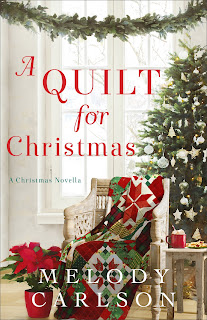
Award-winning author Melody Carlson has a special talent for bringing extra joy to the Christmas season. With over seven million copies sold, Carlson has charmed her way into the lives ofromance readers worldwide. She now crafts another heartwarming holiday tale about giving and forgiving and sprinkles it with just the right amount of romance in A Quilt for Christmas.


When did you start writing?

At age five. Seriously, I wrote little booklets as a child. I always wrote—journals, poetry, letters, short stories, etc. whenever I got the chance. I got serious about writing for publishing in my early thirties. Publishing came relatively soon after. That was about 300 books ago.

Who were/are two of your favorite authors?

That’s hard to answer because it can depend on my mood, time in life, etc.. Early in my writing career, I loved Rosemunde Pilcher and Maeve Binchey.

Do you feel they influenced you? In what way?

I loved how they took relatively simple stories of ordinary people (women) and expounded on them with great character development and wonderful description. I still enjoy those kinds of books.

What do you look for in choosing a setting for your book?

Something that makes me want to go there (then I can go vicariously) or a fond memory of a place I’ve been and loved. For this book, setting wasn’t as important as characterization.

What steps if any are involved in research for your book?

Because A QUILT FOR CHRISTMAS is about four women making a quilt, I had to brush up on the steps and tools. I used to make quilts (like 30 years ago) so I was a little rusty. But I live in a quilting town (Sisters Oregon) so there are plenty of resources right here

In writing your new book, what do you feel makes it stand out?

It’s the relationships of four women who were complete and diverse strangers, with some problems, who were brought together for a common goal, but it wasn’t easy getting there.

In your new book, what would you like the reader to feel and walk away with?

First of all a reminder that most people’s lives do not go smoothly (like it might appear on facebook or a Hallmark movie) and the holidays are a good time to reach out to others with grace and nonjudgment.

What is the best writing advice you have received so far?

Ironically, it’s Stephen King’s book ON WRITING because his style is so similar to mine I found it very encouraging and reassuring.

What is the worst?

Don’t give up your day job! You can’t make a living writing.

Between plotting, character development, dialogue, scenes which is easiest for you, and which takes a lot of effort?

I think character development and dialogue come pretty easily, which is probably why I am able to write screenplays too. I am not a plotter. Plotting makes me want to quit.

What do you do if you get stumped?

I don’t believe in getting stumped (AKA writer’s block) but if I do, I just try to step away and get fresh air. Or have a character walk into the room with a bawling baby or let a doorbell ring, something unexplainable to shake things up.

Did you or do you make any sacrifices to be a writer?

It’s a lonely sort of job. I have to watch out from turning into a hermit.

Did you choose your genre, or did it choose you?

I write is a lot of genres. Most recently it’s been more uplifting contemporary novels, but not limited to that.

What is the best way you found to market your book?

Readers and word of mouth and having written a lot of books for several decades.

Did you actively build a network of readers and if so, how?

Newsletters, facebook, interviews.

Are you on the Social Media Highway and if so, do you schedule times to post?

Not so much. I’ve never really had the knack. I usually feel lost out on that highway.

What advice would you like to give new authors that would help them?

First of all, read a lot in the genre you wish to write. Then just do it. Don’t let your interior editor, or anyone else, shut you down. Get your story completely done before you go back to edit. It’s lots easier to edit a finished book than a partially written one.


What are you working on now?

My 2023 Christmas novella, which is quite different. That’s all I’m saying for now. I’ve also been busily adapting some of my books into screenplays.


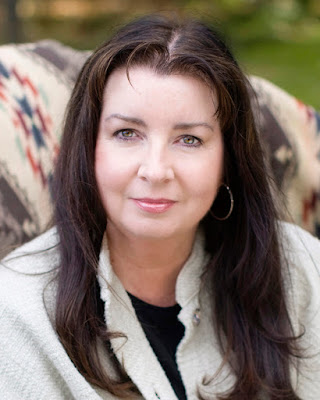
Melody Carlson is the award-winning author of more than 250 books with sales of more than 7.5 million, including many bestselling Christmas novellas, young adult titles, and contemporary romances.

She received a Romantic Times Career Achievement Award in the inspirational market for her many books, including Finding Alice, and her novel All Summer Long was made into a Hallmark movie. She and her husband live in central Oregon. Learn more at www.melodycarlson.com.

March 3, 2022

A Gift That Keeps On Giving


                               Melody Carlson


I always loved writing as a child and young adult, but never dreamed I could ever be a published author. Wasn’t that for someone more qualified, dignified . . . someone in a tweedy jacket with leather elbow patches and a sweet-smelling pipe? Despite encouragement from teachers who even called me a ‘gifted writer,’ and some early ‘successes’ in writing, I never considered myself a real writer. And yet I continued to write. A love of words and storytelling seemed to drive me. Whether it was journaling, corresponding, creating a PTA newsletter, or sending an opinion piece to the newspaper, I was always writing. Was it a gift?


Eventually, a deep burning desire to seriously write took over, and I joined a writers’ critique group. In my spare time, I began to pen (with a real pen and a yellow legal pad) a novel. I soon moved up to an electronic typewriter and, later on, a DOS word processing computer—weren’t those the days? But early in the game, probably due to my overly packed schedule, I discovered I could write fast. Was that a good thing, a bad thing, or maybe even a gift?


Before long, I’d completed half a dozen novels for tweens, teens, and women. My writing time, while working and raising kids, was sparse, but every chance I got I was hammering out a new story. I also spent a fair amount of time (and money) copying and mailing out manuscripts. That was back in the days before internet. And, no kidding, I received enough rejection letters to wallpaper my bathroom! I still have a boxful of them somewhere—they definitely didn’t feel like a gift!


But something finally clicked, and I began to receive book contracts instead of rejections. That was more than 250 books and nearly thirty years ago and yet, today, I’m just as amazed as ever. I still wonder how this all happened. But I’m grateful for it—and I was eventually able to admit that writing, for me, was a gift.


One of the things I love most about writing is that I can never conquer it. I had a number of other diverse occupations before becoming a fulltime writer, but I’d quickly become proficient in those jobs. In other words, they felt conquerable to me. The learning curve would fade, the challenge would flee, and a job I’d enjoyed would become boring. Not so with writing. I could work hard, study the craft diligently, and practice daily, but there was always something new to learn. And since I love to learn, it’s been like a gift to me.


I love knowing that I’ll never be the best writer! It forces me to keep going, keep chasing the story, keep developing new characters, keep digging deeper, and best of all keep learning. Lately I’ve been studying up on screenplay writing and adaptation. I love the idea of getting stories into film. I’ve got a number of projects in the works and even had a Hallmark movie in 2019. And an adaptation (The Happy Camper) in production stages now. That really feels like a gift!


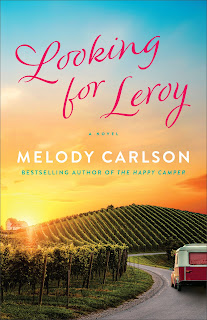
I’ve already adapted my newest book, Looking for Leroy, into a script and think it would be a fun film. It’s a road-trip story about Brynna Phillips—a woman who’s had some disappointments and in need of a second chance at life and love. While Brynna and her friend Jan camp their way from Oregon to California, Jan challenges Brynna to seek out an old high-school beau who might live in Sonoma County. But all Bryanna can remember is that 1) his first name is Leroy, 2) he was a very special guy, and 3) his family owned a vineyard in Sonoma. But that was three decades ago! Meanwhile Leroy has challenges of his own. A widower who’s raised three strong-willed daughters and trying to recover his vineyard from wildfires and a bad economy, is experiencing some middle-aged loneliness.


When Leroy’s and Brynna’s worlds collide, it gets interesting . . . and dicey. But it also provides a fun romp through a gorgeous old-world vineyard! When I wrote this story, during Covid, I got to travel vicariously with these characters as well as learn a bit about vineyards and wineries. What a fun excursion that I hope readers will enjoy as well! And that little getaway is just one more gift that comes with writing—and why I’ll probably never give it up!


Melody Carlson is the award-winning author of over two hundred books with sales
of more than seven million, including many bestselling Christmas novellas, young
adult titles, and contemporary romances. She received a Romantic Times Career
Achievement Award in the inspirational market for her many books,
including Finding Alice, and her novel All Summer Long was made into a Hallmark
movie. She and her husband live in central Oregon. 

Learn more at
www.MelodyCarlson.com.

September 6, 2021

The Perfect Writing Space

Melody Carlson


After thirty plus years of writing nearly 300 books, and occupying more office spaces and writing studios than I can even recall, I’m planning for what I hope will be my final writing space. Not to be confused with my final resting place! I currently write in what I lovingly refer to as ‘the dungeon.’ Because we’re building a new home and living in a studio apartment, my office space is carved into what is actually a book storage room. Dark and dreary and not exactly inviting. So as our new home move-in date approaches, I’m considering how to arrange my new writing space. What do I really need?


Over the years I’ve amassed a lot of writing related ‘stuff’ that requires space. Stuff like bulky reference books, outdated electronic gadgets, obsolete filing systems, plentiful paper products, dust-collecting writing awards and so on. But how much of this do I really need? How much do I actually use? Like other parts of life, I’m in the less-is-more phase. In the same way I’d like to declutter my mind, I hope to declutter my office. I realize it won’t be easy, but the reward (I hope) will be a serene space that allows room for dreaming, imagining . . . breathing.


Because we’re all wired differently, our ‘perfect’ writing spaces should be different too. Some writers are inspired in a noisy Starbucks. Others seek the silent isolation found alone in a parked car. Some writers require a neat orderly space, others thrive amidst creative chaos. Some of us need windows, others prefer a blank wall. So the question is: What kind of space best fits your style and your needs? How do you like to work? What inspires you to create?


Not that we always have the luxury of occupying an ideal space. I remember early in my writing career when we were remodeling and the only niche available for my little writing desk was next to the refrigerator. It was summertime and my boys were big teenagers with big appetites. The distractions were ongoing, but it did keep me cool. I know other writers who’ve made do with kitchen tables, closet offices, back porches . . . even a woman who put her kids in shopping mall daycare then occupied a public bathroom stall with her laptop on her knees as she pounded out a book. There’ve been times when I wrote by my husband’s hospital bedside, or in a waiting room while my son got medical treatments. Basically I think a writer who wants to write can make any place work.


But as I plan for my new office, my goal is simplicity. An ergonomic writing chair. A generous desk space (which hopefully won’t get too cluttered). Bookshelves for my books. Some limited storage, which will be carefully used. A small bulletin board for reminders, some pleasing art and design touches. And most importantly, a comfortable chair for daydreaming—because the perfect writing space is really in my head
!


Melody Carlson is the award-winning author of over 200 books with sales of more than 7 million, including many bestselling Christmas novellas, young adult titles, and contemporary romances. She and her husband live in central Oregon.

Learn more at www.melodycarlson.com.
 

June 28, 2021

Downsize, Upsize, Which is the Right Size?

Meloday Carlson


For some ironic and absurd reason, tiny homes have always fascinated me. The main reason I say it’s ironic is because my husband is 6’6” tall. Get the picture? He doesn’t exactly fit easily into small spaces. The absurd part of this flawed equation is my fault. I love home décor—things like pretty dishes and lamps and linens and furnishings—things that require space. These two factors do not lend themselves to less-is-more tiny house living.

Just the same I’ve enjoyed creating some fun ‘small spaces’ over the years. Like our redesigned RV, a renovated tiny beach cabin, a mini guesthouse, a scaled down writing studio and a few other compact habitats. I think it might all stem back to my favorite childhood toy—a rickety metal dollhouse filled with my homemade pixie sized furnishings.

So anyway, I got my first real taste of honest-to-goodness downsizing about six years ago when we went from 3,500 square feet of living space (that we’d occupied for almost twenty years) to 1,700. Let’s just say we had the biggest yard sale the neighborhood had ever seen. They still talk about it. Not much later, we downsized even more by selling the beach cabin and most of its furnishings. Naturally, our dramatic ‘downsize’ year resulted in a ‘temporary’ storage unit (which we still have!).

Although I liked our smaller home, it was an adjustment and a lot less space. Our three bedroom house (which held two office spaces) became a huge challenge for having guests? And I love being hospitable. But where do you put them? Another thing was troubling. We had this oversized never-landscaped lot. We loved living in town, but half an acre of dirt and weeds required massive work, followed by maintenance. Not exactly the downsized we’d been dreaming of.

So I got an idea. What if we split the lot and built on the other side? To that end, we constructed a ‘barn’ with two very small studio apartments above it. And then, just one year ago, we sold our 1,700 square foot house (in a matter of days!) and quickly moved into the apartments. Each studio is just over 300 square feet—real tiny living! We started summer with more donating household goods, more packing, more storing, more downsizing madness. Our friends thought we were crazy.

It wasn’t long before I thought our friends could be right. Besides discovering that 700 square feet—including two tiny kitchenettes and baths—is a formula for severe cabin fever (especially during winter and Covid!) we began to dream of upsizing. We began to design the home we wanted to create in the front part of our recently divided lot. I drew up plans for a house very similar the one we’d sold (which I greatly missed in our tight second floor quarters). Suddenly 1,700 square feet sounded like a mansion! Especially with the two apartments to use for guests after the house was finished.

But everything seemed to take longer than expected. While waiting on permits, we built a small ‘shed’ to use for storage now and perhaps my writing studio later. In the meantime, I’m writing in a cave-like book storage room in back of the barn. But we weren’t completely deprived. While it was still summer, we threw together a covered outdoor living room/kitchen (partly to store furniture) but also to enjoy during warm weather. And we hardscaped around it, adding a small raised garden and fishpond. Okay, I’ll admit it, our ‘downsize’ was steadily growing by ‘small’ increments. But it made things more livable. At least during warmer seasons. But winter was coming.

It was in autumn, with building finally begun, that my big husband got it into his big head to make our house bigger. He decided we needed a second story. While I was off visiting my sister, a second floor replaced what was supposed to be a small attic. I came home to find a tall house—much larger than the simple single-story ranch style home I’d envisioned. So much for downsizing. And, of course, this change brought a whole slew of new challenges with it. Not to mention severely slowing down what should’ve been a fairly simple build. I thought six months at the most.

So here I am, one year later, still living in small crowded spaces, longing for roomier ones, and suddenly my new novel Home Sweet Tiny Home is about to release. I had such fun writing that lighthearted story . . . back before my life changed so drastically. I lived vicariously through my main character. A widowed empty-nester, her McMansion was too much for her, and while binging on HGTV tiny house shows, she fell in love with the idea of a major downsize—and subsequently reinvented her life. Needless to say, I was still infatuated with small spaces while writing that book. I still believed less was more and that pixies could fly. Maybe I still believe in some of these things—tempered with experience.

What we have wound up with in our downsize-upsize adventure is a bit of both. Our nearly finished home of 1,700 square feet (plus an oversized unfinished attic) as well as a ‘barn’ with two studio apartments, a separate small studio, and an outdoor living area. Downsize, really? It’s like we created a compound! But it works for us. And with mostly hardscape, yardwork is a breeze.

So today, I must ask myself: what have I learned in my adventures of downsizing (and upsizing) over these past six years? Here is what I came up with: 1) People/relationships (like husbands and construction workers) are more important than things (like cabinets and plumbing fixtures). 2) Downsizing is not for the faint of heart or the wistful daydreamer. 3) Patience is a virtue I still need to work on. And 4) I never want to downsize or upsize again.


Melody Carlson has written more than 200 books (with sales around 6.5 million) for teens, women and children. That's a lot of books, but mostly she considers herself a "storyteller." Her novels range from
serious issues like schizophrenia (Finding Alice) to lighter topics like house-flipping (A Mile in My Flip-Flops) but most of the inspiration behind her fiction comes right out of real life. Her young adult novels (Diary of a Teenage Girl, TrueColors etc.) appeal to
teenage girls around the world. Her annual Christmas novellas become more popular each year. She's won a number of awards (including Romantic Time's Career Achievement Award, the Rita and the Gold
Medallion) and some of her books have been optioned for film/TV.
Hallmark movie ALL SUMMER LONG (2019) and another in the works Carlson has two grown sons and makes her home in the Pacific Northwest with her husband and yellow Lab dog. To find out more about Melody Carlson, visit her website at http://www.melodycarlson.com/


September 1, 2020

THE CHRISTMAS SWAP


Melody Carlson


For years I’ve dreamed of doing a house swap. You know—where you trade houses for an inexpensive vacation in a different locale. Since we live in the mountains with snow, winter sports and pine trees, I’ve imagined swapping for a warm sunbelt home with palm trees and a pool. But we’ve never actually done it. So . . . I thought . . . why not write a story about it? Especially since I’ve discovered that writing about things sometimes makes them happen.

So, when I sat down to write The Christmas Swap, I created two very different families who wanted to trade two very different spaces for the holidays. One house is in the Colorado Rockies and the other in Arizona. But the successful songwriter who owns the beautiful lodge-style Breckenridge house isn’t all that eager to trade it for Arizona sunshine. And when he meets one of the girls about to occupy his gorgeous home, he gets serious second thoughts. Something about this girl speaks to his heart. He wants to get to know her.

So, he decides, why not stick around, hole up in his studio/guest house and see what happens? Hopefully his family, already down in Arizona, will understand. But the misunderstandings break loose when he’s mistaken as the caretaker for the main house. To avoid the awkward situation and continue making the acquaintance of the young schoolteacher, he doesn’t straighten them out. Until things get messy. And they do! But isn’t that what makes story?

I’ve been writing Christmas novellas for about twenty years now so I’m familiar with the pacing and recognize the need to create an uplifting story in a limited amount of words. But I still want to make room for conflict and some surprises along the way. I realize the reader expects an encouraging tale and happy ending—and deserves as much in a Christmas novella—but I refuse to sugar-coat my story. To me, the best tales always include characters with some realistic problems. In fact, that is my definition of plot. Character plus challenge equals plot—and that makes a story.

Some writers might enjoy a more complicated process. And I completely respect that every author works differently. Even a bestselling author’s “secrets to success” won’t necessarily help everyone. Believe me, I’ve heard all kinds of theories and formulas and teachings on the art of writing in the past thirty years. I’ve even tried a few of these methods, only to discover that my ways are best for me. And my way is this—I prefer to keep it simple.

Whether you’re a beginner writer or have lots books under your belt, I believe the ‘rules’ remain fairly consistent. Create interesting relatable characters with tough conflicts, throw in an interesting setting, and your story is ready to roll. Let the fun begin! And even though I still hope to do a real house swap someday—I’m not going to swap writing styles anytime soon.

Melody Carlson is the award-winning author of over two hundred books with sales of more than seven million, including many bestselling Christmas novellas, young adult titles, and contemporary romances. She received a Romantic Times Career Achievement Award in the inspirational market for her many books, including Finding Alice. She and her husband live in central Oregon. 

Learn more at www.melodycarlson.com.

March 4, 2020

Story Pillars


By Melody Carlson, Author of The Happy Camper


When I first began to craft fiction—back in BC (before computers)—I’d had no formal writer training. All I knew was that I loved creating stories and I enjoyed reading good novels. Two important components to becoming a writer as it turned out. But somehow, in those early days, I intuitively grasped that a good story must be supported by good characters. Kind of like Atlas and Hercules, although those two pillars sometimes dropped the ball. But even that made their stories more interesting.

So for me, story always began with a character. I didn’t know a thing about ‘character development’ or ‘characterization,’ but it was vital that I liked my character—and that she always had a problem. I tried to create relatable problems, piling on the kinds of challenges that made me feel compassion and empathy for them. In other words, I wanted to care about my characters. Simple enough. Especially for a brand new writer.

After a number of novels (and some sweet awards) I became aware that many authors used a literary lingo that I wasn’t fully comfortable with. A kind of author-ese. And not wanting to be an outcast, I learned the meaning of character-related words like protagonist, antagonist, archetype, narrator and so on. I learned the difference between omniscient and first-person perspectives. But to be honest, I was never really comfortable talking like that. It made me feel kind of like a phony. Like why can’t I just call an antagonist the bad guy?

Another thing I discovered in those first years (through friends, books, workshops...) was there are numerous methods for ‘creating good characters.’ Techniques that experts swear by. Some authors extensively ‘interview’ their characters before they ever sit down to write. They ask: where were you born, what is your heritage, what’s your favorite food, greatest fear, shoe size, etc.? Other authors make character notebooks with notes and photos from magazines—like a pictorial biography. Some novelists even give their characters personality tests.

So I experimented with these tools, but the results were disappointing. And I wound up with characters I didn’t even like. Not because those techniques were faulted, but because that’s not how my brain works. I like to start a story with a character that I don’t really know, to get acquainted as the story evolves. It’s an exploration not so dissimilar to developing a real friendship. Some first impressions are spot-on, some not so much. It can take time to recognize both talents and flaws. But this simple method is what keeps me writing. Because it’s fun getting to know a new character . . . to make discoveries and be surprised. And I hope that’s how my readers feel too. So I’m still convinced that characters are the pillars that support the story. But everyone builds characters differently. I recommend that you find the method that’s best for you, trust your instincts, and just have fun with it!
____________________________________________________________
Melody Carlson is the award-winning author of over 200 books with sales of more than 7 million, including many bestselling Christmas novellas, young adult titles, and contemporary romances. She received a Romantic Times Career Achievement Award in the inspirational market for her many books, including Finding Alice. She and her husband live in central Oregon. Learn more at www.melodycarlson.com


January 21, 2019

A Voice in a Crowd


By Melody Carlson, Author of Courting Mr. Emerson


Have you ever walked into a bookstore with floor-to-ceiling bookshelves stuffed with every imaginable title . . . and suddenly you wanted to give up? As a book writer, I’ve been overwhelmed like that many a time. I’ve honestly asked myself, why does the world need one more book? And why a book written by me? And yet, I’ve continued to write—for more than three decades now, publishing more than 250 books. What keeps me at it? And what makes me think I have anything new or different to offer the world of readers? I still ask myself that occasionally.

That’s when I remind myself that each writer is unique. Every writer has their own individual voice. Like a thumbprint, we’re all one-of-a-kind and not reproducible. Try as you might, you cannot convincingly duplicate the voice of a Nicolas Sparks, Barbara Kingsolver . . . Flannery O’Conner. Oh, you might imitate their style, setting, genre . . . but you’ll never fully capture their voice. Why would you even try? An attempt to emulate another writer usually results in a muddy replica that no one fully enjoys.

But I must confess that, as simple as the concept of distinct writer’s voice seems, it took time for me to fully grasp this phenomenon. Oh, I could recognize characteristic traits in the voices of other writers, but for some reason I couldn’t seem to ‘hear’ my own writing voice. Even after I’d published a number of novels, I questioned whether I even had a voice. Perhaps I was the one and only ‘voiceless’ writer. Not a title I relished.

Then one time, I wrote an anonymous letter of endorsement to a publishing associate (hoping to help a friend’s book into print). My publishing friend informed me that he knew I’d written that letter. When I questioned how he knew, he said he could clearly hear my voice. The incident made me laugh, both with relief and irony. So maybe I did have a voice after all. It helped me realize that, as a writer, it can be hard to ‘hear’ our own voices. Another good excuse for good editors, savvy critique groups and honest readers.

Besides having a voice to set us apart and make us unique, we all have our own stories to tell. Stories comprised of diverse backgrounds, unique challenges, individual experiences, not to mention our one-of-a-kind DNA. All of this contributes to making our writing truly distinctive. Just one more reason not to be concerned over the fact that there are so many writers, or that more than a million books get published around the world annually. So next time you feel overwhelmed in a big bookstore, just remember that no one has a voice quite like yours. You are in good company!
_____________________________________________________________ 
Melody Carlson is the award-winning author of over two hundred books with sales of more than seven million, including many bestselling Christmas novellas, young adult titles, and contemporary romances. She received a Romantic Times Career Achievement Award in the inspirational market for her many books, including Finding Alice. She and her husband live in central Oregon. Learn more at www.melodycarlson.com.