Pages

January 10, 2022

To Prologue – Or Not To Prologue?


                                                                                    Leslie Budewitz


In a book club or a writers’ group, say you hate prologues and never read them. Or say you adore them. Then stand back and watch the opinions fly. The right prologue can set up and sum up the entire story. The wrong one can cost you a reader—and if that reader is an agent or editor, your manuscript may never see paper and ink.

What is a prologue and why do they prompt strong reactions?

A prologue is any short section at the beginning of a book that is, somehow, separate from the main story action. Some are labeled “prologue;” others are not or are labeled with a descriptive phrase such as December or At the Lake. Others slip their way into Chapter One almost imperceptibly. A prologue can set a mood, establish a character, show a past event with direct implications for present action, or introduce a character whose identity the author wants to keep hidden for a while. In historicals, fantasy, and science fiction, they can begin to build the story world.

The best serves more than one purpose, as in Orphan Train by Christina Baker Kline:

Prologue

I believe in ghosts. They’re the ones who haunt us, the ones who have left us behind. Many times in my life I have felt them around me, observing, witnessing, when no one in the living world knew or cared what happened.

I am ninety-one years old, and almost everyone who was once in my life is now a ghost.

The ghosts whispered to me, telling me to go on.

Prologue

After this one-page beginning, we move to present action, labeled “Spruce Harbor, Maine, 2011,” and told by Molly, a teenager in foster care. Kline’s narration switches between Molly and Vivian, the unnamed narrator of the prologue; chapters all start with place and time 
The prologue is poetic and thematic; it introduces one of the two main characters, both girls on their own in very different times and circumstances who meet in the present. It pulls us in and tells us what kind of story to expect.

Prologue

We know we’re being given a glimpse of the narrator’s reflection on what’s happened in Catriona McPherson’s Strangers at the Gate where the opening is labeled Before and starts with this:


Looking back, it’s tempting to say I knew from the start as soon as Paddy said the word for the first time. I can nearly convince myself I shivered at the sound of it. Simmerton.

But I’d be lying. Truth is, there was a while back then when everything seemed fine. Or even better than fine. . . .

Brief, but it yanks the reader in. What should Finn have known? Why didn’t she? Why did it all go so terribly wrong?

The most common use may be to portray past action that drives the present conflict. 

Prologue

Lori Rader-Day’s Under a Dark Sky begins this way:

A few years ago In the dim of the truck’s dashboard lights, Bix’s hand reached toward the steering wheel. “Hold on a second,” he said.

“At ease, soldier.” I swatted him away and kept my eyes on the road.

Eden, our narrator, has all but forgotten, or suppressed, this three-page exchange that occurred while they were driving home late one night. As the memories return, little by little, otherwise inexplicable actions of her now-deceased husband begin to make sense. Not until near the end does she put all the pieces together, finally understanding what Bix did and why, and freeing herself to move on.

Prologue

Another common use is to portray a crime or another incident that sparks the story but that can’t be shown in the primary narrative because it involves only the criminal, whom the main POV characters have not yet encountered, or the killer and victim. Two examples from long-running series, the first from In a Dark House by Deborah Crombie, a police procedural set in the UK, the second from Through the Grinder, a cozy mystery by Cleo Coyle, illustrate this method. Both authors often use prologues from a killer or victim’s POV, and later interject short scenes from the same POV.


It took no more than a match, nestled beneath the crumpled paper and foil crisp packets. The flame smoldered, then flared and crackled, . . .

He would watch from a distance as the fire mounted to its inevitable climax and then—then there would be other fires. There were always other fires.

Scary, but compelling. As a reader, you want to know what this person is doing and thinking, but you’re relieved to know you won’t be spending the entire book in his tortured mind.

Prologue

She had to die.

The Genius knew this and was absolutely fine with it. The problem, of course, was how. . .

But while these examples show how well a prologue can work, many don’t succeed. A news clipping or a police report can make a great introduction, but it’s hard to hook a reader without voice, emotion, or intriguing action, which factual pieces like these typically lack.

A common failure is the “illegitimate prologue,” where the author starts with action that occurs later in the story to make up for an inactive opening or one laden with backstory. Make sure any action you describe is pivotal to the later conflict. Foreshadowing is key, but not enough.

Another flaw is to go on too long, which can particularly throw a reader who isn’t fond of prologues when she skims the opening pages before deciding whether to buy a book. Get in, set the mood, and give us an insight into the story we’re about to read, and move on. Then, whatever function your prologue serves, make sure Chapter One bursts with voice, action, and everything else the reader needs to turn the page.

Should you write a prologue or not?
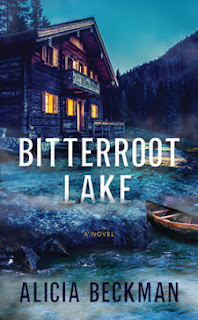


Depends. The original version of Bitterroot Lake, my suspense debut written as Alicia Beckman, started with our main character, newly widowed, driving down a narrow lane to an empty house deep in the woods, late at night. Plenty of hooks there. But my editor knew that a car crash twenty-five years ago would trigger a major story line and wanted me to open with it. “That means a prologue,” I told her. “Some readers don’t like them.” “I know,” she replied, “and I don’t care. This story needs one. Make it work.”

I came up with an unlabeled prologue, twenty-six lines long, that starts this way:

Prologue

What Sarah remembered most about that day twenty-five years ago were the sounds.

The words that twisted Lucas’s full lips, that tipped away all the innocence of the weekend, which scraped her to the bone even still.

Janine sobbing, rasping for breath.

Each of the named characters plays a key role in the story to come. The images set a mood of danger and dread, and foretell a story of loss, but also, because Sarah is remembering, survival. The action drives the central conflict. We know what to expect, including the unexpected.

And that’s the key. Write a prologue only if your story needs one. Then make it work.
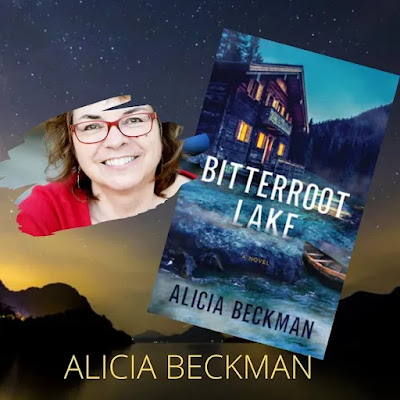


Leslie Budewitz is a three-time Agatha Award winner and the best-selling author of the Spice Shop mysteries, set in Seattle, and the Food Lovers’ Village mysteries, inspired by Bigfork, Montana, where she lives. As Alicia Beckman, she writes moody suspense, making her debut with Bitterroot Lake in April 2021 and continuing with Blind Faith in October 2022. Leslie is a national board member of Mystery Writers of America and a past president of Sisters in Crime.


Find out more about Leslie and her books at her website, www.LeslieBudewitz.com, where she also blogs for writers.

January 7, 2022

Remembering When It Began


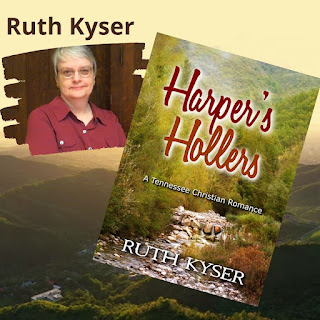
                         Ruth Kyser


Telling stories and writing them down began at an early age for me.

The first story I can remember writing was entitled The Tale of the Holy Sole. It was for a 4th-grade creative writing assignment. And no, Sole is not misspelled. You see, this little story was about a worn-out shoe and his journey through life after being tossed out by his owner. Let’s just say he was a happy shoe at the conclusion of the story when he met a snappy stiletto on the shelf of the local Good Will Store. By the way, I was thrilled when my teacher gave it an A+.

When I proudly took my story home, my mother read it and immediately asked where I had come up with the idea for the story? I remember shrugging my shoulders and telling her I didn’t know. It was just there—in my head.

So basically, I’ve written stories most of my life. Even after marrying my wonderful husband of now 46 years, and while raising a family, I still wrote down my stories, and every now and then would send them out to a publisher in the hopes I would get my “big break.”

In 2001 I was excited to finally publish one of my books—The Dove and The Raven—as a PDF Book. This was LONG before the days of eBook readers like Nook and Kindle. Back then, you had to download the books directly to your computer and print them off for reading or read them on your computer monitor. I sold about a dozen and a half book before the .com company went out of business. Apparently, we were ahead of our time.

I continued to pursue getting my work published, though, but other than for selling a few articles to a local news magazine, had little success.

Then in 2004, I sent my newest manuscript, Endless Season, to a managing editor for one of the large Christian publishers at that time. I had previously sent him the manuscript for The Dove and The Raven, and even though they hadn’t been interested in it, he had generously offered the opportunity to send him more of my work in the future.

I wasn’t surprised when I didn’t hear anything back from Jim for a long time. But when a year had passed, I decided to shoot him an email—just to ask if he’d had time to look over my manuscript. Jim was gracious enough to tell me how much he liked my book and explained why. Then he proceeded to say the dreaded words: “Unfortunately, it doesn’t fit with what we are looking for at this time.”

Filled with disappointment, I decided right then and there that it was time to give up. It was apparent God didn’t want me to write. No publisher wanted to publish any of it, so I was just wasting my time. So, I quit! For five years, I didn’t write a thing.

Looking back at it now, I think God was teaching me patience, wisdom, and discernment. During that time, I had no storylines running through my head like I usually do. It was as if God was giving my brain a rest.

Then in late 2010, my husband bought me a Kindle e-reader. Now, this wasn’t the Kindle Fire or the newest Kindle Fire HD. This was the first version which was pretty much meant for reading books. My daughter-in-law had one, and I was fascinated with its ability to store so many books.

In the process of downloading books to my new Kindle, I discovered something. There were well-known, best-selling authors publishing eBooks, but there were also unknown “Indie” or independently published authors publishing their works. After reading a few, I discovered that some weren’t all that well-written.

That was when I decided to try the Indie route myself. Maybe someone out there would enjoy reading my books.

I’ve now published twenty-two Christian novels and a cookbook and have loyal readers and fans worldwide.

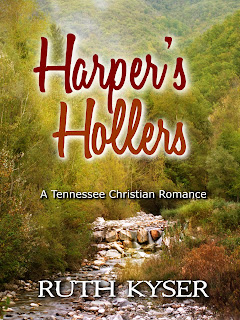
My most recent Christian novel, Harper’s Hollers, is Book 2 in my Tennessee Christian Romances series. I enjoyed writing Marcie’s Mountains so much that when Harper’s storyline started running through my head one day, I knew I had to write it.


After her husband’s death, Harper Sinclair returns to the hills and hollows of her childhood—hoping to find peace and to start a new life. That, and to be closer to her father, whose health is failing.

She goes to work for Dean McRae and his log restoration business, and it’s there she meets Gordie Gordon—a man who has suffered his own losses. Will God bring them together as more than friends—or will circumstances beyond their control keep them apart?

Harper’s Hollers is a heartfelt story filled with people you will come to know and love.


The “Indie” route isn’t always easy, but I’m so glad I went this route. I’m still learning about the publishing process every day. It’s a constant struggle to try and stay on top of new technology, and I so appreciate the opportunity to network with other authors and get their input on the industry. I don’t think I’ll ever learn it all, which is fine with me. I love a challenge.

Why did I have to go through that dry spell so many years ago? Who knows? Maybe I had to wait for technology to catch up with me. Perhaps I wasn’t ready to accept the gift of writing.

I just know that I’m much happier now that I’m back to writing and not ignoring the gift God has given me—the passion for the written word. 


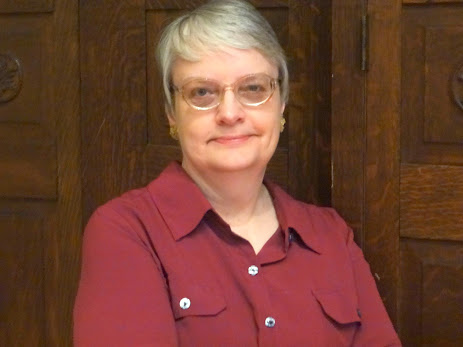
Ruth Kyser is a native Michigander—wife, mother, and grandmother, and just recently great-grandmother—who writes Christian Inspirational Romance. Ruth has had a wide variety of careers in her lifetime, ranging from corporate accounting, office manager at a YMCA Summer Camp for kids, owning and operating a hardware store with her husband, to being an insurance agent for twenty years.


She is currently retired—for the second time—after working part-time as a church secretary for three years. Now she devotes her time to writing Christian novels full-time.


Ruth is a member of American Christian Fiction Writers and enjoys reading almost as much as she loves writing!

Ruth's Mission Statement: "My goal is to write stories that entertain, but more importantly, educate readers about Jesus Christ and His love for them."

https://authorruthkyser.weebly.com/

https://www.facebook.com/ruthkyser.author

https://www.instagram.com/kyser.ruth/

https://www.pinterest.com/rkyser1542

https://twitter.com/kyser_r

https://www.amazon.com/Ruth-Kyser/e/B007INRTAG


January 6, 2022

Who Do You Write For?


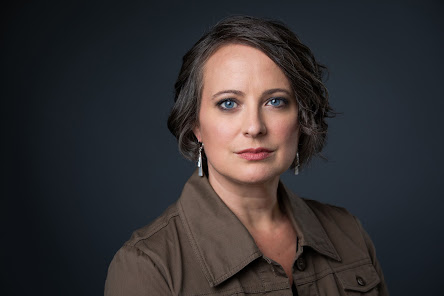
Erin Bartels


I didn’t realize I don’t take compliments well until a friend pointed it out during what was (for me) an awkward, self-conscious, dragged-out moment with a waitress who was just trying to be nice.

I didn’t realize that it was hard to make me laugh—really laugh, not just chuckle—until my son pointed it out at the dinner table (after making me really laugh).

I didn’t realize that I was intimidating until it was pointed out by—well, actually a number of people, but most notably my own father and my own husband about twenty years apart.

I didn’t know these things about myself until others told me they were so. Which is strange, because I generally make a habit of noticing things. I’m the one who sees the red-tailed hawk in the tree we just passed at 75 mph. I’m the one who sees the crooked pictures in the restaurant and straightens them as I leave. I’m the one who sees the way the light is hitting the clouds just so and points it out to my son and my husband so they will look up from their devices before the moment has passed.

The habit of noticing little things and wanting to make sure others notice them is part of what I think I started to write. Way back when, it took the form of sporadic journaling. Then sporadic poetry. Then fairly regular blogging for several years. If I think about it, that’s what most of my writing has amounted to—noticing and celebrating and making sense of the world around me and encouraging others to do the same. I write it down so that moment doesn’t disappear. I write it down to give that moment some weight. I write it down so that moment is imbued with meaning.

I guess I was so busy doing that, I didn’t pay as much attention to the landscape closer to home—myself.

Thinking about it now, I wonder if that’s where writing novels started for me. If it has been my attempt to pay as much attention to the inner world as the outer world. To acknowledge the heights and depths of the human experience and then put it down in words so that it doesn’t disappear without having been examined and appreciated.

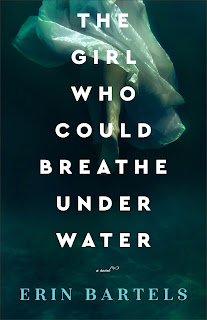
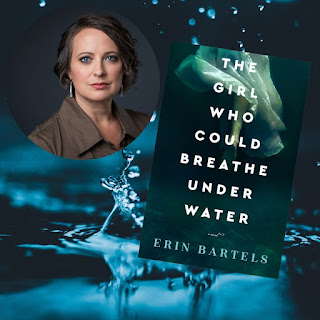
Oftentimes writers get the question, “For whom do you write? Yourself? Or the reader?” My answer has always felt a little selfish to me because other writers all seem to answer that they write for the reader. Um, not me. I write for myself. The reader is not why I’m writing. I’m why I’m writing. And never more so than with my newest release, The Girl Who Could Breathe Under Water


Drawing on some of my own experiences as a child, I developed the character of Kendra Brennan who, as a teen, suffered sexual harassment and assault at the hands of a friend’s older brother. She worked through those experiences by writing a fictionalized version of events as her first novel. But a letter from an anonymous Very Disappointed Reader has accused her of getting the story wrong, taking the wrong person’s side, using people for her own gain, and more. To move forward, Kendra must look back—into the events of those long-ago summers in the cabin on Hidden Lake in Michigan’s northern Lower Peninsula. She must confront the man upon whom she based the antagonist of her first book—and perhaps discover she is asking the wrong questions altogether.

As you can probably surmise, The Girl Who Could Breathe Under Water tackles the things we don’t want others to notice. The things we keep hidden, even from ourselves, because to face them takes the kind of self-examination we would rather avoid. We don’t want to face the ways in which we have failed others and ourselves, the ways other people have hurt us, the ways we neglected to see the things that were right in front of us all along.

This was not an easy book to write. But it was the one I have needed to write for more than thirty years. I needed to write it for myself. I’m glad others will be reading it. But I didn’t write it for readers. I wrote it for me, as a way to process painful memories, to examine how the events of the past shape us into the people we are today, to give an unresolved issue some sense of resolution.

As I think of the events in my life that inspired me to write The Girl Who Could Breathe Under Water, I realize that those events may also have had a hand in making me someone who is just a bit uncomfortable with and suspicious about compliments. They may have something to do with why it’s difficult to make me laugh with abandon. And they certainly have a lot to do with why, at times, I come off as aloof, unapproachable, or intimidating.

They happened in the past, but they are continually with me in the present. Because who we are now is made up of every experience we ever had.

Ultimately—obviously—my books are for readers, and they’ll mean something a little different to everyone, depending on the events that have shaped them into the people they are today. I can’t control what this book will mean to readers. I can only say what it has meant to me to write it.

Release. Forgiveness. Moving on. And if that were the end of all the little stories in our lives, we should count ourselves lucky.


ERIN BARTELS is the award-winning author of We Hope for Better Things, The Words between Us, All That We Carried, and The Girl Who Could Breathe Under Water. She lives in the capital city of a state that is 40% water, nestled somewhere between angry protesters on the Capitol lawn and couch-burning frat boys at Michigan State University. And yet, she claims it is quite peaceful.

She is a. publishing professional for twenty years, is the current director of WFWA’s annual writers retreat in Albuquerque, New Mexico.


Find her online at www.erinbartels.com.


January 5, 2022

Laura Frantz Talks About A Childhood Love


Laura Frantz

“In the winter of 1667 – 1668, he noted the loss of “our ship Providence …

cast away on the French shore … [carrying] … cocoa.”

The Diaries of John Hull,

Mint Master and Treasurer of the Colony of Massachusetts Bay


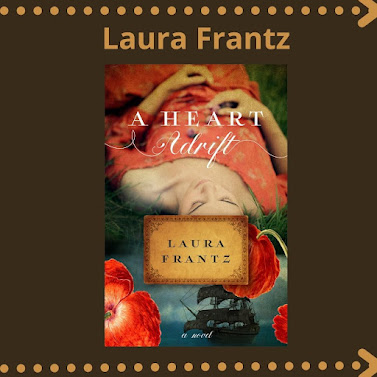
In hindsight, my love of writing stems from a childhood love of reading. Fifty years later, I still recall standing in my elementary school library by a big window and the awe and delight I felt looking at all the little historical biographies written for children about Daniel Boone, Dolly Madison, Pocahontas, and other notables. I also remember the disappointment I felt when I’d read them all and there was no more to be checked out. At that point I became a writer, even though I’d just learned to read. At age seven I wrote my first story about, oddly enough, a ship and the sea. Perhaps that childish effort provided early inspiration for my thirteenth historical novel, A Heart Adrift.


As for writing, it’s been said that it’s a craft where we are all apprentices, and no one ever becomes a master. I’ve also read that it takes 10,000 hours for someone to master something, be it a musical instrument, a foreign language, etc. I never think of myself as having ‘arrived’ with writing. Other authors continually teach me things about the craft and creative process. Readers humble me with their praise and their criticism. Editors show me how much better my work can be through thoughtful analysis.


Writing is truly a gift. In the words of Madeline L’Engle, “A book, too, can be a star, a living fire to lighten the darkness, leading out into the expanding universe.” God gifts us with the ability to write. It’s never something I could work up on my own. I realized early on in childhood that there was a certain heavenly magic about it. I failed at so many things back then – math, music, sports, etc. I was the quintessential shy, four-eyed bookworm. But something deep within reassured me I could write. It took forty years before publication which was something I didn’t even want to pursue because it was my own special, secret world that didn’t need sharing. Or so I thought.


Thankfully, my brother, a pastor/missionary encouraged me to wisely steward the gift I’d been given and so not long after publication became a reality. Of course, there are always risks in going before readers, editors, reviewers. A book is truly a piece of your heart and soul, brave if flawed. Writing and publishing require a certain vulnerability. In God’s timing, you may have something to give to a certain reader(s) though you’ll likely never know if your contribution has any eternal significance. The writing road doesn’t look like I thought it would. It’s thrilling and challenging and uncomfortable and fulfilling all at the same time. But I’m learning to trust the path and the outcome to Him.


For this thirteenth historical novel, A Heart Adrift, I fulfilled my longtime wish to have a sea captain hero. Recently I even rewatched an old movie from my childhood - The Ghost and Mrs. Muir. Though very vintage, it’s every bit as poignant, romantic, and funny today. And like the captain in the film, my novel, aside from one shipboard scene, must be told onshore as women rarely put to sea. In fact, they were considered bad luck aboard.


While researching A Heart Adrift, I discovered a maritime world entirely new to me. History is rife with famous ships, sailors, and sea captains from the earliest ages. My time period – the 18th-century – is no exception. Captain Henri Lennox is but one fictional privateer amid countless real-life pirates, shipwrecks, and prizes on vessels cruising to countless international ports in the Georgian era.


From my heroine’s perspective, I learned about colonial American chocolate and its origins since Esmée Shaw is a chocolatier. Cocoa has a fascinating history and Americans became very fond of it, including George and Martha Washington. Cocoa back then is very different than our cocoa today and was also very laborious to produce and expensive to purchase. I am not a chocolate historian by any means, but I felt a bit like one while researching! And I sampled a great many different varieties of chocolate, including American Heritage’s reproduction colonial chocolate.


On that delicious note, here’s a peek at A Heart Adrift…


A Virginia chocolatier and a privateering sea captain collide once more after a failed love affair a decade before. Will a war and a cache of regrets keep them apart? Or will a new shared vision reunite them?

It is 1755, and the threat of war with France looms over colonial York, Virginia. Chocolatier Esmée Shaw is fighting her own battle of the heart. Having reached her twenty-eighth birthday, she is reconciled to life alone after a decade-old, failed love affair from which she's never quite recovered. But she longs to find something worthwhile to do with her life.
Captain Henri Lennox has returned to port after a lengthy absence, intent on completing the lighthouse in the dangerous Chesapeake Bay, a dream he once shared with Esmée. But when the colonial government asks him to lead a secret naval expedition against the French, his future is plunged into uncertainty.
Will a war and a cache of regrets keep them apart, or can their shared vision and dedication to the colonial cause heal the wounds of the past? Bestselling and award-winning author Laura Frantz whisks you away to a time fraught with peril--on the sea and in the heart--in this redemptive, romantic story.


I hope readers enjoy the sea-salted, chocolate world of A Heart Adrift. It was certainly quite an adventurous voyage writing the novel!


Laura Frantz Award-winning author, has a passion for bringing the distant past to life in her enchanting novels. Her signature style sweeps readers away in a whirlwind of romance, adventure, and rich history. In Frantz’s newest novel, A Heart Adrift, readers will step back in time to the 1700s—a time fraught with peril both on the sea and in the heart.

https://laurafrantz.net/


January 4, 2022

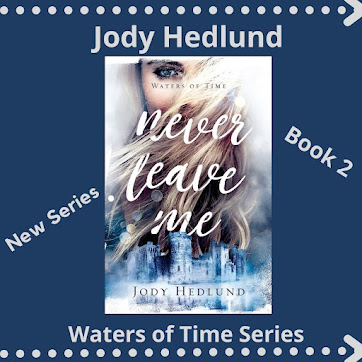
Jody Hedlund Talks About Being Born With A Passion


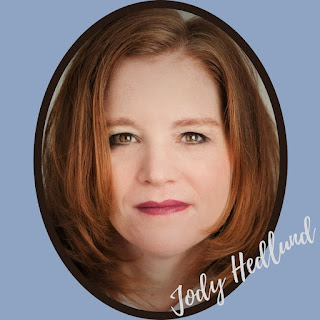
Jody Hedlund


Like many writers I was born with a pen in my hand. I filled notebooks with stories when I was growing up. My mom was the most influential person in my writing career. When I was young, she helped facilitate my love of writing by reading aloud to me, giving me good books to read, and providing the kind of environment that fostered my creativity (in fact we didn’t have a TV for a number of years).


My passion for writing followed me into adulthood. I wanted to be a writer. But like most aspiring writers, I struggled to know how I could use my love of writing novels in a career. Because I needed to pay the bills, I earned a degree in social work.


I kept writing and learning about writing during the years when I worked as a social worker. And it was during those post-college years, when I was working, before I had kids, that I wrote my first five novels and really studied the craft of writing. I read every how-to book about fiction techniques I could get my hands on.


Once I started having babies, I took a break from writing. And it wasn’t until after having my fifth baby that I picked up the pen again. The first novel I wrote after my hiatus went on to become my first published book. Now, twelve years later, I have over thirty published novels.


Even though I’ve completed several dozen novels, I’m still always challenging myself to learn. If I had to narrow down one specific thing that helped the most in my quest for publication, I’d have to say this: My careful, ongoing, and thorough study and practice of writing techniques has been an incredibly beneficial aspect of my writing career. In other words, I read writing craft books, studied fiction-writing basics, and then put what I learned into practice.


I’ve also worked with some excellent editors over the years who’ve helped me to hone my writing skills. I cannot say enough about the benefit of an editor who not only edits well, but also in the process, takes the time to teach writers how to improve. For example, over the past couple of years, I’ve worked with an editor who has taught me how to tighten my writing, helping me learn to spot repetitions and showing me how to trim down extra prose.


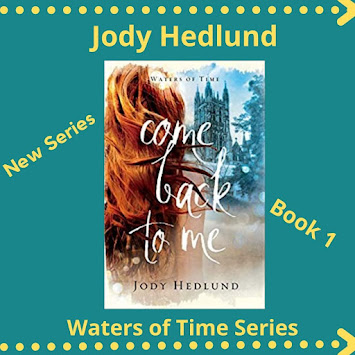
After writing so many books, I’m still just as in love with writing—even more so—than when I started down the road to publication. While I started writing historical romances, I’ve now branched into other historical romance sub-genres, including my new Waters of Time Series, which involves time-crossing.


I’ve always loved reading time-crossing books, but in recent years realized how few there are to choose from. After devouring the few books I could find, I decided I just needed to write one for myself. I happened to have a free block of time in my schedule between projects, and so I gave myself a fun treat and wrote one.


In developing the plot, I wanted to find a concept that gave off the feeling that time traveling was possible. Since people in comas are sometimes known to have very realistic “dreams,” I decided that would be the “vehicle” for the time-crossing. After discovering that “visions” were also connected to ancient holy water, I merged the concepts of coma and holy water. Hopefully, readers will be left with the feeling that time crossing is possible!


In the first book in the series, Come Back to Me (June 2021), research scientist Marian Creighton, thinks her father’s quest to find the ultimate cure is crazy, even if it stems from a desire to save her sister Ellen from the genetic disease that stole their mother from them. When her father finds and drinks a vial of ancient holy water and falls into a coma, Marian discovers clues that suggest he’s crossed back in time. At first, she thinks he’s insane, until she tests his theories and finds herself in the Middle Ages smack dab in the middle of the bloody Peasant Revolt of 1381.


During Marian’s time in the past, of course she has the chance to find true love. But the question that arises is whether she’ll get to stay in the past with the man she loves, or whether she’ll be ripped away from him and plunged back into her previous life.


In Never Leave Me (January 2022), Harrison Burlington, a brilliant scientist, is left to pick up the pieces after his friends Marian and Arthur Creighton die from comas after supposedly traveling into the past to the Middle Ages. With his power and wealth, Harrison continues the search for more holy water, with the hope of saving the woman he secretly loves, Ellen Creighton, who is dying of a genetic disease.


Ellen’s health deteriorates rapidly. As the one-year anniversary of the deaths of her dad and sister draw near, Ellen’s prognosis is grim, and the doctors agree she doesn’t have long to live. She resigns herself to her fate. But Harrison only grows more desperate to save her. When Harrison finds two flasks of holy water, he sets into motion events that changes both his and Ellen’s lives forever and sends them on an adventure of a lifetime.


It’s my deepest hope that readers will come away from both books in the series with a greater fascination and appreciation for history. And maybe in the process, they’ll also wonder if crossing time is more possible than they’d ever believed!


Jody Hedlund s the bestselling author of more than thirty historical novels for both adults and teens, including Come Back to Me, and is the winner of numerous awards, including the Christy, Carol, and Christian Book Awards. Jody lives in Michigan with her husband, busy family, and five spoiled cats. She loves to imagine that she really can visit the past, although she’s yet to accomplish the feat, except via the many books she reads.

January 3, 2022

Lynette Eason Talks About Life Flight


                                  Lynette Eason              


Hi everyone, I want to say thanks for stopping by the Suite T blog. I’m honored to be posting today, so thanks for reading. I get asked a lot about how I got into writing and let’s just say it was a gradual process. I’d always been good at essays in school, and I’d much rather complete an essay test than a multiple choice one, so there was that. But believe it or not, I started writing fiction out of loneliness. Yep, I was lonely, so I decided to talk to the voices in my head! Ha. There’s a writer t-shirt out there that says, “You know you’re a writer when: You’d rather talk to the voices in your head than the person next to you.”


It's a joke, but it’s true, nonetheless. When I was first married (December 1996), my husband traveled a lot with his job. That meant I was home alone with time on my hands. I was a voracious reader and devoured books. And, I’ll admit, there were some stories that had me wanting. . .more. I’d think, “I wouldn’t have ended it that way, I would have done. . .such and so. . .etc.” Any time I mentioned that to my friends and fellow book nerds, they would say, “You should write a book!” So, with all this time on my hands, you would think that this would be when I started writing, but nope. I waited until my daughter (born in 1998) was about nine months old before I thought, “Hey, I should try this writing a book thing.” 


So, that’s what I did. One thing led to another and about eight years later, I found myself with a book contract. I’m laughing because that makes it sound easy but let me assure you that in between those eight years, I worked hard. I attended conferences where I learned from those who were years ahead of me in the process, invested in a few writing books, found a local community of writers who were willing to give me feedback and critiques, and more.


Like I said, it was hard work. So, why didn’t I give up? Well, I have to be honest, I thought about it a few times. And there were even times, months, that I didn’t give writing a thought. I added a second child into the mix of things in 2001 and truly, some days, there just weren’t enough hours to get it all done-much less devoting any amount of time to writing about a made-up world and with made up characters. It was all I could do to keep control of my current reality. Ha. But writing was something that I found myself drawn to. I’d forget about it for a while, then when I had time, I would return to the story world, delving into things like setting, point of view, characters, and plot. 


In 2002, I attended my first writing conference. My mother came to keep my children who were 4 and 18 months at the time (God bless her!) and allowed me to have 4.5 days of nothing but learning the craft of writing. After that conference, I was addicted. I couldn’t get enough of it. I was fascinated that I could create a world, a whole cast of people—and make them do what I wanted them to do. It’s a real control freak playground. LOL! Honestly, I looked at writing like a puzzle. All I had to do was find the right piece, the right place and put it there. It was the same with writing. I would write something then analyze it. Was that the right sentence, the right word, the right point of view, the right scene, the right setting? Then I’d rip it apart and put it all back together again. Until one day, every piece was where it was supposed to go, and I had a story. At least until edits rolled around. But that’s another story for another day.


So, why share this with you? Because some of you reading this may be on the verge of quitting. Thoughts like, “I’m not good enough.” “That writer’s first book was published. I’m on my third and still not published.” “This is just too hard. I can’t do this.” “I’ve read that story and mine is way better. Why is that book published and mine isn’t?”


All those thoughts are valid. We’ve all had them. But the truth is, so many factors play into a book getting published that just because you got a rejection letter, doesn’t mean your story isn’t worthy. It may just mean that it’s not the right timing for that particular topic because they just published one on it. Or they’re booked solid for the next two years on Romantic Suspense stories. Whatever the case, if writing is your calling, then you must do your best to silence the negativity and press on. Because eventually, if you’ve put in the work and have learned the craft, then in God’s timing, it’s highly likely that a publisher is going to say, “We would like to publish your book.” However, getting to that point is definitely difficult, but never impossible. I encourage you to surround yourself with fellow writers and support people who will speak truth to you and encourage you to fight for your dreams.


Life Flight, book 1 in the new Extreme Measures series, is the end result of everything I’ve just talked about. It can happen for you, too. Work hard, believe in yourself, pray about God’s timing, and buckle your seatbelt in preparation for an incredible ride.


Lynette Eason
has been ranked as one of the top romantic suspense authors. With over 40 books in print and more than 1 million copies sold, Eason has mastered the craft of writing action-packed suspense novels with the perfect touch of romance. In Life Flight, book 1 in the Extreme Measures series, Eason offers another high-octane tale of close calls, narrow escapes, and a fight to bring a nefarious criminal to justice.

Lynette Eason is the bestselling author of the Danger Never Sleeps, Blue Justice, Women of Justice, Deadly Reunions, Hidden Identity, and Elite Guardians series. She is the winner of three ACFW Carol Awards, the Selah Award, and the Inspirational Reader’s Choice Award, among others. She is a graduate of the University of South Carolina and has a master’s degree in education from Converse College. Eason lives in South Carolina with her husband and two children. 

Learn more at www.lynetteeason.com.

December 30, 2021

A New List For Resolutions


As I thought about what resolutions I would make for the new year, it occurred to me to make a different list this year.


Instead of making a list of what I would do to make myself better or a list to increase work productivity I would make a list of doing good for others this year.


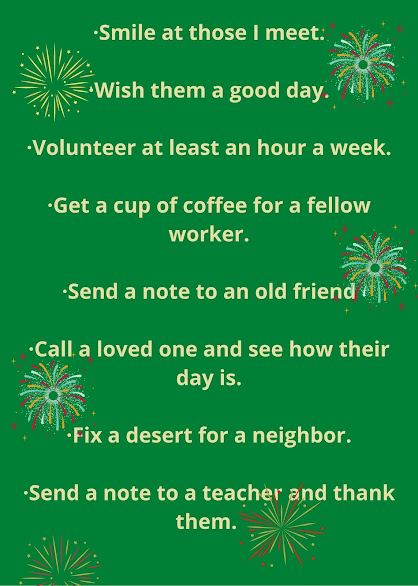
It takes only a few minutes a day to do kind deeds for someone. And most people yearn for kindness and recognition. So, this year my list could read:


Perhaps you can think of more ideas.

All throughout the year wouldn't it be nice to brighten someone’s day?


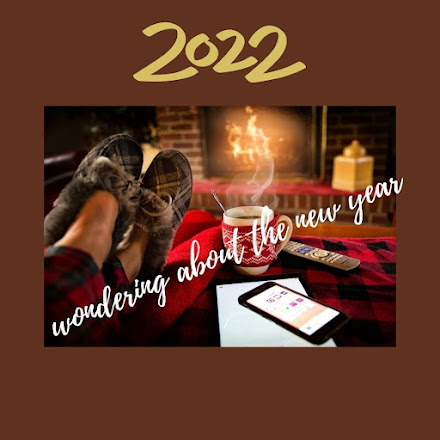
Wondering What 2022 Will Bring?


Sitting in my favorite chair in the living room by the fire, I wondered what the ‘New Year 2022’ would be like.


The past two years have been most unusual to say the least. But I did not want to think on these past two years and the devastation they caused around the world. Instead, I wanted to focus on the new year that would soon be here.


I remembered what Anthony T. Hincks said. “Don’t let the New Year get old.”


As I thought about those words, it seemed to me he was saying do not let the feeling we have at the beginning of the new year get to feeling like all the other years. To embrace the new year with awe and expectancy of good things to come into our lives throughout the year. Choosing to make everyday a new day in our lives. To create and achieve all we are capable of each day.


In this way, we will keep the ‘New Year’ alive every day.


Happy New Year to you!

December 28, 2021

December 27, 2021

Our Life’s Niche


Susan Reichert


Growing up we all are looking for our niche in life. The people we associate with. . . these would be the kids we play with growing up to the people we socialize with as adults. We look for the ones we fit into.


Webster dictionary says Niche is a place, employment, status, or activity for which a person or thing best fits in.


We have all been at functions where we were uncomfortable, we did not fit in. So, we know why it is important to find our niche in life so we will be happy and be able to participate in life and be part of the community.


It is the same with an author’s book. It too has a niche; a place where it will flourish.


For every book there is a specialized segment of the market. It is said that the niche for a book is a very specific, tightly defined, focused audience. The secret for author’s is to find that niche.


So it is with life, people have a niche. Are you in yours?


A new year is upon us, and has we begin to look at our thoughts for the new year and making goals or resolutions, it would be good to look at our niche.


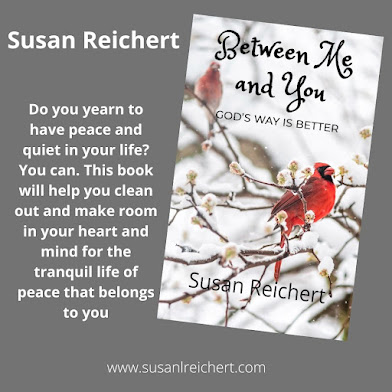
Susan Reichert, author of Listen Close, Between Me and You, God’s Prayer Power and Storms in Life. Published numerous magazine articles and stories in 9 anthology books. Speaker at writing conferences, seminars, and libraries.

She is the founder of Southern Author Services, and Editor of Suite T. She is the retired Editor-in-Chief of Southern Writers Magazine. Reichert has a passion for writing about God in devotionals, prayers, and inspirational works.

She and her husband live in Tennessee. They have four grown daughters with families of their own. Susan is a member of the DAR and a member of the First Families of Mississippi

Visit Susan at: https://www.susanlreichert.com/

https://twitter.com/swmeditorhttps://twitter.com/SouthrnAuthrSer

https://www.facebook.com/SusanLeeReichert, https://www.facebook.com/southernauthorservices