Pages

Showing posts with label Laura Frantz. Show all posts

May 25, 2022

Have You Been Whisked Away Before?


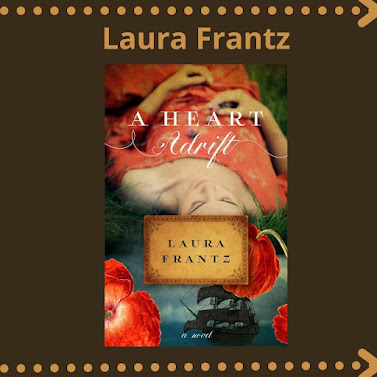
 Bestselling and award-winning author Laura Frantz will whisk you away to a time fraught with peril--on the sea and in the heart — in this redemptive, romantic story.  Laura Frantz has a passion for bringing a distant past to life in her enchanting novels. Her signature style sweeps readers away in a whirlwind of romance adventure, and rich history.

Grab Frantz’s newest novel, A Heart Adrift, and step back in time to the 1700s. You will find yourself in the year 1775 where a threat of war with France is looming over York, Virginia. The story opens at the beginning of the French and Indian War (also called the Seven Years’ War), which pitted England and its colonies against France and their allies, all in a quest for territory. George II was on the English throne, and the conflict lasted for seven long, bloody, costly years, all played out on American soil and at sea.

Colonial America is an unending source of powerful historical men and women who made our nation what it is today. It’s fascinating history right down to the garments they wore. Frantz said, "My regret is that all mystory ideas will outlast me and I won’t find time for all the novels I’d love to write! I’m continually fascinated by our colonial ties to Great Britain and how so many of us have ancestry there."

Both Esmée and Henri are dedicated to the colonial cause. Both are very colonial-minded. They are intent on Virginia’s continuance as a leader among the British colonies, share a heart for what would become the seeds of the United States Navy in time, and are mariners in general, including keeping the first lighthouse in the Chesapeake region.

Here you will meet Esmée Shaw who is fighting her own battle of the heart. She has reconciled herself to live life alone, but still struggles with the loss of a decade-old love affair she has never quite recovered from. You will feel her heartache as you enter iinto her story.

But the pain of that old love affair resurface when Captain Henri Lennox returns to York after a lengthy absence. He is determined to finally complete the lighthouse in the dangerous ChesapeakeBay. This was a dream he and Esmée once shared. Esmée initially tries to avoid Henri, but her desire to make a difference in life entices her to join his undertaking to complete the lighthouse. However, when the colonial government asks Henri to lead a secret naval expedition against the French, Henri’s future is plunged into uncertainty, and he is torn between his feelings for Esmée and his call to duty.

Will a war and a cache of regrets keep Esmée and Henri apart? Can their shared vision and dedication to the colonial cause heal the wounds of the past? While we understand the goings on of the war and love, we will be hoping they can reconcile but will they?

Frantz says, "I hope readers will experience and enjoy the story immensely with all its poignancy and can read between the lines to see that the valleys of life are often the high road, achieving our ultimate good and God’s glory.  I believe this novel is perhaps my most sophisticated yet, dealing with themes of love, loss, forgiveness, and restoration."


Laura Frantz is a Christy Award winner and the ECPA bestselling author of more than a dozen novels, including An Uncommon Woman, Tidewater Bride, The Frontiersman’s Daughter, Courting Morrow Little, The Colonel’s Lady, The Lacemaker, and A Bound Heart. She is a proud mom of an American soldier and a career firefighter. When not at home in Kentucky, she and her husband live in Washington State. Learn more at www.laurafrantz.net.

https://www.facebook.com/LauraFrantzAuthor/

https://www.instagram.com/laurafrantzauthor/

https://www.facebook.com/groups/879504709501366

https://www.laurafrantz.net

January 5, 2022

Laura Frantz Talks About A Childhood Love


Laura Frantz

“In the winter of 1667 – 1668, he noted the loss of “our ship Providence …

cast away on the French shore … [carrying] … cocoa.”

The Diaries of John Hull,

Mint Master and Treasurer of the Colony of Massachusetts Bay


In hindsight, my love of writing stems from a childhood love of reading. Fifty years later, I still recall standing in my elementary school library by a big window and the awe and delight I felt looking at all the little historical biographies written for children about Daniel Boone, Dolly Madison, Pocahontas, and other notables. I also remember the disappointment I felt when I’d read them all and there was no more to be checked out. At that point I became a writer, even though I’d just learned to read. At age seven I wrote my first story about, oddly enough, a ship and the sea. Perhaps that childish effort provided early inspiration for my thirteenth historical novel, A Heart Adrift.


As for writing, it’s been said that it’s a craft where we are all apprentices, and no one ever becomes a master. I’ve also read that it takes 10,000 hours for someone to master something, be it a musical instrument, a foreign language, etc. I never think of myself as having ‘arrived’ with writing. Other authors continually teach me things about the craft and creative process. Readers humble me with their praise and their criticism. Editors show me how much better my work can be through thoughtful analysis.


Writing is truly a gift. In the words of Madeline L’Engle, “A book, too, can be a star, a living fire to lighten the darkness, leading out into the expanding universe.” God gifts us with the ability to write. It’s never something I could work up on my own. I realized early on in childhood that there was a certain heavenly magic about it. I failed at so many things back then – math, music, sports, etc. I was the quintessential shy, four-eyed bookworm. But something deep within reassured me I could write. It took forty years before publication which was something I didn’t even want to pursue because it was my own special, secret world that didn’t need sharing. Or so I thought.


Thankfully, my brother, a pastor/missionary encouraged me to wisely steward the gift I’d been given and so not long after publication became a reality. Of course, there are always risks in going before readers, editors, reviewers. A book is truly a piece of your heart and soul, brave if flawed. Writing and publishing require a certain vulnerability. In God’s timing, you may have something to give to a certain reader(s) though you’ll likely never know if your contribution has any eternal significance. The writing road doesn’t look like I thought it would. It’s thrilling and challenging and uncomfortable and fulfilling all at the same time. But I’m learning to trust the path and the outcome to Him.


For this thirteenth historical novel, A Heart Adrift, I fulfilled my longtime wish to have a sea captain hero. Recently I even rewatched an old movie from my childhood - The Ghost and Mrs. Muir. Though very vintage, it’s every bit as poignant, romantic, and funny today. And like the captain in the film, my novel, aside from one shipboard scene, must be told onshore as women rarely put to sea. In fact, they were considered bad luck aboard.


While researching A Heart Adrift, I discovered a maritime world entirely new to me. History is rife with famous ships, sailors, and sea captains from the earliest ages. My time period – the 18th-century – is no exception. Captain Henri Lennox is but one fictional privateer amid countless real-life pirates, shipwrecks, and prizes on vessels cruising to countless international ports in the Georgian era.


From my heroine’s perspective, I learned about colonial American chocolate and its origins since Esmée Shaw is a chocolatier. Cocoa has a fascinating history and Americans became very fond of it, including George and Martha Washington. Cocoa back then is very different than our cocoa today and was also very laborious to produce and expensive to purchase. I am not a chocolate historian by any means, but I felt a bit like one while researching! And I sampled a great many different varieties of chocolate, including American Heritage’s reproduction colonial chocolate.


On that delicious note, here’s a peek at A Heart Adrift…


A Virginia chocolatier and a privateering sea captain collide once more after a failed love affair a decade before. Will a war and a cache of regrets keep them apart? Or will a new shared vision reunite them?

It is 1755, and the threat of war with France looms over colonial York, Virginia. Chocolatier Esmée Shaw is fighting her own battle of the heart. Having reached her twenty-eighth birthday, she is reconciled to life alone after a decade-old, failed love affair from which she's never quite recovered. But she longs to find something worthwhile to do with her life.
Captain Henri Lennox has returned to port after a lengthy absence, intent on completing the lighthouse in the dangerous Chesapeake Bay, a dream he once shared with Esmée. But when the colonial government asks him to lead a secret naval expedition against the French, his future is plunged into uncertainty.
Will a war and a cache of regrets keep them apart, or can their shared vision and dedication to the colonial cause heal the wounds of the past? Bestselling and award-winning author Laura Frantz whisks you away to a time fraught with peril--on the sea and in the heart--in this redemptive, romantic story.


I hope readers enjoy the sea-salted, chocolate world of A Heart Adrift. It was certainly quite an adventurous voyage writing the novel!


Laura Frantz Award-winning author, has a passion for bringing the distant past to life in her enchanting novels. Her signature style sweeps readers away in a whirlwind of romance, adventure, and rich history. In Frantz’s newest novel, A Heart Adrift, readers will step back in time to the 1700s—a time fraught with peril both on the sea and in the heart.

https://laurafrantz.net/


January 6, 2021

Perks For Being An Historical Author


Laura Frantz       


Before Christmas I actually prayed and asked the Lord to enable me to write the first 2 chapters of the Scottish novel that's next for me - a sort of Christmas gift. Beginnings can be hard even after weeks or months of researching. Of course, He did that and I'm so grateful for a blessed start! I'll continue praying as I write and hope to be finished with the first draft of the novel by late spring. Then it's galleys and page proofs for the novel releasing in January 2021 while continuing to edit and polish the Scottish story to submit to Revell next January, also.


I lost a month or more last spring because everyone was upended by the pandemic and lots of news & change kept coming at us. Though I can work through kid chaos, a pandemic felt out of control when my ideal work environment is peace and order. After reaching a stall on my WIP, I contacted my head editor and agent, something I never do, and asked them to brainstorm the end of the novel with me. That got me unstuck!


Ironically, my next novel involves an 18th-century pandemic that actually occurred historically, so I was able to write about that from a fresher perspective than if we hadn't been in the middle of one. The 18th-century is a far cry medically and germ theory-wise from today though. I think the pandemic has taught me to take nothing for granted, especially the gift of writing. It's a short season.


Pocahontas has always been a historical heroine of mine and I was keen to write a novel that included or honored at least some of her history. Also, the tobacco brides that came to Virginia colony have always been fascinating to me. So, this is where the idea for my new book, Tidewater Bride, came from. Would I have forsaken home and family, gotten on a dangerous ship, then sailed to an unknown colony to be courted by a complete stranger? I think not :) But I have such respect for those who did.


The easiest part was writing the children since I love children and have some of my own now grown. Undoubtedly the hardest part was getting the Indian history right. So many tribes in Virginia during that time period and so many powerful chiefs, etc. The 17th-century is very different than my usual 18th-century setting so I was researching the entire year that I wrote the novel and not relying on prior knowledge. One of the perks of being a historical author is an ongoing education!


Thanks so much for hosting me. I'm honored!


Laura Frantz is a Christy Award winner and the ECPA bestselling author of eleven novels, including An Uncommon Woman, The Frontiersman’s Daughter, Courting Morrow Little, The Colonel’s Lady, The Lacemaker, and A Bound Heart. She is a proud mom to an American soldier and a career firefighter. When not at home in Kentucky, she and her husband live in Washington State. 


Learn more at www.laurafrantz.net.

January 10, 2020

Writing the Book You Want to Read


By Laura Frantz


I once heard the sweet spot for readers is historical fiction set in the 19th-century American west. Novels abound during this time period and are often bestsellers. But what if that’s not your sweet spot as a writer? What if your interests and instincts pull you toward another era and setting? Your passion vs. writing for the market?

When I look back on the ten years spent crafting my debut novel, I clearly recall my motivation. I wrote a book I couldn’t find on the shelf. A book that I really wanted to read but couldn’t locate. That eventually became The Frontiersman’s Daughter published by Revell. Drawing from local lore and the lives of Kentucky’s first settlers, including Daniel Boone, I discovered a treasure trove of novel fodder. Since The Frontiersman’s Daughter released in 2009, colonial American fiction has come into its own with an array of authors to choose from, each penning unique stories devoted to our country’s founding history.

Several years later, I took the same approach when writing The Lacemaker. Although Colonial Williamsburg is a favorite historic site of many, I couldn’t find another novel set in this fascinating, pivotal place. Other than the bestselling Dawn’s Early Light published in 1943, little fiction in 18th-century Williamsburg seemed to exist yet I sensed there were readers who were as interested in Virginia’s tumultuous beginnings and the events leading up to the Revolutionary War as I was. In 2018 I was honored when The Lacemaker won the Christy Award.

My newest novel, An Uncommon Woman, returns to my frontier roots. This story, set in western Virginia, now present day West Virginia, draws heavily from the history of that region and has an Indian captivity theme. Thankfully, my passion for this time period and reader interest has allowed me to continue writing about our nation’s founding, helping keep history alive in even a small way through fiction.

I encourage writers whether beginning or established to write a story they would love to read but can’t find on the shelf. Do you have a favorite setting or time period? Start there. A favorite historic site? Visit if you can, do a little digging/research, and see if it holds the seeds of a story. Write that first page and chapter. If you gain momentum and move forward, keep going. If it appeals to you, then it will probably appeal to readers, too.
__________________________________________________
Laura Frantz is a Christy Award winner and the ECPA bestselling author of eleven novels, including The Frontiersman's Daughter, Courting Morrow Little, The Colonel's Lady, The Lacemaker, and A Bound Heart. When not reading and writing, she loves to garden, take long walks, listen to music, and travel. She is the proud mom of an American soldier and a career firefighter. When not at home in Kentucky, she and her husband live in Washington State. Learn more at www.laurafrantz.net. Facebook: https://www.facebook.com/LauraFrantzAuthor/ Instagram: https://www.instagram.com/laurafrantzauthor/ Pinterest: https://www.pinterest.com/laurafrantz/

January 9, 2019

How I Research My Historical Novels


By Laura Frantz, author of A Bound Heart


Writing fiction is daunting for many but writing historical fiction is especially so. How is it possible to leave our 21st-century mindset and reverse a century or more to create authentic characters in a time period we have only imagined, at best?

When I decide on a certain setting for a novel, I try to visit that historic site if possible. In the case of A Bound Heart, I took 3 trips to Scotland at different times and seasons. I wanted to set foot on the very ground my characters would soon walk though kilted and wrapped in plaid shawls, not yoga pants and Skechers.

Next, I begin to get a feel for what was happening in the year the novel opens, in this case 1752. What was stirring politically? Socially? What was being invented? Fashionable? Discarded or outdated? Who were the movers and shakers of the time period? What foods were being eaten? Books being read? Plays being acted?

I also read as many primary source letters and diaries from that century to get a feel for the language of the time period. I create a word list and include phrases that were common back then. I check the origin of words I’m unsure about to avoid anachronisms.

I enjoy hunting down the most recently published books, both fiction and nonfiction, that have to do with what I’m writing. I take handwritten notes and start a Word file of character names, plot lines, scraps of conversation I might use.     

When I feel I have a better grasp of the above, I begin that first chapter. From the first paragraph my goal is to write a scene that is richly sensory and historic. It’s crucial to start off with a pivotal happening for my heroine or hero, a sort of cliffhanger chapter that keeps the reader turning pages and anticipating what might happen in chapter two.

Most of all, I pray myself through the process. People often ask how to write a book. I honestly say I don’t know but the Lord does. He’s the true creative source. Ten books later, I’m forever grateful.
___________________________________________________________ 
Christy Award-winning author, Laura Frantz, is passionate about all things historical, particularly the 18th-century, and writes her manuscripts in longhand first. Her stories often incorporate Scottish themes that reflect her family heritage. She is a direct descendant of George Hume, Wedderburn Castle, Berwickshire, Scotland, who was exiled to the American colonies for his role in the Jacobite Rebellion of 1715, settled in Virginia, and is credited with teaching George Washington surveying in the years 1748-1750. Frantz lives and writes in a log cabin in the heart of Kentucky. According to Publishers Weekly, "Frantz has done her historical homework." With her signature attention to historical detail and emotional depth, she is represented by Janet Kobobel Grant, Literary Agent & Founder, Books & Such Literary Agency of Santa Rosa, California. Readers can find Laura Frantz at www.laurafrantz.net  Author Website: www.LauraFrantz.net Author Social Media Links:
Facebook https://www.facebook.com/LauraFrantzAuthor/
Pinterest https://www.pinterest.com/laurafrantz/pins/
Instagram https://www.instagram.com/laurafrantzauthor/