Pages

October 6, 2022

Stephenia H. McGee Interviewing with Suite T

Stephenia H. McGee


Award-winning author Stephenia H. McGee brings her Southern charm to the forefront in her new tale that fuses together the world of horse racing with past secrets and hidden dangers. Set in the early 1900s, The Secrets of Emberwild delves into the life of a headstrong woman who is determined to save her struggling horse farm regardless of the obstacles or the people who
want to hold her back.

When did you start writing?

I remember writing a story about a pig traveling on the Mayflower using my first grade spelling list. I always loved reading and writing naturally came out of my attachment to stories.


Who were/are two of your favorite authors?

That’s a hard one! I have so many authors that I love. I was that fifth grade girl lugging around a massive copy of Jane Eyre. I read very widely, in pretty much every genre. Many of my readers are surprised to know I am a fantasy fan, and I really enjoy Brandon Sanderson books. My husband buys me a new Sanderson book every year for Christmas, and I devour those 1,400 page tomes during our two week break. Mostly I read Christian fiction, however, and two of my favorite books I have read so far this year are When the Time Comes by Gabrielle Meyer and Meet Me in the Margins by Melissa Ferguson.


Do you feel they influenced you? In what way?

I’m always inspired by good writing. Especially when the author has crafted the words in such a way that I want to go back and reread paragraphs simply to enjoy how beautifully they put images together. That is something I did with both Meyer’s and Ferguson’s books.


What point in your writing career did you feel like you had gone from amateur to pro?

When I bought a bathtub. I know, that sounds a little weird. Ha! But we had just closed on a new house and were remodeling our bathroom. I really wanted one of those old-fashioned claw foot tubs. Around that same time, I received what I considered my first “real” payment for book sales. I took that check and headed to the showroom! The Whistle Walk bought me a claw foot tub that year, and I felt like I had made it as a professional writer because I’d purchased something practical with my paycheck.


What do you look for in choosing a setting for your book?

History plays a huge part in where I place my books. I choose real events and places that heavily influence the story I am writing. For The Secrets of Emberwild, I wanted my horse farm to be in Neshoba County, Mississippi because of the Neshoba County Fair. A longstanding tradition in Mississippi, the Neshoba County Fair is quite fascinating. The grounds house a trotter track that has been operating for over a hundred years, and it was the perfect location for Nora and Arrow to take their first run.


What steps if any are involved in research for your book?

I love research. The first thing I do is order a ton of books and start there. I have copies of books dealing with everything from social etiquette to standards of horse training in the early nineteen hundreds. I also dig around in the National Archives and find newspapers from the time. Those are great resources for almost anything, and I found several advertisements for races and information on the fair from the Mississippi newspapers. Then finally, I always seem to end up stopping mid-chapter whenever I have to look up something like “was this word used in 1905?” or “what is the tire on a sulky called?”


In writing your new book, what do you feel makes it stand out?

The Secrets of Emberwild is unique with my female horse trainer and the trotting horse industry. There is an entire world that happens within the harness racing circuit, and a woman stepping into the role of trainer and jockey was unusual. Nora is a strong woman who is deeply connected to her horse and her farm, and that connection plays a vital role in the book.


In your new book, what would you like the reader to feel and walk away with?

I hope the reader feels swept away into a new and exciting setting and finishes the book feeling like they have learned a little about life, history, faith, and love during their adventure. Maybe they will feel the wind in their hair as they race through the fields with Arrow, the thrill of discovery as they unravel the secrets buried at Emberwild, and a tug on their heartstrings as Nora battles with both family and romantic relationships. When the final page closes, I hope they feel just a little closer to the God who weaves together a plan for each of us.


What is the best writing advice you have received so far?

Write to one reader. That sounded strange at first, but it is very true. Do you have a reader who loves your books (who is not related to you in any way)? Think about that reader. What is their age? The beliefs? Hobbies? Why do they read? When and where to they read? All of these things help you put an actual person in mind. Then as you are writing that book, you can think, “Oh, she’s going to love this scene!” It really helps.


What is the worst?

I’m not sure who first said it, but it seems the idea of “write what you know” is something that all writers hear. I disagree with this. If I only ever write what I know, then all of my characters would start to look like me. I believe writers should write what they learn.


Between plotting, character development, dialogue, scenes which is easiest for you, and which takes a lot of effort?

I struggle with plotting. I always try to put a plot down on paper, but I have a hard time coming up with anything before I start the story. Even when I do, that plot always changes during the writing process.

The easiest thing for me is probably character development. I have a lot of books on personalities and character traits, and I enjoy coming up with situations that will stretch and grow that type of personality.


What is your schedule for writing?

If I can stay on schedule, my typical day starts with writing and coffee as soon as my husband is off to work, and the boys are at school. I try for one chapter, or about 2,500 to 3,000 words. Then I go back and work on that chapter before sending it off to my critique partner. That’s usually the first half of the day. The second part of the day is for editing previous chapters when they come back from my critique partner, answering emails, other editing, and any other “writer job” things I need to do.


What do you do if you get stumped?

When I get stuck, I have to set the story aside and move around. I will go outside and go for a walk or run errands. Usually this gives my brain a chance to simmer on the issue and come up with a solution.


Did you or do you make any sacrifices to be a writer?

Like anything else, writing requires time. Depending on the season of life I’ve been in, that has meant giving up other hobbies or writing when I could have been doing any number of other things. It’s meant dedicating years to learning the craft and pushing through when it felt like I would never get anywhere.


Did you choose your genre, or did it choose you?

A bit of both. I love history and bygone eras, so historical fiction was a natural fit for me. After the first several books were historical romance, I had a niche. But I also write women’s fiction and time travel, so I’m not really the best at sticking to one thing.


What is the best way you found to market your book?

Connecting with readers. I am pretty active on Facebook and like to get to know my readers. When they get excited about a story, they share it with their book-loving friends. This kind of authentic kinship over story is the truest way to find and cultivate new readers.

Did you actively build a network of readers and if so, how?

I started with offering a free book to my newsletter subscribers. Then I invited those subscribers to be a part of my Facebook group. By being active with both, I continue to grow my readership.

Are you on the Social Media Highway and if so, do you schedule times to post?

My assistant helps me a lot with this. She helps me find fun and interesting things to post on my group, and once we have the post list put together, she schedules them for the group. Then I pop in an out all the time, talking to readers, answering questions, etc. I don’t really have a scheduled time for that, I just do it throughout the day when I’m not working on something else.

What advice would you like to give new authors that would help them?

Know your reader. Take time to cultivate reader relationships and ask them questions. What do they love about your writing? What topics/settings/troupes do they want to see? What trends in story are they loving or detesting? While the story itself should be what you are compelled to write, you can play up your strengths and put in elements your readers enjoy.


Stephenia H. McGee is the award-winning author of many stories of faith, hope, and healing set in the Deep South. When she’s not reading or sipping sweet tea on the front porch, she’s a writer, dreamer, husband spoiler, and busy mom of two rambunctious boys.


Learn more at www.stepheniamcgee.com.

October 5, 2022

Tracie Peterson Interview With Suite T Talking About Her Book Under The Starry Skies

Tracie Peterson


Award-winning novelist, Tracie Peterson, has been praised for her captivating historical fiction novels. While each novel weaves a different tale, Peterson packs her signature elements of history, action, and romance into each work while also offering
underlying life lessons. In her newest novel, Under the Starry Skies, Peterson crafts a story about facing your past and learning to forgive others and yourself.

Tracie, give us a brief description of your new novel, Under the Starry Skies

This book is a historical romance set during WWI in New Mexico. Mexican revolutionaries are destroying the Santa Fe Railroad, and as the danger intensifies, Cassie and her longtime friend Brandon must rely on their faith to overcome the obstacles that stand in their way.

After a minor accident, your female protagonist, Cassandra Barton, has to take a break from her current role as a seamstress. What did she do to occupy her time while she was recovering?

Cassie fondly remembers the stories her father told of working on the Santa Fe and decides to collect stories from other railroad workers and put together a book.
Cassandra’s friend, Brandon DuBarko, is a railroad worker with a troubled past. 

Without giving away any spoilers, can you please give readers a hint about Brandon’s troubles?

Brandon acted out of anger as a youth, and it completely altered his life.

What did you learn from researching the lives of railroad workers during the early 1900s?

One of the main things that jumped out at me was the true brotherhood of the men who worked the rails. There was a deep camaraderie that bound them to each other, not only for the sake of getting work done but also for the safety of their lives.

Under the Starry Skies relays how Mexican revolutionaries tried to destroy the railroad. What was their motivation for the destruction, and how did this impact the lives of railroad workers and the community?

The concern that Mexican revolutionaries were trying to destroy the railroad came about due to Pancho Villa’s raid on Columbus, New Mexico. After that, every time something went wrong, people were quick to believe Villa had returned to cause more harm.

Facing your past is one of the underlying lessons found in Under the Starry Skies. Are there other lessons embedded in the pages of your book?

My stories always deal with forgiveness. Cassie and her sister have to learn to let go and forgive the past. Brandon has to learn to forgive, as well. Forgiveness is critical for these characters to move forward.

Why did you choose Santa Fe as the setting for your novel?

I chose the Santa Fe Railroad for this series because it’s always been near and dear to my heart. My grandfather and other family members once worked for the Santa Fe. I chose San Marcial because it was once a divisional headquarters
for the Santa Fe, and my research provided some very interesting stories about the place.

You have received high praise for your award-winning historical fiction novels. What do you love most about writing books in this genre?

I love sharing little known bits of history, as well as bringing to life a time long gone.  I also like to explore the past because it proves there really isn’t anything new under the sun. Problems that were prominent in the 1800s were also prominent in the 1900s and 2000s.

What are you working on next?

I’m working on a three-book series with each book again standing on its own. The setting is the Alaska-Yukon-Pacific Exposition of 1909 in Seattle, Washington.


Tracie Peterson (www.traciepeterson.com) is the award-winning
author of over 100 novels, both historical and contemporary. Her avid
research resonates in her many bestselling series. Tracie and her family
make their home in Montana. 

Visit www.traciepeterson.com to learn more. Readers can reach me at my website www.traciepetersonbooks.com or on Facebook at

October 4, 2022

Does Courage Define Every Protagonist?


DiAnn Mills


Do our protagonists need a red, white, and blue cape or a stretchy, skintight outfit that offers supernatural powers? Are heroes and heroines born with special abilities or just the right DNA? Does courage mean the same for every protagonist?


Is there a set of guidelines to check off for the heroic male or female characters in our stories?


My research led to several observations about how courage looks and behaves in a protagonist’s life. These heroes and heroines are committed to facing every physical, mental, and spiritual challenge of their world with determination to right a wrong or solve a problem. Some encounters set the stage for thrilling adventures; while others hit the target as an obstacle to overcome. Every happening is an opportunity for personal growth, which means the protagonist can make a mistake and get wounded physically or mentally.


A protagonist’s motivation sounds strong and noble. Carry the banner of truth and march forward. But the road to victory can be twisted, even dangerous. Success is never easy, or the trek isn’t worth the sacrifices. Often the courageous one stands alone and finds the journey too hard.


The hero or heroine has a unique perspective on how to apply courage to their life. Decisions are made according to their personality or life experiences and behavior patterns formed from lessons learned.


It’s been said that it takes as much courage to stand and fight as flee. What determines if an act is virtuous or cowardly?


I explored the traits that create a powerful lead character in different genres, and the following four admirable traits embrace every protagonist.


Bravery

· A behavior necessary in the heat of a physical battle.

· A means of stepping forward to accomplish a feat when others cower in fear.

· Making a life decision, studying spiritual principles, and embarking upon life changes that others may view foolish.


To show bravery, the hero or heroine needs physical, mental, and spiritual courage every step of the way.


Strength

· Fitness and nutrition employ courage to maintain the discipline of a healthy body.

· Mental alertness to master learning.

· Powerful goals and habits aren’t for the weak-hearted.


To equate strength with courage means more than an action, but a state of mind and willingness to grasp strength through courage to overcome adversity.


Boldness

· Occurs when a person shakes off fear and ridicule, then expresses willingness to proceed beyond normal abilities with an air of confidence.

· Accepting risks to reach a worthy goal.

· Showy or distinct individuals are described as bold, but the stellar qualities require a selfless heart.


A wise protagonist weighs risky actions to choose if moving ahead is courageous.


Heroism

· Inner traits needed to perform acts of valor.

· Determination to act unselfishly for the good of others.

· Resolve to sacrifice whatever is necessary to protect and/or save others from peril.


Heroism always reaches deep for courage, not to act foolishly but with resolve that is physical, mental, and often spiritual.


What about you? Does courage define the protagonist in your story?


DiAnn Mills is a bestselling author who believes her readers should expect an adventure. She weaves memorable characters with unpredictable plots to create action-packed, suspense-filled novels. DiAnn believes every breath of life is someone’s story, so why not capture those moments and create a thrilling adventure?

Her titles have appeared on the CBA and ECPA bestseller lists; won two Christy Awards, the Golden Scroll, Inspirational Readers’ Choice, and Carol award contests.

DiAnn is a founding board member of the American Christian Fiction Writers, an active member of the Blue Ridge Mountains Christian Writers, Advanced Writers and Speakers Association, Mystery Writers of America, the Jerry Jenkins Writers Guild, Sisters in Crime, and International Thriller Writers. DiAnn continues her passion of helping other writers be successful. She speaks to various groups and teaches writing workshops around the country.

DiAnn has been termed a coffee snob and roasts her own coffee beans. She’s an avid reader, loves to cook, and believes her grandchildren are the smartest kids in the universe. She and her husband live in sunny Houston, Texas. DiAnn is very active online and would love to connect with readers on: Facebook, Twitter, Instagram, Pinterest, Goodreads, BookBub, YouTube, LinkedIn or her website: diannmills.com

October 3, 2022

Irene Hannon Interview with Suite T


Irene Hannon


When did you start writing?

I’ve been writing since I was old enough to pick up a pen and put words together. I’ve always believed that storytelling, like any other talent, is a gift. So if you’re a writer, you write. And most of us never stop.


Who were/are two of your favorite authors?

Carolyn Keene (actually multiple authors) and Emilie Loring, who began publishing in the
1920s.


Do you feel they influenced you? In what way?

Absolutely! That’s why they’re among my favorites. The Nancy Drew mystery books whetted my appetite for strong, independent heroines who have staunch values and are courageous, loyal and smart. Nancy was a great role model for a young girl. The Emilie Loring books also featured strong women involved in intrigue, with the addition of a romance element. I read the latter books as a

September 30, 2022

Joanna Davidson Politano on Spinning Tales


Joanna Davidson Politano


When did you start writing?

The first books I remember writing were in grade school, when it drove me nuts that kids were bullied but I was too quiet to do anything about it. So, I wrote stories on stapled half-papers about the bullied kids with super powers and the bullies getting a little justice. It made me feel better, anyway! Then those stories got around the class and even though no one knew who had written them, it caused some waves!


Who were/are two of your favorite authors?

Daphne Du Maurier has been a long-standing favorite in gothic suspense, and a recent favorite is Mimi Matthews. Du Maurier opened my mind to the possibility of different types of stories that included all my favorite things—abandoned old houses, atmospheric tension, and surprises. I think that absolutely inflamed my desire to write, knowing that genre was out there.


What point in your writing career did you feel like you had gone from amateur to pro?

When I decided to go firmly into amateur status! I shelved the idea of writing for publication when my first baby was born, thinking it wasn’t a good time, but all that really accomplished was freeing me up to write the sort of stories I loved most. No one will ever read this, I told myself, so it doesn’t matter if it follows any genre rules, is any certain length, or looks any particular way. Out came the books that I enjoyed most—and when the writer enjoys a project, often so do readers.


What do you look for in choosing a setting for your book?

I always aim to make my setting a character in itself, at least a little bit, so it has to be memorable. Atmospheric. Rich with meaning, maybe symbolism. And more than anything, the setting has to intrigue me. It makes the story so much more fun.


What steps if any are involved in research for your book?

I start out very research heavy, especially when tackling a topic, I’m less familiar with—ballet, for example. I aim to read books written during the period I’m researching for the most authentic flavor of the times. I want to hear first-hand about the people and mindsets so I can sink into it myself. I even read fiction surrounding my topic or time period. The story takes shape from the research, then as I go into the drafting phase, I keep many, many books open around me to check on little details as I go.


In writing your new book, what do you feel makes it stand out?

The Lost Melody has such a heavy setting—the Victorian asylums. Yet I made it a point to combine that setting with music, which is one of the loveliest aspects of this world to me. So, you have a rather dark setting that’s interrupted by the beauty and light of music. That’s symbolic of the whole book, too—light breaking into darkness. Music breaking into the dark places of a person’s mind. Music therapy is also such a fun aspect of this book, and I’ve never seen that in a historical novel before—the origins of it as well as a little of the science behind it. I truly loved researching and including that.


In your new book, what would you like the reader to feel and walk away with?

There was a backdrop of music as I wrote this book—sometimes on my radio, sometimes just hovering in the back of my mind. There was a strong sense of rhythm and order throughout the drafting stage, and I hope readers can get a sense of that too. Music threads through every chapter and shows up in such surprising ways.


What is the best writing advice you have received so far?

To write organically. If you are not surprised, it’ll be hard to evoke that response in readers! Allow your plot to deviate from whatever you had in mind, if there’s something that better serves the story. Go back and read and reread when you start writing every day, so you have a sense of the story and a natural path for the narrative to continue. The more you let the story take over, the better and stronger it’ll be.


What is the worst?

Anyone that ever said, “a story MUST have, or MUST be....” Exceptions make the memorable stories!


What is your schedule for writing?

As a stay-at-home and homeschooling mom, I typically keep my writing to when my children sleep. I wake up before them if I can, and that’s when I research. I write in the afternoon when my baby sleeps and older kids are doing independent work, then I catch up on emails and indulge in social media when they’re in bed in the evenings. Sunday, however, I reserve all free time for fun reading. That’s always a much-needed rest day.


What do you do if you get stumped?

I stop and play with my kids, get silly and do kid things, or take walks. I often message back and forth with a writing friend or two and they can often offer suggestions. Just talking through it aloud to them sometimes frees me up. In the moment, though, I pause and connect with God and try to get a sense of what he has in mind for the story. Often, being stumped just means I need to turn some corner in my thinking—try something new or go a different direction.


Did you or do you make any sacrifices to be a writer?

Oh yes! Most of my free time goes to writing, and honestly, most of my free brainpower does too. Even when I’m playing with my kids or teaching a history lesson, the creative wheels are pinning, and I jot down ideas in a notebook. I love this backdrop to my life very much, but at times it’s a little draining!

Did you choose your genre, or did it choose you?

I first chose a lot of other genres in my pursuit of publication, but once I gave up on the idea of publishing, I discovered the genre I loved more than any! When I wasn’t trying to do or be or say anything in particular, just enjoy myself, I found the most natural type of story for my heart, and it fit like Cinderella’s glass shoe. Just right.


What is the best way you found to market your book?

Authors usually aren’t sure which effort leads to book sales but having “cheerleader” friends seems to have paid off more than anything. I have absolutely wonderful friends—local reader friends and other author buddies—who get excited about my stories and spread the word to other readers. I’m eternally grateful for all those word of mouth recommendations.


Did you actively build a network of readers and if so, how?

A lot of my first readers came from other authors telling their readers about my books. I set up a launch team for my first book when several sweet authors told their readers about my books, and they were willing to try them. I don’t know how people do any of the writing process without a very kind network of other writers who all get behind each other!


What advice would you like to give new authors that would help them?

Based on my writing journey, I’d say enjoy yourself FIRST and foremost, before you expect anyone else to enjoy your stories. They should be fun for you, the writer, and trust me, that enthusiasm is absolutely contagious. And at the end of the day, even if you don’t get published, you are still enjoying the process either way. Also, along those lines, let the story tell itself. Don’t shoe-horn plot points or character actions or moralizing lessons in where they don’t want to be.


Joanna Davidson Politano is the award-winning author of Lady
Jayne Disappears, A Rumored Fortune, Finding Lady Enderly, The Love Note, and A Midnight Dance.
She loves tales that capture the colorful, exquisite details in ordinary lives and is eager to hear anyone’s story. She lives with her husband and their children in a house in the woods near Lake Michigan. 

You can find her online at www.jdpstories.com.

September 29, 2022

Larry Gildersleeve Talks About His Book Rising To #15 on Barnes & Noble's Best Seller List

Larry Gildersleeve


Larry, your fourth novel, Blue by You, recently rose to a #15 position on Barnes & Noble’s best-seller list. Any comments?

You bet. First and foremost, it came as a complete surprise. I learned about it when a friend texted that he’d seen the rating posted in our Sunday paper. Second, after everything I put into the book, it was extremely gratifying to enjoy that brief but shining moment in the sun. And seeing John Grisham listed at #16 caused me to fantasize that he was asking his agent or publisher “Who is this number fifteen guy?”

What do you mean by “brief moment”?

By the time I got around to checking the Barnes & Noble website a few days later, I wasn’t even ranked in their Top 100. Although I’ve never been able to find anything approaching a standard method of measurement to achieve bestseller status, my extensive research tells me it comes from one of two things, or both. Either cumulative sales of at least ten thousand books over an unspecified period of time, or a certain velocity of book sales in a very short period of time. I believe my carefully crafted and successfully executed launch triggered the Barnes & Noble algorithms for one week, and since I wasn’t able to sustain the momentum, I disappeared as quickly as I appeared. And I’m not yet claiming to be a best-selling author.

You mentioned your launch. How are you marketing your books?

Sad to say, I’ve only really put serious effort into marketing my current one, hoping for a read-through by those who enjoy Blue by You and wonder what else I’ve written. We all know the reality of self-publishing is that our books will never, or likely never, be on the shelves of mainstream book stores or in libraries. That leaves online distribution and marketing, and I have yet to crack the code to sustain significant sales over a long period of time. But I keep trying.

What are you trying?

Like many or most authors, I abhor social media for all the reasons we know so well. My focus has been on growing my proprietary opt-in/opt-out email database, using a free novella I wrote entitled My Way as my magnet tied to me web site, as well as beginning to write an infrequent newsletter targeted at readers. Instead of focusing entirely on selling books, I’m after peer recognition as an author by entering Blue in writing and award contests, as well as writing a recurring feature column in a four-color lifestyle magazine. And I’m seeking other periodical writing opportunities, as well, both traditional and online.

What is it about social media that’s caused you to feel the way you do?

In terms of marketing myself as an author and selling my books, I haven’t found a shred of empirical evidence supporting social media cause-effect relationships. Said another way, after a ton of research, I’ve found no legitimate bestselling indie author who has documented “I did these things, in this way, spending this amount of money, and achieved these results.” If I missed it, I hope it’s the subject of a future Suite T submission, or many submissions. It would be an enormous benefit to all self-published authors.

What’s the best writing advice you’ve received?

It came from a small gathering a few years ago with NY Times best-selling author Ann Patchett. When asked if she had a formula to recommend to aspiring authors, she replied in words to this effect: “Most books are purchased and read by women, especially fiction. Think about writing a book about women, for women, with women characters who are not defined by men nor dependent upon them. And have a happy ending.” From that evening on, that’s been the formula driving my writing, and I don’t see it ever changing. As a side note, I recently wrote her a thank-you letter and included her latest book, These Precious Days, with an autograph request. A few weeks later, the book came back with a personal note from her.

And the worst advice?

Just about anything and everything that comes from an unpublished author, or from the legions of people who promote themselves as bestselling, award-winning or acclaimed authors, but never disclose anything to substantiate those claims. Maybe they have some worthwhile thoughts and ideas, but if they begin by potentially misrepresenting themselves, I have no interest in what they have to say about anything else. You can’t lead further than you’ve been.


Larry Gildersleeve. He says, "American by birth and Southern by the Grace of God." Larry was born in Knoxville, TN, and raised and educated in Virginia and Kentucky. A three-decade corporate career took him across the country and around the world before he returned to Kentucky in 2014 to realize his long-deferred dream of becoming a published author. His three Parchment Series novels were released between 2016 and 2019, and his fourth novel, Blue by You, was published in mid-2022. All of Larry's works of fiction will be in the Christian and Inspirational genres. He is a member of the Association of American Christian Fiction Writers, the Academy of American Poets, the Alliance of Independent Authors, the Author's Guild and the Bluegrass Writer's Guild. Larry is married; the father of two and grandfather of four.


September 28, 2022

What is Cowboy Poetry?

 Sara M. Robinson


Recently I discussed cowboy poetry with my weekly poetry critique group. This was a lively discussion as most had not heard of it, or the recently-deceased and beloved Baxter Black.

He was the major contributor to that sub-genre and would richly contribute his verse to late night hosts.

So, what makes this poetry type so interesting? 

Well, for starters, the main topics are near and dear to most hearts: horses, the West, saddles, chuckwagon steak and beans, prairie dogs, and cattle. Cowboy life is a life of rugged independence that we have seen portrayed by the likes of Randolph Scott, Alan Ladd, Clint Eastwood, Gene Autry, and Roy Rogers. The West wasn’t always about bandits and Indians either. 

Many of the poems had a romantic lure which mostly focused on being away from family, the loss of a dear spouse, and longing for a pretty girl. As you can guess by now there weren’t many cowgirls noted, but we have to mention Dale Evans, Annie Oakley, Calamity Jane, and Sandra Day O’Connor. Yes, that one, the Supreme Court Justice who grew up being a cowgirl.

What would be the kind of lines and language we would expect to see? Here are a few to consider:

“I like to think I’m good with cows, / A pretty fair hand with a horse / But am I a surefire

 cowboy? / I’m dodgin’ the answer, of course. // …”. (Baxter Black. Washington Post June 2022)


“They don’t call it Death Valley for nuthin’

And coyotes don’t make a good pet 

But livin’ out here with the griz and the deer you pretty much take what you get” (Baxter Black)


“I know there's some ponies that I cannot ride

Some of them living, they haven't all died.

But I bet all money there's no man alive

That can ride Old Strawberry when he makes that high dive.” (Curley Fletcher)


And here is my contribution, as I thought, why not try?

Bull Rider’s Waltz 

Come jump with me in moonlight

Both of us tied to each other so tight

We’ll jump and careen ever so light

All day and well into the night


Come ride with me on the plains

And we’ll head toward sunset before it rains

We’ll hoop it up and holler out loud

Then laugh at the bull shaped like a cloud


Come live with me and we’ll face the weather

Free of ropes and rough raw leather

We’ll graze in lush green fields

And spend our lives in total pleasure

(Sara Robinson)


Sometimes when we write, we should give ourselves a chance to be totally silly. This is exactly what I did. It doesn’t matter whether it’s good or not. Cowboys didn’t really care either. They were content to entertain themselves and give their occupation a kind of pointless dignity. The point of their work was the work itself. Their poetry was a gift to us.

Keep writing!


This is Sara's newest book. A delightful read!

Sara M. Robinson, founder of the Lonesome Mountain Pro(s)e Writers’ Workshop, and former Instructor of a course on Contemporary American Poets at UVA-OLLI, was poetry columnist for Southern Writers Magazine and inagural poetry editor for Virginia Literary Journal. She has served as guest lecturer at UVA’s College at Wise, Wise, VA. Her poetry has appeared in various anthologies, including We Grew Wings and Flew (2014), Scratching Against the Fabric (2015), Virginia Writer’s Club Centennial Anthology (2017), Blue Ridge Anthologies and Mizmor Anthology (2018). Journals include: Loch Raven Review, The Virginia Literary Journal, vox poetica, Jimson Weed, Whisky Advocate, and Poetica. She is poet and author of Love Always, Hobby and Jessie (2009), Two Little Girls in a Wading Pool (2012), A Cruise in Rare Waters (2013 Stones for Words (2014), Sometimes the Little Town (2016), a finalist for the Poetry Society of Virginia’s 2017 Book Award. In 2019, Needville, her poetry about effects of coal mining on SW Virginia was released and in 2020 debuted as play in Charlottesville. Her most recent publication is Simple River (2020, Cyberwit).

https://saramrobinson.com/


September 27, 2022

Would You Risk Every Thing for a Dream?

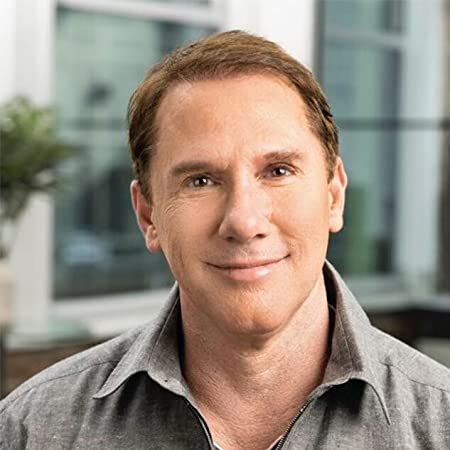
Nicholas Sparks


If you haven't heard of or read at least one of Nicholas Sparks' books, you have missed a special time of entertainment. 

His books are well known and loved through the reading circles on a worldwide basis. Check out the titles below:


Nicholas Sparks is one of the world’s most beloved storytellers. Most of his books, if not all, have been New York Times bestsellers, with over 105 million copies sold worldwide, in more than 50 languages, including over 75 million copies in the United States alone.

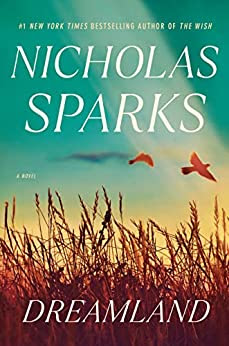
Sparks wrote one of his best-known stories, The Notebook, over a period of six months at age 28. It was published in 1996 and he followed with the novels Message in a Bottle (1998), A Walk to Remember (1999), The Rescue (2000), A Bend in the Road (2001), Nights in Rodanthe (2002), The Guardian (2003), The Wedding (2003), True Believer (2005) and its sequel, At First Sight (2005), Dear John (2006), The Choice (2007), The Lucky One (2008), The Last Song (2009), Safe Haven (2010), The Best of Me (2011), The Longest Ride (2013), See Me (2015), Two by Two (2016), Every Breath (2018), The Return (2020), and The Wish (2021) as well as the 2004 non-fiction memoir Three Weeks With My Brother, co-written with his brother Micah. His twenty-third novel, Dreamland, was published on September 20, 2022.

Film adaptations of Nicholas Sparks novels, including The Choice, The Longest Ride, The Best of Me, Safe Haven (on all of which he served as a producer), The Lucky One, Message in a Bottle, A Walk to Remember, The Notebook, Nights in Rodanthe, Dear John and The Last Song, have had a cumulative worldwide gross of over three-quarters of a billion dollars. The Notebook has also been adapted into a musical, featuring music and lyrics b
y Ingrid Michaelson.


Check out his newest book, Dreamland. It is a poignant love story about risking everything for a dream—and whether it’s possible to leave the past behind.

Colby Mills once felt destined for a musical career, until tragedy grounded his aspirations. Now the head of a small family farm in North Carolina, he spontaneously takes a gig playing at a bar in St. Pete Beach, Florida, seeking a rare break from his duties at home.

But when he meets Morgan Lee, his world is turned upside-down, making him wonder if the responsibilities he has shouldered need dictate his life forever. The daughter of affluent Chicago doctors, Morgan has graduated from a prestigious college music program with the ambition to move to Nashville and become a star. Romantically and musically, she and Colby complete each other in a way that neither has ever known.

While they are falling headlong in love, Beverly is on a heart-pounding journey of another kind. Fleeing an abusive husband with her six-year-old son, she is trying to piece together a life for them in a small town far off the beaten track. With money running out and danger seemingly around every corner, she makes a desperate decision that will rewrite everything she knows to be true.

In the course of a single unforgettable week, two young people will navigate the exhilarating heights and heartbreak of first love. Hundreds of miles away, Beverly will put her love for her young son to the test. And fate will draw all three people together in a web of life-altering connections . . . forcing each to wonder whether the dream of a better life can ever survive the weight of the past.

Visit his website: https://nicholassparks.com/

September 26, 2022

A Social Worker’s Perilous Journey to Avenge Her Sister


Carla Damron


Advocate for human trafficking survivors pens thriller with a message of awareness and vigilance.


Award-winning author and social worker Carla Damron, named by NAMI as an Outstanding Mental Health Professional of the Year, uses fiction to address social justice issues, and her latest release is no exception. Emotion-driven, The Orchid Tattoo (Koehler Books, Sept. 30, 2022) is one part of Damron’s work as an advocate for human trafficking survivors and people with mental illnesses.

Her previous work includes The Stone Necklace, winner the 2017 Women’s Fiction Writers Association Star Award for Best Novel, which led award-winning author Pat Conroy to say “this is a novelist to be read again and again.”


In The Orchid Tattoo, social worker Georgia Thayer can balance her own mental illness with the demands of an impossible job. Mostly. But when her sister vanishes in the dead of night, her desperate quest to find Peyton leads to a multi-tentacled human trafficking network. 

When Georgia learns that her sister was brutally murdered trying to help a young victim called “Kitten,” she picks up where Peyton left off, and travels a treacherous path to expose the kingpin of the Estate, a luxurious brothel servicing rich and powerful men, and rescue his victims. 

Kitten is determined to escape. She won’t be trapped like the others. She won’t sell her soul like Lillian, victim-turned-madam, feeding the dark appetites of international business moguls and government leaders. 

Aided by Kitten, Georgia maneuvers to bring down the Estate and expose its dark secrets, but her efforts place her--and the very few people she allows to get close--in grave danger.


Carla Damron is a social worker, advocate and author whose last novel, The Stone Necklace (about grief and addiction) won the 2017 Women’s Fiction Writers Association Star Award for Best Novel and was selected as the One Community Read for Columbia SC. Damron is also the author of the Caleb Knowles mystery novels and has published numerous short stories, essays, and op-eds. Damron holds an MSW and an MFA. Her careers of social worker and writer are intricately intertwined; all of her novels explore social issues like addiction, homelessness, mental illness, and human trafficking. In her spare time, Damron volunteers with the ›League of Women Voters, Sisters in Crime, Palmetto Chapter (President), her church, and Mutual Aid Midlands. Find out more about her at http://carladamron.com.

September 22, 2022

Kimberley Woodhouse~ Part II About the Worst Advice!


PART II

Kimberley Woodhouse 


What is the worst writing advice you got?

 “Wait for the muse to strike so it will be brilliant.” Worst advice ever.


Between plotting, character development, dialogue, scenes which is easiest for you, and which takes a lot of effort?
 

I’m a bit of an organized-planning-freak. So plotting, developing the characters, research, and all the planning are fun for me. Writing the first draft takes the most of my effort and is my least favorite. And then I absolutely LOVE the editing phases.


What is your schedule for writing? 

I’m a full-time author. I have five full-length novels releasing in 2023 (three historicals, two romantic suspense), four full-lengths in 2024, five in 2025, etc. So, my schedule is pretty consistent. I’m always researching one book, writing the synopsis for another, writing the first draft of another, and editing another. I divide my day/week up into increments for each one. I have a planner for my planners – no joke LOL – and I have one specifically for my writing. In it, I have all my deadlines and plan out my word-count for each day and each project. Most working days, I put in about ten hours.


What do you do if you get stumped? 

Sometimes, I take a fifteen-minute walk to get everything flowing again. Sometimes, I read over my research and notes. But most times, I just keep writing. Find a different scene to start and go from there. Some of my favorite quotes are hanging in my office where I can see them over my three monitors.

“Get to work. Your work is to keep cranking the flywheel that turns the gears that spin the belt in the engine of belief that keeps you and your desk in midair.” – Annie Dillard, The Writing Life

“If you wait for inspiration to write you’re not a writer, you’re a waiter.” – Dan Poynter

“Few things are impossible to diligence and skill. Great works are performed not by strength, but perseverance.” – Samuel Johnson


Did you or do you make any sacrifices to be a writer? 

More than I can count. Especially those first years. I remember a friend of mine—who was a best-selling author—telling me that writing was an occupation where you put in all the work years ahead of time and hoped for the reward about ten years down the road. Makes me laugh to think about it, but there is some truth to that. Right now, I sacrifice a lot of other things (i.e., say “no”) so that I have the time to write (again, it’s my full-time job). But I wouldn’t trade it – I love it.


Did you choose your genre, or did it choose you? 

Hmmmm. I would have to say both. 😊


What is the best way you found to market your book? 

Word of mouth is still the best. Readers are the best. When they get a hold of your book, read it, and then tell people about it? Makes my heart sing.

Did you actively build a network of readers and if so, how? 

I do. My website is a great place for people to find me and sign up for my newsletter and blog. Then on social media, I do my best to stay active and get to know readers there. The biggest thing I want people to know is that I’m just an ordinary, normal person. I want to be real. And my hope is that they feel comfortable being real there with me.

Are you on the Social Media Highway and if so, do you schedule times to post? 

I am! Although I rarely schedule things unless it’s something planned coming up. Most of the time, I like it to be organic and random so I can simply connect with people. My VA makes graphics and things for me, but I still do all my own social media because I want it to come across authentic.


What advice would you like to give new authors that would help them? 

Study the craft. The publishing business isn’t fast. And it shouldn’t be. Take your time. Be patient. Learn all you can and keep on learning—no matter how many books you’ve written! Don’t try to put something out there before it’s ready in the beginning. Be disciplined and diligent in your writing. Persevere. And one more time… be patient. Keep writing!


Kimberley Woodhouse is an award-winning, bestselling author of more than thirty fiction and nonfiction books including THE HEART OF ALASKA series and THE TREASURES OF NOME series.

Kim and her incredible husband of thirty-plus years have two adult children. She loves the gift of story and is passionate about music and Bible study. 

Kimberley Woodhouse has won multiple awards for her
historical novels, which are filled with adventure and romance.
In A Gem of Truth, book two in the SECRETS OF THE CANYON series, Woodhouse plunges readers deep into the recesses of the Grand Canyon in search of a legendary treasure. Themes of honesty, love, and one’s worth regardless of their past are intricately woven together in this captivating historical narrative.

You can connect with Kimberley at
kimberleywoodhouse.com.

September 21, 2022

Kimberley Woodhouse Talks With Suite T About A Gem of Truth

Kimberley Woodhouse


When did you start writing? 


I started writing actively when my son was a baby—more than twenty-seven years ago. As a trained/professional musician—but at home with my young baby—I had all this “creative juice” flowing that I poured out onto the page in story form. I’d always loved to read and my English professor in college had even told me I was an amazing storyteller, but I didn’t take it to heart until years later after my son was born. I kept it hidden for a while, because it was just a creative outlet at the time. But then one of my friends found manuscripts I’d written and challenged me to do something about it.  


Who were/are two of your favorite authors?


Tracie Peterson and Colleen Coble were favorites way back before I started writing and they are still at the top of my list. They both have also poured so much into me over the years as mentors.


 How do you feel they influenced you?


They helped me find my voice and encouraged me to write for publication.


What point in your writing career did you feel like you had gone from amateur to pro?


I was excited about the possibility of being a professional when I signed with my first agent, but it wasn’t until after my first book released that I realized I was an actual author. Now, after more than thirty books, there are days I still feel like a newbie because I feel like I’m just getting started and my hope is to always improve my craft and learn more.


What do you look for in choosing a setting for your book?


Fascinating history or something unique about the location. There are so many different things that inspire me for settings. The people that lived there, events, and yes, the visual aspects often draw me in to write about them. When I teach at writer’s conferences, I always say that the setting needs to be strong enough to be another character.


What steps are involved in research for your book? 

Such a great question! I do months of research for each book. I go to the location, visit museums, libraries, historical societies, and talk to the people who know the most about the area and its history. And I read five to ten books (at least) on the subject matter/location. One step is to find a few people that are experts that I can email and speak with via phone. They are invaluable. 


In writing your new book, what do you feel makes it stand out?


A Gem of Truth is a unique story as it’s set at the Grand Canyon at the El Tovar Hotel. The hero is a jeweler, and the heroine is a Harvey Girl. The story also involves a legend (fictional) that goes back to when the Spanish explorers really did come to the Grand Canyon in 1540 as they were looking for the Cities of Gold. There’s suspense, romance, and what I think is a fun setting.


In your new book, what would you like the reader to walk away with? 


A sense of belonging, acceptance, and love. The thrill of the adventure and a passion for the amazing history of our country.


What is the best writing advice you have received so far? 


To make it a discipline to write. As creatives, we authors can easily get distracted or want to wait for inspiration to strike. But in the very beginning, I was given the advice to write, write, write, write, write. A little every day. Making it a discipline and a habit to focus the creative energy into the story.


Continues tomorrow: See what the worst advice was Kimberly received.


September 20, 2022

Can We Rewrite Our Own History?


Rudy Ruiz

Award-winning San Antonio author Rudy Ruiz will release his latest book, “Valley of Shadows,” on Sept. 20 with Blackstone Publishing, just in time for Hispanic Heritage Month. The novel pays tribute to his family’s cultural background and puts a soul-stirring Latinx spin on three classic American genres: Western, Southern gothic and horror.

Rudy Ruiz, the son and grandson
of Mexican immigrants, was raised around ranches and horses, reared on tales of the Old West and the Mexican Revolution, but then he moved on to Harvard and success as an award-winning author of literary fiction.

Now he brings his brand of polished storytelling, cultural immersion and magical realism to a visionary novel that explores and upends classic American genres: Western, Southern Gothic and Horror.


The results are pioneering, poignant and powerful. The novel, “Valley of Shadows,” will be released by Blackstone Publishing on Sept. 20, 2022, just in time for Hispanic Heritage Month.


Steeped in heritage, “Valley of Shadows” shifts back and forth through time, kicking off in West Texas in 1883, but slowly revealing its protagonist’s past in sections dating back to the mid-1800’s, when the Rio Grande became the new border between the U.S. and Mexico, and the 1860’s, when Mexico battled the French Imperial invasion. The hero of the story is Solitario Cisneros, a former Mexican lawman who lives up to his solitary name. He lost his wife, his family, even his country when the river shifted course. He has resigned himself to a life of solitary regret, communing with spirits and whispering to horses. But a gruesome series of macabre murders and abductions, along with the friendship of an unlikely ally, present him with an unexpected second chance at life, or death.


Through its intimate story, and the perspectives of its lead characters, which include newly minted Mexican-Americans, Anglo settlers, and Mescalero Apaches who had long before called West Texas home, “Valley of Shadows” sheds light on the dark past of injustice, isolation, and suffering along the U.S.-Mexico border. Through luminous prose and soul-searching reflections, Rudy Ruiz transports readers to a distant time and a remote place where the immortal forces of good and evil dance amidst the shadows of magic and mountains.


As readers follow Solitario and his Mexican-Apache friend Onawa into the desert, they join them in facing haunting questions about the human condition that are as relevant today as they were back then: Can we rewrite our own history and shape our own future? What does it mean to belong to a place, or for a place to belong to a people? And, as lonely and defeated as we might feel, are we ever truly alone?