Pages

Showing posts with label Irene Hannon. Show all posts

May 18, 2023

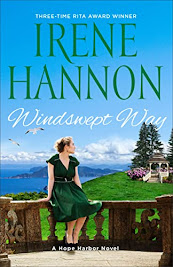
Welcome Back to Hope Harbor

Irene Hannon


Bestselling author Irene Hannon invites you back to Hope Harbor, where hearts heal and love blooms.


Buying a haunted house was never in Ashley Scott's plans, but when an intriguing opportunity drops into her lap after a major setback, she finds herself trekking cross-country to Hope Harbor on the Oregon coast to launch a new life.

Wounded warrior Jonathan Gray isn't sure what to make of the attractive woman on his reclusive older neighbor's isolated property, but her presence is none of his business--until she enlists his help with an ambitious project. When Jonathan finds his interest in the new arrival becoming more personal than professional, however, his defenses go up. There's no room in his life--or his heart--for romance.

Yet, as these three hurting people join forces to restore life, laughter, and love to a historic estate that has known too much sadness, they may also find healing, hope, and happiness for themselves.


Irene Hannon is the best-selling author of more than 35 novels. Her books have been honored with the coveted RITA Award from Romance Writers of America, the HOLT Medallion, the Reviewer's Choice Award from Romantic Times BOOKreviews magazine and the Daphne du Maurier Award for mystery/suspense. Irene and her husband make their home in Missouri, USA. Irene invites you to visit her at her website, www.irenehannon.com

October 3, 2022

Irene Hannon Interview with Suite T


Irene Hannon


When did you start writing?

I’ve been writing since I was old enough to pick up a pen and put words together. I’ve always believed that storytelling, like any other talent, is a gift. So if you’re a writer, you write. And most of us never stop.


Who were/are two of your favorite authors?

Carolyn Keene (actually multiple authors) and Emilie Loring, who began publishing in the
1920s.


Do you feel they influenced you? In what way?

Absolutely! That’s why they’re among my favorites. The Nancy Drew mystery books whetted my appetite for strong, independent heroines who have staunch values and are courageous, loyal and smart. Nancy was a great role model for a young girl. The Emilie Loring books also featured strong women involved in intrigue, with the addition of a romance element. I read the latter books as a

April 8, 2022

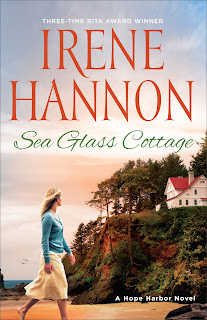
Irene Hannon Welcomes Readers Back to the Oregon Coast in Sea Glass Cottage

Irene Hannon


Over the years, bestselling author Irene Hannon has written more than 60 novels. Fans have come to love her captivating tales whether they immerse themselves in one of her spine-chilling psychological thrillers or wrap themselves in one of her heartwarming romances. 

Now, in Sea Glass Cottage, she invites readers to return to the beautiful seaside town of Hope Harbor—a place where hearts heal . . . and love blooms.


Christi Reece is desperate. The one-time golden girl’s life has tarnished, and a
cascade of setbacks has left her reeling. She needs help, and she’s certain Jack
Colby is in a position to provide it.

When she shows up in Hope Harbor, however, Jack wants nothing to do with
the woman who betrayed him. He’s built a new life on the Oregon coast—and
there’s no room in it for Christi, even after she takes refuge in a charming but
mysterious cottage nearby. Yet it soon becomes apparent his opinion of her may need revising . . .especially when he ends up needing her help.

Can these two hurting souls make peace with their past and open their hearts to a new beginning?


Bestselling and award-winning author Irene Hannon delivers another heartwarming and romantic story set

in the enchanting seaside community of Hope Harbor that is loved by readers the world over. Once you visit, you’ll never want to leave.

Good news for Irene's fans! She has signed a new contract for another suspense series launching in 2023—plus three more Hope Harbor books, bringing the total in that long-running series to 11 books. I for one am hoping there will be more.

Irene Hannon is the bestselling author of more than sixty novels, including the long-running Hope Harbor series, as well as Labyrinth of Lies, Point of Danger and the Code of Honor, Private Justice, and Men of Valor suspense series, among others. Her books have been honored with three coveted RITA Awards from Romance Writers of America, and she is a member of that organization’s elite Hall of Fame. Her many other awards include National Readers’ Choice, Daphne du Maurier, Retailers’ Choice, Booksellers’ Best, Carol, and Reviewers’ Choice from RT Book Reviews magazine, which also honored her with a Career Achievement Award for her entire body of work. In addition, she is a two-time Christy Award finalist. Learn more at www.irenehannon.com.

October 4, 2021

The Chapter Checklist


Irene Hannon


Every writer knows there is no one right way to write a book. It’s a process unique to each author. While one may procrastinate, then use deadline-producing adrenaline to race to the finish, another maps out their schedule with precise daily or weekly word counts and builds in time to coast to the deadline. Whatever works for you is the right way.

But when it comes to polishing writing—a more mechanical than creative process—there are some general guidelines that can work for every author. And an amazing amount of creativity can creep in at this stage, too.

One polishing techniques that has worked well for me is the chapter checklist. I’m in the weekly-word-count-coast-to-the-finish camp, and I write polished drafts. That means I have a master document (the polished manuscript), and no chapter gets moved into it until it’s “done.” At the end, I have a finished book, ready to turn in with only a final read-through for smoothing and minor editing.

The chapter checklist helps me achieve this painless finish. Before I move a chapter into the master document, I give it a rigorous going over. Here’s what’s on my checklist:

1. Do a global search for overused words. This list is personal for every author, but we all have pet words that creep into our writing far too often. My list has grown over the years and is now much too long, making the process tedious—but by searching out these words and finding alternatives, my writing stays fresher and less repetitive.

2. Cut adverbs. I again use global search to do this, putting ly in the search box. Many authors fall into the trap of using too many adverbs—which don’t make for the strongest writing. My rule is no more than two per manuscript page…and in general, I have one—or less.

3. Skim through the chapter and check the first word in every paragraph. It’s easy to become repetitive here—e.g., using too many he, she, first names, etc. Vary paragraph openings with different parts of speech. My basic rule is that no two sequential paragraphs should start with the same word—dialogue being the exception.

4. Run spell check. This is my last step before deeming a chapter ready to move into the master document.

If you’re a writer who writes the whole book in one fell swoop and later goes back to clean it up, this exercise is still worthwhile. But it’s less overwhelming if you do it chapter by chapter.

And you’ll be amazed how much of a luster this puts on your work.


Irene Hannon is the bestselling author of more than sixty novels, including the long-running Hope Harbor series, as well as Point of Danger and the Code of Honor, Private Justice, and Men of Valor suspense series, among others.
Her books have been honored with three coveted RITA Awards from Romance Writers of America, and she is a member of that organization’s elite Hall of
Fame. Her many other awards include National Readers’ Choice, Daphne du Maurier, Retailers’ Choice, Booksellers’ Best, Carol, and Reviewers’ Choice from RT Book Reviews magazine, which also honored her with a Career
Achievement Award for her entire body of work. In addition, she is a two-time Christy Award finalist.


Learn more at www.irenehannon.com.

May 6, 2021

Three Basics to Being a Good Writer


Irene Hannon


As I sat down to write this article—and to cull through all the tips I’ve learned through my many years and sixty-plus novels as a writer—I tried to think about which ones would have been most helpful to my rookie self.

It wasn’t easy—because the list is long, and every single thing I’ve learned has allowed me to grow and mature in my use of words and in my storytelling.

But if I have to choose among them, the following are certainly among the top three.

October 22, 2020

The Genesis of Danger - Part 2


Irene Hannon


. . . continued from Part 1

But what I do know from the beginning with my suspense novels is that the danger level…the impending threat…the sense of menace—and malice…must be omnipresent. It can slink off-screen for a few minutes here and there, but the ominous undercurrents must always ripple just below the surface.

So how did I do that in Point of Danger?

First, let me tell you how I didn’t do it—with a high-action, high-adrenaline storyline in which the characters are in physical danger in almost every chapter. My characters are not shot at, thrown off cliffs, dumped into raging rivers, locked in airless rooms, buried alive, tied up, chased, exposed to fire—you name it—in every chapter.

While there are moments of physical danger in my books, I don’t have a life-threatening event in every scene. For me, psychological suspense is more compelling. Think Alfred Hitchcock versus James Bond. In my books, there’s a steady build to an often-explosive ending.

In Point of Danger, I use three specific technique that are part of my standard tool kit for a suspense novel to keep the danger level front and center.

First, I include multiple points of view in addition to the hero and heroine. I take readers into the heads of several characters, all of whom have a potential motive for wanting Eve gone. So, I keep the audience guessing about who’s behind the threats all the way through the book.

Second, I try to end every scene with a foreshadowing statement. A suggestion that more danger is ahead.

Here’s an example:

“Because confident as she was in her ability to stand up to intimidation, it would be comforting to have someone like Brent in her corner if by chance today’s prank morphed into a much more ominous threat.”

This plants the notion in the readers’ minds that the prank probably will morph into something more ominous—and compels them to keep reading to see what danger lies ahead.

In the next example, the police think they may have found the culprit. Everything fits. But there’s a glitch.

“The crime scenes were clean and there were no witnesses. There was no absolute proof he was their man.

Without that, he could walk.

Meaning Eve’s life could still be in danger.”

Again, I’ve planted a seed of doubt in readers’ minds to induce them to keep reading…and to suggest they shouldn’t let their guard down.

I use the same technique with the romance aspect of the book, raising questions at the end of those scenes that keep the tension high, making readers’ wonder whether Eve and Brent will manage to overcome the personal obstacles that could sabotage their relationship.

So, I use foreshadowing to sustain suspense on two levels—professional and personal—throughout the book

Finally, I choose action verbs that evoke danger whenever possible. My characters freeze…suck in a breath…snatch…bolt…leap…sprint…bound…skid. And that’s just in the first two pages. Powerful, action-oriented verbs can generate a sense of danger faster than anything else.

And that, my friends, is how I generate and sustain suspense in Point of Danger. I hope you’ll give the book a read and see for yourself that it’s possible to create a taut, gripping story without putting physical danger on every page.

Because the scariest place of all is the villain’s mind.


Irene Hannon is the bestselling and award-winning author of more than 50 contemporary romance and romantic suspense novels, including Dangerous Illusions, Hidden Peril, and Dark Ambitions, as well as the Men of Valor, Heroes of Quantico, Guardians of Justice, and Private Justice series. 

In addition to her many other honors, she is a three-time winner of the prestigious RITA Award from Romance Writers of America. She is also a member of RWA’s elite Hall of Fame and has received a Career Achievement Award from RT Book Reviews for her entire
body of work. Each of her suspense novels have been ECPA bestsellers, and her books often appear on the Publishers Weekly bestseller list. 

Learn more at www.irenehannon.com.

October 21, 2020

The Genesis of Danger - Part 1


Irene Hannon


On October 6, I’ll launch a new suspense series called Triple Threat, which features three sisters involved in truth-seeking professions who are plunged into dicey situations that lead to danger…and romance.

In Book 1, Point of Danger, radio talk show host Eve Reilly finds a ticking package on her doorstep…left, the police assume, by a disgruntled listener. But she’s not about to buckle to threats. Enter police detective Brent Lange, who isn’t in the market for romance but begins to fall for Eve. As a string of unsettling incidents follows…and multiple people with viable motives take their turn on stage…it becomes clear someone wants her voice silenced—permanently.

I’m guessing it took you less than thirty seconds to read the preceding paragraph.

March 30, 2020

Start with a Bang


By Irene Hannon, Author of Starfish Pier


I was recently asked by a fellow author for one piece of advice she could share in a writing workshop she was leading.

After fifty-seven novels and a multitude of years in the publishing game, I’ve learned a lot—so it took a bit of thinking to cull through all the tips stored in my brain and pick out just one nugget of advice. Here it is.

Start your story in the right place.

Where, you may ask, is that? Simple. It’s the moment when everything changes for one of your main characters. When the world they know has shifted, and nothing will ever be the same again.

No matter the genre, our job as writers is to convey that life-altering moment in a high-impact opening. One that grabs readers and lets them know something big is at stake. That leaves them with questions—and eager to read on to find answers.

So how does this work in practical terms?

January 14, 2019

To Agent or Not to Agent?


By Irene Hannon, author of Driftwood Bay


When I launched my fiction-writing career many years ago, I thought having an agent would be advantageous—not to mention prestigious. It was a sentiment shared by most authors I knew.

But my early career ended up being focused on category romance, and as I quickly learned, an agent in that situation is little more than an unnecessary expense. Category romance contracts are boilerplate and largely nonnegotiable (aside from a couple of items like author copies). So, an agent won’t be able to get you anything you can’t ask for yourself—yet they’ll still take their full fifteen percent.

When I decided to branch into longer, trade-length books, I knew I’d need to switch publishers. By then, it had become more difficult to connect with non-category publishers without an agent.

So, I got one—and he did sell my first suspense series.

However, having spent more than two decades in an executive level position at a Fortune 500 company, I was familiar with the give and take of negotiation. I had also educated myself through the years on publishing contracts. So other than making that initial connection, my agent did very little for me.

When it came time to pitch a second series, I sent him a one-page proposal, with a one-paragraph synopsis of each of the books. He passed it on to my publisher—and they bought it immediately. Virtually no work was required on his part…yet he collected his fifteen percent (and continues to collect it to this day, since the series is still selling).

At this point, I decided the agent model wasn’t working for me. I was comfortable reviewing contracts and asking for what I wanted, and I anticipated a long run with my publisher. What value was my agent adding?

Just as I was about to sever our relationship, my publisher contacted him and asked for another contract. Absolutely zero work was required on his part. But since he was still the agent of record, he got his percentage.

Needless to say, we’ve since parted ways. I now negotiate my own contracts, though I do have a literary attorney in New York who I use on occasion. But that’s a pay-as-you-go arrangement, which works far better for me.

While I realize an agent may make sense for some authors who intend to take advantage of the smorgasbord of services they offer—publisher contacts, industry information, contract negotiation, contract analysis, manuscript review, hand holding. However, all I ever used my agent for was negotiating contracts. So, I was paying for a smorgasbord I didn’t need.

For those still waiting for their first contract, a literary agent may help you get your work in front of an editor. But remember that many editors attend writing conferences, and you may be able to make a personal connection yourself. It’s an option that could be worth exploring.

Whether you decide to get an agent or not, I’ll share one piece of advice. Educate yourself on the industry and on contracts—and review every contract word for word. Because no one will ever care as much about your career as you do.
_______________________________________________________________________ 
Irene Hannon is the bestselling, award-winning author of more than fifty contemporary romance and romantic suspense novels. In addition to her many other honors, she is a three-time winner of the prestigious RITA Award from Romance Writers of America (the “Oscar” of romance fiction) and is also a member of that organization’s elite Hall of Fame. In 2016, she received a Career Achievement award from RT Book Reviews magazine for her entire body of work. Millions of copies of her books have been sold worldwide, and they have been translated into multiple languages. She’s active on social media, and especially loves to chat with readers on Facebook and Twitter! Social Media links: www.irenehannon.com


December 29, 2017

One Genre—or Two?


By Irene Hannon 


I write in two genres—contemporary romance and romantic suspense—and I’m often asked how this came about and how I make it work. So let’s talk about that for a few minutes.

My very first book was a romantic suspense novella—and it was really, really, really bad. (Sorry for all those adverbs, but they capture the badness!) One of the many reasons it was so bad is because I had no contacts in law enforcement (a serious problem if your main character is a police detective) and there was no internet. We’re talking the Dark Ages here.

Stymied, I decided to switch to contemporary romance. While most books in that genre do require some research, in general it’s less intense and technical than the kind needed for a heavy-duty suspense novel.

After writing three books, I connected with a publisher and was off and running in contemporary romance.

Or so I thought.

Problem was, after two of my three contracted books were published, the line I wrote for was discontinued.

I did connect with another publisher eventually…then another…and my career picked up momentum.

Twenty-six books later, I got the urge to try romantic suspense again. This time, I not only had contacts, I had the internet. Piece of cake, right?

Wrong.

My 26 mass market series romance books didn’t mean a thing to single-title, trade-paperback publishers—especially since I was an unknown in romantic suspense.

In the end, I did connect with a wonderful publisher, and now write both contemporary romance and romantic suspense for them under the same pen name.

I think this has worked well for me because my books share three common elements.

First, romance is central to all my novels. A reader who picks up an Irene Hannon book knows it will contain a central love story and that the ending will be happy.

Second, my focus in both genres is on my characters. I use the plot to deepen character development as well as to propel the story. As a result, my suspense books are not action/adventure novels, where characters’ lives hang in the balance on every page while shots fly and bombs explode and planes are hijacked. Instead, I build toward a suspenseful climax while delving deep into my characters’ minds (including the villain’s), taking readers along with me. Those who read my books know they’ll get an in-depth character dive in every story I write.

Third, all my books contain moments of mirth, deeply emotional scenes, and relatable heroes and heroines the reader can connect with and root for.

As a result of these common elements, I have many readers who enjoy my books in both genres.

That said, some of the suspense readers have dinged me in Amazon reviews because my contemporary romances weren’t to their taste. There are also some readers who enjoy my contemporary romances but find my suspense tales too scary. So the crossover isn’t one hundred percent.

My publisher does differentiate between the two genres with two very different cover styles, and that helps readers make choices consistent with their tastes. It’s pretty obvious that Sandpiper Cove and Dangerous Illusions are not in the same genre!

Bottom line, writing in two genres has worked for me for the reasons outlined above. But if you’re thinking of writing, say, young adult dystopian fantasy and regency romance—different pseudonyms might be in order!
_________________________________________________________________ 
Irene Hannon is the bestselling and award-winning author of more than fifty contemporary romance and romantic suspense novels. In addition to her many other honors, she is a three-time winner of the prestigious RITA Award from Romance Writers of America (the “Oscar” of romance fiction) and is also a member of that organization’s elite Hall of Fame. In 2016, she received a Career Achievement award from RT Book Reviews magazine for her entire body of work. She loves to chat with readers on Facebook!


October 6, 2014

The Difference Between Great and Almost-Great Books


By Irene Hannon 


After 45+ books, I’ve learned that the difference between great and almost-great books can often be summed up in two words—the basics. Getting those right can give you a winning edge. So here are 12 genre-neutral tips (because good writing is good writing) that can help put the final polish on your writing.

  1.  Start in the right place, i.e. right in the middle of the action. Create a high-impact opening that immediately lets readers know something big is at stake. Begin with a bang—sometimes literally in suspense, but figuratively in any book. The opening must also leave readers with a question that makes them want to read on to find the answer.

2.     Pay attention to chapter and scene endings. Again, leave the reader with a question or make the reader curious about what’s coming next. Give him or her a reason to keep reading.

3.     Never take the reader out of story. If you must weave in technical information or backstory, find a way to do it in the context the scene. Don’t stop the action for a data dump from a disembodied narrative voice.

4.     Don’t head hop within a scene. This is disruptive to story flow. It’s better to let the readers, along with the point-of-view character, try to figure out what the other players are thinking by viewing  their actions, inflections and gestures through the eyes of the viewpoint character.

5.     Pay attention to rhythm. For example, short, choppy sentences convey tension and urgency. This is a good technique for a charged scene in any genre. So use sentence length and construction to help convey mood through rhythm.

6.     Cut adverbs. Eliminating adverbs strengthens writing by forcing us to choose better words. Don’t say she walked slowly; pick a stronger verb. She ambled, crept, limped, and trudged.

7.     Make limited use of dialogue tags (he said/she said). Most of the time you don’t need them and they bog down the pace.

8.     Use as much dialogue as possible vs. narrative to advance plot, deepen characterizations, and share background info. Dialogue keeps the story active and immediate and the reader feels engaged and in the middle of the action.

9.     Write tight and cut ruthlessly if something doesn’t advance the plot or offer new insights into a character, cut it.  Author Elmore Leonard was asked once how he did this. He said he simply left out the parts readers skip. That’s a great rule. Everything must be deliberate and there for a purpose or it should be cut.

10.  Always take the time to choose the perfect word. Walked conveys a whole different meaning than sauntered.

11.  Don’t overuse pet words. We all fall into this trap, and new ones keep cropping up. Make a list of your overused words, then search for them after you finish each chapter.

12.   Limit descriptions, especially of settings. Popular fiction readers have no patience for long, lyrical passages. They want the mood and place captured quickly so they can move into the action.
____________________________________________________________________
Irene Hannon, who writes both contemporary romance and romantic suspense, is the bestselling author of more than 45 novels. Her books have been honored with two coveted RITA awards (the “Oscar” of romantic fiction), a Carol award, a Daphne du Maurier award, a National Readers’ Choice award, three HOLT Medallions, a Retailers Choice award and two Reviewers’ Choice awards from RT Book Reviews magazine. A former corporate communications executive with a Fortune 500 company, Irene now writes full time. Her Private Justice series includes the titles: Deceived, Trapped and Vanished. She can be found at http://www.irenehannon.com/