Pages

April 4, 2022

Kelli Stuart Talks About The Master Craftsman


                                Kelli Stuart


In 1999, I was a senior at Baylor University majoring in English Professional Writing. At that time, I assumed I’d become a copywriter, or perhaps an editor at a publishing house. I never really considered that I’d be a novelist because that felt too lofty—it felt like a pipe dream meant only for the brooding artist types who wore funky hats, lived in big cities, and smoked really thin cigarettes.


But then I took a class called Writing for the Popular Market in which our only assignment for the year was to write a novel. I decided to fictionalize the story of a woman I’d met when studying abroad in Kiev, Ukraine who had survived a Nazi slave labor camp in WWII.


That novel writing experience completely shifted my thoughts on my career path. I found that telling stories brought me a deep joy, and I knew I wanted to see my name on the cover of a book I had written. So, I started looking for funky hats and got to work.


Just kidding. I don’t wear hats very often.


I did end up publishing that WWII novel based on the true stories of over 100 veterans I met and interviewed from in the former Soviet Union. It would ultimately take sixteen years, but persistence and tenacity are key in this industry, and that debut book of mine, Like a River From Its Course, went on to win the ACFW Carol award for Best Historical fiction and was a double nominee for the Christy Award in 2017.


I’d tasted the Kool-Aid of the novel world, I found that I loved it, so I started again. I was a Russian minor at Baylor and had spent quite a bit of time in Russia and Ukraine over the years, so many of my story ideas came from the pages of Soviet history. There is no shortage of stories to be told and mining out those stories has kept me busy these last few years.


My newest release, titled The Master Craftsman, releases in April 2022 with Revell Publishing. This book marries my love of Russian history with a modern-day treasure hunt that was so delightful and challenging and fun to write. Following is a brief summary:


In 1917, Alma Pihl, a master craftsman in The House of Faberge, was charged to protect one of the greatest secrets in Russian history—an unknown Faberge Egg that Peter Karl Faberge secretly created to honor his divided allegiance to both the people of Russia and the Imperial Czar’s family. When Alma and her husband escaped Russia for their native Finland in 1921, she took the secret with her, guarding her past connection to the Romanov family.


Three generations later, world-renowned treasure hunter Nick Laine is sick and fears the secret of the missing egg will die with him. With time running out, he entrusts the mission of retrieving the egg to his estranged daughter, Ava, who has little idea of the dangers she is about to face. As the stakes are raised, Ava is forced to declare her own allegiance—and the consequences are greater than she could have imagined.


***


Stories come to authors in a variety of ways. Each one of my books has been sparked by something small—a line in a book, a magazine article, an experience at a museum. You never really know what’s going to be the next idea that sticks so as an author I try to always stay ready.


The idea for The Master Craftsman came to me one afternoon when I randomly clicked on a news headline about a Russian Imperial crown that had been recently discovered. In that article, I read the story of a Midwest American man who had purchased what he thought was an interesting little trinket at an auction for $14,000. He planned to melt it down and sell the gold, but as he was cleaning it up decided to do a quick search on the name engraved in the golden egg.


It turned out he had purchased the missing Moscow Kremlin Egg, designed by The House of Faberge for the Russian Imperial family. Even more, this impulse purchase was worth an estimated $33 million dollars.


This short article set my imagination spinning, and my research brain was already three steps ahead. I found that Peter Karl Faberge and his team of Master Craftsmen had designed fifty-two Imperial Easter Eggs for the Romanov family, but after the Russian Revolution in 1917, the collection had gone missing. To date, only forty-one of the eggs have been recovered.


So, where are the other eleven eggs? That is the question that treasure hunters around the world are asking, and it’s the launching point for The Master Craftsman.


Books and stories are a powerful tool for transporting us to different places and times. I adored being transported back into those tumultuous days in pre-revolutionary Russia where tensions ran high between the people and their leader. And while I had heard of Faberge Eggs and seen pictures of them before, I’d never studied them quite so closely. It was enamoring to consider the talent, imagination, and skill that went into crafting those pieces, and to know that two of the most revered eggs in the entire Imperial collection, The Winter Egg and The Mosaic Egg, had been designed by a woman was even more intriguing.


The Master Craftsman is the story of Peter Karl Faberge—a visionary with a torn allegiance, with ahead-of-his-time business practices and creativity, and with a secret too great to reveal. This real-life history is coupled with my own imagination to bring you a story of intrigue and mystery. Ultimately, you’ll be left asking a single question: What if it’s true?


Kelli Stuart is the award-winning author of the novels Like a River From Its Course, A Silver Willow by the Shore, The Fabulous Freaks of Monsieur Beaumont, and the soon-to-be-released The Master Craftsman. Kelli was also part of a collection of Christmas novellas inspired by classic holiday films titled It’s a Wonderful Christmas: Classics Reimagined. Kelli lives in Tampa, Florida with her husband and five children.

 Learn more at KelliStuart.com

April 1, 2022

Do You Love Mysteries?

Amy M. Reade


If you are a mystery lover, then you will want to know Amy M. Reade (A. M. Reade) Do you love mysteries?
​

Amy M. Reade started her career practicing law in New York City, but it wasn't long before she realized it was much more fun writing fiction than legal documents. It took her a while, but she finally decided to polish up the manuscript she had been working on and send it out.


That manuscript became her first standalone book, Secrets of Hallstead House. 
From there she went on to write two more standalone Gothics, then along came Malice, a contemporary Gothic series set in the United Kingdom

After the Gothics, Amy started a cozy series, the Juniper Junction Holiday Mystery series. She's currently working on book 6 of that series.


Writing under the name A.M. Reade, she also writes historical mysteries. Book 2 in the Cape May Historical Mystery Collection releases this month.


Amy lives in New Jersey with her family, just a few miles from the Atlantic Ocean. She loves to travel, cook, and read, though not necessarily in that order. She also loves wine and music: you'll find wine recommendations on her website from her latest favorites, as well as playlists to go along with her books. You'll find them in the drop-down menu under "Home."


To find out when her next book is coming out and to grab some fun freebies, sign up for her mailing list at www.amymreade.com.

March 31, 2022

The Mystery? Which of These Three Would You Choose?


See if you agree with the

 Amazon Editors' Picks: Best Mystery, Thriller & Suspense. 

Here are the first three books out of the fifteen they chose.


Nine Lives by Peter Swanson: Nine strangers receive a list with their names on it in the mail. Nothing else, just a list of names on a single sheet of paper. None of the nine people know or have ever met the others on the list. They dismiss it as junk mail, a fluke—until very, very bad things begin happening to people on the list.

First, a well-liked old man is drowned on a beach in the small town of Kennewick, Maine. Then, a father is shot in the back while running through his quiet neighborhood in suburban Massachusetts. A frightening pattern is emerging, but what do these nine people have in common? Their professions range from oncology nurse to aspiring actor, and they’re located all over the country. So why are they all on the list, and who sent it?

FBI agent Jessica Winslow, who is on the list herself, is determined to find out. Could there be some dark secret that binds them all together? Or is this the work of a murderous madman? As the mysterious sender stalks these nine strangers, they find themselves constantly looking over their shoulders, wondering who will be crossed off next…


Family Money by Chad Zunker: A dead man’s secrets put a family in peril in a twisting novel of suspense by the Amazon Charts bestselling author of the David Adams series.

Alex Mahan is married to his high school sweetheart, Taylor. They have two daughters and a beautiful home, and Alex’s startup business is about to explode thanks to massive private funding from his compassionate and supportive father-in-law, Joe. With millions more to come, all is perfect—until Joe is abducted and murdered during a family trip in Mexico.

Alex’s world is about to be turned upside down. He can’t bear to tell his grieving wife why. The man they’ve both idolized has been keeping secrets. The pledged millions are nowhere to be found. The source of the original investment is a mystery, even to Joe’s financial adviser. No one, it seems, has any idea who the man they knew, loved, and trusted really was.

As Alex digs deeper into Joe’s shadowy life, the most shocking surprises are yet to come. Deadly ones, too, because every lie that Alex uncovers in Joe’s dark past puts his family in more danger.


Reptile Memoirs by Silje Ulstein(author), Alison McCullough, (translator):
A bestselling Norwegian debut already sold in thirteen territories, Reptile Memoirs is a brilliantly twisty and unusual literary thriller for fans of Gillian Flynn, Jo Nesbø, Kate Atkinson, and Tana French, asking the question: Can you ever really shed your skin?

Liv has a lot of secrets. For her, home is the picturesque town of Ålesund, perched on a fjord in western Norway. One night, in the early-morning embers of a great party in the basement apartment she shares with two friends, Liv is watching TV, high on weed, and sees a python on an Australian nature show. She becomes obsessed with the idea of buying a snake as a pet. Soon Nero, the baby Burmese python, becomes the apartment's fourth roommate. As Liv bonds with Nero, she feels extremely protective, like a caring mother, and she is struck by a desire that surprises her with its intensity. Finally she is safe.

Thirteen years later, in the nearby town of Kristiansund, Mariam Lind goes on a shopping trip with her eleven-year-old daughter, Iben, who angers her mother by asking for a magazine one too many times. Mariam storms off, leaving Iben in the shop and, expecting her young daughter to find her own way home, heads off on a long calming drive. When she returns home in the evening, her husband is relieved to see her but terrified that Iben isn't also there. Detective Roe Olsvik is assigned to the case of Iben's disappearance; he has just turned sixty and is new to the Kristiansund police department. As he interrogates Mariam, he instantly suspects her—but there is much more to this case and these characters than their outer appearances would suggest.

A biting and constantly shifting tale of family secrets, rebirth, and the legacy of trauma, Reptile Memoirs is a brilliant exploration of the cold-bloodedness of humanity, and the struggle to mend broken lives and families.


Which of these three would you choose to read?


To see Amazons Editors' Picks click here.

March 30, 2022

The Line: In Search of It


Sara M. Robinson


In search of the perfect, or at least the ideal, poetic line. I don’t know about any other poets, but I am in search of “the line of all lines.” I can’t describe it for you, but like my search for the perfect onion ring, I’ll know it when I see it.


Some time back, in one of my earlier Southern Writers columns, I wrote about the line in poetry. A quick review: The line in poetry is simply composed, but complex in its action. How’s that for possible confusion. Let’s take a look at some brief poetry lines and see how this works. In his poem, “In a Station of the Metro,” Ezra Pound gave us these amazing lines: “The apparition of these faces in the crowd: / Petals on a wet, black bough.” Many critics would argue that these two lines are among the best ever written. The metaphor and imagery are key here. So, we know something more about a poetic line: It should contain metaphor; and it should conjure up images for our minds to latch onto. This poem, The Red Wheelbarrow, by William Carlos Williams is another example: “so much depends/ upon / a red wheel / barrow / glazed with rain / water / beside the white / chickens.” He wants us to take each line, each single word, slowly and thoughtfully. Amazing. Here’s one of mine, from the poem, The Root of Faults. “Mountain of no roots / slips ledge by ledge / bench by bench / into the bitter water” //…


What about length or number of words? As we can see above perhaps brief is better, but there has to be meaning. There is a poetic line in the Bible that is considered the shortest line in the Book: “Jesus Wept.” Two words that for many speak volumes. The greatest mistress of the short, but powerful, poetic line is Emily Dickinson. It is hard for me to pick one out, but here is one that certainly is representative of her talent: “I dwell in possibility— / A fairer house than Prose— /” … The vastness of that initial line offers unlimited options for her “house” which stands in as a metaphor for her poetry.


Another key element in the line is making inanimate objects life-like. Again from Ms. Dickinson, “The duties of the Wind are few,” … Immediately I think I should list some of the duties! The rest of the poem directs us to see nature as the epitome of a poetic topic.


I love the poet, Billy Collins. For me he is every person’s poet. His poems are so accessible that you can easily relate. And his use of humor is extraordinary. Here is a line from one of my favorites of his: “the trouble with poetry is / that it encourages the writing of more poetry, / more guppies crowding in the fish tank / … // And how will it ever end?/ ...”


We should hope that the writing will never end. My hope is that we all find that perfect line, whether or not we even wrote it. No matter. In our hearts and minds, we can claim it.


Like me, I hope you will keep searching.

Until next time.


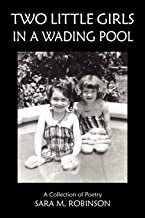
Sara M. Robinson, founder of the Lonesome Mountain Pro(s)e Writers’ Workshop, and former Instructor of a course on Contemporary American Poets at UVA-OLLI, was poetry columnist for Southern Writers Magazine and inagural poetry editor for Virginia Literary Journal. She has served as guest lecturer at UVA’s College at Wise, Wise, VA. Her poetry has appeared in various anthologies, including We Grew Wings and Flew (2014), Scratching Against the Fabric (2015), Virginia Writer’s Club Centennial Anthology (2017), Blue Ridge Anthologies and Mizmor Anthology (2018). Journals include: Loch Raven Review, The Virginia Literary Journal, vox poetica, Jimson Weed, Whisky Advocate, and Poetica. She is poet and author of Love Always, Hobby and Jessie (2009), Two Little Girls in a Wading Pool (2012), A Cruise in Rare Waters (2013 Stones for Words (2014), Sometimes the Little Town (2016), a finalist for the Poetry Society of Virginia’s 2017 Book Award. In 2019, Needville, her poetry about effects of coal mining on SW Virginia was released and in 2020 debuted as play in Charlottesville. Her most recent publication is Simple River (2020, Cyberwit).

March 29, 2022

Suite T Nostalgic Moment with DiAnn Mills


Nostalgic Moment


Tuesday, June 22, 2021

A Twelve-Step Program for NOT Becoming a Successful Writer

DiAnn Mills

We fiction writers chase successful and entertaining stories like toddlers on a sugar-high. I’m one of them. I can dream and plan and plot all day long. Yet sometimes we can be stopped cold by research, social media, and the reality of all the hard work writing takes.

For writers who live and breathe their writing addiction but have a problem staying on task, I’m offering a twelve-step program called Story Chasers (SC). These are writers who want to be called authors but don’t want to do the necessary work. That is not us! So, let’s beware.

1. Pacifier Writers

A pacifier is used to keep a baby from crying. In the instance of a writer, it’s whining about the publishing industry instead of writing better manuscripts.

2. Paint Writers

Don’t paint your world with illusions such as, “My mom says I’m the best writer in the state. I don’t need feedback.” If you want realistic feedback, ask someone other than a relative.

3. Passionless Writers

If a writer’s passion is not for his/her story idea, then a reader won’t be enthusiastic about it either. Develop ideas that keep you excited about the project.

4. Peacock Writers

Ouch. Pride stops us from success. It also brands us as unteachable. A humble writer learns the craft, develops a sense of the market, and is enthusiastic about edits.

5. Peanut Writers

George Washington Carver discovered 325 uses for the peanut. A peanut writer pens everything from T-shirt sayings to theology books. We all have varied interests, and that’s commendable, but find your writing niche and stick with it.

6. Perspiration Writers

Some writers don’t like to sweat. If you’re not dripping over your manuscript, then you’re not writing a quality story. Writing is a contact sport: your mind is engaged with your heart and fingers. Sweat. It’s good for the soul.

7. Pickle Writers

Weak writers are afraid to write themselves into a pickle. They don’t want the challenge of discovery, research, or unpredictable outcomes. They also don’t sell their work.

8. Plumber Writers

Plumber writers flush all their work down the toilet and never seek publication. Need I say more? Find your confidence and reach your goals.

9. Plywood Writers

Plywood is flexible, inexpensive, easy to work with and reusable. But it’s very hard to bend perpendicular to the grain. A plywood writer refuses to accept constructive criticism or change with the industry. In short, a plywood writer insists upon writing his/her way.

10. Popcorn Writers

Popcorn writers are those who jump from one frying pan to another. They submit, are rejected, and submit again without looking at the manuscript for ways to improve it.

11. Potato Writers

Some writers don’t want to write for free. It’s beneath them. Small potatoes grow into big ones, and those nonpaying manuscripts build our resume. A writer always learns in the creative process.

12. Piranha writers

Some writers will do anything to keep from writing. They like to swim through swift
waters with published writers, but they have one excuse after another not to work. They never make deadlines, even self-imposed ones. Piranha writers set themselves up to be devoured by the sharks who are swimming upstream.

If you’ve discovered a characteristic that slides you into a Story Chaser mode, now’s the time to change bad habits and begin the next bestseller. How are you changing your writing habits?


DiAnn Mills is a bestselling author who believes her readers should expect an adventure. She combines unforgettable characters with unpredictable plots to create action-packed, suspense-filled novels. DiAnn believes every breath of life is someone’s story, so why not capture those moments and create a thrilling adventure?

Her titles have appeared on the CBA and ECPA bestseller lists; won two Christy Awards; and been finalists for the RITA, Daphne Du Maurier, Inspirational Readers’ Choice, and Carol award contests. You can download a list of her published titles by clicking here.

DiAnn is a founding board member of the American Christian Fiction Writers, a former director of Blue Ridge Christian Writers, and a member of Advanced Writers and Speakers Association, Mystery Writers of America, Sisters in Crime, and International Thriller Writers. She shares her passion for helping other writers be successful by teaching writing workshops around the country.

DiAnn has been termed a coffee snob and roasts her own coffee beans. She’s an avid reader, loves to cook, and believes her grandchildren are the smartest kids in the universe. She and her husband live in sunny Houston, Texas.DiAnn is very active online and would love to connect with readers on any of the social media platforms listed at diannmills.com.

For more info visit DiAnn Mills at: https://diannmills.com/


March 28, 2022

Hawthorne Said It Best If We Listen!


Happiness! Now there is a word. So many people think they know what happiness is. They always seem to think it is on the outside, and like Hawthorne said, they chase the happiness just like kids chase a butterfly. But like the kids, we cannot catch happiness.

Happiness is a feeling of contentment.  Pharrell Williams in Happy says:


So can we trust our feelings? Maybe. 

For writers. maybe happyiness is putting those words that run around in our head to paper. For a gardener happiness may be putting  seeds into the ground and nurturing with food and water and see the flowers pop through the soil and grow tall.  For parents, it is holding their precious baby at birth.  


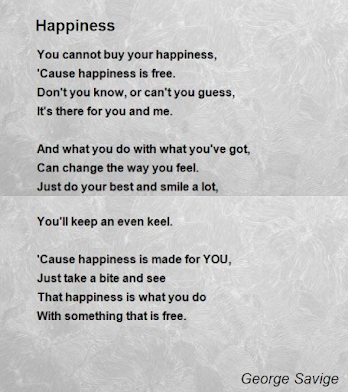
And George Savige imparts his thoughts on happiness to us in his poem Happiness.


So if Hawthorne is right, and we quit chasing happiness, and sit down and be quiet, will it alight on us?

March 25, 2022

The Writing Life—The good, the bad, and the hammer

Vickie Carroll


When one retires, it’s a time to relax and enjoy doing nothing or expanding a hobby, so the myth goes. What no one tells you is that after years of structure, being productive, having set goals and challenges, that not having any can be a problem. Trust me on this.

Fortunately for me, when retirement came for me, I had been writing for years as time permitted, so I had things to do, I just didn’t know how to restructure my time and set goals and challenges for the writing life. It has taken a few years of hit-and-miss, but finally in 2020, in Covid semi-isolation, I figured it out. Writing is a lot of things, but it’s not just a creative enterprise. It’s a business and I had to learn to treat it as such. I set daily goals, monthly goals, and yearly goals. I now had/have my new life structure, and the best part—I am the boss.

I love mysteries. I love watching them on television (it’s possible I could make the record books if I could confirm my Midsomer Murders and Miss Marple repeated viewing). I also love reading books based on a mystery; and in general, this genre makes up the bulk of my entertainment. Naturally, that is what I wanted to write about. My most recent cozy mystery series, Prediction: Murder has done well. They were released as they came out in 2021, and then released as a set more recently. I have written a few “less cozy” mysteries as well. Meaning a few with a paranormal element that are still up on Amazon.

The Prediction: Murder series is based on a woman who goes back to her hometown in Steepwick, Maine after her cousin Hazel dies unexpectedly from a mysterious fall down the basement stairs. Harper, the main character, learns that not only has Hazel left her a business, her thriving bookstore, but her house and a quirky dog named Einstein. Harper decides to stay in Steepwick because she has a nagging feeling that Hazel’s fall was not an accident. Along the way to finding out more about her cousin’s former life, she also finds a few family secrets that her parents had kept from her. The reader follows Harper as she learns who she really is, and why there were secrets about her family heritage. There are people in Steepwick who know her family secrets, and with a little help from them, she comes to terms with her heritage, and solves the mystery surrounding her cousin’s death. I was ready to move to this town by the end of the story. Sadly, I came out of my writer’s trance and realized it was “just a story” and I had to come back to reality.

As I looked around for my next project, I ended up doing one more mystery, “A Room with a Clue” for another publisher. It’s about life in a retirement village, and a couple of women who found it boring. But after the main character, Agnes literally falls over a dead body in a wine cellar on a house-sitting job, things pick up. Agnes pulls in a fun cast of characters in the Happy Years Retirement Village in Florida and takes them with her on her crime solving escapade.

So, I went from Maine to Florida, and then this year I settled in Georgia. I not only have a new book location, but an entirely new era that has fascinated me enough to contribute to a new series. I have stepped out of the mystery genre and stepped into romantic-historical world. My newest books (2 unrelated books by character and place but in same era and vein) are both about “Letters from Home” during World War II, a new bigger series from my publisher. I am contributing two books, and the first, “I’ll be Seeing You” will be out in May, and the second, “We’ll Meet Again” will be out in the fall (I say with fingers crossed.)


There is nothing like the writing life because it requires use of both sides of the brain, the business and the creative. It can be painful, fun, challenging, maddening, and frustrating, all in the same hour. I have a friend who, when having a bad run, or when she gets a bad review, always says, “why don’t I just go hit myself over the head with a hammer, it would be less painful.” While I never threaten that, I know what she means. It is painful to put one’s heart and soul into a story, spend weeks and weeks living it, and then have someone give it a bad review, or worse, the book just doesn’t sell, and you can’t figure out why. But rejection is part of life in general, and the writing life in particular. A good writer will just chalk it up as a learning experience and go on. That’s what I tell myself. I have been lucky never to have gotten a one-star review (again, fingers crossed) but I’d like to think I’d deal with grace and good sense, like a woman of experience—if not, there is always the hammer.


 Vickie Carroll is a published author of eight fiction books (Sweet Promise Press and The Wild Rose Press). You can find them on Amazon. She has an article coming out this summer in the CCAR Journal: The Reform Jewish Quarterly, about her journey to find Judaism.

March 24, 2022

On Finishing a Series with your Readers in Mind

Heather Day Gilbert


I've concluded a couple of my series at this point in my author career, and I've found that each final book presents its own challenges. On March 14, 2022, I'll be winding up my bestselling A Murder in the Mountains Christian mystery series with Book 4, False Pretense.

It's a delightful—yet somewhat daunting—experience to have readers contact you, asking when the next book in a series will release, and my readers have been actively asking about A Murder in the Mountains' finale since Book 3 released in 2017.

Readers play a critical role in my all of my indie (independently published) series. In the case of False Pretense, I sent out a couple of polls and my readers actually helped me choose the best title for it.

I think there are other ways authors can seek to please their readerships when winding up a series. If you're an author coming up on your grand finale book, here are some ideas to keep in mind:

1. Bring in readers' favorite characters for a final goodbye.

A good series will make us feel close to the characters—including the side characters. Think of Hastings in Agatha Christie's Poirot books, or Reepicheep the mouse in The Chronicles of Narnia. We need to see how their stories end, too.


For instance, each book in my Hemlock Creek Suspense series followed the romance of a sibling in the McClure family. In the final book, Deadlocked, I wound up both sisters' trajectories (married, jobs, etc.), as well as steering the brother into his happily-ever-after relationship.

In False Pretense, I'll be pulling in all my readers' favorite side characters. For instance, I'll show what happened with the boy my main character was fostering at the end of Book 3, and I'll also reveal the highly anticipated backstory of a tall and extremely mysterious German character who has appeared in every book.

2. Work in feedback from reviews and make the last book stronger than all the rest.

Book 1 in my Murder in the Mountains series, Miranda Warning, was published in 2014, and at this point, it has 898 reviews on Amazon.

I've read every single one.

Of course, as you would expect, some are simply from haters who will never pick up another of my books, but many of the well-reasoned ones have given me a clue as to things I can strengthen in following books in the series.


For instance, I don't do a villain's point of view at the start of chapters anymore, since several readers found that confusing in Book 1. For False Pretense, we stay solidly in my main character's head.

My readers also appreciate that my main character (Tess Spencer) has a great relationship with her in-laws next door and that she's in a healthy marriage. Both of these family aspects will be heavily featured in Book 4.

3. By this point, your characters feel real to you because you've spent so much time with them. It's the same for your readers, so make sure you get the details right.

Many authors keep spreadsheets or notebooks with details on all the characters in a series (often called a "series bible"). For instance, what color hair/eyes does each character have? How old are they? What's their favorite restaurant, book, or song? What is their MBTI personality type, etc.?

Before starting my latest Barks & Beans Cafe cozy mystery series (with ten books planned in the series), I took a tip from mystery author Tonya Kappes. She buys a black address book and uses it to organize details on the characters from her series by name.

This made a lot of sense to me since I'm not great with spreadsheets—I'm one of those old-school authors who uses a physical calendar instead of my phone calendar. So, it made sense to have a physical "little black book" with all the details I've included in the series. Otherwise, I'd have to go back and search my previous files for the specifics with each new book I write.

But no worries if you're on your final book and you didn't keep a series bible. Just be sure to go in check that the details from previous books match up with your latest. It'll take time, but it's well worth it. Trust me, your loyal readers will notice if someone suddenly jumped up a few years in age or if their hazel eyes switched to bright blue.

4. Set up a preorder and get buzz going early for your final book—at least three months in advance, if possible.

I love being able to tell readers the final book they've been waiting for is coming out, and I'll link them directly to a preorder page on Amazon (which includes the book blurb and finalized book cover), or at the very least, I'll link to the book on Goodreads (which doesn't have to have the cover, just the blurb). I make sure the upcoming release is something my readers can share with friends and order early, if they use Kindle. I also drop the cover art to my newsletter readers as soon as it's finalized, and I often share a teaser excerpt to my newsletter readers pre-publication, as well. This is also a great time to share graphics featuring author endorsements you've received for your upcoming release on all your social media outlets.

5. Once the book is out, don't look back. Keep moving forward with your next series.

Let's say that final book doesn't bring in the 5-star reviews or the income you'd hoped for. You can't waste time looking back and wishing you'd done something differently—the book is published, and it's already been read. Instead, look ahead to your next series and make that one stronger than the last, based on your reader reviews and input. Know that your loyal readers will continue to follow you (unless you jump to a completely different genre) and feel encouraged that you now have a completed series to market. You can even make it into a boxed set(s). In 2021, I boxed my completed Hemlock Creek Suspense series and got a Bookbub deal ad on it, and that set alone accounted for almost a third of my income that year (Note—I'm in Kindle Unlimited).

Here's hoping that your grand finale books will be everything your fans have been hoping for! Can you name an example of a series finale that felt completely satisfying to you? Comment below!


Award-winning novelist Heather Day Gilbert enjoys writing mysteries and Viking historicals. She brings authentic family relationships to the page, and she particularly delights in heroines who take a stand to protect those they love. Avid readers say Heather's realistic characters—no matter what century—feel like best friends. When she's not plotting stories, this native West Virginian can often be found hanging out with her husband and four children, playing video games, or reading Agatha Christie novels. 

Find out more at heatherdaygilbert.com.

March 23, 2022

Am I Done With This Poem?


Sara M. Robinson


When is a poem finished? How do you know when you have reached the end of your poetry piece?

For some of you who have kept up with either my Southern Writers columns or my Suite T blogs, this may sound like I am resurrecting old stuff. But hang in there with me, I have some new things to say about finishing a poem.

When we are writing, and we believe we are coming to the end of the poem, the “finish line,” as it were, are we saying that the poem is good at this time? Is there more to write, or have I written too much? And now when I go back, I realize I finished the poem in several places before I came to my perceived “end.” Was I really done? Is where I am really “good.”?

How many poems have you read, where you asked if the poet really meant to stop there?

I’ve read my share, and that includes my own. Some poets stop intentionally before they finish.

Does that seem odd? Sure, we read a poem, think that the poet stopped too soon. But that is our opinion. We can’t guess intention. Take this ending from Billy Collins’ poem, “Hippos on Holiday”: “Only a mean-spirited reviewer/ would ask on holiday from what?” Of course, this ending is taking out of context, but he does end the poem with a question mark, which is a great way to leave the reader to determine from herself whether the poem is done.

Now you ask, where am I going with this? I want to convey that good poems need to come across as finished. When you say the poem is done, in your view, the poem is good when it is done.

I often choose many endings or closings for one poem. I have to have enough plans for when I decide I am done and what I have written is good. This is when revision becomes important. I know. I know. Many poets hate to revise. But I’ve shared this before: I love revision. Between when I create the first rendering and when I finish the piece, I might go through 5 to 10 or more versions. And when I finally settle on something, this is how the poem tells me it is done. Here is a little trick I use: I reverse the order of the poem to see if the first line is a better ending than the last line. You might find yourself surprised if you try this.

I have finally gotten to the point: The poem will tell you when you are done. When you write, listen and read carefully so you don’t miss hearing, “that’s it, we’re done. And it is good.”


Until next time…


Sara M. Robinson, founder of the Lonesome Mountain Pro(s)e Writers’ Workshop, and former Instructor of a course on Contemporary American Poets at UVA-OLLI, was poetry columnist for Southern Writers Magazine and inagural poetry editor for Virginia Literary Journal. She has served as guest lecturer at UVA’s College at Wise, Wise, VA. Her poetry has appeared in various anthologies, including We Grew Wings and Flew (2014), Scratching Against the Fabric (2015), Virginia Writer’s Club Centennial Anthology (2017), Blue Ridge Anthologies and Mizmor Anthology (2018). Journals include: Loch Raven Review, The Virginia Literary Journal, vox poetica, Jimson Weed, Whisky Advocate, and Poetica. She is poet and author of Love Always, Hobby and Jessie (2009), Two Little Girls in a Wading Pool (2012), A Cruise in Rare Waters (2013 Stones for Words (2014), Sometimes the Little Town (2016), a finalist for the Poetry Society of Virginia’s 2017 Book Award. In 2019, Needville, her poetry about effects of coal mining on SW Virginia was released and in 2020 debuted as play in Charlottesville. Her most recent publication is Simple River (2020, Cyberwit).

https://saramrobinson.com/

March 22, 2022

What Will You Leave?


Today, Henry David Thoreau  is considered among the greatest of all American writers and the intellectual inspiration for the conservation movement. 

While I love his quote above, and believe that if we each work on being better as a person we will have influence in our world, I do not agree that he is the greatest of all American writers.

We have many writers who have come and gone, who are also great in their own right. I think there is room for all of them. Don't you?

I think we can all strive to write better, learn more, and be in the moment as a person and as a writer.

Over the years, I have enjoyed many different genres and authors. I always try to read books written by new authors and follow some of them; and like all writers, the more they write, the better they become. 

As a reader, I am cautious about what I read. If I am going to spend my time reading a book, I want to know the book will either be entertaining or informative.  We all have certain core values as people, and I want to protect my core values and not allow things I read or see to erode my values. So that is why I am cautious.

It is important that writers know their readers, and that readers know their writers. When the two mesh it becomes an excellent relationship between the two.

What we believe is important, whether we are writing or just living each day. Let us try to leave something worthy to make the world a better place for those who are still here in writing and living.


Susan Reichert, author of Listen Close, Between Me and You, God’s Prayer Power and Storms in Life. Published numerous magazine articles and stories in 9 anthology books. Speaker at writing conferences, seminars, and libraries.

She is the founder of Southern Author Services, and Editor of Suite T. She is the retired Editor-in-Chief of Southern Writers Magazine. Reichert has a passion for writing about God in devotionals, prayers, and inspirational works.

She and her husband live in Tennessee. They have four grown daughters with families of their own. Susan is a member of the DAR and a member of the First Families of Mississippi


Visit Susan at: https://www.susanlreichert.com/

March 21, 2022

ANGUISHED FOR SOUTHERN AUTHORS

George Encizo


Why the book, and why the title Anguished? After three books in the JD Pickens series, I wanted to continue the series with Pickens and add more depth to his character, and what better way to delve into his character than to create angst in his life, which began as one of the titles.

I use a whiteboard as Pickens does and list plots and titles. The plots just come, and the titles follow. I never know what I’m going to write about; just plot and go, that’s my motto. I began by referring to the last paragraph in Murder Knows No Boundaries when Pickens receives an urgent call while on vacation with his wife and daughter. That would have been a good start, but I wanted something more dramatic, so I chose a 911 call about a man getting mugged and the caller wishing to remain anonymous.

The victim was Pickens’s father and ended up in a coma in the hospital. I wanted to see if Pickens would be stoic or fragile or both. I asked myself how I would react to my father getting mugged, in a coma, and possibly at death’s door. I also asked what readers would do, and that’s how the plot thickened.

I glanced at my whiteboard and saw that some of the potential plots would make good chapters and scenes. Without a definitive outline, I began writing chapters in no specific order. Later I would put them in order as the story evolved. Like when Pickens discovers, his father was in the wrong place at the wrong time, and someone else’s father was the intended victim. Now I had two sons wanting to avenge their fathers’ muggings, but how would they do it. Apart or together?

Once that was resolved, I added more angst to Pickens by having his best friend shot in the back and left for dead. Then I had another friend shot. Trust me, Pickens had more angst than anyone could handle, but Pickens was Pickens and managed to weather the storms. I also showed his humble and caring side by attempting to help an abused boy. I’m not Pickens, but I had difficulty dealing with his angst. But since I’m the author, I had to suck it up and write the story because I knew there would be no book if I didn’t. It’s another reason I enjoy writing this series and writing about Pickens.

With all the angst in Pickens’s life, I settled on the title Anguished as it seemed fitting. That title was never on my whiteboard, but I liked it, and now you know why Anguished won out in the end.


George Encizo is the author of several award-winning novels. His first novel, Blocker’s Bluff, was published in 2013. Since then he has published seven more. A retired banker and an accomplished watercolorist, Encizo took to writing because of arthritic fingers and could no longer hold and control a brush. In need of a creative outlet, he turned to writing and has been writing over a decade.
His second novel, The Farber Legacy, was awarded a gold medal in the 2015 Florida Authors and Publishers President’s Book Awards. Since then, his other novels have also won awards.
His latest novel, Anguished is the fourth in a series of JD Pickens Mysteries. He is currently working on more in the series.
When not writing, he is either in the gym or working in the garden with his wife. He gets inspiration from everyday life and ideas come to him from out of nowhere. He and his wife live in Florida.


March 18, 2022

Suite T Nostalgic Moment with Cliff Yeargin


Monday, March 20, 2017

IT’S THE STORY, STUPID

By Cliff Yeargin


I am a storyteller. I work daily in network television and I write mysteries. The two are very different crafts. Television is more a collaborative process in the beginning while writing breeds solitude. But the two also share some very similar traits and challenges when it comes to telling a story. A story bubbles up from one person and as it flows downriver it can often get lost in the muddy waters of teamwork. In TV we have layers of producers, legal, show team executives and reporters that weigh in on each story. For a writer there are agents, editors and publishers to chime in as the story navigates the rapids.

The biggest challenge today in television storytelling is technology. When I first told a story for TV it was just me, one camera and the subject. Today we have a dizzying array of tools. Tiny cameras you can mount on a moving car or maybe a skateboard or even the head of a monkey. Add a drone in the sky and you can end up with hours of footage. Software in our editing process now makes it a snap to add almost any special effect in mere seconds. Once we spit out the final version we often stand around and pat ourselves on the back about how cool it looks. Except for one thing. One big thing. Sinking under all the muddy water of cool tools we have lost the STORY. Viewers at home aren’t as impressed as we are with our toys and all they wish to see and hear is the story. In television the best editing is editing those goes unnoticed by the viewer.

Telling a story in fiction can face challenging water as well. When you set out to write a book the first thing you think about is what story do I want to tell. You are not concerned with revisions, marketing or sales because at that moment you are just telling a story. Even that calm water can turn muddy if you spend too much time trying to turn prose into poetry when your skills don’t reach that level or imitating the style of your favorite writer instead of searching for your own voice. An overwritten fanciful sentence may delight your inner muse but no reader is likely to tell a friend about your book by saying “I just read one of the most beautifully crafted sentences.” They are however much more likely to tell them about a “great story” they just finished.

From the time of cavemen around the fire to the old man next to the pot-bellied stove at the general store, the person who demanded the most attention was the storyteller. We are the storytellers of today. Television or fiction the goal should be to steer clear of muddy waters and narrow our journey downriver to one simple thing…the story.


To paraphrase former President Bill Clinton’s laser focus on the economy…


“It’s the STORY…Stupid.”


Cliff Yeargin has spent his life as a “Storyteller”, the bulk of that in a long career in Broadcast Journalism as a Writer, Producer, Photographer and Editor. Most of those years were spent covering sports, particularly Major League Baseball, where in Baltimore he was lucky enough to cover Cal Ripken Jr.’s very first and very last game…and hundreds in between. He is the author of the Award Winning Jake Eliam ChickenBone Mystery Series.The books include the introductory RABBIT SHINE and the second in the series HOOCHY KOOCHY which was named The Georgia Author of The Year Silver Medal Finalist in the Mystery Category for 2016; then MUDCAT MOON, BIRDDOG BOOGIE, AND SWEET TATER TANGO. Today he has returned to his native Georgia and works at CNN. Follow Jake, Catfish and the rest in this Southern Fried Mystery Series. cliffyeargin.com