Pages

June 16, 2022

Your Next Beach Read!


Carley Fortune is the author of Every Summer After, the instant USA Today, Toronto Star, and Globe & Mail bestselling novel — and your next beach read. The book is a nostalgic story of childhood crushes, first loves, and the people and choices that mark us forever.

Carley is an award-winning journalist, who has served at some of Canada’s top publications. She was most recently the Executive Editor of Refinery29 Canada, a job that gave her a lot of pride, joy, and a few migraines. Previously, she was the deputy editor of Chatelaine magazine, where she oversaw the brand’s digital transformation. After being promoted to Editor in Chief, she produced one whole issue, then left to launch Refinery29 Canada, making her the shortest-serving EIC in Chatelaine’s 90+ year history, a fact you will not find on its Wikipedia page.

Carley’s sixteen-year tour around the Canadian media industry has included editorial positions at The Globe and Mail, Toronto Life magazine, and the much-beloved, now-defunct weekly paper, The Grid. Not surprisingly, she likes coming up with new ideas and prefers the beginning of things. Carley was born in Toronto, and spent her young life in the suburbs of Sydney, Australia, and in Barry’s Bay, a tiny lakeside town in rural Ontario.

Carley holds a Bachelor of Journalism from Toronto Metropolitan University (formerly Ryerson University). She lives in Toronto with her husband, whom she met in a magazine features writing class at j-skool and pursued doggedly after hearing about his nonna’s homemade lasagna. They have two sons.


Every Summer After is Carley’s first novel. She is currently writing her second.

When asked why she wrote a novel, Carley said, " As a kid, reading and writing were my first loves. But I had a pragmatic streak from a young age, and I didn’t think becoming an author was a realistic way to pay the bills. I ended up in journalism instead. (HA!) Still, I always dreamed of writing a novel — I just never thought I’d actually get around to it. In the summer of 2020, feeling deeply nostalgic and pushed to my personal limits, I suddenly decided to write the damn book. I guess I was reclaiming my creativity. I gave myself a deadline to finish the manuscript by the end of the year, set a daily word count goal, and chipped away at it in the early hours of the morning. I’m still shocked Every Summer After is a real book now. It was published May 2022.


June 15, 2022

The Gamble Paid Off


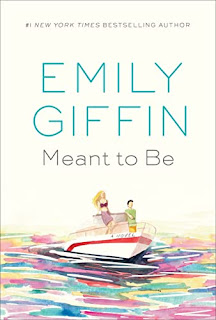
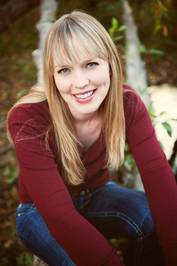
Here is Emily Giffin's story. If you have read her work you will agree with me, we're glad she took the gamble.


Emily Giffin, a Chicago native, graduated summa cum laude from Wake Forest University and the University of Virginia School of Law. After law school, she moved to Manhattan and practiced litigation at a large firm for several years while she paid back her school loans, wrote a novel in her very limited spare time, and dreamed of becoming a writer.

Despite the rejection of her first manuscript, Giffin persisted, retiring from the legal profession and moving to London to pursue her dreams full time. It was there that she began writing Something Borrowed (2004), a story of a young woman who, upon turning thirty, finally learned to take a risk and follow her heart. One year later, Giffin’s own gamble paid off, as she completed her manuscript, landed an agent and signed a two-book deal on both sides of the Atlantic. The following summer, Something Borrowed, hailed as a “heartbreakingly honest debut” with “dead-on dialogue, real-life complexity and genuine warmth,” became a surprise sensation, and Giffin vowed never to practice law again.

Dubbed a “modern day Jane Austen” (Vanity Fair) and a “dependably down-to-earth storyteller” (New York Times), Giffin has since penned nine more New York Times bestsellers, Something Blue (2005), Baby Proof (2006), Love the One You’re With (2008), Heart of the Matter (2010), Where We Belong (2012), The One & Only (2014), First Comes Love (2016), All We Ever Wanted (2018) and The Lies That Bind (2020). 

All of her novels, filled with endearingly flawed characters and emotional complexity, have resonated deeply with both critics and readers around the world, achieving bestseller status in a number of countries, including the United States (#1), Canada (#1), United Kingdom, France, Brazil and Poland (#1). The books have been translated into thirty-one languages, with over twelve million copies sold worldwide. In addition, five of her novels have been optioned for the big screen and are in various stages of development. The first, Something Borrowed, hit theaters in May 2011, starring Kate Hudson, Ginnifer Goodwin and John Krasinski.


Giffin now resides with her husband and three children in Atlanta. Her eleventh novel, Meant to Be, was published on May 31, 2022.

June 14, 2022

Loves Junior Mints!


Kasie West writes YA. Eats Junior Mints and sometimes goes crazy and does both at the same time.


Her novels are: PIVOT POINT and its sequel SPLIT SECOND. Kasie's contemporary novels: THE DISTANCE BETWEEN US, ON THE FENCE, THE FILL-IN BOYFRIEND, PS I LIKE YOU, BY YOUR SIDE, LUCKY IN LOVE, LOVE LIFE and the LIST, LISTEN TO YOUR HEART, FAME FATE and the FIRST KISS, MAYBE THIS TIME, and MOMENT OF TRUTH.


Kasie's books are always fun, sweet and cute that's why they hit the spot for young teens as well as older YA readers. She seems to have found a perfect balance. Her books are great no matter what your age is.

She is a stay-at-home mom of four children- three of them girls, ranging in age from four to 12.

Her newest book, Places We've Never Been: A sweet and swoony contemporary Young Adult novel about a cross-country family road trip that puts one girl and her childhood best friend on an unexpected road to romance!

Norah hasn’t seen her childhood best friend, Skyler, in years. When he first moved away, they'd talk all the time, but lately their relationship has been reduced to liking each other’s Instagram posts. That’s why Norah can’t wait for the joint RV road trip their families have planned for the summer.

But when Skyler finally arrives, he seems...like he’d rather be anywhere else. Hurt and confused, Norah reacts in kind. Suddenly, her oldest friendship is on the rocks.

An unexpected summer spent driving across the country leads both Norah and Skyler down new roads and to new discoveries. Before long, they are, once again, seeing each other in a different light. Can their friendship-turned-rivalry turn into something more?


Visit Kasie West at http://www.kasiewest.com/

June 13, 2022

To Rhyme or Not to Rhyme, Is That a Question?

Sara M. Robinson


I’ve not talked about rhyme on its own in my earlier columns. As a free-verse poet, I don’t necessarily focus on rhymes. However, someone asked me recently if poetry had to rhyme.


This person wanted to write poetry but didn’t feel adequate enough to create rhyming lines.


And this got me to thinking about the idea of rhyme schemes. So, here we go. Let’s explore what it is about rhyming lines.


I’ve looked at two recent resources to help explain why or why not rhyming. One of the sources is Adam Gopnik’s “The Rules of Rhyme,” that appeared in the May 30 issue of The New Yorker magazine. I’ll refer to my second resource in a follow-up column. Gopnik states that rhyme is language turned into a ritual. He further explains that rituals are the cohesion (my word) among cultures, religions, and various sects. When we think of hymns, for instance, we know that literally every one of them in our language have rhyme schemes. Probably these hymns started out as poems then were set to music. Works of literature, such as those by Shakespeare used a great deal of rhyme. This was a great technique to appeal to the masses where formal education was not always present.


In our country today, we hear the poetry of hip-hop and rap as a major force in poetry of the YA group. Spoken-word poetry is also a forum for rhyming. So, does the popularity of modern spoken-word music (combines the two just mentioned) mean that rhyming is the only way to write? No, and maybe. All depends on what audience you write for or intend to write for.


To further add to your consideration of using rhymes, consider there are several types: half-rhymes, slant-rhymes, off-rhymes, odd-rhymes, near-rhymes, and assonance. I leave it to you to google these types as a homework assignment. If you decide that incorporating rhymes is an essential component of your style, then I implore you to expand your vocabulary. Read Milton, read Richard Wilbur, Robert Frost, and others who are formalists. Because once you begin to write in rhyme, you will need to consider how to make your lines work: iambic pentameter? trochee (stressed and unstressed syllables in a particular pattern)? These are only two examples.


Then lastly you will consider the end-rhyme word scheme itself: AABB, ABAB, ABBA, ABBCCA, ABA BCB, and so on.


What will you give your readers? Keep writing…


Sara M. Robinson, founder of the Lonesome Mountain Pro(s)e Writers’ Workshop, and former Instructor of a course on Contemporary American Poets at UVA-OLLI, was poetry columnist for Southern Writers Magazine and inagural poetry editor for Virginia Literary Journal. She has served as guest lecturer at UVA’s College at Wise, Wise, VA. Her poetry has appeared in various anthologies, including We Grew Wings and Flew (2014), Scratching Against the Fabric (2015), Virginia Writer’s Club Centennial Anthology (2017), Blue Ridge Anthologies and Mizmor Anthology (2018). Journals include: Loch Raven Review, The Virginia Literary Journal, vox poetica, Jimson Weed, Whisky Advocate, and Poetica. She is poet and author of Love Always, Hobby and Jessie (2009), Two Little Girls in a Wading Pool (2012), A Cruise in Rare Waters (2013 Stones for Words (2014), Sometimes the Little Town (2016), a finalist for the Poetry Society of Virginia’s 2017 Book Award. In 2019, Needville, her poetry about effects of coal mining on SW Virginia was released and in 2020 debuted as play in Charlottesville. Her most recent publication is Simple River (2020, Cyberwit).

https://saramrobinson.com/

June 10, 2022

Former Stealth Pilot~No Stranger to Secrets and Adventure


 We welcome James R. Hannibal to Suite T. 

James is a former stealth pilot and is no stranger to secrets and adventure. He has been shot at, locked up with surface to air missiles, and chased down a winding German road by an armed terrorist. He is a two-time Silver Falchion award-winner for his Section 13 mysteries, a Thriller Award nominee for his Nick Baron covert ops series, and a Selah Award finalist for his Clandestine Service series. James is a rare multi-sense synesthete, meaning all of his senses intersect. He sees and feels sounds and smells and hears flashes of light. If he tells you the chocolate cake you offered smells blue and sticky, take it as a compliment.


Let's talk about your writing James. When did you start writing?

I've always been a writer and storyteller. At age four I told my parents I wanted to write books, and I had my first short story read over the radio at age twelve after winning a writing contest. Becoming an author was never in question, but I needed to experience life first. At seventeen, I joined the Air Force through the Air Force Academy, and the military left little time for writing. But it built up my reserve of experiences. It built up my understanding of people, leadership, technology, and the good and evil in the world. All these things prepared me for the day I set out to write a book and find a publisher.


Who were/are two of your favorite authors and do you feel they influenced you? In what way?

To me, the works of C.S. Lewis have a vibrancy rarely found anywhere else. His writing taught me the potential for beauty within an adventure tale, whether fantasy or suspense. His works also taught me the value of communicating a message—a truth—through story, and that is what I hope to do through Peter and Lisa’s adventures in Elysium Tide. After starting with C.S. Lewis, I began reading Tom Clancy at the age of twelve. Through his stories, I discovered my love for technology and suspense. Tom's work also helped me understand the art of weaving multiple plot threads together into a single, seamless tapestry.


What point in your writing career did you feel like you had gone from amateur to pro?

My first thriller, Wraith, came out from a small publisher. It wasn’t a great experience, but through that process, I managed to get the attention of Clive Cussler and Publishers Weekly. With praise from them, I finally landed an agent and a “Big Five” publisher who continued that Nick Baron series. The day I signed my first contract with Penguin Random House is the day I felt like a pro.


What do you look for in choosing a setting for your book?

I’d say settings are secondary for me thus far. The story arrives by inspiration, usually during my travels. In the case of Elysium Tide, I was visiting Maui with family and learned of two things: the island had a serious auto theft problem and the resorts offered “boondoggle” certification retreats for doctors. Those two pieces of information spawned the story, and the place where inspiration struck gave me the setting. From there, I let a big resort on the island inspire the over-the-top Elysium Grand from the book.


What steps if any are involved in research for your book?


Research is an ongoing process, but there are definite steps. If you don’t have a process, you can get bogged down in research, which is something I’ve written about in the past. Make an overview pass of topics related to your story. I use mind mapping for this. From the mind map, I determine the most important topics and dig deeper, looking for those that generate new ideas to give breadth to my story. The internet is not all-knowing. Invest in good, well-documented books if the story demands it. Books are self-limiting, but when heading down an internet rabbit hole, I’ll set a timer to prevent myself from getting lost in the research bog.


In writing your new book, what do you feel makes it stand out?


Elysium Tide comes to life with a gorgeous resort setting contrasted with a crime underworld. It also doesn’t take itself too seriously. Even though we’re dealing with weighty topics like life, death, and salvation, the characters manage to find and express humor in a way that early reviewers have connected with.


In your new book, what would you like the reader to feel and walk away with?

My hope is the readers will walk away entertained, encouraged, and equipped. Even Christians struggle with the idea of eternity and the fear of death. I hope that examining these topics through the eyes of an atheist neurosurgeon while he and his detective friend uncover a dangerous conspiracy brings them to light in a new way while giving readers tools for bolstering their own faith and reaching out to others.


What is the best writing advice you have received so far?

“It’s not a book. It’s a career.” That’s a quote from author Tom Young, and it’s the best practical advice I’ve ever received from an author. And to be clear, I’ve had face to face conversations and sat through seminars with many of the greats—Lee Child, Clive Cussler, James Patterson, and so on. Tom’s simple phrase is the one that stuck with me, and the one my wife and I repeat to each other often. Finish the story, let the publisher send it out, then get to work on the next one. The other great advice I follow came from my pastor, Dr. Jeremy Evans. “I only have a short time in this life to do God’s work. I’m going to use that time as best I can.”


What is the worst?


I had an employee of a publisher once suggest that I should violate my non-disclosures with the US Air Force to garner publicity for a series. I know that several have made this move—some with great success and no consequences. I won’t do it.


Between plotting, character development, dialogue, and scenes which is easiest for you, and which takes a lot of effort?


I like action. Action scenes flow quickly, and for that reason some new writers make the mistake of letting them run for pages and pages. If you do that, your action will eventually become boring to the reader. The harder part is combining narrative and dialogue (and sometimes action) to convey important story information and message to the reader. I call this the hermeneutics of writing, and it takes effort and training.


What is your schedule for writing?

I write when I can. I hold down a day job as an airline pilot, and my schedule is often unpredictable. Thus, I fight for every writing moment I can get. If you don’t, it won’t happen.


What do you do if you get stumped?

I used to go for long walks. Turns out, walking twelve miles per chapter for fifteen years can have a detrimental effect on your feet. I spent four months in a wheelchair, walked with a cane for a bit, then experienced a miraculous healing of my ligaments. I’m not going to waste that by making the same mistakes, so now I walk a little and then swing in a porch swing to get the creative juices flowing.


Did you or do you make any sacrifices to be a writer?


Daily. Financial. Career. Physical. I do this for ministry. Ministry without sacrifice doesn’t live up to its name.


Did you choose your genre, or did it choose you?


Let’s be very honest. In the case of Elysium Tide, the publisher chose the genre. I gave them a range of options. They picked the proposal in the mystery genre, and that’s the one I wrote. In the case of my fantasy stories in the Lightraiders realm, that genre picked me. From the way I met the original owner of the 1980s game world to the incredible men and women who have come alongside me to carry its discipleship tools to a new generation, there is no other way to view it than “God is driving this boat.”


What is the best way you found to market your book?


Readers are the best marketing for a book. If you like a book, tell your friends, leave reviews on Amazon and Goodreads. Apart from that, the best marketing for a book in my genre is a traditional paid ad on a major source (FB or IG ads). Previously it was major newspapers. The best day of sales in my career came from a quarter-page ad in USA Today. I’m trying to serve the near-forgotten Christian men’s fiction market. If you want to reach men, reach them with ads, not blogs.


Did you actively build a network of readers and if so, how?


My reader network has grown organically. Recently, publishers have asked me to build networks in other ways and it seems to be costly and counterproductive. I think proponents of these methods (like “street teams”) are getting perceived positive results that are influenced by other sources such as crossflow sales and word of mouth from the authors books with other publishers. The street team phenomenon may also be unique to the romance genre, which is not my area.


Are you on the Social Media Highway and if so, do you schedule times to post?


Scheduling posts is a best practice. My average engagement per post goes up when I do it and drops when I don’t. But I’ve been inconsistent. I’ve hired someone to help with this. I’ll let you know how it goes.


What advice would you like to give new authors that would help them?

I don’t think I can out-advise those who’ve given me the best advice I mentioned in the previous question on this topic. So, let me repeat what they told me.

“It’s not a book. It’s a career.” Tom Young

“I only have a short time in this life to do God’s work. I’m going to use that time as best I can.” Dr. Jeremy Evans.


Thank you James and congratulations on your new book, Elysium Tide

Visit James at www.jamesrhannibal.com .

June 9, 2022

Susan May Warren Talks About International Intrigue


In January 2022, USA Today bestselling author Susan May Warren introduced fans to her new Sky King Ranch series. Now Warren propels readers back into the thick of the action in a tale full of suspense, romance, and international intrigue in the next epic installment, Sunburst.


Sunburst is a twist on the marriage of convenience trope. It’s set in beautiful Nigeria and is about a former Navy SEAL who is sent in to rescue his brother from the Boko Haram. He discovers, among the captives held with his brother, the woman he never stopped loving . . . but can’t have. That is, until they find themselves on the run in Nigeria and the only way to protect her is to marry her. But when the dust settles and they’re safe, can he let her go? It’s book 2 in the epic Sky King Ranch trilogy.

What is the connecting factor for all three books in this series? 

Sky King Ranch is the home of the Kingston brothers, who went their separate ways ten years ago after an epic family fight. They all entered different branches of the military and are now all separated from that life, for different reasons. They find themselves returning home to the ranch only to discover that there is trouble afoot that’s bigger than the ranch, bigger than Alaska, and something only they can stop. This all starts with a mysterious woman who arrives in Alaska in book 1. So the connecting tissue is more than the family and the ranch; it’s the suspense thread that thickens with each story. 

Sunburst is set in Nigeria. Can you please tell readers why you selected this location?

During the pandemic my son married a darling woman from Nigeria named Precious. They were married in Italy. My husband and I were unable to attend, and she wasn’t able to return to her home, which was a big deal. Nigerian weddings are something to behold, and I hated that she missed out on that special event. So, when I was outlining my next book I thought, what if Presh and I planned a fictional wedding for my heroine, and thus, she at least got to take part in planning a beautiful Nigerian wedding. Plus, it gave me a chance to experience her culture through research and deepened our relationship through our many hours spent together on Zoom. Someday I hope to visit Nigeria—and attend her wedding event. (Yes, even though they are already married!)

Although your two main characters, Ranger Kingston and Noemi Sutton, reconnect in Nigeria, they have met before. Can you provide a little information on their backstory? 

Ranger and Noemi met in one of my favorite places—Key West. I set their meeting before the hurricane damaged the Bahama Mama resort in The Heart of a Hero, so it was fun to revisit that location. They met while Ranger was training for a free-diving certification and Noemi and her father were ashore to fix their sailboat. As for the rest . . . well, you’ll just have to read the book! 

In an effort to save themselves and the rest of the hostages, Ranger and Noemi come up with a plan. Can you give a hint to what this plan involves?

Well, the trope sort of gives it away, but they are inadvertently mistaken for a married couple, which plays into their game plan until they meet Noemi’s uncle, who is the Ovie of the area (aka the king). He’s not so happy that they married without his permission, so everything goes off the rails! 

NGO worker Noemi Sutton is in Nigeria attempting to return a young girl to her family in the Boko Haram territory. What type of research was required to accurately portray the intense danger that this undertaking would entail?

Aside from reading news reports and watching terrible videos, I read a number of books by survivors who had been kidnapped by the Boko Haram. One was a fantastic book titled Under the Tamarind Tree. That’s where I got my idea for the massive Kuka tree in chapter 1. I also read a number of memoirs by former missionaries to the area to get their take on the life from a foreign point of view.

 Do you have a favorite character or one that you can really relate to? 

I think I really love Auntie Precious. She immediately takes my heroine, Noemi, into her heart. I’d like to be like her. 

Sunburst is packed with suspense, romance, and international intrigue. What is the secret to being able to masterfully blend all three of these elements?

Each step of the story in one area creates a problem in one of the other areas—so
everything is connected. The romance isn’t just tacked on and the suspense isn’t just “stuff that happens.” When I plot, I start with the international problem, and then I make it personal by giving the characters a trigger, or ignition, into the plot. This in
turn triggers the romance, which causes them to do something about that situation,
adding to the suspense. Then it all twines into the international plot. Going back and forth like this keeps the story from being episodic and instead builds on each story thread.

What do you hope readers will experience when reading Sunburst?

 I hope they sense the peace that comes with trusting God, even when he seems far. He is closer than we think, and sometimes it just takes opening our eyes to see him.

Susan May Warren is the USA Today bestselling author of more than 85 novels with more than 1.5 million books sold, including the Global Search and Rescue and the Montana Rescue series, as well as Sunrise. Winner of a RITA Award and multiple Christy and Carol Awards, as well as the HOLT Medallion and numerous Readers’ Choice Awards, Susan makes her home in Minnesota. 

Find her online at www.susanmaywarren.com, on Facebook @SusanMayWarrenFiction, and on Twitter @SusanMayWarren. 

June 8, 2022

The Spark of an Idea


Wendy Wilson Spooner


SPARK OF AN IDEA

Allen Hamilton is a name that inspires me to my core.

The first time the idea sparked to write his story was on a research trip to Ireland where I was hunting for ancestral records with my husband and parents. As we searched archives in tiny villages surrounded by deep green hills, and combed through the records in town halls flanked by ancient castles and cathedrals, something deep within me stirred—a connection to the past as tangible as the cobblestones beneath my feet.

Allen was the oldest son of my 3rd great-grandfather. When he turned 18, he met a man from “the states” at his great-aunt’s manor house in County Donegal that lit the fire of the American dream in his heart, and compelled him to cross the Atlantic alone to find a way to save his family. Allen’s father was a Clerk of the Crown and one of 17 sons of a landed gentry family near Enniskillen Castle in Northern Ireland. But when the British forced oppressive fees and tax laws on the people it imploded the economy—three decades before the Irish Famine. And seeing no hope for recovery, Allen borrowed the six-pence for passage and crossed the ocean in search of an answer.

BASED ON A 2OO-YEAR-OLD LETTER COLLECTION

A faded and worn letter collection survives today, written by Allen’s parents to him after Allen went to America. My mom and my daughters and I transcribed many of the faded, damaged letters which copies can be found on microfilm in the Family History Library in Salt Lake City, Utah as well as the genealogical library in Fort Wayne, Indiana. The correspondence is both inspiring and heart-breaking, filled with the family’s trust in God as they suffered, while Allen journeyed thousands of miles away through antebellum America, seeking for a way to make a success of himself so he could bring his family to him before it was too late.

As starvation and typhus fever raged throughout his homeland, it was who and what Allen became in The U.S. that still inspires me today.

I wrote Once Upon an Irish Summer through the eyes of Allen’s fictional descendant, a young gifted artist struggling through debilitating grief, because what we learn from the past entirely holds the promise of changing our future.

NO REGRETS

Writing this story in dual timeline was one of the hardest tasks I could have taken on as a debut novelist. But I would do it again because the outcome has inspired countless people to delve into the lives of their own ancestors. And I believe that those who came before us want nothing more than for each generation to become a little better. And that’s what Once Upon an Irish Summer is all about. To learn about the people we come from, to honor them, and then to stand on their shoulders to become someone even better.


Wendy Wilson Spooner, Lic. G., LCoT, is an Genetic Genealogist by day, a writer by night, and an artist in between.

Her love of what we can learn from history compels her to write the true stories she unearths during her research because she has found that truth is indeed, much more exciting and inspiring than fiction.

Wendy is a member of the International Society of Genetic Genealogist, The Association of Professional Genealogists, Romance Writers of America, and The American Night Writer’s Association. As an award-winning author of professional articles and poems, she’s turned to novel writing to share what she has learned with a greater audience.

When not writing or researching, Wendy paints, hikes, binges on Bollywood movies, and spends time with her greatest loves—her family.

SOCIAL MEDIA LINKS

https://wendywilsonspooner.com

https://www.facebook.com/authorWendyWilsonSpooner/?modal=admin_todo_tour

https://twitter.com/Wendy_W_Spooner

https://www.instagram.com/wendyspooner/


http://KnowMyRoots.com

June 7, 2022

The Beauty of Flaws


Mary Alford


As an author, I love writing about flawed characters because I find myself rooting for them to prevail over their weaknesses and find their happy ending.

Whether it’s personality shortcomings, physical imperfections, or emotional scars, each flaw helps to create depth to a character and make them appear more human and relatable.

When Among the Innocent was still just an idea—even before I’d developed the storyline fully—I had the two main characters pretty much figured out.

That probably sounds strange, but for me, characters definitely drive a story.

In Among the Innocent, the heroine, Leah Miller, was once an Amish teenager content to live the Plain life until her entire family was murdered. Leah knew she could no longer live in the community where her family died and survive. She left the faith and was adopted by the former chief of police and his wife. Yet Leah carried the guilt of being the only survivor with her since that night. Not only does she bear the scar of the killer’s attack, but Leah also struggles to make connections to those around her. She joined the police department and worked under her adopted father to reclaim some of her power.

Dalton Cooper is very much a part of Leah’s tragedy even though she doesn’t realize it. Dalton’s Amish brother was accused of killing Leah’s family and later taking his own life. After the former chief of police was killed while out on a call, Dalton takes over the position to prove his brother’s innocence.

Dalton has been chasing after the truth for ten years, and it caused him to miss so many important things in life, like how seriously ill his wife was until it was too late, and she died.

Leah’s adoptive mother, Marge, plays a huge part in the story. We see Marge struggling with dementia. Some of the things Marge says goes against everything Leah knew about her and Ellis’s life. Is it part of her dementia or old secrets rising to the surface?

The right location can make or break a story, especially in suspense. I’d read about the St. Ignatius, Montana area in the past and chose it for the setting of Among the Innocent. There is much about the location that adds to the suspense of the story. The Mission Mountains cast their shadows on the Amish community below, while the isolation and vast stretches of countryside allow for plenty of places for a killer to hide. There is something about setting a suspense story in an Amish community that reminds me of the age-old struggle between good and evil.

And what better flawed villain could there be than a serial killer with plenty of baggage of his own. Serial killers are some of the most frightening of all villains. They invoke fear in real life and in fiction because they can move among society and usually function normally while hiding their true selves even from those closest.

Unraveling what makes this killer tick will take readers back to his childhood, and to a past that hopefully comes as a huge surprise.

Throughout the story, the faith aspect plays an important part. Both Dalton and Leah were once strong believers, but Leah’s past drove her away from God, while the tragedies in Dalton’s life brought him closer.

Among the Innocent is a story filled with secrets. At the heart of it, is the decade old murder of Leah’s Amish family and the surprises lurking behind the case.

One of my biggest challenges as an author is to be able to keep the reader guessing about the identity of the bad guy until the very end. If I can do that, then I’ve done my job. I truly hope readers will be surprised when they read the final pages of Among the Innocent and learn who the killer is. And hopefully they’ll say, “I didn’t see that coming.”


Mary Alford is a USA Today bestselling author who loves giving her readers the unexpected, combining unforgettable characters with unpredictable plots that result in stories the reader can't put down. Her titles have been finalists for several awards, including the Daphne Du Maurier, the Beverly, the Maggie, and the Selah. She and her husband live in the heart of Texas in the middle of seventy acres with two cats and one dog. Learn more at www.maryalford.net.

June 6, 2022

A Pandemic Book Baby

Rachel Fordham


Where the Road Bends is my pandemic book baby! My husband, who is a dentist, had his office closed to all patients except the rare emergency, my children were home from school, and nothing felt normal. It was under these circumstances that I began writing the story of two lost souls who find each other in a most unusual way, during very trying times.

Looking back, I wonder how much the pandemic, without me knowing it, trickled into this story. My characters deal with their own uncertainty and questions about their futures. They have fears and yet, try to find their footing. Writing fiction is an interesting thing, it’s made up, and yet, it is full of pieces of reality. Our family was also looking for our footing, trying to be optimistic despite our worries and praying for outcomes we could not see.

The initial idea for this change of fortunes story came from a couple places. The first is my love for Les Misérables. I love how one act of generosity changes the main characters trajectory. He is able to make a new life for himself (though still haunted by the past). The author wheels began turning, could I take a main character and suddenly change his course overnight? How would I do that?

I love how one question leads to others, until there is suddenly a story mapped out (usually a much different one than expected!). My first thought was for Quincy (my leading man) to find a fortune, but how? Then I discovered that people used to sew their money into clothing when they traveled by stage or train in hopes it wouldn’t be stollen if bandits came along. What if money was left, sewed inside of clothing and then someone else became the owner of that clothing?

I think the “what if” question is the key to good brainstorming! I kept asking what if over and over. In the end, Where the Road Bends does not very closely resemble Les Misérables and it does not include money sewed into clothing, but there is a change of fortune. My former boxer, who had no true course in life finds himself on a new path and it all happened because of an injury that nearly took his life. The sequence of questions led me to a story that fit perfectly in its Iowa setting where Norah (my leading lady) is facing the prospect of a marriage of convenience to save her farm.

Days before her wedding, she discovers an injured Quincy whom she nurses back to health and in the process discovers a friend (something she has not had in a very long time). But Quincy is penniless and without a marriage, Norah will be homeless…

I loved walking with these characters as they face some very difficult times. It was therapeutic for me to nudge them along as I was also trudging along, my characters and myself believing that happy endings do come in their own time. It was also comforting stepping back into Iowa (the setting of some of my previously published books), it was like visiting old friends (in fact a couple old friends make very brief appearances in this book).

When I look back on the writing of my novels, I often think of what was happening in my own life during the writing of them. The novels, for me, are a time capsule full of memories of the life that was happening around me as I wrote. My debut was written during one of my son’s medical crisis’s. It released the same month we said goodbye to our beautiful and loved foster daughter. That book will always remind me of the heartache and the joy of loving others. This book, Where the Road Bends, will forever remind me to keep taking steps forward even when I am unsure what lies ahead.


Rachel Fordham is the author of The Hope of Azure Springs, Yours Truly, Thomas, and A Life Once Dreamed. Fans expect stories with heart and she delivers, diving deep into the human experience and tugging at reader emotions. She loves connecting with people, traveling to new places, and daydreaming about future projects that will have sigh-worthy endings and memorable characters. She is a busy mom, raising both biological and foster children (a cause she
feels passionate about). She lives with her husband and children on an island in the state of Washington.

June 3, 2022

The Long But Happy Path of a Debut Suspense Novelist


Frank A. DiBianca


My pre-retirement writing career started with a 9,000-word short story entitled The Love Coach about an insecure engineering grad student doing research with lasers and his platonic love coach. 

During the period 2013-2019, my mystery-novelist wife, Kay, and I attended half a dozen writers conferences, almost all of which were Christian. At these conferences, I presented synopses of The Love Coach and a few other short fiction pieces. None of these pieces had been professionally edited. The many editors and agents I met with liked the premise of The Love Coach and encouraged me to expand it to a full novel. But the many teaching sessions I attended discouraged me. I had so much to learn. I decided to put my short stories aside and move straight to writing a full-length novel.


So, I wrote a 120,000-word cosmic fiction novel called The Centaur about a runaway asteroid. I outlined it at a Christian writers conference to a publisher. He liked the premise very much and told me to send him the manuscript. So, I emailed him my creation. Months later, he emailed back that he and an assistant editor were still trying to decide where to slice into my manuscript, but he’d get back to me. They never found an opening. Now I know why.


Disappointed but unwilling to give up, I decided to return to The Love Coach and, after expanding it to a 15,000-word novelette, took a preliminary book proposal for it to a writer’s conference in 2018. Several professionals I spoke with said they liked it, but it still wasn’t long enough. The same story I’d heard before but hadn’t been listening. Now I would listen. I worked hard and successfully on turning the story into a novel.


Back at the same conference in 2019, I scheduled meetings with acquisition editors representing five publishers. The morning of my meetings, I learned there was a prayer room. I went to it and prayed to the Lord for help in finding just one interested acquisition editor. By late that afternoon, four of my meetings resulted in acceptances to receive my proposal after it was finished. Praise the Lord!


I went home and was blessed to engage three outstanding editors, Mel Hughes, specializing in developmental editing, Barbara Curtis, copy editing and proofreading, and Jeanne Leach, book proposal development. For over a year under their direction, I wrote, removed, and rewrote chapters in the novel, adding copious amounts of suspense material to make it more exciting. I also wrote and modified a new book proposal. And finally, in late 2020, I sent the finished proposal to the four acquisition editors.


Surprised and thrilled, I received two publication contracts for my new novel, and through the efforts of Managing Editors Darla Crass and Karin Beery, I signed with Iron Stream Media (ISM) in February 2021. The agreement provided that the suspenseful romance would be rebalanced into a suspense with romantic components, which I enthusiastically embraced. The new title of the novel is Laser Trap, to be published by Iron Stream Fiction, an Imprint of Iron Stream Media.


Over the next sixteen months I first worked closely with Ms. Crass on the rebalancing. After that phase was complete, I worked with ISM editors Sally Shupe and Denise Loock to make numerous further improvements per their recommendations. This period was challenging, but throughout the rebalancing and further editing, everyone thought the book kept getting better and better. And that’s what everybody wanted.


Laser Trap is scheduled for release on June 7.


Frank A. DiBianca is a fiction writer and retired university professor. He received a Ph.D. in high-energy physics from Carnegie Mellon University and later worked in biomedical engineering. Frank lives in Memphis with his wife, Kay, an award-winning mystery author. His debut suspense novel, Laser Trap, is scheduled for publication on June 7, 2022, by Iron Stream Fiction, an imprint of Iron Stream Media.


June 2, 2022

Seeing Into the Life of Things

Sara M. Robinson


Poetry As the Mechanism For Seeing Into the Life of Things.


In all of my previous columns I have written about how poetry works, the role of language, mechanics, and how to start our own internalized fire for poetry. I’ve written about poetry as a way to witness current events or to watch nature. What do I mean by this topic? In my unfolding explanation down this page, I attempt not to be redundant, but to offer some new/different sight lines using poetry.


How does poetry work to see the necessary points of life… and death? I submit that the first work poetry has to do here is get our attention. This is best done by a powerful first line, especially if the poem is short. Say, ten lines, more or less. William Carlos Williams’ poem, “The Red Wheelbarrow,” is only eight lines containing sixteen words. But that first line, “so much depends,” is a novel. This line is so expansive that it is amazing that it comes back to focus on the red wheelbarrow. That’s how attention works.


Poetry asks us to move in all directions. Some critics would say poetry requires us to move. Either way the key is observation. We may see lots of things and we may need to make decisions about what to keep and what to discard. For example, you witness a bluebird singing and you see a nice-looking car drive by. That decision of what to keep and write about is likely pretty easy. But what if you witness an accident and you witness someone struggling with groceries. In that case you may want to keep both as writing potential. Observation is about choices.


Poetry is also about reaction times. I hinted at that above. How we may react quickly to an event, though the poem may take much longer to come together. We react, poetry reflects. The caveat to this, however, is speed. Today’s electronic/digital age requires information to be sent at nanosecond speeds and read about as fast. There does not seem to be time to absorb the information and even to contemplate it. Poetry does not fit well with nanosecond speeds so this is why it could become a casualty. Spoken word poetry is one way to keep up as I see and hear young poets recite poetry in the fashion of hip-hop or rap.


Maybe poetry can be both things: Modern quick speed and slow thoughtful pacing. The quick one can relay immediate witness and the slower pace can provide perspective and documentary.


Lastly, poetry’s vision can bring us all into solidarity… in the world… in all life.


June 1, 2022

June~Who Knew?


The month of June. Who knew it would get here so fast. Seems like yesterday we were celebrating Valentines Day.

Here we are in the sixth month of the year. June contains the summer solstice in the Northern Hemisphere, (the day with the most daylight hours) and the winter solstice in the Southern Hemisphere, (the day with the fewest daylight hours) excluding polar regions in both cases.

But June also contains Father's Day; it's known for the time schools let out for the summer and the longest day of the year, which is June 20.

June is also the middle of the year and the midpoint of the growing season between planting and harvesting.

In history, June was also the month in 1942 when The Battle of Midway (World War II) began. In June 1989 Tiananmen Square protests ended when Chinese Troops killing hundreds. And June of 1969 US Senator and presidential candidate Robert Kennedy was assassinated.

It is also a month with new books releasing such as:


Sunday Afternoons and Other Times Remembered: A Memoir


by Ben Ewell


Then there is Beyond the Moonlit Sea by Julianne MacLean


The Reunion by Elizabeth Drummond


But don't stop with these, there are hundreds releasing. And out of those I know you will find a few you will enjoy.

Happy Reading!