Pages

Showing posts with label Sarah Sundin. Show all posts

February 13, 2024

WWII Historical Fiction with Mystery, Suspense, and Clean Romance


As the German army invades the Netherlands in 1940, Aleida van der Zee Martens escapes to London to wait out the Occupation. Separated from her three-year-old son, Theo, in the process, the young widow desperately searches for her little boy even as she works for an agency responsible for evacuating children to the countryside.
When German bombs set London ablaze, BBC radio correspondent Hugh Collingwood reports on the Blitz, eager to boost morale while walking the fine line between truth and censorship. But the Germans are not the only ones Londoners have to fear as a series of murders flame up amid the ashes.

The deaths hit close to home for Hugh, and Aleida needs his help to locate her missing son. As they work together, they grow closer and closer, both to each other and the answers they seek. But with bombs falling and continued killings, they may be running out of time.


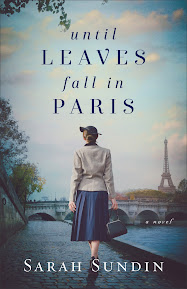
Sarah Sundin enjoys writing about the drama and romance of the World War II era. She is the bestselling and Christy Award-winning author of Embers in the London Sky (February 2024), The Sound of Light (2023), Until Leaves Fall in Paris (2022), When Twilight Breaks (2021), and several World War II series.

Sarah's novels have received starred reviews from Publishers Weekly, Library Journal, and Booklist. Until Leaves Fall in Paris received the 2022 Christy Award and was a semi-finalist for the 2023 Carol Award, The Sound of Light, When Twilight Breaks, and The Land Beneath Us were finalists for the Christy Award, and The Sky Above Us won the 2020 Carol Award.

A mother of three, Sundin lives in Southern California and enjoys speaking to community, church, and writers' groups. Sarah serves as Co-Director for the West Coast Christian Writers Conference.

February 1, 2022

Coming By A Back Door


                                                                Sarah Sundin


Did you ever take an unexpected detour in life and find yourself unprepared for your new road? That’s how I felt about writing. Unlike most authors, I hadn’t planned to become a writer since childhood. Although I’d been a lifelong reader and storyteller, I majored in chemistry and earned a doctorate in pharmacy. I loved my career as a pharmacist, which was flexible enough to allow me to work only one day a week when my children were little.

Then one day I had a story idea that would not leave me alone. I had to write it. This was a new and rather unsettling experience for me, and it took a while before I could even tell my husband, family, and friends. But my love—obsession?—for that story drove me. And then another story idea came. And another. Over time, I became involved in a writers’ group and began attending writers’ conferences. I learned the craft, and I learned about the industry. I wrote and received rejection letters and finally, in 2010, my first novel was published.

In many ways, I feel as if I came to a writing career by a back door, even after fourteen published novels. I challenge myself to keep learning, and I attend conferences as much to learn as to network and meet with friends. As an extreme outliner-planner sort of writer, I’ve learned a lot of analytical, organizational ways of writing that make my science nerd brain happy. But more and more, I make myself set my spreadsheets aside, trust my creative brain, and let it fly!


In my latest novel, Until Leaves Fall in Paris, Americans Paul Aubrey and Lucie Girard remain in Paris under the Nazi occupation for differing reasons. An engineer by training, Paul keeps his automobile factory running so he can send information from his German customers home to the US military. Meanwhile, ballerina Lucie purchases her favorite English-language bookstore to allow the Jewish owners to escape—and uses the store to aid the Resistance.


Lucie is a creative sort who disdains routines and money. Paul is an analytical sort who thinks art isn’t practical. In order to keep her bookstore afloat, Lucie must learn to follow routines and keep track of money. And widowed Paul, who has a storytelling four-year-old daughter, must learn to appreciate creativity before he tramples little Josie’s tender spirit. Through their friendship—their growing romance—Paul and Lucie challenge each other.

At one point in the story while strolling along the Seine, they both state that green is their favorite color. Yet they still disagree. Lucie loves the light green of a new spring leaf in the sunshine, while Paul prefers the weight and heft of forest green. Lucie is appalled at the dull choice and says, “That weight—it’s why the color can’t dance.”

Then Paul pulls down a tree branch and shows how the colors play on the leaves—light on one side, dark on the other. Lucie lets that sink in, studies the dark underside, and states, “It’s as if the weight of this color allows the color on the other side to dance.” And Paul responds, “The top side—that’s where photosynthesis takes place. Your dancing side nourishes the whole tree.”

The leaves, the shades of green, become symbolic of their relationship and how they each change. Although Lucie will never be analytical by nature, she grows in her understanding of the necessity of math and science and business, and she adopts structured habits contrary to her nature for the sake of art. And although Paul will never become an artist, he comes to appreciate the worth and purpose of creativity and beauty in the world, and he nourishes it in his little girl.

The balance between creativity and practicality, between art and analysis, is one each of us must grapple with as writers. Most writers, by nature, are more like Lucie, disdaining structure and routines—and deadlines. To survive in this industry, we must adopt professional skills and habits, or our careers will be short-lived. We also must have a deep empathy for analytical personalities to write such characters with honesty. And please, my seat-of-the-pants writing friends, don’t disparage outliners for not being “organic and intuitive.” They are real writers too.

Likewise, for those of us writers who have an analytical bent—I’m not alone! —we must learn to trust the musing parts of our brains. We must surrender ourselves to the story and allow our characters to say and do things that do not follow our pretty charts and outlines. Because the characters always know best. We must give ourselves permission to write lines that don’t even make sense and tell ourselves we’ll edit them later, so we won’t get stuck in a perfectionistic loop. We must have deep understanding of creative personalities to write those characters with compassion. And please, fellow outliners, don’t disparage pantsers for being “disorganized and unprofessional.” They are real writers too.

Like Paul and Lucie, we can learn from each other. When I describe my outlining techniques, my pantsing friends look stunned—but they invariably pick up a tip or two to apply to their own writing. Likewise, some of my pantser friends swear by brainstorming with mind maps. When writing my last proposal, when I had no ideas to start with, I pulled out white boards, colored markers, and drew circles and arrows. It unleashed a part of my brain that had lain dormant, and the ideas flowed!

Learning to appreciate those who are different from you 
is a major theme in Until Leaves Fall in Paris. A theme that is so relevant in today’s divisive world.


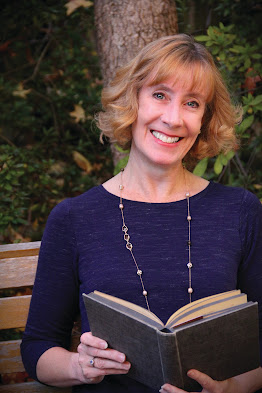
Sarah Sundin is an ECPA-bestselling author of World War II novels, including Until Leaves Fall in Paris. Her novels When Twilight Breaks and The Land Beneath Us were Christy Award finalists, and The Sky Above Us received the 2020 Carol Award. A mother of three adult children, Sarah lives in California and teaches Sunday school and Bible studies. She serves as co-director of the West Coast Christian Writers Conference and enjoys speaking for church, community, and writers’ groups. www.sarahsundin.com.

February 4, 2021

More Insight Into Writing

Sarah Sundin’is a historically accurate World War II novelists. Like all authors, she too had to deal with the pandemic and writing during 2020 and the thrust of covid. But succeed she did. Her newest novel, when Twilight Breaks releases February 2, 2021. This electric standalone novel puts you right at the intersection of pulse-pounding suspense and heart-stopping romance.

How have you set your goals for writing for the new year?

Setting writing goals has been part of my routine for many years. Before I was published, my writers’ group had us write our monthly goals on an index card. I liked seeing them before me and highlighting them as I completed them. Now I have a document with a table, with columns for various tasks, from novel writing to interviews to publicity, and with rows for each month. Every month I sit down with my goal chart, update it, and print off a fresh copy to hang over my desk. Every week I use the chart to draft my daily schedule, and every day I highlight completed tasks in color. It really keeps me on track. Since my goal chart runs through 2023, my writing goals for 2021 have already been set.

How has the virus affected your writing?

Because I already work from home and our children are grown up, I didn’t think my writing routines would be much affected. But I found the shift of routines, the loss of favorite activities, the social isolation, and the general uncertainty caused some upheaval in my writing life. And I don’t have young children distance learning from home—I can only imagine how disorienting it’s been for so many other families.

Do you feel the pandemic has changed your writing in some way?

In a way, the pandemic has given me some insight for the novel I’m currently writing. The book is set in Nazi-occupied Paris in 1941, where people lived very closed lives and didn’t know whom to trust. That sense of apprehension and distancing reminded me of today—although it came from a far different cause!

Where did you get the idea for your new book, When Twilight Breaks?

When we visited Ellis Island a while back, I entered some family names into their computer and found my grandfather’s trip from Hamburg to New York in 1936. I knew he’d studied in Germany, but it had never struck me that he’d studied in Nazi Germany. That raised a question for me—what would it have been like to have been an American student living in Nazi Germany before the war? In the novel, Peter Lang is an American graduate student studying in Munich, where he meets American foreign correspondent Evelyn Brand—and they get themselves into a bit of trouble.

What was the easiest and most difficult part of writing your new book?

The easiest part by far was the dialogue. Peter and Evelyn banter and spar and simply have fun together—especially when they’re arguing—and their dialogue flowed.

The most difficult part was the dark setting. Researching Nazi Germany is very difficult emotionally, and I read things that shook me to the core. But I needed to be shaken and shocked and appalled, so that my readers will also be shaken.


How did you become interested in the World War II era?

Family stories drew me to the World War II era. One of my grandfathers served in the US Navy during the war, and he was a born storyteller. My grandfather Ebelke used his skills in the US Army Specialized Training Program to teach American soldiers the German language. Growing up hearing these stories— plus my father’s love for WWII movies!—gave me a love for the era.


Many of your World War II novels are part of a series. Why did you decide to write a standalone novel?

These three-story ideas came to me as standalone ideas. Since a series presents a few writing and marketing challenges, I decided to keep the novels separate and not link them. I did find a minor connection between the three—I can’t help myself! —but each story is completely independent.


When Twilight Breaks touches upon ethics within a war setting. Can you expound upon this topic? 

The key word for 1938 would be “appeasement.” The world was trying to appease Hitler, not only with his demands for annexing Austria and the Sudetenland in Czechoslovakia, but in the treatment of the Jews. At one point in the story, Evelyn asks Peter, “Where do you draw the line?” Where do we draw the line between peace and war? Between personal liberty and societal order? Between justice and mercy?

Peter and Evelyn wrestle with these topics—which are so timely. While writing this story, I was struck by the similarities between the divisive 1930s and our own time. Very sobering.


What do you hope readers can learn from your novel?

I hope readers think through the roles of freedom and order in their own lives and in society, and I hope they learn along with Peter and Evelyn how to lean on the Lord and on the people he places in our lives.


How can readers connect with you?

I love to hear from readers! Please visit my website at www.sarahsundin.com. There you can send me a message or sign up for my email newsletter. I’m also active on Facebook (SarahSundinAuthor), Twitter (@sarahsundin), Instagram (@sarahsundinauthor), and Pinterest (Sarah Sundin).

Sarah Sundin’s novels have received starred reviews from Booklist, Library Journal, and Publishers Weekly. The Sky Above Us received the Carol Award, her bestselling The Sea Before Us received the FHL Reader’s Choice Award, and both Through Waters Deep and When Tides Turn were named on Booklist’s “101 Best Romance Novels of the Last 10 Years.” Sarah lives in Northern California. 


Visit www.sarahsundin.com for more information.


February 5, 2020

Map It Out


By Sarah Sundin, @sarahsundin


Author of The Land Beneath Us


In the course of our careers, novelists practice many professions—psychologist, historian salesperson, and graphic designer to start with. But how about cartographer?

Have you ever had your heroine gaze out her kitchen window to the street in one chapter—and to her backyard in the next? Or have you ever had the locations of banks and groceries and post offices shift during your novels? I’ve found these things in my first drafts.

The solution—map it out.

On a small scale, draw floor plans of homes and other important buildings, including locations of things important to your story—telephones, kitchen knives, windows. For my novel The Land Beneath Us, I sketched a floor plan of the heroine’s home and of the library where she works.

February 6, 2019

Who Are You? Using Personality to Make Your Characters Shine


By Sarah Sundin, Author of The Sky Above Us (released 2-5-19)


With her third novel, an author fell off my must-read list. Why? I loved her first novel, with the fiery, spunky blonde heroine. I liked her second novel, with the fiery, spunky brunette heroine. Then I read her third novel, with the fiery, spunky redhead heroine. You see the problem.

Understanding personality is a powerful tool to help us write believable characters—and to avoid writing the same character over and over.

By nature, novelists’ study human behavior. Studying personality types hones those skills.
To understand my main characters, I give them personality tests. There are three major personality tests—the Four Temperaments, the Myers-Briggs, and the Enneagram. These reveal how your characters are wired and how they act and react in certain situations.

You will apply pressure to your character—will she withdraw into herself? Freak out? Lash out at others? Get drunk—or otherwise tune out of life? How does he react to failure? To success? How does he make decisions? How does he recharge his batteries? When does he feel most alive?

When you stay true to a character’s personality, the story rings true to the reader.  
In my latest novel, The Sky Above Us, Lt. Adler Paxton is a choleric/sanguine ESTP Promoter—a man of action, confident, and charming. Appropriate for a World War II fighter pilot. These traits lead to his greatest successes—and his deepest failures. He can’t accept that he committed a great sin that hurt people, so he doesn’t think about it, true to his personality. The story forces him to think about it, deal with it, and change.

The heroine, Violet Lindstrom, is a melancholy ISFJ Protector—warmhearted, hardworking, drawn to the downtrodden, and she values tradition and family. Appropriate for a Red Cross worker. These traits lead her to do great good—and to inflict great hurt when her standards are violated. The story forces her to face her self-righteousness, deal with it, and change.

Adler and Violet are different and complementary, and they’re different from the other heroes and heroines in my Sunrise at Normandy series. This create variety for readers, and it provides a satisfying challenge for me as a writer. When writing in the point-of-view of characters with different personality types, we must fully immerse in their ways of thinking and acting, not our own.
By understanding personality, we can craft realistic characters who bring our stories to life. 
______________________________________________________
Sarah Sundin is a bestselling author of historical novels, including The Sea Before Us and The Sky Above Us. Her novels When Tides Turn and Through Waters Deep were named to Booklist’s “101 Best Romance Novels of the Last 10 Years,” and Through Waters Deep was a finalist for the 2016 Carol Award and won the INSPY Award. A mother of three, Sarah lives in California. She enjoys speaking for church, community, and writers’ groups. Social Media Links:: Website: http://www.sarahsundin.com Blog: http://www.sarahsundin.com/blog Facebook: http://www.facebook.com/SarahSundinAuthor Twitter: http://twitter.com/sarahsundin


August 8, 2016

Plot Charts—How to Wrestle Your Story into Submission


By Sarah Sundin


“My plot is a mess! How can I make sense of it all?”

Do you ever feel that way about your novel? As an outliner, I always reach this stage about midway through the pre-writing. If you’re a “seat-of-the-pants” writer, you may feel that way when analyzing your rough draft.

For me, a plot chart helps organize the chaos. A chart gives me a visual sense of the story structure and helps me see areas that are under-developed—or overdone.

I make a simple table in Microsoft Word or Excel. Each row is for a scene. In the columns, you can track the point-of-view character, date, location, brief blurbs of what happens in the scene—and you can break this down by the novel’s main plot arcs.

This is a sample of my plot chart for the first chapter of my latest World War II novel, Anchor in the Storm, including scenes from both the heroine’s and hero’s points-of-view.

Scene
In the first column, use a number or name for the scene. I use the chapter number and a short name for the scene to jog my memory.

POV character
Use a separate column to label the point-of-view character, or simply color-code. I use pink for the heroine and blue for the hero (original). This allows you to see at a glance if your characters get enough—or too much—time on stage.

Date and Location
I include the date since I write historicals and work around actual historical events. Also, if you find a two-month gap between chapters, you might need to fix it. Tracking the location is useful too. Is every other chapter set at the coffee shop? Or have you forgotten to include scenes at your heroine’s workplace?

Plot Lines
I like to break down the chart by plot arcs so each aspect is well developed. I have columns for Arch’s and Lillian’s action plot lines—he’ll be fighting U-boats on a destroyer, she’ll be working as a pharmacist, and they’re both solving a mystery about a drug ring. The middle column is for their romance. I also have columns for their spiritual and emotional journeys, the personal issues they need to work through. You can include columns for subplots unique to your story. My notes probably won’t make sense to you, but they remind me of certain plot or character elements.

When to Chart?
As an outliner, I create this chart in the pre-writing process. It serves as a map as I plan each chapter, making sure I include these elements. This saves me time when editing because the structure is already sound.

If you’re a seat-of-the-pants writer who finds outlines stifling, you may find this process useful during the content edit. Filling in a chart can show you story lines that have been neglected or abandoned, scenes that are fluffy or repetitive, or illogical jumps in character growth.
_______________________________________________________________________
SarahSundin is the author of eight historical novels, including Anchor in the Storm. Her novel Through Waters Deep was named to Booklist’s “101 Best Romance Novels of the Last 10 Years,” and her novella “I’ll Be Home for Christmas” in Where Treetops Glisten was a finalist for the 2015 Carol Award. For a complete list of Sarah’s books, please see the books page on Sarah’s website: http://www.sarahsundin.com/books/ Please visit her at http://www.sarahsundin.com, and on Facebook http://www.facebook.com/SarahSundinAuthor 

August 14, 2015

Chart It!—How to Keep Track of Your Characters


By Sarah Sundin


What color were her eyes again? How long has he had this job? When did she break her arm, and is she out of her cast yet?

When we’re writing a novel, details threaten to swamp us. We waste time tracking them down. We waste time fixing them during editing. And when we mess up, we drive our copyeditors—or our readers!—crazy.

A character chart can save time and headaches. I use a simple table in Microsoft Word, but you can use any form you like. I prefer to enter information as I go to keep it up-to-date. When I turn in my manuscript, I include my character chart—the editorial staff at my publishing house loves this!

Here’s a snippet of the chart from my most recent World War II novel, In Perfect Time, showing the main characters, Kay Jobson and Roger Cooper.

Characters: Each named character gets a row in the table. I group characters by story function, such as “Kay’s family,” “802nd Medical Air Evacuation Transport Squadron” (Kay’s unit), “64th Troop Carrier Group” (Roger’s unit), and of course, “other.”

Name: The first column is for names. I can check my table for repetitions, too many names that start with M, and ethnic diversity. Since I use military settings, I include the character’s rank. Also include nicknames, including familial nicknames—do her children call her “Mom” or “Mama”? I also add “nonfictional” to any real historical figures mentioned in the story.

Role: In this column, I state the character’s role in the story—“Kay’s father,” “Roger’s best friend,” and their job. To keep the timeline straight, I often include graduation dates and when the character started or changed jobs.

Family: List the character’s family—birth order, names of parents, siblings, spouse, and children. Since my novels feature characters from all over America, I list hometown or region.

Age/Birthday: Self-explanatory! But it’s important to know how old your characters are, especially if the book or series spans a longer period of time, or for child characters who change rapidly. For minor characters, this might be only “middle-aged” or “early twenties.”

Description: For major characters, I list height and weight, hair and eye color, and other significant features, including scars or disabilities. For minor characters, I only list what’s mentioned in the story.

Other: List any detail you need to track. Do they wear glasses or speak Mandarin or smoke? I listed singing voice, because it’s pertinent to my story. With my military setting, I include promotion dates. I include dates and nature of injuries (I’m mean to my characters!), so I can track their convalescence and make sure the cast doesn’t move from one arm to the other. I also include the date a character is killed (I told you I’m mean).

A Stitch in Time . . .With a bit of work in advance, you can create a tool to save loads of time later. And your editor—and readers!—will love you.


_________________________________________________________________
Sarah Sundin is the author of seven historical novels. Her book, Through Waters Deepreleases this month and is Book 1 in the Waves of Freedom series. Her other books include In Perfect Time (Revell, August 2014). Her novel On Distant Shores was a double finalist for the 2014 Golden Scroll Awards. A mother of three, Sarah lives in northern California, works on-call as a hospital pharmacist, and teaches Sunday school. She also enjoys speaking for church, community, or writers’ groups.