Pages

August 17, 2021

4 Ways to Find Inspiration When It’s Hiding


Liz Johnson


Jack London famously wrote, “Don’t loaf and invite inspiration; light out after it with a club, and if you don’t get it you will nonetheless get something that looks remarkably like it.”


Modern day writers have summarized it as this: You can’t wait for inspiration. You have to go after it with a club.


If the last year has taught me anything about writing, it is this hard truth. How wonderful it would be to wait for inspiration to strike and write when the muse is fully at play. But that’s neither practical nor very productive.


While I was writing my latest novel, Beyond the Tides, a worldwide pandemic struck, forcing me out of my usual rhythm of writing in coffee shops and restaurants. Shortly thereafter, my dad suffered a heart attack, and I moved in with my parents for more than a month. My writing time was suddenly replaced with precious family time. And my muse curled up for a lengthy hibernation.


Honestly, I was so shaken by my world being upended that I wanted to write about as much as I wanted to stub my big toe.


But I still had a book due. My deadline didn’t care that I’d almost lost my dad or that I no longer had the privacy of my own home. Words had to make it onto the page. Which meant, I had to pick up my club and go after inspiration. And I knew that was easier said than done.


Here are 4 ways to pick up your club even when your world feels upside down.


1. Find space for both family and your writing. After my dad’s heart attack, I was afraid of missing out on time with him. But I discovered that we didn’t need to talk to be together. I’d wake up early in the morning, help him get his coffee and cereal, and then I’d open my laptop and write while he did the daily crossword.


Writing even though I didn’t feel like it didn’t mean removing myself from my family. It simply meant finding quiet times where we could just be together. Of course, finding time to write means finding a balance too. But just because you’re writing doesn’t mean you can’t snuggle with reading kids or sip morning coffee with your spouse.


2. Ask someone you love to keep you accountable. If you’re not writing because your inspiration has vanished, ask a friend or family member to keep you accountable for half an hour or more. For me this has looked like meeting with writer friends twice a month for years. We talk over dinner and then write together. It builds community and friendship, but it also keeps us accountable to be working toward our goals and deadlines.


During the pandemic, I heard of several writer friends who would write together over zoom. They’d each stay on the call for an hour as they wrote—not talking, but being productive. Isolation can hit inspiration hard, so invite your friends to be part of your writing life.


3. Talk to someone who understands. Sometimes my emotional and mental health take a beating—as they did this last year. And that’s often why my muse hides, and my inspiration vanishes. If you find yourself in a difficult, dark place, talk to someone about it. Perhaps your doctor or a pastor or a mental health professional. Sometimes you need to borrow someone else’s club. And that’s okay.


4. Set unintimidating word count goals. When I don’t feel like writing, the idea of getting in 1,000 words is overwhelming. I start telling myself I can’t do it. But you know what I can do? I can write 200 words. And when I sit down to write 200 words, I usually write a whole lot more. But the goal isn’t the more. The goal is simply to write. Because just opening up my laptop and tapping out some words is the club I need to find that inspiration.


This last year has reminded me that even when I feel isolated or unbalanced, I can still write. And even if I don’t feel like writing, I can still write. It may not be perfect—what first draft is? But once I get started, inspiration usually finds me. Or at least something that looks remarkably like it.


Liz Johnson is the author of more than a dozen novels, including the Georgia Coast Romance series and the Prince Edward Island Dreams series, as well as a New York Times bestselling novella and a handful of short stories. She works in marketing and makes her home in Phoenix, Arizona.

August 16, 2021

Suite T Salutes Patricia Bradley


Suite T is bringing author Patricia Bradley to our blog today for readers to get to know more about her personally and her books.


If you ask Patricia Bradley what is her top priority she says, "To honor God through my writing."  She has done this in every book she has written.

She is a Romantic Suspense writer who lives in the "Deep South." It is often said "She writes suspense with a twist of romance."

You will be interested to know that Patricia's first published works were short stories that Woman's World published. You won't want to miss reading one of these stories. Here is a link to one of those short stories called Blood Kin~A Biter-Bit Story

From there her writing took off with her creating those wonderful romantic suspense novels we can't get enough of. She also created a couple of novellas. Everytime she has a new book out readers are waiting in line to get them. How do I know this? I know because I am one of them. I hate for the book I am reading to end!


We talked about how she became a writer. She said, "I was a reader until I turned thirty-five. That was also the year I couldn’t sleep, and one night as I lay in bed, staring at the ceiling, an older man appeared in my vision. He stood at a window with smoke stacks billowing behind him. He turned to me and said, “This isn’t the way my life was supposed to turn out.”"

I wanted to know more about this man in the vision. She continued, "After hearing the man's  statement, I was intrigued and I began telling myself stories of the different things that went wrong in his life. It wasn’t long before other people came to live in my head, and they refused to leave until I wrote their stories down…on a blue Hermes 3000 portable typewriter. Woman’s World bought the very first short story I wrote—"The Snow Leopard.”


Patricia is a goal setter in her writing on word count verifiying often where she stands with her word count and how many more words she needs to in order to reach her goal.

But what does this author do when she is not writing? One outlet is speaking to groups, such as students and adults on abstinence and healthy relationships.If you would like to have Patricia speak to your group you can contact her here.


So what does she do when not writing or speaking? She throws mud on a wheel. She said, "I try to make something beautiful! Long before I became a published writer, I saw a potter working the clay, making beautiful vases and bowls. I immediately knew I wanted to write a story with a potter as my heroine. Since I knew nothing about ceramics, I took lessons for a year and a half. That was back in 2001. It was another ten years before I’d use what I’d learned in a story. But I did use the pottery in my “day” job as an abstinence teacher to show teens how they could reclaim their lives if they made a mistake in the same way a potter reclaimed clay he messed up. At the end of our sessions, I took a portable potter’s wheel into the class room and demonstrated how easy it was to ruin a vase or bowl on the wheel. Then I showed how I reclaimed the clay to use again, and how once it was fired, no one knew a vase or bowl was made with reclaimed clay. Sometimes I think that demonstration spoke louder than anything I said.

You will enjoy this short video of Patricia on her wheel as she reveals how it relates not just to the pottery but the analogy of our lives.


Patricia's first series was Logan Point. There were four books in the series: Shadows of the Past, A Promise to Protect, Gone Without A Trace, and Silence in the Dark. Revel, a division of Baker Books published her first series. Click here to find out more about Logan Point Series . . . "The quiet town of Logan Point, Mississippi, set just outside of Memphis, is no stranger to evil, and each story is a classic tale of good triumphing over the villain.


Her next series, Memphis Cold Case had four books in the series. Justice Delayed, Justice Buried, Justice Betrayed, and Justice Delivered.You can learn more about this series here. The series has the perfect mixture of intrigue and nail-biting suspense. Award Winning Author Patricia Bradley invited her readers to crack the case––if they can––alongside the best Memphis as to offer.


She also wrote a straight romance in September 2014 Matthew's Choice: A Clean Romance and found out it was a lot of fun. So in 2015 she added The Christmas Campaign and in 2020 The Gingerbread Pony.


The next series is Natchez Trace Park Rangers. The books are Standoff, Obsession, and Crosshairs releasing in November and then Deception releasing in the spring of 2022. Patricia Bradley introduces you to a new series set in the sultry South that will have you wiping your brow and looking over your shoulder. You can learn more about that series here.


In talking with Patricia about the Natchez Trace Park Ranger series she related an interesting story that happened during her research pertaining to one of the books. Here it is in her own words:


"While researching Obsession, the 2nd book in the Natchez Trace Park Rangers series, I needed a place to bury a body, and I knew I wanted it to be at Mount Locust. The historic site is filled with so much history and is the oldest “inn” on the Natchez Trace that still stands. It has two cemeteries, and I wanted to hide a body in one of them.

"I stopped at the ranger station and the park ranger, bless his heart, didn’t faint when I asked if there was a way to get a body onto the Mount Locust property from the backside. He told me how to get to the road that ran behind the property, but once I was done, to be sure I took a right at the next road.

"After quickly discovering the perfect place to bring in the body, I drove on, looking for that road to the right…and drove…and drove as the road wound down to a one lane sand road with bayous on each side. There were no houses and absolutely no place to turn around until about five miles later. At that point I questioned my sanity of being a lone woman on a deserted road in the middle of nowhere.

"When I finally did get turned around and back to Mount Locust, I found the road I was supposed to turn on. I had missed it because the road I was on curved to the left, and I thought the little lane on the right was a driveway."


You will want to go over and visit Patricia on her website, https://ptbradley.com/. While you are there check out her blog, you will enjoy her post and be sure and sign up to get her blog post so you will not miss it. It is very informative and a lot of fun. She has a great segment called CRIMES GONE AWRY––MYSTERY QUESTION


Be sure and sign up for her newsletter and for doing so, you will receive her novella Revenge!

You will be glad you did. It's a suspense novella about a murder that becomes a case of mistaken identity at a remote drug rehab facility. An old threat resurfaces and Andi Hollister finds herself in the crosshairs of a killer. You will not want to miss this!.


Patricia Bradley has won an Inspirational Reader's Choice Award in Romantic Suspense, a Daphne du Maurier Award, and a Touched by Love Award, and she was a Carol Award finalist.


She also has won readers from all over the world who never miss reading her books. If you have not read one, choose any one of them, and you will not put it down until you finish it, and then you will find yourself reading all of them.


So what is next on the horizon for Patricia Bradley?


"In November, Crosshairs, the third book in the Natchez Trace Park Rangers series releases, and then in the spring of 2022, Deception, the fourth and final book in the series comes out. By then I’ll have the first book in my next romantic suspense series, tentatively called The Pearl River Series, almost finished. That series is set in the Cumberland Plateau somewhere around Chattanooga, Tennessee, and features a female sheriff doing battle against the evil trying to infiltrate her small county.

"And last of all, I’m excited to take part in an anthology of short stories based on the titles of the Oak Ridge Boys’ Christmas Cookies album. Joe Bonsall, the Oaks’ tenor, is also contributing to the anthology."


We want to thank Patricia Bradley for listening to the voices that came to live in her head and writing these great books to entertain us.

Patricia keep listening and writing!

Suite T

August 13, 2021

Top 3 Picks

 Amazon Editors top three picks for August as of August 12, 2021


Do you have a favorite book for August, so far? 


We would love for you to share it with us.

August 12, 2021

The Birth of Penelope Pumpernickel


MaryAnn Diorio, PhD


It all started about 20 years ago. I was browsing through the children's section of my local bookstore and discovered a book about Jesus. Delighted to see such a book in a secular bookstore, I opened it and began to read. What I read literally caused me to weep.


The book did not present Jesus Christ as true God and Savior of the world. Instead, it presented Jesus as simply a good teacher among many other good teachers, like Buddha, Mohammed, and Hare Krishna. With broken heart, I closed the book and vowed to write a children's book presenting the truth about Jesus Christ.


Immediately after my bookstore visit, I went home and began to write Who Is Jesus?, eventually published as a picture book in 2014. That book launched my career as a children's writer. Who Is Jesus? was followed by seven other books for children, all of which seek to promote the truth about life as taught in God's Word.

The latest of these books is a series of chapter books for children aged six to ten years old, titled The Penelope Pumpernickel Series of Chapter Books for Children. Targeted to early and reluctant readers, this series features eight-year-old protagonist Penelope Pumpernickel, a feisty little girl with a heart of gold, a propensity for adventure, and a character that wants to obey God despite her many temptations against doing so.


As in the situation with Who Is Jesus?, The Penelope Pumpernickel Series came about as a result of my exploration of current children's literature. What I found was a major dearth of books written from a Biblical worldview. Indeed, books reflecting a Biblical worldview were few and far between.

Instead, far too many of the current children's books I read reflected the decline--and depravity--of our current culture. They presented worldly philosophies blatantly contrary to the Holy Scriptures--philosophies steeped in humanism and selfism.


Again, I wept.

And again, I did something to change the situation. I decided to create a series of chapter books for early readers in which the Biblical worldview is paramount and upheld throughout. I wanted to create a character who struggled with the same issues with which other children struggle, but who depends on the Holy Spirit of Jesus Christ to guide her decisions and her actions.


And so was born Penelope Pumpernickel.


Truth be told, Penelope had been roaming around in my mind for many years, but I wasn't sure how God wanted to use her. After my research into current children's books. I knew that God wanted Penelope to serve as an example of courage to young children to choose righteousness in the face of temptation simply because it is the right thing to do.


In this entertaining, exciting, and humorous adventure series, Penelope Pumpernickel takes on Grandville Ungerleider (Grandy, for short), fellow homeschool student who symbolizes compromise with the world. But by speaking the truth in love to Grandy, Penelope points him to Jesus Christ, the One Who loves Grandy and will give him the grace to choose good over evil every single time.


Six books are planned for the entire series. Summaries of the two books available thus far follow below:


Book One


In Book One, titled Penelope Pumpernickel: Precocious Problem-Solver, Penelope Pumpernickel (Penny Pump, for short) runs into a big problem. His name is Grandville Ungerleider (Grandy, for short). Grandy wants to be Penny's friend, but he has a strange way of letting her know. Maybe his father's recent death has something to do with it.


Penny's sidekick and best-friend-forever, Matilda Mendoza (Tilly, for short), offers Penelope some good suggestions about what to do with Grandy. Tilly is the "Queen of Ideas."


When Grandy disrupts the Homeschool Consortium with his crazy antics, Penelope must find a way to solve the big problems he causes.


In this first book of this funny, adventure-packed series, Penelope learns that no matter how big a problem one faces, there is always a way to solve it with God's help.


Book Two


In Book Two, titled Penelope Pumpernickel: Dynamic Detective, Penelope has another encounter with homeschool trouble-maker Grandville Ungerleider. Grandy says he has discovered a treasure chest in the basement of the church where their Homeschool Consortium meets every Thursday. But is Grandy telling the truth? How can Penelope find out? Students are forbidden to go down to the basement.

And then there's the case of the missing maps. Who stole them and why?

Book Two provides another exciting adventure as Detective Penelope solves another homeschool mystery. In this second of the delightful Penelope Pumpernickel Series of chapter books for six-to-ten-year-old children, Penelope learns that no matter how hard it is to do right, doing right is always the right thing to do.


Benefits to Children


Why should children read the Penelope Pumpernickel books? Here are a few reasons:


1. They are entertaining and fun.
2. Their page-turning adventures motivate early and reluctant readers to read.
3. They build character by presenting a child protagonist who faces normal temptations--like the temptation to lie or steal--and show how choosing good over evil always results in blessing and how choosing evil over good does not.
4. They are thoroughly based on the Word of God and present a solid, Biblical worldview.


It is my heartfelt hope that the Penelope Pumpernickel series will serve as a major influence in raising up a generation of children who love God, who are not afraid to proclaim Truth, and who will point others to Jesus Christ, the Only Savior of the world.


In so doing, they "will rebuild what has long been in ruins, building again on the old foundations" of righteousness and truth. They "will be known as the people who rebuilt the walls, who restored the ruined houses" (Isaiah 58: 12).


And then, perhaps, good will once again prevail in the land.


MaryAnn Diorio is a widely published, award-winning author of books for children and adults. A former university professor of Romance languages and Writing Fiction for Children, she holds the PhD in French and the MFA in Writing Popular Fiction. MaryAnn resides in New Jersey with her husband of 51 years, a retired ER physician. They are blessed with two amazing daughters, a very smart son-in-law, and six rambunctious grandchildren. In her spare time, MaryAnn loves to paint in oils and acrylics, to play the piano and mandolin, and to make up silly songs with her grandchildren. You can learn more about MaryAnn at https://www.maryanndiorio.com.

August 11, 2021

Critiques - How To See?


In December 2018 Ane Mulligan wrote a post for Suite T titled Literary Leftovers – A Matter of POV. https://southernwritersmagazine.blogspot.com/2018/


Ane said, “When I received my first critique, I discovered I knew nothing but good dialogue … and I mean nothing. Zilch. Nada. Zip. I’d never heard of POV and had no idea what it even meant.” She went on to say, “I didn’t have any problem accepting the hard critiques. The difference was, while they were hard, I never saw them as harsh. It’s all a matter of POV. I wanted to learn. I read those critiques from the POV of being taught – not attacked.”


And there is the “Point”. It is how we see the critique. For many writers critique is commonly considered as someone finding fault with our writing, and we probably feel we are being judged in a negative way. We take it personal.


No one wants to sit and hear someone find fault with anything they do. Right? However, it is how the person critiquing begins their sentence that can open you up to hear constructive words or close you off and refuse to hear.


In writing, the only way to learn is to do along with studying and honing our craft. But in that process, we need people in our corner that are sincere about helping us move forward in our writing process. People we can trust and know they are helping us not hurting us. We need a good someone who can critique our work and help us see the things that need to be worked on and the whys.


Ane Mulligan went on to say in that post, “We need to trust our critique partners won’t let us get away with anything less than our best.”


To see her Literary Leftovers, go to https://southernwritersmagazine.blogspot.com/2018/


Ane Mulligan has been a voracious reader ever since her mom instilled within her a love of reading at age three, escaping into worlds otherwise unknown. But when Ane saw PETER PAN on stage, she was struck with a fever from which she never recovered—stage fever. She submerged herself in drama through high school and college. One day, her two loves collided, and a bestselling, award-winning novelist emerged. She lives in Sugar Hill, GA, with her artist husband and a rascally Rottweiler. Find Ane on her website, Amazon Author page, Facebook, BookBub, Goodreads, Pinterest, Twitter, and The Write Conversation.

August 10, 2021

The True Value of Social Media & Blogging

Edie Melson       @EdieMelson


On the surface, social media appears to be all about amassing numbers, increasing reach, and generating sales. Everywhere we look we’re being told how to get more hits on our blogs, generate new followers, and strengthen our web presence. After all, the higher our numbers, the more valuable we are. Right?


In actual practice, that is a perversion of the truth.


I’m not doing this writing thing to win some numbers race. I write because I want to reach people, to help them, and have a positive impact on the world around me.


If all I’m looking for is higher numbers, I’ve missed the point. I’ve set a course that leads to certain frustration and ultimate failure. So if it’s not for the numbers, then what’s the point? Why even bother with social media?


The point is what the numbers represent.


The point of growing my social media influence lies with the individuals who can be impacted by what I write, challenged by what I say, and changed by what I share.


When I get caught up chasing the numbers, the significance of what I’m doing diminishes.

But when I step away from the race and concentrate on who I’m writing and who I’m writing to, things fall back into place.


I’m first and foremost a writer. For me, social media is a tool. It’s the means to an end. It helps me find my audience. But when I begin to measure my worth as a writer through the numbers of social media, I’ve gotten off course.


My worth is not determined by my numbers.


For me, the blog posts that mean the most are rarely the ones that generate the highest numbers. The ones that mean the most are those that help someone, that connect the dots for an individual who’s hurting or help someone who’s frustrated finally see the light. It’s when I pen those words that I feel true satisfaction in my calling.


So how do I avoid the numbers race when everyone is pushing for more?
I quit talking about myself on social media—completely. Instead, I work hard to help someone else succeed or reach a new level. This takes my focus off me.
I volunteer. I offer to write an article or blog post for someone who doesn’t have the same size audience as me..
I issue an invitation. I ask someone who doesn’t have as much experience and/or exposure to contribute to my blog.
I watch the clock. I limit my time on social media to a strict thirty minutes a day. With that, I don’t have time to obsess over my numbers.
I reveal something new about myself. I know this seems like the opposite of the first bullet, but it's really not. I'm talking about being vulnerable, not saying come look at me. I've discovered that I make those important heart-to-heart connections when I open up and I'm vulnerable. When I revert to slick slogans and polished posts, I'm really just hiding.

As twenty-first century wordsmiths, social media & blogging are important additions to our toolboxes, but it’s not the focus of what we do.


This media driven world we live in ebbs and flows. One second we’re on top, the next we’re at the bottom of the pile. When we measure our worth through charts and graphs generated by numbers we’re certain to fail. But when we look at the lives that are impacted by our words, success is guaranteed.

Edie Melson is the co-author of the bestseller Social Media for Today’s Writer. She’s the co-director of the Blue Ridge Mountains Christian Writers Conference, and board member of the Advanced Writers and Speakers Association.

https://www.blueridgeconference.com/

Visit Edie at:

www.EdieMelson.com

www.twitter.com/EdieMelson

Edie Melson, Facebook

August 9, 2021

Leaving That Legacy

Chris Pepple


My children have their own careers now. Oh, how time flies. I remember holding them as babies when they couldn’t sleep. We rocked for hours, and I read books to them at bedtime even before they could understand what I was reading to them. I enjoy the pictures that remind me of all of our many adventures together and of their moments to shine in plays and concerts or sporting events. I’m so proud of the young adults they have become.


When they were younger, I started thinking about the legacy I wanted to leave my children. We often spend a lot of time thinking about the financial and legal aspects of what we need to leave behind for those we love. It’s critical that we make wills and leave written, legal documents so that our wishes will be fulfilled. What else are we writing for our children or our nieces and nephews or grandchildren, though? Are we spending time leaving a written legacy?


Hopefully our actions speak volumes about what we believe, and we model for our children the type of life we hope they lead. Often, though, our children don’t know much about our actions. They are too young to remember or are in school when we are volunteering. They are at swim practice while we are sitting with an elderly relative. They may not know the details about what we do, much less why we do it. That’s where our writing comes in.


Fiction writing is a great place to create characters that model for others what we would like to see in life. Through the characters and the plot, we can show others what we would like to see in the world. We can have characters discuss integrity and hope and kindness. Characters can struggle with issues that we struggled with and resolve those issues in ways our children may have never realized could be possible. They may not have realized our struggles or may not have seen how we overcame them (or wished we had because we realized later that we made the wrong choice). Our stories can leave a written legacy for the next generation.


Our nonfiction writing has the same potential. We can leave behind a written legacy that details what we believe and why we believe it. It’s there whenever the next generation needs a word from us even if we are living in different cities or time zones or even if we are ill and no longer able to communicate well.


I wish I had more written words from my grandmother. I know she faced many challenges in her life, and I know that her faith and her strength helped her overcome those challenges. I don’t know, however, what her words would be about all that she faced. What advice would she give me? What would she tell me about her faith? What would her written legacy to me have been if she had been a writer? I found poems by my great-grandmother that give me insight into her faith and her decisions when life was hard. I cherish those poems scribbled out on yellowed paper.


Our faith and life legacy can be published or unpublished, but it needs to be written. We can all share our voices and tell our stories so that the next generation can hear from us firsthand what we hope for them. What written legacy—fiction or nonfiction—are you leaving for others?


Chris Pepple is an award-winning author and a freelance writer, manuscript consultant, and editor living in Germantown, Tenn. As a published author, her works include Looking, Seeing (2018), Without a Voice (2017), Two Frontiers (2016), Writing Your Faith Journey (2016), Look to See Me: A Collection of Reflections (2006) and Reflections on Suffering: Defining Our Crosses and Letting Go of Pain (2012). Her first novel, Two Frontiers, was a 2017 Next Generation Indie Book Awards Finalist.

She was a long-time writer-at-large for Southern Writers Magazine, interviewing national authors for each issue. My articles have appeared in many other local and national publications, including Delta Magazine.

She speaks to writing groups on topics such as self-publishing, how to find your own creative voice and how to break writer's block. Along with speaking to writing groups, she also speaks nationally to churches and nonprofit organizations on a variety of motivational and spiritual topics.

Visit at https://www.chrispepple.com/

August 6, 2021

What Are The Top 3 Books So Far?


Would you be surprised to know what each book is about?


#1 - Is a Historical World War II Fiction.


#2 - Is a Metaphysical Fiction


#3 - is Genetic Science


Are you surprised? With what we have been through last year and are still esperienceing this year I can't help but wonder where are the "Feel Good" books.


Your thoughts?

August 5, 2021

A Fun Writing Excercise


We thought it might be fun to take a break
 this week and do a writing exercise.


Here are 3 words. All you have to do is choose one of the words to begin your paragraph and then use the other two words somewhere in the paragraph. Make it a short paragraph in the comment section.

Don't be shy. It's fun! 

Which word will be used the most to begin the paragraph?


August 4, 2021

Killer Nashville International Writers' Conference


Killer Nashville International Writers' Conference

  • Image

  • Event Information:

  • Event Dates: August 19-22, 2021
  • Registration Deadline: December 31 (Super Early Registration); March 31 (Early Registration); August 19 (Regular Registration)
  • Embassy Suites Nashville South/Cool Springs
  • 820 Crescent Centre Drive
  • Franklin
  • TN
  • 37067

      • Program Features: writing workshops, panel discussions, manuscript critiques, readings, pitch sessions, book fair, author signings, roundtable discussions
      • Genres: fiction, nonfiction, playwriting, screenwriting
  • Event Size: 350+

  • Cost: $379 Super Early / $399 Early / $419 Regular
    Discounts available: Educators, Seniors, and Active Military

  • Scholarships Available: yes (see website)
  • Contests: yes (see website)
  • Presenters: TBA

Event description: The Killer Nashville International Writers’ Conference was created in 2006 by author/filmmaker Clay Stafford in an effort to bring together forensic experts, writers, and fans of crime and thriller literature.

Our objective is simple: to educate and empower aspiring and established writers, and connect them with other industry professionals. We pride ourselves on our intense, intimate workshops and panels, and on our close-knit community of writers.

At the conference, we try diligently to ensure that the weekend has something for every writer and lover of literature, and our sessions are structured to assist writers on multiple career levels. Our learning tracks tackle the craft of writing, business of writing, marketing, and forensics.

In addition to it’s 60+ conference sessions, Killer Nashville features nine breakout sessions for intense smaller group interaction, an authors’ bar (free for hotel guests), a moonshine and wine tasting, agent/editor roundtable pitch sessions, a mock crime scene designed by special agents and other law enforcement professionals, cocktail receptions, the Killer Nashville Awards Dinner, film previews, live music performances and—of course—all the great activities one can enjoy in downtown Nashville.

Reserve your spot now! Attendance is capped at 350 registrants. Discounts and scholarships are available. Visit our site for more details.


August 3, 2021

Husband Audition's

Angela Ruth Strong


When I was writing Husband Auditions, I had recently read a book about dysfunctional relationships, and it listed seven different heart issues. One of them was laziness, which is said to be the most frustrating for a woman to have to deal with, and it seems to be common in the younger generations.

I wanted to explore the idea of a lazy but likable hero and what it would take for him to have to grow. 

I gave Meri the heart issue of fear because the fear of being alone could trap her in a relationship with a man who was just going to sponge off her. I believe many women choose bad love over no love at all, and I want to encourage them to invite their significant other into the light rather than join him in the dark.

As far-fetched as the list that Meri inherited sounds, and as silly as the advice may seem, I was inspired by an actual magazine article that has floated around online in recent years. The title was 129 Ways to Get a Husband. It was published in McCall’s magazine in the 1950s. Some of the suggestions were quite outlandish, such as standing on a street corner with a lasso. I imagined what would happen if a modern-day woman tried them out.

When I created an original list for my book, I went to my reader group on Facebook for ideas. We had such a great time with all of them, and I can’t wait for my readers to see which of their ideas made it into the story.

Some of the ideas that made the list include:

  • Move to a state with more men than women. We recommend Nevada.
  • Make friends with beautiful women. They usually have a cast of unwanted suitors.
  • Why stop with a hat, when you could carry a hatbox? Be both charming and intriguing.
  • Only let him see you cry if he has the power to cheer you up. Otherwise, you’re wasting your tears.
  • There’s nothing more romantic than a view. Ask a Ferris wheel operator to leave you at the top of the ride for longer than usual.
I think the book is unusual in a way that provokes dry amusement with a zany but relatable cast of characters while having an unbeatable chemistry among the characters. I hope you will feel I have created a heartfelt look at the reality of modern Christian dating and that the book will resonate with you.


    Angela Ruth Strong sold her first Christian romance novel in 2009, then quit writing romance when her husband left her. Ten years later, God has shown her the true meaning of love, and there’s nothing else she’d rather write about.

    Strong’s books have since earned Top Pick honors in Romantic Times, won the Cascade Award, and been Amazon best sellers. Her book Finding Love in Big Sky recently filmed on location in Montana and will air soon. She also writes articles for SpiritLed Woman.

    To help aspiring authors, she started IDAhope Writers where she lives in Idaho, and she teaches as an expert online at Write That Book.

    Besides writing, Strong teaches exercise classes, works for an airline, and enjoys Harley rides with her husband and camping with her three kids.

    Learn more about Angela Strong at www.angelaruthstrong.com, or find her on Facebook (Angela Ruth Strong Fan Page), Instagram (@ang_strong), and Twitter (@AngelaRStrong).


    August 2, 2021

    To Workshop Or Not To Workshop? Is That a Question?


    Sara Robinson


    I have often fielded calls from writers about workshops and should they join one. Have I had any experience with a workshop? What did I learn? Would I attend another? Do famous poets/writers present workshops? Did I have a workshop? What about critique groups? These are all very good questions, and very tough for me to answer. But I’ll start with some basic responses.


    Yes, I have had experience with workshops, both in attending and running. For the most part I benefitted from them. One basic thing to consider: A workshop is not necessarily a critique group. When I started my workshop many years ago, I had one purpose: To work with writers to get their works ready for publication. As such we were taking already composed pieces ready for ordering into a manuscript or for sending out to journals (and similar) and polishing them for completion.

    A critique group, by contrast, is helping writers in the formative stages of their renderings by giving them basic feedback. While I have done both, I really don’t have a preference except that for nine years I have been facilitating a poetry literary critique group where we read and discuss poets already known. Think Auden, Wordsworth, Rita Dove, John Keats, Mary Oliver, etc.


    Let’s get back to workshops, however. The first question you may want to ask yourself is what do you want to get out of being in a group with other writers? If you are already published and you want to sharpen your skills, a critique group may be useful. I’ve found critique groups helpful when I am concerned about audience reception to what I’ve written. As you can see, there can be a gray area between the two groups.


    So, the second question you may want to ask relates to the group itself. What is their purpose and what are their goals? Look online for workshops. Explore magazines that deal directly with writing, such as Poets & Writers or Writers Digest. They have excellent resources in their monthly publications which can often be found at public libraries.


    A next question is a tough one: How receptive are you to constructive criticism about your work?

    If you are very sensitive, workshopping may not be your thing. But if you can accept that everyone there is coming for the same reason, you may find the experience exhilarating.

    Often, and again, depending upon the workshop set-up, there are writing prompts, shared experiences, tips on publishing, and loads of useful help.


    I will promise you this: Whatever you may have thought about revision, discard it. Revision is the soul and heartbeat of good writing. Attending a workshop will show you how to embrace your inner “revisionist.” Personally, I love revision. You would be surprised to know how many poems I have created from revised lines taken out of another text.


    So, for you, think about a value you can gain from joining a workshop. Perhaps you can find one as part of a writers retreat close by. Think, too, of kindred spirits gathered on a blanket at the end of a perfect day reading and discussing each’s contributions, perhaps with a nice, iced tea or white wine. What an amazing opportunity! Until next time…


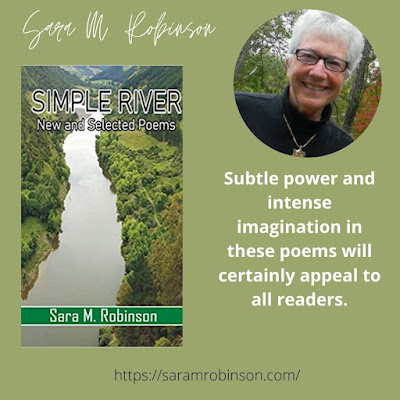
    Sara M. Robinson, founder of the Lonesome Mountain Pro(s)e Writers’ Workshop, and former Instructor of a course on Contemporary American Poets at UVA-OLLI, was poetry columnist for Southern Writers Magazine and inagural poetry editor for Virginia Literary Journal. She has served as guest lecturer at UVA’s College at Wise, Wise, VA. Her poetry has appeared in various anthologies, including We Grew Wings and Flew (2014), Scratching Against the Fabric (2015), Virginia Writer’s Club Centennial Anthology (2017), Blue Ridge Anthologies and Mizmor Anthology (2018). Journals include: Loch Raven Review, The Virginia Literary Journal, vox poetica, Jimson Weed, Whisky Advocate, and Poetica. She is poet and author of Love Always, Hobby and Jessie (2009), Two Little Girls in a Wading Pool (2012), A Cruise in Rare Waters (2013 Stones for Words (2014), Sometimes the Little Town (2016), a finalist for the Poetry Society of Virginia’s 2017 Book Award. In 2019, Needville, her poetry about effects of coal mining on SW Virginia was released and in 2020 debuted as play in Charlottesville. Her most recent publication is Simple River (2020, Cyberwit).

    Visit
    https://saramrobinson.com/