Pages

August 4, 2021

Killer Nashville International Writers' Conference


Killer Nashville International Writers' Conference

  • Image

  • Event Information:

  • Event Dates: August 19-22, 2021
  • Registration Deadline: December 31 (Super Early Registration); March 31 (Early Registration); August 19 (Regular Registration)
  • Embassy Suites Nashville South/Cool Springs
  • 820 Crescent Centre Drive
  • Franklin
  • TN
  • 37067

      • Program Features: writing workshops, panel discussions, manuscript critiques, readings, pitch sessions, book fair, author signings, roundtable discussions
      • Genres: fiction, nonfiction, playwriting, screenwriting
  • Event Size: 350+

  • Cost: $379 Super Early / $399 Early / $419 Regular
    Discounts available: Educators, Seniors, and Active Military

  • Scholarships Available: yes (see website)
  • Contests: yes (see website)
  • Presenters: TBA

Event description: The Killer Nashville International Writers’ Conference was created in 2006 by author/filmmaker Clay Stafford in an effort to bring together forensic experts, writers, and fans of crime and thriller literature.

Our objective is simple: to educate and empower aspiring and established writers, and connect them with other industry professionals. We pride ourselves on our intense, intimate workshops and panels, and on our close-knit community of writers.

At the conference, we try diligently to ensure that the weekend has something for every writer and lover of literature, and our sessions are structured to assist writers on multiple career levels. Our learning tracks tackle the craft of writing, business of writing, marketing, and forensics.

In addition to it’s 60+ conference sessions, Killer Nashville features nine breakout sessions for intense smaller group interaction, an authors’ bar (free for hotel guests), a moonshine and wine tasting, agent/editor roundtable pitch sessions, a mock crime scene designed by special agents and other law enforcement professionals, cocktail receptions, the Killer Nashville Awards Dinner, film previews, live music performances and—of course—all the great activities one can enjoy in downtown Nashville.

Reserve your spot now! Attendance is capped at 350 registrants. Discounts and scholarships are available. Visit our site for more details.


August 3, 2021

Husband Audition's

Angela Ruth Strong


When I was writing Husband Auditions, I had recently read a book about dysfunctional relationships, and it listed seven different heart issues. One of them was laziness, which is said to be the most frustrating for a woman to have to deal with, and it seems to be common in the younger generations.

I wanted to explore the idea of a lazy but likable hero and what it would take for him to have to grow. 

I gave Meri the heart issue of fear because the fear of being alone could trap her in a relationship with a man who was just going to sponge off her. I believe many women choose bad love over no love at all, and I want to encourage them to invite their significant other into the light rather than join him in the dark.

As far-fetched as the list that Meri inherited sounds, and as silly as the advice may seem, I was inspired by an actual magazine article that has floated around online in recent years. The title was 129 Ways to Get a Husband. It was published in McCall’s magazine in the 1950s. Some of the suggestions were quite outlandish, such as standing on a street corner with a lasso. I imagined what would happen if a modern-day woman tried them out.

When I created an original list for my book, I went to my reader group on Facebook for ideas. We had such a great time with all of them, and I can’t wait for my readers to see which of their ideas made it into the story.

Some of the ideas that made the list include:

  • Move to a state with more men than women. We recommend Nevada.
  • Make friends with beautiful women. They usually have a cast of unwanted suitors.
  • Why stop with a hat, when you could carry a hatbox? Be both charming and intriguing.
  • Only let him see you cry if he has the power to cheer you up. Otherwise, you’re wasting your tears.
  • There’s nothing more romantic than a view. Ask a Ferris wheel operator to leave you at the top of the ride for longer than usual.
I think the book is unusual in a way that provokes dry amusement with a zany but relatable cast of characters while having an unbeatable chemistry among the characters. I hope you will feel I have created a heartfelt look at the reality of modern Christian dating and that the book will resonate with you.


    Angela Ruth Strong sold her first Christian romance novel in 2009, then quit writing romance when her husband left her. Ten years later, God has shown her the true meaning of love, and there’s nothing else she’d rather write about.

    Strong’s books have since earned Top Pick honors in Romantic Times, won the Cascade Award, and been Amazon best sellers. Her book Finding Love in Big Sky recently filmed on location in Montana and will air soon. She also writes articles for SpiritLed Woman.

    To help aspiring authors, she started IDAhope Writers where she lives in Idaho, and she teaches as an expert online at Write That Book.

    Besides writing, Strong teaches exercise classes, works for an airline, and enjoys Harley rides with her husband and camping with her three kids.

    Learn more about Angela Strong at www.angelaruthstrong.com, or find her on Facebook (Angela Ruth Strong Fan Page), Instagram (@ang_strong), and Twitter (@AngelaRStrong).


    August 2, 2021

    To Workshop Or Not To Workshop? Is That a Question?


    Sara Robinson


    I have often fielded calls from writers about workshops and should they join one. Have I had any experience with a workshop? What did I learn? Would I attend another? Do famous poets/writers present workshops? Did I have a workshop? What about critique groups? These are all very good questions, and very tough for me to answer. But I’ll start with some basic responses.


    Yes, I have had experience with workshops, both in attending and running. For the most part I benefitted from them. One basic thing to consider: A workshop is not necessarily a critique group. When I started my workshop many years ago, I had one purpose: To work with writers to get their works ready for publication. As such we were taking already composed pieces ready for ordering into a manuscript or for sending out to journals (and similar) and polishing them for completion.

    A critique group, by contrast, is helping writers in the formative stages of their renderings by giving them basic feedback. While I have done both, I really don’t have a preference except that for nine years I have been facilitating a poetry literary critique group where we read and discuss poets already known. Think Auden, Wordsworth, Rita Dove, John Keats, Mary Oliver, etc.


    Let’s get back to workshops, however. The first question you may want to ask yourself is what do you want to get out of being in a group with other writers? If you are already published and you want to sharpen your skills, a critique group may be useful. I’ve found critique groups helpful when I am concerned about audience reception to what I’ve written. As you can see, there can be a gray area between the two groups.


    So, the second question you may want to ask relates to the group itself. What is their purpose and what are their goals? Look online for workshops. Explore magazines that deal directly with writing, such as Poets & Writers or Writers Digest. They have excellent resources in their monthly publications which can often be found at public libraries.


    A next question is a tough one: How receptive are you to constructive criticism about your work?

    If you are very sensitive, workshopping may not be your thing. But if you can accept that everyone there is coming for the same reason, you may find the experience exhilarating.

    Often, and again, depending upon the workshop set-up, there are writing prompts, shared experiences, tips on publishing, and loads of useful help.


    I will promise you this: Whatever you may have thought about revision, discard it. Revision is the soul and heartbeat of good writing. Attending a workshop will show you how to embrace your inner “revisionist.” Personally, I love revision. You would be surprised to know how many poems I have created from revised lines taken out of another text.


    So, for you, think about a value you can gain from joining a workshop. Perhaps you can find one as part of a writers retreat close by. Think, too, of kindred spirits gathered on a blanket at the end of a perfect day reading and discussing each’s contributions, perhaps with a nice, iced tea or white wine. What an amazing opportunity! Until next time…


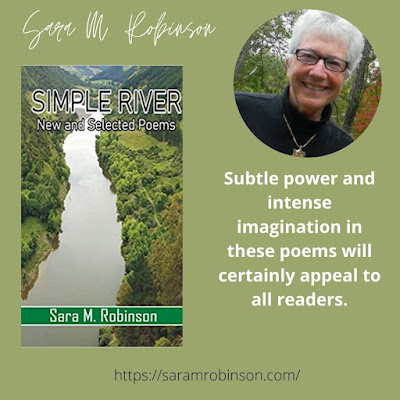
    Sara M. Robinson, founder of the Lonesome Mountain Pro(s)e Writers’ Workshop, and former Instructor of a course on Contemporary American Poets at UVA-OLLI, was poetry columnist for Southern Writers Magazine and inagural poetry editor for Virginia Literary Journal. She has served as guest lecturer at UVA’s College at Wise, Wise, VA. Her poetry has appeared in various anthologies, including We Grew Wings and Flew (2014), Scratching Against the Fabric (2015), Virginia Writer’s Club Centennial Anthology (2017), Blue Ridge Anthologies and Mizmor Anthology (2018). Journals include: Loch Raven Review, The Virginia Literary Journal, vox poetica, Jimson Weed, Whisky Advocate, and Poetica. She is poet and author of Love Always, Hobby and Jessie (2009), Two Little Girls in a Wading Pool (2012), A Cruise in Rare Waters (2013 Stones for Words (2014), Sometimes the Little Town (2016), a finalist for the Poetry Society of Virginia’s 2017 Book Award. In 2019, Needville, her poetry about effects of coal mining on SW Virginia was released and in 2020 debuted as play in Charlottesville. Her most recent publication is Simple River (2020, Cyberwit).

    Visit
    https://saramrobinson.com/


    July 30, 2021

    If You Love Hallmark


    Join Nancy Naigle in Franklin, TN 


    7/30 - 8/1 at


    RomaDrama


    Nancy Naigle will be speaking on a Panel


     Saturday


     and around all three days.


    Use NAIGLE20 for 20%off
    Click here for tickets.


    July 29, 2021

    Finding Stories All Around You


    Valerie Fraser Luesse


    My husband and I got our COVID-19 vaccines at a small pharmacy inside the Piggly Wiggly grocery store (a.k.a. “The Pig”) in Sylacauga, Alabama. And while the waiting room consisted of a few chairs and a bench overlooking the produce section, the pharmacy staff couldn’t have been more caring and professional. End result: We took a positive step toward protecting our health and we can point you to a good buy on watermelon.

    Moments like that are great fodder for stories, I think. A little exaggeration here, a sprinkling of humor there, and you’d have instant comic relief for a dramatic story or an over-the-top scene for a lighthearted one. (“J.T., when you get done pricin’ them tomatoes, can you come on over here and load me up a syringe? Bring the patient a Granny Smith while you’re at it.”)

    As a writer, I’m blessed to have spent my entire life in the South, a wellspring for storytelling. Actually, there isn’t just one South—there are many, related but not identical. They’re like cousins at a family reunion. Everybody looks and sounds a little different, but you can definitely see a resemblance. The small-town, 1960s Alabama of my first book, Missing Isaac (Revell, 2018), is a long stretch of two-lane highway from the post-war Cajun Louisiana of my latest, Under the Bayou Moon (Revell, August 2021), but both are firmly rooted in the South.

    I always anchor my stories in places that I know. When you think about it, place determines so much about us—and about fictional characters—from the clothes we wear to the foods we eat, from our accent to our attitudes. The only way I can write authentic characters is to know exactly where they came from. And the key to bringing a place to life for readers is detail—concrete details that help them imagine the setting for themselves, even step inside it so they experience it in a visceral way.

    For example, I could tell you that the people of my fictional Bernadette, Louisiana, “served a bountiful buffet” at their annual picnic. Or I could say this:

    The men had set up two long serving tables made of sawhorses and plywood, which were quickly covered with platters of fried chicken, barbecued ribs, and boudin; cast-iron Dutch ovens overflowing with jambalaya, deer chili, and maque choux; a mountain of boiled crawfish and corn on the cob; potato salad, baked beans, and dirty rice; fried peach and apple hand pies, layer cakes, hand-turned ice cream, and crusty French bread. A huge iron pot was simmering chicken and andouille gumbo over a fire behind the tables.

    Now it’s not just a lot of food that we’re talking about. It’s a lot of specific food that telegraphs the South in general and Louisiana in particular.

    Details matter and being isolated for over a year has made me more keenly aware of that, even in my everyday surroundings. I write in a little cottage-office next to our house (I call it the Story Shack), and last winter, when we couldn’t go anywhere, I decided that I needed something new to look at, so I hung a couple of bird feeders where I could see them out the front windows. I had never paid one bit of attention to the birds in my yard. Suddenly, I was borrowing bird books from my mother and wondering when that red-headed woodpecker might make another appearance. Every day now, I scatter seeds on the ground for three doves that frequent the Shack because that’s where these peaceful birds like to eat—beyond the fray, minding their own business. As for the resident blue jays, I agree with Mama: “A blue jay is a fussy bird.” When I thoughtfully observe the behavior of the feathered ones, I begin to see personalities, and a personality is just a short leap from a character. (Don’t we all know a few blue jays?)

    Just as important as watching—maybe even more so—is listening, and that’s something I have sorely missed during the pandemic. We talk a lot less in a mask, and it’s hard to hear the little nuances in our everyday speech. If you want to write realistic dialog, start listening to it—while you’re standing in the checkout line at the grocery store or sitting in the waiting room at your doctor’s office, when you’re drizzling ketchup on your hash browns at the Waffle House or sitting in the stands at soccer practice. Listen to the way real people say things. (I call this research. My husband calls it eavesdropping. Tomato, to-mah-to.)

    Ellie Fields, the main character in Under the Bayou Moon, is college educated but she’s also a country girl from Alabama, and her dialog needed to reflect both aspects of her life—her upbringing and her education. So, while her subjects and verbs generally agree, she will occasionally put her hands on her hips and tell you what’s what. There’s no pretense about Ellie.

    The opposite is true for Heywood Thornberry, the charismatic photographer Ellie meets in New Orleans. Heywood uses language both to draw others in and to keep them at bay. He’s so entertaining that many people don’t realize he’s using charm as his personal firewall.

    And then there’s Heywood’s friend, Raphe Broussard, whose speech reflects the solitary, stripped-to-essentials life he has been leading. He couldn’t make idle chatter if his life depended on it, and that’s one of many reasons Ellie is drawn to him.

    So, watching and listening . . . and then storyboarding. I started storyboarding—or, at least, my version of it—on a small scale with my last book, The Key to Everything (Revell, 2020), but I took it to a whole new level with Under the Bayou Moon. I knew I needed a better way to organize my ideas, but I’ve never been able to write from an outline. I couldn’t do it in high school, I couldn’t do it in college, and I can’t do it now—not as senior travel editor for Southern Living magazine and not as a fiction writer. But what I can do is storyboard a book the way we storyboard magazine features. I find pictures of people and places who look like the characters and setting I see in my mind, and then I print them out and arrange them all over the walls of the Shack. They aren’t randomly pinned here and there; they are arranged in ways that help me see the whole story at a glance—the relationships between people and place. The resulting visual and spatial connections that I see feel less hard-and-fast than an outline because I can easily and quickly rearrange them if I change my mind. There’s no need to realign points I, II, III, A, B, C. (I confess to having issues with patience!)

    When I step back and look at these picture collages, no matter where the story is set or who the main characters are, I always see the same two things: family and community, people acting in relation to each other and to a place. As a storyteller, that’s what interests me most—families; specific cultural communities, like small-town Alabama or Cajun Louisiana; and the greater human community.

    We were never meant to live in isolation. If the past year has taught us anything, it’s that. And yet we crave our independence. I’m hoping the tension between those two will keep me busy for a while.


    Valerie Fraser Luesse is the bestselling author of Missing Isaac, Almost Home, and The Key to Everything, as well as an award-winning magazine writer best known for her feature stories and essays in Southern Living, where she is currently senior travel editor. Specializing in stories about unique pockets of Southern culture, Luesse received the 2009 Writer of the Year award from the Southeast Tourism Society for
    her editorial section on Hurricane Katrina recovery in Mississippi and Louisiana. 

    A graduate of Auburn University and Baylor University, she lives in Birmingham, Alabama, with her husband, Dave.

    July 27, 2021

    Signing Books and the Pandemic?

    Susan Reichert


    I am curious!

    Are author's still doing book giveaways of their new books as they release?

    Or has that all together just stopped since covid? And what happened to some of the books that came out when covid hit?

    With one book, author, Sarah Ramey, said about her debut book's release date, (March 17, 2020) "That is essentially the same week that COVID-19 came out." She goes on to say, "For it to come out that week, of all weeks, was really . . . challenging. Her book was The Lady's Handbook for Her Mysterious Illness.

    Aimee Liu's, (author of numerous books), novel Glorious Boy came out in May 2020. She said, "The publishing industry only gives you one bite of the apple. She goes on to say, "They immediately write you off if you don't sell big on your first book. They don't give you a second chance, and they don't handicap you for bringing a book out in the middle of a pandemic. It's not like you get extra points."

    And what about book signings and speaking events during the pandemic? Those opportunities became non-existent.

    Sometimes when things happen that prevent us from business as usual it can be detrimental; but, with that said, it can also be an opportunity to find a better, more productive way to do business.

    Yet, out of the shutting down came more virtual tours. . .online debuting. . .podcasts! Whatever someone could imagine they seem to be able to pull it together.

    We won't know the outcome on all of that yet, but we will as time goes on. Each author will continue to look for ways to announce their newly released book to the world.

    Never count an author out.

    Maybe, we can look at the things we did before, and dust those off now and put them into action with a different twist. We might find ourselves looking to tweak some of those and make them more user friendly for our readers.

    By putting ourselves in the readers shoes we will be able to find new and better ways to bring about new facets of getting information out about our new books. Don't forget, authors create buzz!


    July 26, 2021

    What Does Poetry Do?


    Sara Robinson


    Recently I have seen columns asking their readership to answer: What does poetry do? I also asked my poetry critique group this question. One of my poetry friends responded, when asked if poetry can “fix” the world, poetry is not a screwdriver. Poetry is not supposed to fix anything.


    Or is it? If we define “fix,” as setting something right that may have been incorrectly placed or to make something permanent or stable, then maybe poetry can fix at least something.


    I’m advocating that poetry can be a “universal fixer.” What I mean is this: If the creation of poems can persuade an adversary to reconsider a point, create an awareness for an individual who has never appreciated the blueness of a particular bird, or offer an empathetic view toward diversity, to name just a few; then I think poetry can do many things. Poetry itself is not in the doing. Poetry is in the thinking and then we do the doing.


    Witness (no poetry pun intended) recent events of violence. We have seen much come out of the writing community on topics of policing, inequalities of service, statues that resurrect unimaginable times, and so on. When I read poetry and articles about certain events, I am not looking for clues to fix something. I am looking for emotional commitment to the topic. If someone is that moved to write about it, then I know that person wants to offer a “fix.” The poet Brenda Hillman uses the word “metonymy” to draw an association with realism. For example,
    “The White House” today raised up rails around the east side or “the Giants need a new glove in right field.” Here is one from me: “Detroit needs to remove the tarnish it has inherited.” Now while these lines are not poetic, what they give us is a way for poetry to do something. That is to say, we can take a collective, have it provide the action, or possibly a way to be fixed.


    Another view of what poetry can do: Poetry can intimate that the past is never quite over with. This line taken from poet, Matthew Bevis, sums it up: “Did you just get déjà Vue?” The implication here is that we are reading a poem about something that happened and the reader knows that something similar happened to them, too. I have had times when a stranger has come up to me, drawing attention to some poem I wrote, then telling me that they were either at that same place or had that same feeling. How did I know or do that? While I want to say that poetry is magical, that seems flippant. Of the many things that poetry can do, what it cannot do is perform magic.


    When you write your poems, think about what poetry is doing for you at that time. Maybe you just saw something that moved you so much you cried. Was it for joy? Sorrow? What if you wrote about your feelings? That is when poetry does something.


    Until next time!

    Sara M. Robinson, founder of the Lonesome Mountain Pro(s)e Writers’ Workshop, and former Instructor of a course on Contemporary American Poets at UVA-OLLI, was poetry columnist for Southern Writers Magazine and inagural poetry editor for Virginia Literary Journal. She has served as guest lecturer at UVA’s College at Wise, Wise, VA. Her poetry has appeared in various anthologies, including We Grew Wings and Flew (2014), Scratching Against the Fabric (2015), Virginia Writer’s Club Centennial Anthology (2017), Blue Ridge Anthologies and Mizmor Anthology (2018). Journals include: Loch Raven Review, The Virginia Literary Journal, vox poetica, Jimson Weed, Whisky Advocate, and Poetica. She is poet and author of Love Always, Hobby and Jessie (2009), Two Little Girls in a Wading Pool (2012), A Cruise in Rare Waters (2013 Stones for Words (2014), Sometimes the Little Town (2016), a finalist for the Poetry Society of Virginia’s 2017 Book Award. In 2019, Needville, her poetry about effects of coal mining on SW Virginia was released and in 2020 debuted as play in Charlottesville. Her most recent publication is Simple River (2020, Cyberwit).

    Visit 
    https://saramrobinson.com/

    July 23, 2021

    Injecting the Writer into the Story


    Darlene L. Turner


    Authors are often asked if they inject their own life experiences into the lives of their characters. Another adage we writers hear is “write what you know.” Can we do both to make our stories more real? More authentic?

    I wrote Lethal Cover-Up during the summer of 2020 when COVID-19 had first taken the world by storm. Fears had mounted. Questions of this virus had overtaken every social media platform. Rumors and conspiracies emerged, running rampant. Fear of the unknown clutched our hearts.

    We didn’t know how to handle what we didn’t know.

    During this time as I was writing the book, I had a strong urge that something was missing from my hero and heroine’s story. However, I couldn’t put my finger on it. So, I did what I always do when stumped.

    I stepped away from my WIP and prayed.

    I asked God to show me what He wanted this story to be about. “What’s missing?” The answer I heard?

    You.

    Eeeekkk! Questions went through my head. How can I do that? Did I really want to share parts of my life? Fears? Not that I have deep, dark secrets, but to add in parts of my life sent my pulse racing. Do other authors reveal pieces of themselves in their stories?

    I tried ignoring the answer to my story’s missing component, but it grabbed a hold of me and wouldn’t let go. What did I do?

    I relented and inserted personal life experiences into the lives of my characters. Gave them some of my fears. Opened my mind to sharing my heart through the hero and heroine. Once I did the story came to life. But every author knows, you don’t stop there. You must take it a step further. You can’t just throw your characters into the unknown and leave them hanging.

    I added an important piece of takeaway.

    Hope.

    Specifically hope in the unknown. We were living (still are) in a world plagued with unanswered questions, so I offered reassurance to the readers by showing how my characters dealt with their issues. Did my hero and heroine resist? Of course. Just like us, they too needed to work through their fears to come out strong and trusting on the other end.

    After seeing the positive results of interjecting bits of myself into my story, I encourage writers to do the same. It not only makes the book more authentic, but will have a greater impact on our readers.

    Isn’t that why we write?


    Darlene L. Turner’s love of suspense began when she read her first Nancy Drew book. She’s turned that passion into her writing and believes readers will be captured by her plots, inspired by her strong characters, and moved by her inspirational message.

    Darlene won the Daphne du Maurier Award for Excellence in Mystery/Suspense twice and an ACFW Genesis award. Her debut book, Border Breach, (Love Inspired Suspense) was a double winner at the Selah Awards, taking third place in the First Novel and Romantic Suspense categories. She’s represented by Tamela Hancock Murray of the Steve Laube Agency. She has two books releasing in 2021: Abducted in Alaska (March) and Lethal Cover-Up (July 27).

    Darlene met her husband Jeff at the turtle races in Ontario, Canada. She loves flavored coffee and plaid shirts. You can connect with Darlene at www.darlenelturner.com where there’s suspense beyond borders.


    Website: https://darlenelturner.com/

    Facebook (author page): https://bit.ly/2Woy8dK

    Facebook (personal): https://bit.ly/3kLG5ST

    Twitter: https://bit.ly/2Qso27O

    BookBub: https://bit.ly/2QrdkhP

    Instagram: darlenel.turner


    July 22, 2021

    Organize Your Writing


    Nancy Roe


    I’ve been an organizer as long as I can remember. As a kid, I organized my candy into categories: chocolate, chewy, hard, and other (such as pixie sticks). In my teenage years I kept a detailed record of my babysitting jobs (date, who I cared for, how many hours, and how much I made.) When I had my first apartment, I kept a record of my income/expenses (in the days before personal computers), and I’m still recording, but now it’s an Excel spreadsheet.


    While working on a book, I keep organized two ways. The first is by using a binder with various tabs that include list of characters and character sketches, maps (of a town or a house layout), outline (overall and by chapter), timeline, edit checklist, and notes. I’m a visual person and use paper. Many of you may use Scrivener or Fictionary or another software program. Use whatever works for you.


    I use a single sheet to keep track of my characters. I list their names, ages, what they do for a living, and major traits. Since I write mysteries, I also note the characters who are the protagonist, antagonist, suspects, and relationships to other characters.


    To track my chapters and scenes, I use the table function in Word. For each chapter I note:

    1. The purpose of each scene.

    2. Setting.

    3. Weather.

    4. Bullet points of what happens in the scene.

    5. Characters in the scene.

    6. Comments of what’s happened off screen, what’s happening with other characters, etc.

    7. The five senses. Try to use two or three in each scene.


    The second way I stay organized is by using clear heavy-duty plastic sleeves. I cannot live without these! These keep me organized in my day-to-day activities. Each webinar, article to write, blog post, etc. gets its own sleeve. Not only does this allow me to keep important papers separated in a controlled manner, but I can organize the sleeves according to due date. I use this technique to organize the rest of my life, such as doctor appointments, bills, and follow-up correspondence. Have you ever searched for a piece of paper only later to find out it got stuck to something else? And, if your significant other or kids decide to use your desk while you’re out, they won’t mess up your stack of papers.


    I hope you’ll use these tips to keep your writing organized too. I’d love to hear what tips you use to stay organized.


    Nancy has self-published seven books and is writing her next mystery due out this fall. Nancy served as a panelist at the Killer Nashville International Writer’s Conference, speaking on the subjects of self-publishing, minor characters, and dialogue. She is a member of Sisters in Crime, Guppy Chapter, The League of Utah Writers, Just Write Chapter, and Writer’s Circle. Nancy is a Midwest farm girl at heart and lives in Utah with her husband and four-legged children, Max and Addison.


    Website: www.NancyRoeAuthor.com

    BookBub: https://www.bookbub.com/profile/nancy-roe

    Twitter: www.Twitter.com/NancyRoeAuthor

    Books: www.NancyRoeOnAmazon.com

    July 21, 2021

    In the Author's Words

    Audra Jennings


    Carolyn Miller said, "After writing nine books in the Regency Brides trilogies, I wanted to focus on stories that were less about the rich, beautiful, and titled aristocracy and more about ordinary people. Specifically, I wanted to tell the stories of women who were slightly older and who were considered “wallflowers” or those with very few, if any, matrimonial prospects. I have found that Regency fiction is often populated by an amazing number of single, rich, young, and handsome dukes instead of these far more relatable women and situations."


    Best-selling author Carolyn Miller is back with a fresh series that will not only thrill readers eager for more of her work, but bring in new fans looking for beautiful writing, fascinating research, deftly woven love stories, and real faith lived out in the Regency period. 

    Dusk's Darkest Shores (Regency Wallflowers Book 1) released May, 2021

         Mary Bloomfield has no illusions. Her chances for matrimony have long since passed her by. She has found purpose in assisting her father with his medical practice in England's beautiful Lake District. Adam Edgerton returns to the sleepy district. This decorated war hero did not arrive home to acclaim and rest, but to a new battle against the repercussions of an insidious disease. Mary's caring nature cannot stand to see someone suffer--but how can she help this man? He is plunged into melancholic darkness, his dreams laid waste by his condition.


    Carolyn Miller is an inspirational romance author who lives in the beautiful Southern Highlands of New South Wales, Australia, with her husband and four children.

    A longtime lover of romance, especially that of Jane Austen and Georgette Heyer’s Regency era, Carolyn holds a BA in English literature and loves drawing readers into fictional worlds that show the truth of God’s grace in our lives. She enjoys music, films, gardens, art, travel, and food.

    Miller’s novels have won a number of RWA and ACFW contests. She is a member of American Christian Fiction Writers and Australasian Christian Writers.

     
    Learn more about Carolyn at www.carolynmillerauthor.com, or find her on Facebook (Carolyn Miller Author), Instagram (@CarolynMillerAuthor), and Twitter (@CarolynMAuthor)

    July 20, 2021

    Facing Your Critics


    Amanda Wen                        
    @AuthorAmandaWen


    Whether it’s a scathing contest critique or a bad Amazon review, every author will eventually run into that (hopefully) rare (and clearly misguided) reader who doesn’t like their work. Some reviews or critiques can make you want to curl up under your desk, hide under a fuzzy blanket, and never write another word for public consumption again.


    Not that I have done this.


    As a professional musician, and now an author, I’ve had my share of criticism, and here are a few tactics I’ve found helpful:


    · Take it to Jesus. Before you react or reply or do anything else, walk away and pray. Jesus knew this bit of bad news was going to hit your inbox even before you did. He can handle your tears and your complaints about how off-base that reviewer was, and how they’ve obviously never read a good book, and therefore, wouldn’t know one if it bit them in the behind. (Again, that may just be me).


    · Feel your feelings. Criticism can pack a wallop, and pretending you’re not upset about it isn’t a healthy way to cope. Whether you’re sad, angry, discouraged, or all three as a result, your feelings are valid, and the only way to move forward is to move through them. However, as valid as feelings are, they aren’t always true. If your feelings are saying you’re worthless, purposeless, hopeless, or anything else ending in –less, they’re lying. God has a plan for you and your writing, and even a harsh critique can be woven into His beautiful story. (Romans 8:28 gets thrown around an awful lot, but it’s true!)


    · Remember that all art is subjective. Just as you don’t love every book, song, show, or movie, neither will anyone else. Something that turns one reader into a flailing fangirl for life might totally turn off another. We’ve all got our favorite genres, topics, and writing styles, and we’ve also got genres, topics, and writing styles we steer clear of. That person who dinged your book on Amazon? As much as it stings to admit, your book just might not have been that reader’s cup of tea.


    · Critique the critic. Once you’ve felt the initial sting and you can be more objective, look at the critique again and see exactly what the reviewer didn’t like. If someone hated your romance “because I hate kissing books,” that is a bit unfair, but it also means there’s nothing you can do about it, and you can dismiss it as an unhelpful critique. If a review says something like “The hero was difficult for me to relate to because I thought he was too self-absorbed,” then that might be something to consider when writing your next hero, especially if you hear it from more than one reviewer. Sometimes the harshest critiques contain nuggets of gold, and the wise writer can learn much from them. This is where prayer and a trusted friend or critique partner can come in handy. I’ve asked writing pals many a time if a critique was off base. Sometimes the answer was yes, and sometimes it was “Okay, the way they said it was a little harsh, but what they said? They’re not wrong.”


    · Know thyself. If a negative Amazon or Goodreads will derail you and cause you to question your life choices, then it’s probably best to just steer clear. Although we can learn from bad reviews, consumer-site reviews are primarily for readers: to help those who are looking for your type of book to find it! That’s it. But if positive reviews provide needed motivation, you can always enlist a trusted friend or family member to screen your reviews and share the uplifting ones.


    · The critic is not always right. Many famous authors, including J. K. Rowling and Dr. Seuss, received scathing rejections of works that went on to become mega-selling classics. And several less-famous authors can recount critiques that were proven wrong. After winning a handful of writing contests with one project, I entered a different project in a fairly-big-deal contest. That project, one that was near and dear to my heart, received some very harsh criticism from the first-round judges, along with the lowest scores I’d ever seen attached to an entry of mine. But that’s the book that became my debut novel.


    So don’t let a negative review or harsh critique derail you as an author, my friends. If possible, use it to learn and grow as a writer. But even if there’s nothing you can learn from it, even if it’s a harsh personal attack, trust God to weave it into His perfect story.


    Amanda Wen is an award-winning writer of inspirational romance and split-time women’s fiction. She has placed first in multiple writing contests, including the 2017 Indiana Golden Opportunity, the 2017 Phoenix Rattler, and the 2016 ACFW First Impressions contests. She was also a 2018 ACFW Genesis Contest finalist.


    Wen is a member of American Christian Fiction Writers (ACFW) and regularly contributes author interviews for their Fiction Finder feature. She also frequently interviews authors for her blog and is a contributor to the God Is Love blog. Her debut novel is Roots of Wood and Stone.


    In addition to her writing, Wen is an accomplished professional cellist and pianist who frequently performs with orchestras, chamber groups, and her church’s worship team. Wen lives in Kansas with her patient, loving, and hilarious husband, their three adorable Wenlets, and a snuggly Siamese cat.

    To find Amanda Wen’s blog and short stories, visit www.amandawen.com. Readers can also follower her on Facebook (@AuthorAmandaWen), Twitter (@AuthorAmandaWen), and Instagram (@authoramandawen)

    July 19, 2021

    WE WILL SURVIVE!


    Sandra Mansfield Wright


    It is now 2021 and although many went through a horrific 2020 – those of us reading this did survive. We may have bumps and bruises, or may have suffered grief and loss, but we are still here and hanging on. Encouragement and uplifting words mean even more to me now than before the pandemic, and hugs from my friends and loved ones even more precious. COVID did make me appreciate, notice and drink deeply of life.

    In the COVID year of isolation I was blessed to have written two books and find now that I can get out and be busy with other things, I am having a difficult time getting into my writing as before. Maybe this is true for others as well – finding it hard to get back to normal (whatever normal may be.) This is a time when we may reflect on how we truly want to live our lives. Do we want to go back to normal? Things are supposedly back to normal, but normal is different for many of us, isn’t it? We find we don’t feel the same about normal any longer. This may be a good thing, because we will now appreciate and cherish our ordinary days more readily. Finding our normal lives again, when life has changed so much in the world, isn’t an easy matter.

    The good thing is, we can grow, and change and help our lives be whatever we hope them to be. We can take the good things and expand on them and let go of the things which were unnecessary and hold less meaning for us. We may have found we could live with many less “things,” many less activities, going and doing, running hectically through life. Families had time together around the kitchen table, playing games together, eating meals and talking. We found time to talk and listen to our family members – those who are most precious to us. Outside distractions were limited. Maybe you would like to keep these good parts of isolation. It caused me to re-think my activities, and I found I even enjoyed being at home more.

    How do we keep the things we want in our lives and not fall into the trap again of being swallowed up by the world around us – the constant pull of work, going, doing, planning, keeping up? Everyone has different needs and wants in their lives. There are chapters in each life, some are raising children, some working a stressful and demanding job, some are care-givers to someone in their family, some are retired, some are fighting health issues, some are struggling with heartache and problems, and on and on it goes. We live our lives as best we can, and I for one ask for God’s help daily. We each must make a conscious effort to get the life we want. We must choose wisely. There are things we will have to give up – we cannot have it all! We must make time for those who are a priority for us. What’s important to our life right now? Who is important? Make time for these. Will what we are spending our time on (people, things, our faith, our work) be important to us in five years, in ten years, in eternity?

    The books I write are books of joy, hope and encouragement. Helping people, lifting them up as we all struggle to live as best we can is a goal of mine. I want to leave you with my favorite scripture:


    “May the God of hope fill you with all joy and peace as you trust in him,

    so that you may overflow with hope by the power of the Holy Spirit.”

    Romans 15:13 (NIV)


    Sandra Mansfield Wright, is the author of Gentleness, Strength, The Posture of Hope, Growing in Hope,365 Daily Gifts of Joy and Little Gifts of Joy.


    After retiring from her career in real estate, Sandra Mansfield Wright became an "Interior Designer for the Heart".


    She writes and speaks on the subject of joy and provides practical ways to bring joy more fully into the lives of her readers and listeners. Sandra lives near Memphis, TN,


    Visit Sandra at sandramansfieldwright.com
    for more information and to read her blog.