Pages

Showing posts with label Save the Date. Show all posts

December 16, 2021

NOSTALGIC MOMENT with Marion Ueckermann on How to Keep Readers Reading


NOSTALGIC MOMENT


Wednesday, November 23, 2016

HOW TO KEEP READERS READING


By MARION UECKERMANN


“I couldn’t put the book down...”


That’s what all writers want to hear in reviews, isn’t it?


So how do we keep readers reading?


‘O Happy Day’ it was when I came across a formula by Dwight Swain that turned my critiquers’ comments from “...this is where I’d stop reading,” to “...as a reader I loved the conflict which works because often I was tired and needed to go to bed but I had to see the next sub to know what happened.” And if my crit partners felt that way, readers certainly would.


Fiction 101 is a course by Randy Ingermanson that I purchased some years ago. There he teaches about Scenes and Sequels; the two distinct types of scenes Dwight Swain identifies in his book Techniques of the Selling Writer. A Scene and a Sequel are both made up of three parts:

· SCENE (action packed)

o Goal (what does your Scene’s POV character want to achieve within the Scene)

o Conflict (without this the reader becomes bored!)

o Disaster (do not let your POV character reach their goal – this is your hook)


· SEQUEL (gives the reader time to catch their breath)

o Reaction (the Sequel POV character’s reaction to the Scene’s disaster - emotive)

o Dilemma (no good options)

o Decision (best choice under the circumstances – becomes the goal for the next Scene)


Being a Panster at heart, this method has made me think about each chapter before I write it because I now plot out the Scenes and Sequels first. It makes it easier to write, too. I do this by keeping an Excel spreadsheet for each story, with a page for each chapter. I’m sure there’s a way to do this easily in Scrivener, but I’ve not yet mastered the Scrivener monster. I still hope to someday, but for now I choose to remain old school with Word and Excel. So, here’s where I plot what to write in a chapter (see image below), where I go from Panster to Plotser (my interpretation of a Panster / Plotter hybrid).


“...kept me reading long into the nights,” formed part of a review of one of my latest releases. No doubt, I’ve Dwight Swain and his Scene / Sequel formula to thank for that. Again.


Do you want to have readers reading long into the night, too? Follow this formula. It will revolutionize your writing. It did mine. The first story I applied this method to was contracted for publication. And the second. And so on ...
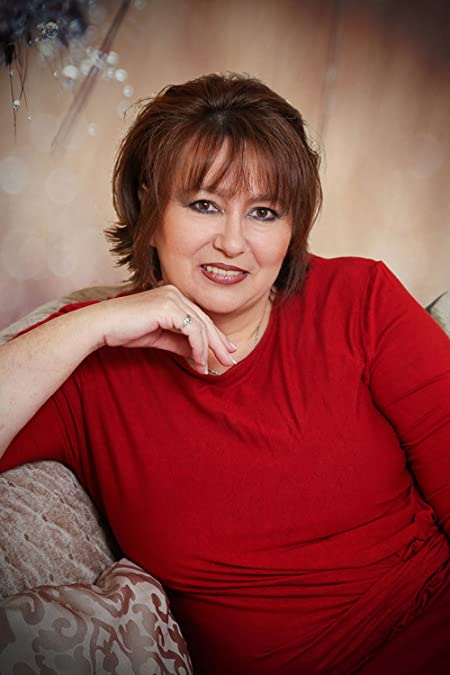


USA Today bestselling author, MARION UECKERMANN’s passion for writing was sparked when she moved to Ireland with her family. Her love of travel has influenced her contemporary inspirational romances set in novel places. Marion and her husband again live in South Africa and are setting their sights on retirement when they can join their family in the beautiful Cape.

December 8, 2011

The Gift of Humor

by Jenny B. Jones

Humor makes the world go round. It is the sugar in my tea and the spice on my fajitas. It’s also why I write books— to make someone laugh, to entertain, to encourage and provide an escape.

What I love about humor is that it can sweeten almost any story or work of nonfiction, whether it’s just a brief moment or the voice of the entire piece. Let’s talk about some ways you can incorporate a few laughs, a few smile-inducing moments in your work.  

1.  Kids, Old folks, and Minor Characters
The joy of having an elderly character or a young character is that they have free reign to say and do whatever they want. Exhibit A:

Look at the success and beloved legacy of Golden Girls. Use grandma or the four year old to be the voice of reason, to be your blunt characters, and the ones who have no filter. Usually they’re just vocalizing what we polite ones are thinking anyway.

Look for other characters who can be your Steve Martin. While my protagonists always have a sense of humor (or are supposed to), the heavier comedy usually comes from my minor characters, such as a nutty best friend or a socially inept boss. (Think Michael Scott, The Office) This keeps your main character (the one you want your reader to relate to) more believable while letting other characters up the comedic stakes.

2.  Contrasts
When you have contrasts in your book, you have built-in humor. How can you twist your story, your setting, your character to provide the unexpected? One of Warren Buffett’s best friends is a woman, Sharon Osberg. The two have been bridge partners and confidants for over twenty years. I find that unexpected, endearing, and humorous. It’s not the first image that comes to mind when I think of Buffet, but man, is there a story there or what?

3.  Dialogue
Dialogue is one of the easiest and most effective sources for humor because you can use just a little or a lot. For me, dialogue is the driving force of the humor in my books, so I rely on witty conversation a lot. (Again, my use of the term witty up for judgment, but wit is the intention.) I want the comedic dialogue to be shorter; a funny piece of conversation is rarely a long one. And I want it to move quickly. In my romance Save the Date, social worker Lucy and ex-quarterback Alex are total opposites, share a mutual dislike, and find themselves in a fake engagement. If I didn’t capitalize on that to create some sparring, humor-filled conversations, then I haven’t done my job.

Dialogue can also be effective for those writing more serious tomes. Sometimes a moment is so dark or the reader has been held under for so long, a brief flash of subtle humor or irony would give them some relief.

Laughter is one of the best sounds ever created. (Right after that noise made by popping the tab on a Diet Coke.) Your readers are surrounded by a bad economy, global unrest, pressure at work, and stress at home. If you’ve been called to write a little comedy, you have the opportunity to provide your reader with moments of escape, a break from the realities of life. There’s nothing like getting reader email that says “You made me laugh on a tough day” or even a simple “You made me smile.”

Humor isn’t just a style.

It’s a gift to your reader.
____________________________________

Jenny B. Jones is the four-time Carol Award winning author of books for women such as Save the Date and the newly released companion YA There You’ll Find Me. None of these books have been optioned for stage, screen, or Vegas, but Jenny continues to sit patiently by the phone waiting for that lucky call from Spielberg or Donnie Osmond. Having little free time, Jenny believes in spending her spare hours in meaningful, intellectual pursuits such as watching E!, binge Twittering, and writing her name in the dust on her furniture. You can find her at www.jennybjones.com