Pages

Showing posts with label M.D.. Show all posts

June 5, 2024

The Surprising Connection Between Metabolism and Limitless Health


A bold new vision for optimizing our health now and in the future!

What if depression, anxiety, infertility, insomnia, heart disease, erectile dysfunction, type 2 diabetes, Alzheimer’s, dementia, cancer and many other health conditions that torture and shorten our lives actually have the same root cause?

Our ability to prevent and reverse these conditions - and feel incredible today - is under our control and simpler than we think. The key is our metabolic function - the most important and least understood factor in our overall health. As Dr. Casey Means explains in this groundbreaking book, nearly every health problem we face can be explained by how well the cells in our body create and use energy. To live free from frustrating symptoms and life-threatening disease, we need our cells to be optimally powered so that they can create “good energy,” the essential fuel that impacts every aspect of our physical and mental wellbeing.

If you are battling minor signals of “bad energy” inside your body, it is often a warning sign that more life-threatening illness may emerge later in life. But here’s the good news: for the first time ever, we can monitor our metabolic health in great detail and learn how to improve it ourselves.

Weaving together cutting-edge research and personal stories, as well as groundbreaking data from the health technology company Dr. Means founded, Good Energy offers an essential four-week plan and explains:

  • The five biomarkers that determine your risk for a deadly disease.
  • How to use inexpensive tools and technology to “see inside your body” and take action.
  • Why dietary philosophies are designed to confuse us, and six lifelong food principles you can implement whether you’re carnivore or vegan.
  • The crucial links between sleep, circadian rhythm, and metabolism.
  • A new framework for exercise focused on building simple movement into everyday activities.
  • How cold and heat exposure helps build our body’s resilience.
  • Steps to navigate the medical system to get what you need for optimal health.

Good Energy offers a new, cutting-edge understanding of the true cause of illness that until now has remained hidden. It will help you optimize your ability to live well and stay well at every age.


I am a medical doctor, writer, tech entrepreneur, aspiring regenerative gardener, and outdoor enthusiast who lives in a state of awe for the miracle and mystery of existence and consciousness.

During my training as a surgeon, I saw how broken and exploitative the healthcare system is and left to focus on how to keep people out of the operating room.

I am passionate about working towards a healthier and happier planet by empowering people to understand their health and the limitless potential within them.

  • BA, Stanford Undergraduate, with Honors
  • MD, Stanford Medical School
  • AFMCP, Institute for Functional Medicine
  • Research positions at NIH, Stanford, NYU, OHSU
  • Co-founder, Levels
For more information on Casey Dean M.D.   https://www.caseymeans.com/

January 18, 2022

My “Last Book”


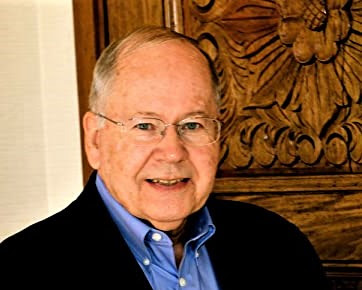
                                Richard Mabry


My first book contract was 17 years ago. My reason for writing the book was rather simple. I had read every book I could get my hands on about the loss of a loved one, but none spoke to me. So, I wrote one myself. It was, and is, one of the most satisfying books I have ever had my name on as author. And with its publication, I thought I was done.


I signed the contract without an agent and was thrilled that an established publishing house was willing to put out a non-fiction book based on my emotions after the death of my first wife. I wrote an additional chapter for a second edition of the book over 10 years later, and The Tender Scar remains in print today. It was and is a ministry for me.


Because I didn’t know anything about writing a book or getting it published, I followed the advice of an editor and attended my very first writing conference. To this day, I can’t say why I chose a Christian conference, but perhaps it seemed natural. But I later decided that this was one of the two blessings to come out of my efforts there. The other was advice from a couple of experienced writers, who seemed to like the way I put the words together and suggested that I try my hand at writing fiction.


I accepted the challenge (or, at least, I took it as such) and discovered that having a book published was far from an easy thing. I wrote, re-wrote, submitted, and after four years and forty rejections, I was in the right place at the right time and had my first novel of fiction accepted. Several more followed, from several publishers. But I found a contract wasn’t forever, and eventually—after ten published novels—I had no publisher. Since I’d known this day was coming, I dipped my toe (or rather, my pen) into self-publication by putting out a series of novellas, and by so doing I learned that not only were there advantages and disadvantages to writing for a publisher, but that self-publication came with its own advantages and disadvantages. But it was another avenue for me, and I followed it.


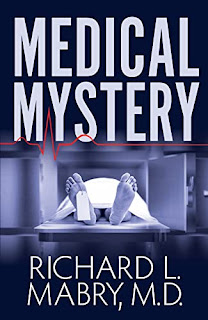
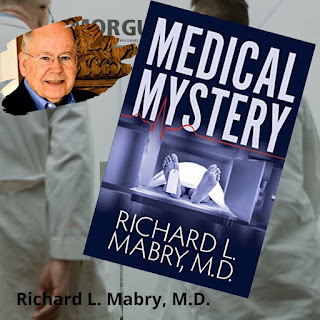
With the advent of the pandemic, I found that it was hard to write. Many of my colleagues evidently felt this way as well. After considering it, I decided that twelve novels and seven novellas was probably a good place to stop. Why not just let it go at that? But my wife felt otherwise, apparently. She dropped occasional hints about writing, and finally came right out and suggested a story arc that I might find interesting: a story about an ER nurse who was trying to write a book. I tried several times to make this work, but just couldn’t. But along the way I became interested in the female protagonist I had created, as well as the male protagonist, a family doctor who had thrown himself into his work after the death of his first wife. I was interested enough to populate the story further, and before you know it, I had written a novella featuring these two. I couldn’t think of an appropriate title until I realized that the story featured a murder that was almost undetectable—a true “medical mystery.” And thus, my eighth novella was born.


Will this be the last? I thought I had already written my last novel, but I was wrong. In a burst of enthusiasm, I included the beginning of another one at the end of this one. Will it come to fruition? I’m not sure. Then again, I’d already thought once that I had written my last one, and I was wrong.


Dr. Richard Mabry is a retired physician, now writing “medical suspense with heart.” His previously published novels have garnered critical acclaim and been recognized by programs including the ACFW’s Carol Award, the Romantic Times’ Inspirational Book of the Year and its Reviewers’ Choice, the Inspirational Readers’ Choice, and the Selah Award.

May 8, 2020

Where Does An Author Get Ideas? (Part 2)

Richard L. Mabry, M.D.       @RichardMabry

Medical Suspense with Heart


Here are where some of my ideas came from, and how I turned them into a novel.

One evening, going into an almost deserted parking garage at the medical center, I idly thought, “This would be a good spot for a kidnapping.” Apparently it was, because I turned that thought into Stress Test, in which a doctor was kidnapped, shoved into the trunk of his car, taken for a ride that wasn’t to have a pleasant ending, and he didn’t know why.

Coming out of a movie, I idly wondered about all the couples I’d seen in attendance. What if one of them wasn’t using his correct name or identity? Why would someone do that? I spun that idea into Heart Failure, a novel that involves an engaged couple that’s shot at, causing the man to eventually reveal that he’s in the witness protection program.

One of my colleagues was accused (falsely) of a mercy killing. I incorporated that into my novel, Diagnosis Death, in which a woman is accused of a similar situation involving her husband—but she can’t recall whether she’s guilty or innocent of his death and the one that followed.

How about something more recent? My latest novel, Critical Decision, stems from an idea given me by my wife. She is my first reader and both my biggest booster and severest critic. In an offhand fashion, when I was brooding about my next book, she suggested I write about a doctor who receives a mysterious package. When she opens it, she finds a phone that rings. A voice addresses her by name, telling her that her husband has been kidnapped. If she doesn’t give a medication to the patient she’s seeing the next day, a former Vice President of the US, her husband will be killed. What will the medicine do to the patient? It will kill him. Well, you must admit that was a pretty good start, and I managed to turn it into to my most recent book.

Try taking the novel you’re currently reading and find the nugget of an idea inside it. What did the author write that book? What do you think you’ll take away after reading it? Then ask why you care what happens. What is at stake? What holds your attention? I was told that once I started writing, I’d never read the same way again. I suspect that once you begin looking for the idea that started it all, once you look for the “So what?” you’ll be a changed reader, too.

Where do you get your ideas? They’re all around. It’s what you do with them that counts.


Dr. Richard L. Mabry is a retired physician, now writing novels of “medical suspense with heart.” (He calls them “sleep with the lights off” books.) To learn more about him, go to his web page and follow him on Twitter and Facebook. His latest novel, Critical Decision, released this spring.

May 7, 2020

Where Does An Author Get Ideas? (Part 1)

Richard L. Mabry M.D.    @RichardMabry

Medical Suspense with Heart


Any writer will tell you that the question most frequently posed to them is “Where do you get your ideas?” When I first started, I sort of wondered if I could come up with a single idea, much less enough to write thirteen novels and six novellas. But I soon found that getting an idea wasn’t the problem. Once you look around, you find that ideas are everywhere. You just have to ask yourself the right question when you see them.

December 13, 2017

Find Your Voice


By D. P. Lyle, M.D.


So, you’ve finished your manuscript and sent it to an agent/editor. Now, you wait, hoping they will sign you up.

What makes them decide? The unique premise or clever plot? The colorful characters? The snappy dialog and wonderfully rendered setting? No, the most important thing agents/editors look for is the voice. When they say they’re searching for something fresh, something that speaks to them, they mean the narrative voice.

What is voice? It’s hard to define, or describe, but like other great art, you know it when you see (read) it. It’s a combination of word choice, rhythm, sentence structure, pacing, tone, and other equally difficult to define qualities.

My definition: Voice is your distinctive way of telling your story. It comes from three things: Knowledge, Experience, and Confidence.

Let’s look at how each of these will help you find your unique voice:

1—Knowledge: Most things we learn along life’s journey come from others. An apprenticeship of sorts. For sure, medical school was that. So is writing. To write, you must read. See what others are doing and how they’re doing it. Some writing will speak to you, other writing might not. You will gravitate to word choices, sentences structures, and the sound of some writer’s voices and not those of others. Besides reading widely, try this: Go to the library, your local bookstore, or even use the “Look Inside” feature on Amazon, and read the first few pages of 50 books. Some will work for you—-the operative phrase here is “for you.” Take what speaks to you and embrace it in your own writing.

2—Experience: The great Australian writer Bryce Courtney often said that the secret to writing was “bum glue.” Glue your bum to the chair and write. Write every day. Write your way. Copy the styles of writers you like. Not that you will write exactly the same way, but rather elements of their writing that work for you will creep into your own prose. This will evolve over time and before long, like riding a bicycle, you will be off and writing in your own voice.

3—Confidence: This, to me, is the key. Be fearless. Tell your story in your own words, your own voice. Don't worry what others might think or whether it fits the so-called rules. Tell your story your way. Knowledge and experience breed confidence.

Don’t forget that writing is art, then craft. The art is the storytelling; the craft is making it cleaner and more publishable. Don’t let the craft kill the art. Don’t over edit as you go. Write the story fast, write it your way, in your voice, then go back and clean it up. As Hemingway said: write drunk, edit sober. Get drunk on your writing, spill it on the page, then take a sober assessment and fix what needs fixing. Write fast, edit slow.

In the end, your voice is yours. It’s personal. No one else has it. Let it out. Don't handcuff it. Let it guide you through your manuscript. In the end, you’ll have your story, told your way. That’s always the goal, and it’s what agents and editors and, most importantly, readers are looking for.
_______________________________________________________________
D. P. Lyle is the Macavity and Benjamin Franklin Silver Award winning and Edgar(2), Agatha, Anthony, Shamus, Scribe, Silver Falchion, and USA Today Best Book(2) Award nominated author of 17 books, both non-fiction and fiction, including the Samantha Cody, Dub Walker, and Jake Longly thriller series and the Royal Pains media tie-in novels. His essay on Jules Verne’s THE MYSTERIOUS ISLAND appears in THRILLERS: 100 MUST READS and his short story “Even Steven” in ITW’s anthology THRILLER 3: LOVE IS MURDER. He served as editor for and contributed the short story “Splash” to SCWA’s anthology IT’S ALL IN THE STORY. He is International Thriller Writer’s VP for Education, and runs CraftFest, Master CraftFest, and ITW’s online Thriller School. Along with Jan Burke, he was co-host of Crime and Science Radio. He has worked with many novelists and with the writers of popular television shows such as Law & Order, CSI: Miami, Diagnosis Murder, Monk, Judging Amy, Peacemakers, Cold Case, House, Medium, Women’s Murder Club, 1-800-Missing, The Glades, and Pretty Little Liars. Social Media Links: .Website: http://www.dplylemd.com Blog: http://writersforensicsblog.wordpress.com Crime & Science Radio: http://www.dplylemd.com/crime--science-radio.html Twitter: https://twitter.com/DPLyleMD FaceBook: https://www.facebook.com/dplylemd


October 16, 2017

NOTHING IS FOREVER…INCLUDING PUBLISHING CONTRACTS


By Richard L. Mabry, M.D.


I was associated with traditional publishers since 2010 when my first novel, Code Blue, was released. I’d had a good relationship with them, but—like many other authors—the contracts I was given were for a limited number of books each time. There was no lifetime guarantee, but with all the awards and honors my writing received, I wasn’t worried. But perhaps I should have been.

I’d signed (after a long period of nail-biting) with a new publishing house run by experienced and respected people. We were all excited about it, but when my publication date was pushed back a couple of times I began to worry a bit. That unease was validated when I received news from the publisher that there were problems with their financing. My agent negotiated a reversion of rights for the novel the publisher held, but where did I go from here? After several other publishers declined to give me an offer, I reached the conclusion I’d been avoiding: I’d go with self-publication.

Actually, I’d dipped my toe—er, my pen—into these waters earlier, publishing three novellas using agent-assisted publication. And for this novel I used the lessons I’d learned. For the novellas, as well as the novel I was about to release, I made certain that the cover design was a good one. How? I didn’t try to do it myself, but paid a professional. The same with editing, even though I’d read all the books on self-editing and gone through the manuscript several times. Another pair of eyes, especially a good one, never hurt. And, because I was still new at this “indie” thing, I turned to agent-assisted publication for this endeavor.

The agency furnished a coordinator (one with whom I’d worked on publication of my novellas), and she helped walk me through the process. She assisted in pricing the book. She answered my questions and even had some suggestions along the way. And I tried to learn from the experience.

I didn’t have a publisher’s marketing department behind me, but every author will agree that the best way to advertise is to write good books and have readers look forward to your next one. I lined up a few blog appearances, recruited a dozen or so people to help get the word out after I sent them a print copy of the book, and let things take their course. So far, the results have been good.

Would I use a traditional publisher in the future if I am offered a contract, or am I an “indie” (actually a hybrid) author for the foreseeable future? Only time will tell. But this experience has shown me yet another means of getting my novels to readers. And for that I am grateful.
________________________________________________________________________________
Richard L. Mabry is a retired physician, now writing “medical mysteries with heart.” He is the author of one non-fiction book (TheTender Scar: Life After The Death Of A Spouse), three novellas, and eleven published novels, the latest of which is Cardiac EventHis novels have been a semifinalist for International Thriller Writers’ debut novel, finalists for the ACFW Carol Award, Inspirational Reader’s Choice, and Romantic Times’ Reader’s Choice and Reviewer’s Choice Awards, as well as winner of the Selah Award and the 2017 Christian Retailers Best.