Pages

Showing posts with label Lynn Austin. Show all posts

June 21, 2022

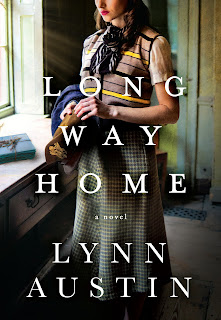
Long Way Home Shared By Lynn Austin

Lynn Austin


It often happens that in the process of researching one novel, I encounter interesting tidbits that give me ideas for a future novel. That’s how my newest book, Long Way Home, came to be. As I researched World War II for my two previous books, If I Were You and Chasing Shadows, I kept thinking about my dad, who enlisted in the Navy at age eighteen and served in the war in the Pacific. Dad never talked about his experiences, but we noticed that certain activities, such as driving across a long bridge, caused him anxiety. While researching, I came upon accounts from WWII veterans and their children that described anxiety-producing episodes like my dad’s. Post-traumatic stress disorder (PTSD) wasn’t recognized back in the 1940s, and psychiatry was still in its infancy. Returning soldiers were left to struggle on their own with what was called “battle fatigue” or cope with risky treatments such as electric shocks or insulin comas. Thus, the idea for Long Way Home was born, the story of returned veteran Jimmy Barnett, who suffers from PTSD, and his friend Peggy Serrano, who battles to find help for him.

While researching my earlier WWII novels, I also read about the SS St. Louis, which sailed from Hamburg, Germany, in 1939 with more than nine hundred Jewish passengers, desperate to escape Nazi persecution. I knew when I read their harrowing story that I wanted to use it in Long Way Home, so I decided to retell it from the point of view of Gisela Wolff, a sixteen-year-old Jewish passenger. Her story intertwines with Jimmy Barnett’s story, but readers will have to read the novel to discover how.

In writing my novels, I always begin with an idea, such as the ones I mentioned above. Then I dive into the research until my characters and their settings come to life in my mind. After that, I begin writing and make up the story as I go along, with no clear idea how the book will end. It becomes very much like a roller-coaster ride for me as I experience all of the ups and downs that my characters experience, facing challenges and obstacles along the way. I became very emotional, at times, as I relived World War II with Jimmy and Gisela. One of the themes that emerged is the destructive power of prejudice—whether it’s blatant anti-Semitism or children bullying someone on the playground—and the power of love and friendship to help rescue one another. Another theme asks, how do we hang on to our faith when faced with suffering and God seems very far away?

It was my own struggle with unanswered prayer nearly forty years ago that first inspired me to try writing. God had used a novel, The Chosen by Chaim Potok, to help me understand why a loving Father might sometimes allow His children to suffer. At the time, Christian publishing was in its infancy, but that book inspired me to try writing a book from a Christian worldview, showing God as a main character working behind the scenes as He does in our lives. My hope was to encourage one person the way that The Chosen had helped me.

So, I sat down to write one day when my children were napping and quickly discovered how much I loved it! I learned that all of my quirky personality traits and experiences made me well-suited to be a writer. I began reading books on writing and attending writing conferences in order to learn the craft, and happily, my first book was finally published eleven years later. Since then, writing has greatly enriched my life, taking me to new places for my research, teaching me new things, stretching my own faith as I journey to hard places with my characters. But my greatest joy comes when I hear from readers that God has used my book to enrich their faith journeys, just as a book once blessed me.

Over the years, I’ve learned a lot while writing twenty-seven novels, two novellas, and two nonfiction works. There are many wonderful days when the writing flows and I lose all track of time. Of course, there are also days when things get tough and it’s hard to stay in the chair! I’ve learned that creativity must be nourished, and I’ve taught myself some strategies for dealing with writer’s block and discouragement. This was true, at times, while writing Long Way Home because the subject matter was so intense. But I think the end result was worth it and that readers will find it to be a refreshing and surprisingly uplifting story of God’s faithfulness in difficult times. My goal is always to tell a compelling story that will move and bless my readers. I hope Long Way Home will accomplish that.

Lynn Austin has sold more than one and a half million copies of her books worldwide. A former teacher who now writes and speaks full-time, she has won eight Christy Awards for her historical fiction and was one of the first inductees into the Christy Award Hall of Fame. One of her novels, Hidden Places, was made into a Hallmark Channel Original Movie. Lynn and her husband have three grown children and make their home in western Michigan.


June 8, 2021

When Will Life Get Back To Normal?

 Lynn Austin


We’ve all been at war with the COVID-19 virus this past year, and the fear, uncertainty, and isolation we’ve experienced have been depressing at times. Like many authors, I began to wonder if I had anything worthwhile to say, and if I did, would anyone be interested in reading it. Then I recalled another time when world events had a similar, destructive effect on my writing, and I remembered the lessons I’d learned back then. The event was the 9/11 terror attacks. At the time, I was writing a historical novel about the Civil War, and my first thought was “Who will want to read about that when the world is in such turmoil? With news headlines commanding our attention, will people even read novels anymore?”

In the hours and days after the shocking attacks, we all wondered what would happen next. Would life as we knew it halt like all the air traffic? My daughter was in high school at the time, and one evening she poured out her fear and grief due to her disrupted life and unknown future. Would she ever have the things she’d dreamed of? Would she ever feel safe again? As I listened and wept with her, I realized that her feelings were probably the same as the young main character in my novel. Her country was also at war. An enemy threatened her city, and she feared for her life and her loved ones’ lives. I quickly wrote down everything my daughter had shared (with her permission) and returned to my novel with new insights.

That memory from 9/11 has kept me writing, and has even energized my writing, during this pandemic. What we’ve all experienced this past year—the fear, the isolation, the shortages, the canceling of our travel plans and weddings and graduations, and most of all, the specter of death hovering over us and our loved ones—has been experienced by the generations who have come before us. Their stories and their examples of courage and sacrifice can motivate and inspire us in our current times. I’ve had my dark moments this past year, but I’ve continued to write, pouring my own feelings of grief and worry and helplessness into my characters’ stories with firsthand insight.

When the pandemic struck, I had been researching and writing two novels that take place during World War II. The first book, If I Were You, released four months after the lockdown and tells the story of two young women who endure life in war-torn London, including the terrifying Nazi bombing blitz. The second book, Chasing Shadows, which releases June 8, tells the stories of three women who are trying to survive in the Netherlands after the surprise Nazi invasion and occupation of their country. The events in these novels share many similarities with the current pandemic.

Foremost are our fears: Will I survive? Will my loved ones survive? Also, our sense of helplessness, which can lead to despair, anger, and even hatred. Our many losses are the same, including our dreams and various measures of freedom. We all ride the never-ending emotional ups and downs of hope and disappointment. And we share the uncertainty about tomorrow, the inability to plan for an unknown future, and the anxiety of wondering when our situation will finally end. Of course, we know that World War II did end with the defeat of the Nazis. Life gradually returned to normal. But the men and women who lived through that war, day by day for five long years, had no idea how it would end or how much longer they would be forced to suffer.

In challenging times, we each must choose how we will respond. While some people succumbed to despair and emotional breakdown during WWII, many, many more found sources of great courage and faith that led them to accomplish selfless, courageous acts. In both novels, I chose to write about characters who responded with faith and courage. Yes, they sometimes felt fear and self-pity, but it was love for the people they cared about that helped them rise above their circumstances. I saw many examples of such selfless courage during this pandemic, especially from our medical workers.

“When will life get back to normal?” I hear that longing voiced nearly every day. I want to reply, “Probably never.” Things will never go back to the way they were. For the men and women in WWII, the war finally ended, but their lives were very different—and in some ways, better. They had learned things about themselves and had gained new strengths and new levels of faith in God that transformed them into different people. Better people. Hardship will change us, one way or another. It can destroy us or strengthen us if we allow it to. It’s my hope that the two novels I published during this pandemic will energize readers’ faith and offer this message of hope from author C. S. Lewis, who endured WWII in Great Britain: “There are better things ahead than any we leave behind.”


Lynn Austin has sold more than one and a half million copies of her books worldwide. A former teacher who now writes and speaks full-time, she has won eight Christy Awards for her historical fiction and was one of the first inductees into the Christy Award Hall of Fame. One of her novels, Hidden Places, was made into a Hallmark Channel Original Movie. Lynn and her husband have three grown children and make their home in western Michigan. Visit her online at lynnaustin.org

June 2, 2020

If I Were You

Lynn Austin   


The idea for my newest novel, If I Were You, began as many of my novels do, with a true story that someone told me: A young British woman met an American soldier when he was stationed in England during World War II, and they fell in love. The only problem was, he had a sweetheart back home who was waiting for him. But he decided to break up with his longtime sweetheart and marry his new British love. The war ended, and the soldier shipped home. Months passed before the new war bride received the paperwork that allowed her to set sail to be with him. But just as her ship docked in America, she received a telegram saying that her husband had died in a tragic accident.

What should she do?

What would you do if you were her? Return to the home and family you had left behind in England? Or stay in America without your husband, living with a family you’d never met? Remember, at least one person in her husband’s hometown had a good reason to hate her.

Authors love to ask these what-if questions when we’re plotting our novels, and this real-life dilemma became the catalyst for my newest novel, If I Were You. I also happened to know a genuine British war bride—a very dignified, tea-drinking lady with a charming accent. She was the mother of a good friend, and she always reminded me of the queen. Wartime romances intrigue me. They’re often fueled by the idea that life is short, so we should live for today because we don’t know what tomorrow will bring. For many young women, a wartime romance that was forged in life-and-death circumstances is a love so strong that it compels them to leave everything behind for a new life in a new land.