Pages

Showing posts with label Cindy Woodsmall. Show all posts

September 4, 2023

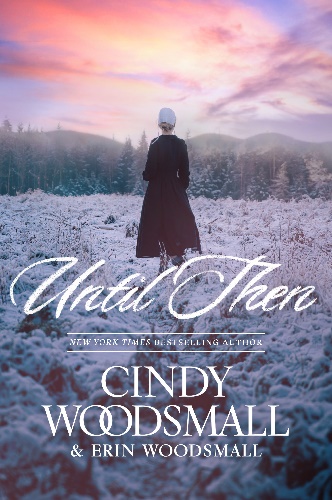
Until Then


Until then may I use my time as you desire . . .


In 1985, Old Order Amish couple Celeste and Vin Lantz have been married for six years. Vin is a carpenter by trade but an artist in his heart. He is especially captivated by drawing portraits, which the Amish consider idolatry. Knowing they could be shunned, Celeste is shocked to discover that Vin has secretly been sketching her and their sons. When she confronts Vin, they argue and Vin storms off . . . and seems to disappear, leaving Celeste to wonder if he chose his art over his family.

When he leaves the house that night, Vin seeks peace on his favorite mountain overlook. But he takes a fall and wakes to find himself injured and lost. Vin soon realizes just how far he has traveled—not only in distance but back in time, to 1822 Ohio, a place that provides the freedom he craved but where he is separated from his beloved wife and children. Vin is saved by the kindness of strangers and gradually learns to survive and even to use his skills to help his new friends in this unfamiliar time and place. But all the while he prays desperately for God to return him to his family, before Celeste makes a new life without him.


Cindy Woodsmall is a New York Times and CBA bestselling author of twenty-six works of fiction and one nonfiction book. Coverage of Cindy's writing has been featured on ABC's Nightline and the front page of the Wall Street Journal. She lives in the foothills of the north Georgia mountains with her husband, just a short distance from two of her three sons and her six grandchildren.

https://www.cindywoodsmall.com/


Erin Woodsmall is a writer, musician, wife, and mom of four. She has edited, brainstormed, and researched books with Cindy for almost a decade. More recently she and Cindy have coauthored five books, one of which was a winner of the prestigious Christy Award. https://www.facebook.com/authorcindywoodsmall

September 1, 2023

Cindy Smallwood Interview on Until Then~A New Love Story


Interview with Cindy Smallwood on new book, Until Then.


Cindy, what inspired you to write Until Then?

I had a strong heart’s desire to explore how we as humans often have unmet longings and dreams to develop gifts or talents that might be outside what our family or community believe we should pursue.


How did you decide to combine Amish fiction with time-slip fiction? 

In many ways the Amish live in a different time, but to send an Amish person back to the 1800s added a new dimension of deliciousness. Would an Amish person adjust easier because of their way of living? In our time, the Amish are known for being separate from the world, but they were in the thick of social justice and political battles in the 1800s. A time-slip setting for this story allowed me to dive deep into the history of 1822 and write about the bravery and diligence of the Amish and Quakers when it came to fighting against slavery. Because the Amish and Quakers would never bear arms, their history is very different, and that difference had an impressive impact on quiet, unseen lives.

How do you expect the novel to resonate with your audience? 

I have strong hopes that women will be impacted by the love story between Celeste and Vin, who are separated when Vin slips through time. Vin has no understanding of how to get back home. Celeste has no idea where he is or why. She isn’t a widow who can remarry, although she meets a very kind, handsome single man. She’s thrust into being a single mom of two in a community that believes she’s the reason her husband is missing. She faces being passively ostracized while trying to keep a roof over their heads and food on the table, and she feels the sting of being neither a successful breadwinner nor the kind of mom she dreamed of being. She’s so very lost and betrayed by her husband’s disappearance. I feel all women have witnessed or felt some of those stings on some level

What are you most excited for your readers to experience by reading this story? 

I’m most excited that as the story unfolds, we see both Vin and Celeste learn to trust in God differently than ever before, to accept what is and make good use of the time they are living in as opposed to fulfilling the dreams they shared.

You are a mother and daughter-in-law writing team. 
Can you describe your writing process? 

Our usual tag-team writing method was tossed out the window for this book. Typically, we each choose a main character or two, and through hours of brainstorming and outlining, we develop our character(s). But because of this particular story and the new difficulties of two storylines in two different times and the amount of research needed, I wrote, and Erin edited. We talked on the phone a lot to clear my head and help me to stay true to myself, my readers, and my genre. 

See, Louis L’Amour kept trying to take over! Decades ago, I read his works voraciously, and as I wrote this book, each time I slipped back in time to the 1800s, Mr. L’Amour showed up, trying to write the story from a male point of view with superheroic efforts. I got that out of my system and was able to hear just my voice. 

Finally, months later, I sent Erin the last five chapters of the book. At the time I had Covid and was quarantined in Canada, unable to return to the States. Erin read the chapters and called me, apologizing as she told me that those chapters didn’t work. The problem: I was coming from a place of being weary and irritable, and she pointed out that the characters were in love and needed to show a level of gratefulness and trust in order to be true to who they were. So, L’Amour hadn’t shown up, but Grumpy Author had arrived on the page. I told Erin if she could call her sick mother-in-law stuck in a tiny hotel room with no food service while trying to meet a deadline and gently speak the truth, she could do anything in life! I love being a team with her!

What role does faith play in this story? 

In many ways, Celeste and Vin both see their faith burned to the ground in all they thought they knew and understood, and from those ashes, they each slowly find a new faith that carries them in very different ways.

What lessons or truths do you hope people take away from Until Then? 

Vin and Celeste are trapped in lives they can barely survive, either physically or emotionally. While Vin prays unceasingly for God to show him how to return home, and he promises to be a better man, a better husband, a better dad, as time passes, he often ends his prayers with the words “Until then, may I use my time as You desire.” So, he uses the “trappedness” to do the one thing each of us can do—take on an “until then” thinking and sacrifice our desires to make others’ lives better. Isn’t that always a part of what life and love are?

You talk about the idea of an "until then" perspective in this novel. Can you explain what you mean by that? 

All of us are trapped in some ways: trapped with personal illness or the illness of loved ones, trapped with difficult bosses or a low-paying job, trapped with bills and taxes we can’t get free of, trapped in a difficult relationship, or trapped in silence as we watch loved ones suffer. When we can’t get to where we’d like to be, we can be free to do our best by praying, “Until then, may I use my time as You desire.”


Be sure and get Cindy Woodsmall's & Erin Woodsmall's new book. You will enjoy this amazing love story.

December 12, 2018

Looking for the Perfect Character Names


By Erin Woodsmall


What makes a name a good one? Luckily for us the answer to this question varies or else life would get confusing as we called one another by the same small set of names! Tastes in names change each decade, something we can see on the Social Security website. 

New parents pour over lists of names before settling on one for their child. So what makes a good name for your literary “children”—also known as your characters?

One of the obvious answers is: names need to match the era, culture, or setting. In Amish fiction, giving a man the name “Maverick” wouldn’t work unless it’s a nickname with a believable history behind it. For The Christmas Remedy we consulted a blue book of names and addresses that Cindy received from an Amish friend in Pennsylvania who runs a country store. Cindy has other Amish resources and has put the names in a Word document to pull from as needed. She also compiled a list of all names she’s ever used in a book—something very useful to refer back to after twenty-something books written!

Another thing to consider is the name’s meaning and connotation. A character named Hope probably wouldn’t make a good villain. In The Christmas Remedy, we wanted our main character to have a Christmas-themed name—after all, she was born on the Amish holiday of Second Christmas. So her parents decided to go against Amish tradition, and they named her Holly Noelle. Her siblings, also born around Christmastime, are Iva “Ivy” Zook and Ezra “Red” Zook. Since the Amish often stick to a short list of traditional names, they tend to use nicknames like Ivy and Red.

Have you ever met a family who names all their kids in a theme of the same first letter? This can be cute in real life, but it’s best avoided when writing fiction. On television or the big screen, they avoid having characters with the same hair color or hairstyle or skin color or body build. The visual differences are necessary to keep from confusing viewers. In a book, the name is instantly defining on page, and if two or more characters have the same letter sounds at the beginning, it’s problematic for readers.

When naming all of my children, it was important to me that I found names that had nickname potential. Some parents feel the opposite and want to find names that can’t be shortened or changed. Not every character has to have a nickname, like Matthew to Matt or Abigail to Abi, but it can be a cute thing in romance. I have a friend named Jeffrey who is often called “Jeff,” but in his mind he’s Jeffrey. My two year old, Silas, refers to himself exclusively as “Si Guy.”

Who are your characters to each other? To themselves? Names help connect a reader to the characters, so if after writing on the story for a while you realize something about the name of your character isn’t working for the story, don’t be afraid to embrace a name change.
One of my favorite names from a series I’ve read is Claire. It works for the characters and readers on many levels. It makes me think of someone having clarity, and she does, even when overwhelmed with total confusion.

What is the name of a favorite character from a book you’ve read?
____________________________________________________________________ 
Erin Woodsmall is a writer, musician, wife, and mom of the three. She has edited, brainstormed, and researched books with Cindy for almost a decade. She and Cindy have recently become co-authors and have written three books.  Cindy Woodsmall is the New York Times and CBA best-selling author of twenty-two works of fiction. She’s best known for her Amish fiction. Her connection with the Amish community has been widely featured in national media outlets, including The Wall Street Journal and ABC Nightline. Cindy has won numerous awards and has been a finalist for the prestigious Christy, Rita, and Carol Awards. Cindy and her husband reside near the foothills of the North Georgia Mountains. 


October 31, 2018

Co-Writing a Book


By Cindy Woodsmall 


Michelangelo said, I saw the angel in the marble and carved until I set him free.

While my skills are nothing like his, I can relate to what he meant.

Stories inside a writer’s mind and heart flow easily and are a lot of fun to ponder, but carving a work onto the written page that is free of anything that isn’t “the angel” is hard work, and we, as writers, have to figure out what we must do to free that story.

I had been pondering the story idea that’s now called As the Tide Comes In for many years before my daughter-in-law Erin and I finally met at a coffee shop to begin hammering out the outline.

I’d given the story a working title of Soft Dusks and Noonday Fire, which was inspired by a poem called The Marshes of Glynn, written in 1879 by Sydney Lanier.

I shared with Erin what I knew of the characters and what I was looking for in a setting—a small Southern town with a culture all its own and people to match.  

Her eyes lit up as she asked—have you considered Brunswick, where the poem was written or its neighbor, St. Simon’s Island?

I had thought of numerous small towns in Georgia that were connected to Sydney Lanier, but I hadn’t considered a setting that far south. We discussed my story ideas and all that St. Simon’s had to offer. She knew the island well. Her parents had grown up in Brunswick, and she had spent her summers as a child exploring St. Simon’s Island.

Despite all she knew of it and the interviews she could line up with people who’d lived there all of their lives, I knew I couldn’t write a story based on a place I hadn’t been. I needed to breathe in the air, listen to the myriad of sounds, and live a few days where my characters would.

Erin had a solution for that—let’s go there next month!

It would take time and money and effort…but we began making plans to go.  

When I went home from the coffee shop, I began an online search for a home to rent on St. Simons. While I scoured the pages, story ideas and excitement for the novel began to build. I made a reservation and began writing on the story. But nothing I wrote worked for me, but I kept trying. I find it odd that as much as the story works inside my head, getting the right beginning for it can take numerous rounds of writing the first several chapters and chucking them. Rinse. Repeat.  

Soon we were on the island, and we spent a week in a lovely old home that was incredibly inspirational. Oh, how I long to share its unique beauty with you.

I had to chuck every word I’d written thus far and start fresh…because being on the island and staying in that intriguing old home had stirred my imagination in ways I hadn’t expected.   

By the time our week was up and we were packing to return home, I knew we had all the tools we needed to carve the angel out of the marble.

Without seeing the place firsthand and without the wonderful interviews with those who lived on the island, I couldn’t have seen the angel in the marble to even try to carve him free.

What do you need to do to see the angel in the marble and find the tools to set him free?  
_______________________________________________________________________ 
Cindy Woodsmall is the New York Times and CBA best-selling author of twenty-two works of fiction. She’s best known for her Amish novels. She’s been featured in national media outlets such as ABC’s Nightline and the Wall Street Journal. Cindy has won numerous awards and has been a finalist for the prestigious Christy, Rita, and Carol Awards. Cindy and her husband reside near the foothills of the North Georgia Mountains. She can be found online at cindywoodsmall.com  Cindy’s co-author, Erin Woodsmall is a writer, musician, wife, and mom of the three. She has edited, brainstormed, and researched books with Cindy for almost a decade. She has family roots in the Golden Isles of Georgia, and spent time every summer of childhood on St. Simons Island.


November 15, 2017

Jingle Bells in July and Summer Grove in Winter


By Cindy Woodsmall


Let me share with you a scene that happened in my house a few years ago…

Taking a deep whiff of the cinnamon-cookie-scented candle, I slide on my fingerless writing gloves and snuggle under an Amish-made quilt. Fuzzy slippers on, I settle in front of my computer to work on my Christmas novella. A scrumptious mug of hot chocolate and marshmallows sits on my side table, and I take a sip here and there.

After a few hours I put on my swimsuit, turn the air conditioner back to a normal temperature, and leave the house to go join my granddaughter at the neighborhood pool. Extreme and a little silly? Maybe. But if setting up my office like Christmas can help me get into the story I’m writing, I’ll do it. Anything to break up the logjam that sometimes invades my brain when I’m trying to finish a book.

Because I write Amish fiction, I’ve decorated my office with Amish-made quilted wall hangings, Amish-made drawings and paintings, and other things that remind me of Amish life. I immerse myself by burning candles scented like baking bread, or dumping orange peels and cinnamon into a pot of steaming water.

For my recent series, The Amish of Summer Grove, I indulged in going to coffee shops and enjoying the homemade goods and amazing flavored coffees.

I meet my daughter-in-law there from time to time, and we brainstorm for hours. We both live in a small town forty miles northeast of Atlanta, and our area has two coffee shops—one in the historic district that’s very quaint and a more modern one in a strip mall.  The two places provided inspiration for my main character, Ariana, and her family-run café, Brenneman Perks.

As I talk to the owners, they share struggles that my characters will face, and the setting is so inspiring. It not only energizes me via delicious cups of coffee served in lovely ceramic mugs, but the sounds and aromas inspire me to write scene after scene.

Another thing that helps me enter my characters’ worlds is looking at pictures of research trips I have made in the past. I have folders and folders of pictures from various places in Amish country, from tourist spots in Lancaster County to the homes and farms of Old Order Amish friends.

I have an upcoming Christmas novella that is my first non-Amish book, and it’s set in Asheville, North Carolina. It’s titled The Gift of Christmas Past, and it’s coauthored with my daughter-in-law, Erin. We spent a lovely, snowy weekend in Asheville, hoping to get a lot of research done. Our husbands and her three children, ages five and under, went with us, so I wasn’t sure how much research we’d accomplish. But I was caught off guard by how many unexpected things fell into place. That weekend served as great inspiration for the book. 

My current writing project is also non-Amish. Its title is Soft Dusks and Noonday Fire, and its setting is St. Simons Island, Georgia. Renting a house and staying there with my daughter-in-law and her family for a week was lovely and, again, surprisingly productive. We met and interviewed people who’ve lived there all their lives and one whose occupation is the same as the main male character. I have pages of notes we took during the interviews and hundreds of beautiful pictures we snapped throughout the week. Whenever I need to be transported to where my characters are, I open the Photos folder on my computer and look through the pictures.

What are some things you’ve done to help get into your book’s settings?
_________________________________________________________________________ 
Cindy Woodsmall is an award-winning New York Times and CBA best-selling author who has written 20 works of fiction, including her most recent series, Amish of Summer Grove. Her connection with the Amish community has been widely featured in national media outlets, including ABC’s Nightline. The Wall Street Journal listed Woodsmall as one of the top three most popular authors of Amish fiction. RT Book Reviews recently presented her with a Career Achievement Award and gave her latest release, Gathering the Threads, a Top Pick review. Woodsmall and her husband reside near the foothills of the North Georgia Mountains.Learn more about Woodsmall and her books at www.cindywoodsmall.com. She is also active on Facebook (@authorcindywoodsmall). Learn more and purchase a copy: http://waterbrookmultnomah.com/books/242926/gathering-the-threads-by-cindy-woodsmall/